
Tabelog 100
Our verdict
American places the Ginza kissaten tradition in a working neighbourhood context rather than a luxury-dining frame. Its Tabelog 100 Kissaten selections in 2021 and 2022, table-only 22-seat room, sandwich-and-yoshoku identity, and Higashi-Ginza setting make it a compact lesson in how Tokyo’s old coffee-shop culture survives beside theatre crowds, office routines, and polished Ginza dining.

Pearl is the En Primeur Club membership app — saves, bookings, and concierge access live there. Same editors, same standards.
The menu
What to order
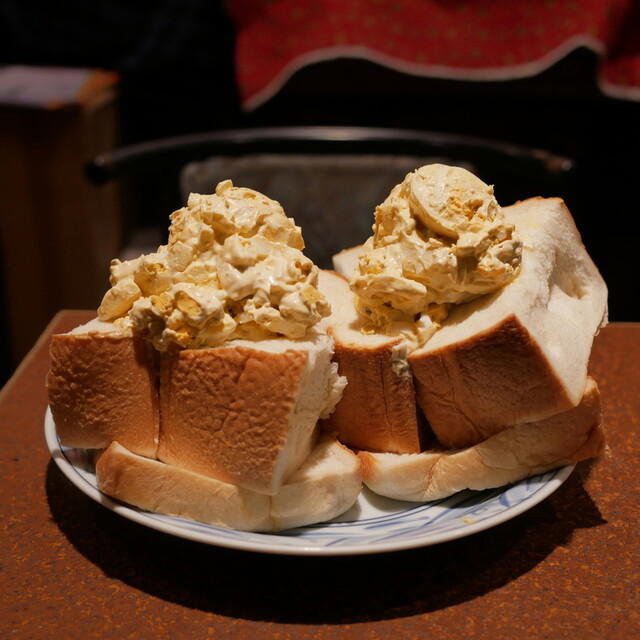
- Fluffy egg sandwich
- Hearty sandwiches (various fillings)
- Breakfast sets with coffee
South of Kabukiza, Ginza changes register quickly. The avenue polish gives way to narrower side streets, morning errands, office footfall and the older rhythm of kissaten culture: coffee, thick sandwiches, yoshoku plates, table service and a room built for repeat use rather than spectacle. American belongs to that side of the district. It is not trying to compete with Ginza’s formal sushi counters or French dining rooms; it sits in the quieter lane where Tokyo’s coffee-shop grammar still matters.
That neighbourhood position is the point. Higashi-Ginza has always held two identities at once: the theatrical pull of Kabukiza and the practical food culture that feeds people before and after the performance, between meetings, or on a weekday lunch break. In that context, a kissa with sandwiches and Japanese-style Western food is not retro decoration. It is part of the infrastructure of the area, a form of dining that predates Tokyo’s current appetite for reservation-only counters and chef-led tasting formats.
Ginza's kissaten culture, read through sandwiches and yoshoku
Tokyo’s kissaten are often misunderstood by visitors as cafés with older furniture. The better reading is functional: they are urban rooms where coffee, toast, sandwiches and yoshoku carry a social role that newer specialty coffee bars do not replace. The menu language at American sits in that tradition, with kissa, sandwich and yoshoku categories placing it closer to everyday Tokyo food history than to brunch imported from elsewhere.
The recognition matters because the category is broad and uneven. Selection for Tabelog 100 Kissaten in 2021 and 2022 places American inside a national conversation about the kissa as a serious dining form, not just a nostalgic stop between larger meals. A Tabelog score of 3.69 in this category signals strong local traction in a field where sentiment alone does not carry a room. The format is modest by design, but the audience is not casual about it.
Compared with nearby comparison venues, the distinction becomes sharper. Kabukizaura Masashi works in a Japanese dining register tied to the theatre district’s more composed meal culture, while Bistrot Vivienne brings a French bistro frame into Ginza’s side streets. YOU, another low-priced Higashi-Ginza reference point, sits closer in spirit because it also reflects the area’s daytime, comfort-food habits. Godaime Hanayama Udon Ginza ten shows how noodle dining can turn the same neighbourhood into a queue-driven destination. American occupies the sandwich-and-yoshoku lane within that mix, which is narrower and more specific than general café dining.
A small room in a district built on scale
Ginza is good at large gestures: department stores, luxury frontage, theatre façades, dining rooms engineered for ceremony. A 22-seat table-only kissa works against that scale. The room format changes the expectation. This is not counter theatre, not omakase pacing, not a bar where the drink program performs its technique. The experience is closer to a compressed urban canteen for people who know exactly what they came for.
That scale also explains the planning logic. Reservations are not part of the format, and the weekday daytime rhythm matters more than dinner strategy. For travellers building a Ginza day, American reads cleanly as a daytime anchor before crossing into the broader restaurant map: sushi, udon, bistro cooking and yoshoku all sit within a compact radius, but they answer different needs. This is the one to understand if the question is how local coffee-shop food survives in a district better known abroad for luxury retail.
The practical details also reinforce the old-school profile. Take-out is part of the service mix, the room is non-smoking, private rooms are not part of the offer, and payment is cash-oriented rather than built around cards or mobile systems. None of this is decorative information. It tells the reader what kind of Tokyo institution this is: small, direct, operationally plain, and shaped around throughput during a limited daytime window.
Where American fits in a Tokyo itinerary
For EP Club readers, the editorial value is not that American is rare in the abstract; Tokyo has many old coffee shops. The value is the address and category alignment. In Ginza, where dining prestige often means omakase, French technique, luxury retail adjacency or long queues for a single specialist dish, this kissa preserves a different standard of seriousness. It rewards those interested in the city’s working food culture as much as its trophy meals.
Use it as a Ginza counterweight. A day might move from kissaten breakfast culture to a polished lunch, then into a bar or hotel dining room later, but the first stop changes how the district reads. The same streets that hold formal Japanese dining and European bistro references also hold sandwich-and-yoshoku routines with their own hierarchy and loyal audience. That is why American is more than a convenient address near Higashi-Ginza; it is evidence that Tokyo’s premium dining story is incomplete without its everyday institutions.
For broader planning, place it alongside the city’s wider restaurant field rather than treating it as a café footnote. EP Club’s Tokyo coverage ranges from casual specialists such as 2D Cafe and curry addresses like 3 Chome no Curry Ya San to grill, yakitori and izakaya-adjacent rooms including . 鮪と炭火焼き うお炭 秋葉原店, 12/10 Shinjuku ten and 124. KAGURAZAKA (Yakitori). The complete city edit sits in Our full Tokyo restaurants guide, with parallel planning through Our full Tokyo hotels guide, Our full Tokyo bars guide, Our full Tokyo wineries guide and Our full Tokyo experiences guide.
Readers extending the same everyday-food lens beyond Tokyo can compare how casual precision travels across Japan and abroad: -Grilled beef Sukiyaki- KAMAKURA TANUKIAN 鎌倉 たぬき庵 in Kamakura.cafe in Osaka.know in Kumamoto, (Shoku) Vietnam in Kawasaki, [Curry Senmon Ten] Maruyama Kyoju. in Sapporo, [ki:] in Kyoto, Jōdo Saké Bar in Los Angeles and Onigiri Time in Pasadena. The through-line is not luxury; it is format discipline, local use and a clear reason for existing within its neighbourhood.
Peers in This Market
Comparable venues at a similar level for quick context.
| Venue | Cuisine | Price | Awards | Notes |
|---|---|---|---|---|
| AmericanThis venue (the venue you are viewing) | Classic Ginza kissaten & sandwich café | $10–20 | Tabelog 100 | Not listed |
| Kabukizaura Masashi | Seasonal Japanese Omakase | $100–150 | Michelin Plate | Japanese |
| Bistrot Vivienne | French Bistro | $100–150 | Michelin Bib Gourmand | French |
| YOU | Classic Japanese kissaten & omurice café | $10–20 | Tabelog 100 | JPY 1,000 - JPY 1,999 JPY 1,000 - JPY 1,999 |
| Godaime Hanayama Udon Ginza ten | Traditional Japanese Udon | $10–20 | Tabelog 100 #18 | JPY 3,000 - JPY 3,999 JPY 1,000 - JPY 1,999 |
Recognition history
Dated appearances from independent guides and award organizations, with the underlying list record or original source where available.
Tabelog 100
Tabelog · Tabelog 100 - Kissaten - 2026
Full recognition history (2 entries)
Tabelog 100 #33 · No. 33
Tabelog · Tabelog 100 - Kissaten - 2022
Continue exploring
More in Tokyo
Restaurants in Tokyo
All restaurants in Tokyo →



Details
- Classic
- Cozy
- Well Known
- Solo
- Family
- Casual Hangout
- After Work
- Standalone
- Historic Building
- A La Carte
- Set Menu
- Coffee
- Tea
Current opening hours
- Monday
- 8:30 AM–2 PM
- Tuesday
- 8:30 AM–2 PM
- Wednesday
- 8:30 AM–2 PM
- Thursday
- 8:30 AM–2 PM
- Friday
- 8:30 AM–2 PM
- Saturday
- Closed
- Sunday
- Closed
Hours can change for holidays and private events. Last verified .