
A Nara wagashi and sweets cafe with Tabelog 100 recognition in the Japanese traditional sweets category, Yorozu Onkashi Atsurae Dokoro Kashiya belongs to the city’s quieter tea-and-confectionery register rather than its temple-district lunch circuit. The appeal is cultural as much as culinary: a compact tatami format, shaved ice and wagashi categories, and a price tier that keeps it approachable beside Nara’s more formal dining rooms.
Pearl is the En Primeur Club membership app — saves, bookings, and concierge access live there. Same editors, same standards.
- Address
- 22-3 Chuincho, Nara, 630-8392, Japan
- Phone
- +81 742-22-8899
- Website
- kasiya.jp
 Saves & bookings on Pearl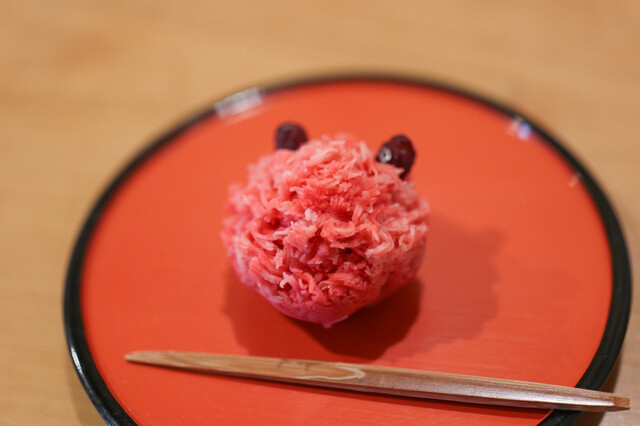
The approach to Naramachi shifts the tempo. Streets narrow, plaster walls and timber fronts replace station-side commerce, and the city’s older domestic scale starts to matter. In that setting, Japanese sweets read differently from a dessert course at the end of a restaurant meal. Wagashi is tied to tea practice, seasonality, gifting, and the small ceremonial pause that sits between sightseeing and dinner. Yorozu Onkashi Atsurae Dokoro Kashiya belongs to that register: a compact sweets house in Nara where the point is not abundance, but compression.
Nara’s dining scene is often read through temple proximity and historic atmosphere, but its stronger tables split into several lanes. There are formal Japanese rooms such as Tsuru Yoshi, casual price-tier specialists such as Poku Poku and Kinari Pizza, and contemporary European-leaning addresses including cucina regionale YANAGAWA and the Spanish-innovative akordu. A wagashi cafe occupies a different competitive frame. It asks less time and less money than a kaiseki meal, but it can say more about Japanese food culture than another generic cafe stop.
Wagashi culture in Nara rewards restraint over spectacle
Japanese confectionery is not merely sweet cooking. Its grammar depends on texture, season, negative space, and the relationship between sugar and bitterness, especially when tea is involved. Kyoto often dominates the conversation for formal tea sweets, but Nara has its own logic: older, calmer, less performative, and closely tied to walking routes through merchant streets and temple districts. The strongest wagashi experiences in this city tend to feel small by design.
That is where the Tabelog 100 selection matters. Yorozu Onkashi Atsurae Dokoro Kashiya was selected for Tabelog 100 in the Japanese traditional sweets and Japanese sweets cafe category for WEST in 2023, with prior Tabelog Sweets WEST selections listed in 2018, 2019, 2020, and 2022. Those signals place it inside a regional sweets conversation rather than a general cafe list. In a category crowded with photogenic shaved ice and casual tea rooms, repeated recognition points to consistency across format, not a single viral item.
The listed categories tell the story cleanly: cafe featuring Japanese sweets, Japanese traditional sweets, and kakigori. That combination is useful for travellers because it covers two modes of Japanese sweets culture. Wagashi carries the formal and seasonal vocabulary; kakigori gives the room a warmer-weather pull and a more relaxed cadence. The idea is not to chase a named signature. The smarter reading is to treat the place as a bridge between confectionery craft and cafe use, especially in a city where visitors often overcommit to lunch and underplan the afternoon pause.
A small tatami room changes the pace of a sweets stop
The room’s scale matters. With 13 seats and tatami seating, this is not a high-volume cafe designed for lingering groups. The format encourages a slower posture and a shorter visit, closer to a tea break than a Western dessert salon. That intimacy also changes expectations: service rhythm, seating comfort, and access can matter as much as what is ordered. The detail that all seats are tatami is not decorative information; it defines who will find the experience easy and who may prefer takeaway.
Price also changes the editorial calculation. At JPY 1,000 to JPY 1,999, the cafe sits below Nara’s formal restaurant tier and even below many multi-course lunch decisions. Compared with Chugokusai Naramachi Kuko or cucina regionale YANAGAWA, this is not a competing meal slot. Compared with Tsuru Yoshi, it operates in another universe entirely. The better comparison is with the city’s affordable specialists, where a narrow format justifies a stop because it expresses something local with discipline.
There is a practical advantage to that positioning. Nara day trips can become overplanned: deer park, temple routes, lunch, train timing, and little space for recovery. A sweets cafe in Naramachi gives structure to the late morning or afternoon without turning the day into another reservation-led itinerary. The format is especially valuable for travellers who want Japanese culinary tradition without committing to a full formal meal.
How to place it in a Nara itinerary
The strongest use case is cultural pacing. Pair a wagashi stop with Naramachi wandering rather than treating it as a dessert add-on after a heavy lunch. The city’s better food day is often built in contrasts: a specialist sweet break, then a more substantial dinner, or a light afternoon before a formal Japanese booking. For broader planning, EP Club’s full Nara restaurants guide maps the restaurant side, while the Nara hotels guide, Nara bars guide, Nara wineries guide, and Nara experiences guide help frame the rest of the trip.
Within Nara, travellers comparing dining moods can look at 37+1 - Sanjuhachi, A VOTRE SANTE (French), Ajinokaze Nishimura (Japanese), Ajinotabibito Roman (Japanese), and akordu (Spanish, Innovative). Those are restaurant decisions; Kashiya is the quieter cultural interlude between them.
For readers building a wider Japan or Japanese-food itinerary, the contrast is useful. -Grilled beef Sukiyaki- KAMAKURA TANUKIAN 鎌倉 たぬき庵 in Kamakura,. 鮪と炭火焼き うお炭 秋葉原店 in Tokyo,.cafe in Osaka,.know in Kumamoto, (Shoku) Vietnam in Kawasaki, and [Curry Senmon Ten] Maruyama Kyoju. in Sapporo show how specialized formats carry local context across regions. Outside Japan, Jōdo Saké Bar in Los Angeles and Onigiri Time in Pasadena underline the same point from abroad: Japanese food culture travels through small formats as much as through formal restaurants.
The editorial read is clear. This is not where to look for a sprawling meal, a chef-driven tasting menu, or a luxury dining room. It is where Nara’s slower confectionery culture becomes legible in a compact setting, with enough recognition to justify prioritising it over an anonymous cafe break. In a city where visitors can confuse old streets with atmosphere alone, a disciplined wagashi stop gives the afternoon a sharper cultural shape.
Pricing, Compared
Nearby venues at a similar price tier for orientation.
| Venue | Cuisine | Price | Awards | Notes |
|---|---|---|---|---|
| Yorozu Onkashi Atsurae Dokoro KashiyaThis venue — the venue you are viewing | $$ | , | ||
| kuruminoki Ichijou ten | $$ | , | Nara, Seasonal Japanese cafe with obanzai lunch and cakes | |
| Miyake Kyukounoiketei Omoteya | Nara, Japanese wagashi café | $$ | , | |
| 滴翠 | $$$ | , | Takabatake, Nara, Health-Focused Japanese Kaiseki | |
| Naramachi Vegan Nabi ならまちヴィーガン菜美 | Nara, Vegan Japanese Omakase | $$ | , | |
| Soba Kiri Momoyo Zuki | Nara, Traditional Soba Noodle Shop | $$ | , |
Continue exploring
More in Nara


Bars in Nara
Browse all →

Hotels in Nara
Browse all →



Wineries in Nara
Browse all →
At a Glance
- Classic
- Cozy
- Hidden Gem
- Intimate
- Solo
- Date Night
- Casual Hangout
- Special Occasion
- Historic Building
- Standalone
- Design Destination
- Local Sourcing
Quiet, traditional tatami-room setting in a restored Nara townhouse, with a calm, contemplative atmosphere that focuses on the craftsmanship of wagashi rather than bustle or chatter.