

Michelin Bib Gourmand · Tabelog 100 #18
Our verdict
Yakitori SANKA holds a 2024 Michelin Bib Gourmand on the second floor of a Kagurazaka building, where a former hairdresser applies the same precision to chicken on skewers that he once applied to scissors. Sourcing from Kochi Prefecture and varying the producing region by cut, he works at the ¥¥ price point in one of Tokyo's most atmospheric dining neighbourhoods.

Pearl is the En Primeur Club membership app, where members save venues, book tables and use the concierge.
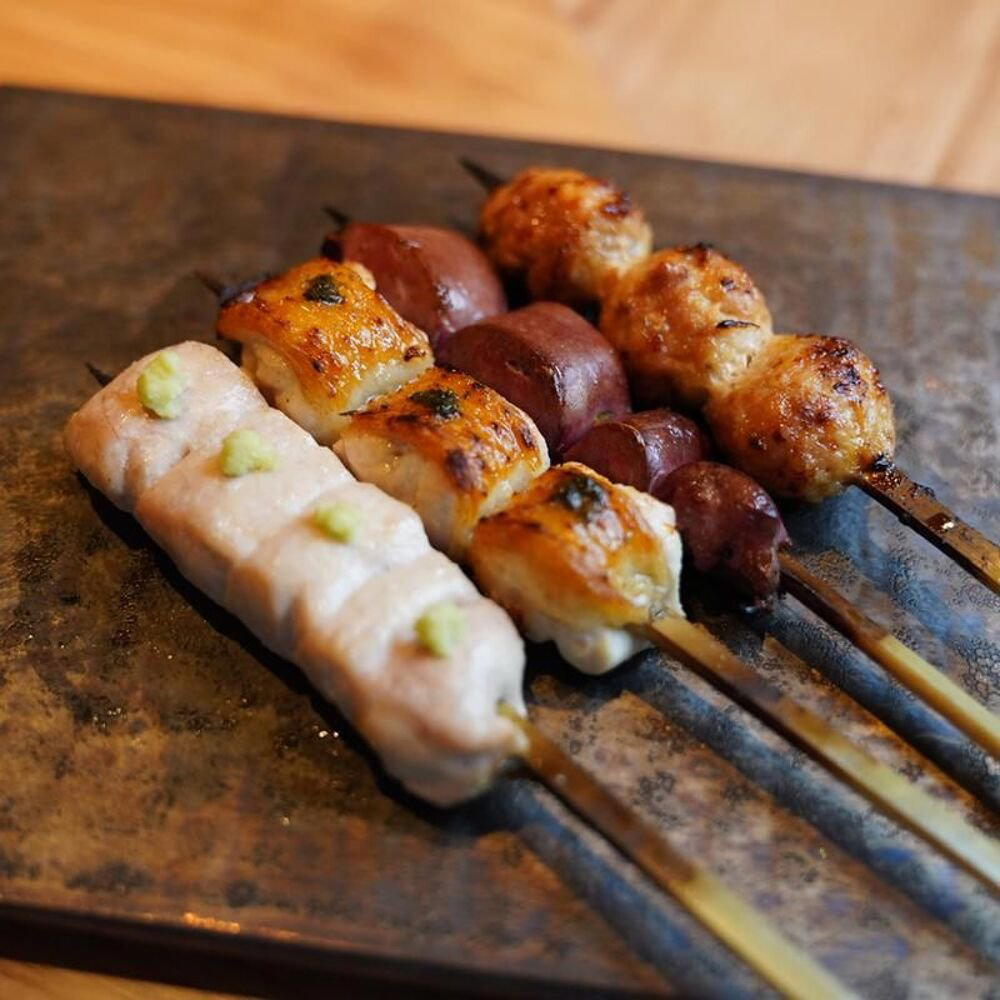
The menu
What to order
- Yakitori course
- Sanka course
- Tosa Jiro charcoal-grilled chicken
- Tosa Hachikin jidori skewers
The Ritual of the Skewer in Kagurazaka
Yakitori is one of the few Japanese dining formats where the counter is the only setting that makes sense. Seated close to the charcoal, watching each skewer positioned and rotated with unhurried attention, the meal operates on its own clock. There is no amuse-bouche, no intermission for a cheese course. Each skewer arrives as its own small event, and the custom is to eat it immediately, while the skin still carries the crackle of direct heat. At this price point, ¥¥, which in Tokyo puts SANKA comfortably within reach compared to the city's omakase-heavy upper tier, the ritual is accessible without being diluted.
Kagurazaka is one of the few Tokyo neighbourhoods where the density of serious cooking at mid-range prices is not coincidental. The area spent decades as a geisha district, and the culture of understated, precisely executed hospitality has translated into a dining scene where small, technically focused restaurants occupy the upper floors of narrow buildings with no signage beyond a discrete placard. SANKA sits on the second floor of the DEAR神楽坂 building at Yaraicho 64-4, consistent with that neighbourhood pattern. For Kagurazaka, 124. KAGURAZAKA offers another reference point in this neighbourhood's concentrated dining offer.
How the Meal Moves
In Tokyo's sharper yakitori rooms, the pacing is set by the chef, not the diner. You do not browse a menu and tick boxes. The sequence of skewers follows the logic of the bird, lighter, more delicate cuts early, richer, fattier pieces in the middle, with a few seasonal variations threaded through. Salt and tare (the house sauce) are applied at the chef's discretion; asking for the other is not offensive, but experienced diners lean toward the chef's read of each cut.
At SANKA, sourcing introduces a further layer of intentionality into that sequence. The chef draws primarily from Kochi Prefecture, a region in Shikoku associated with free-range chicken raised on longer timelines than standard commercial birds. Crucially, the producing region shifts depending on the cut being cooked: breast, thigh, liver, heart, and skin behave differently under heat and carry different fat structures, and the sourcing reflects that. The result is that the progression of skewers maps not just the anatomy of the bird but the geography of Japan's premium poultry regions.
The cutting technique adds another dimension. The chef's background in hairdressing may sound incidental, but the analogy is precise: cutting along muscle fibres, rather than across them, produces skewers that hold together under heat without bunching or toughening. The salt application follows the same logic of evenness that disciplines barbering, distributed rather than spotted, so that each bite carries a consistent seasoning rather than alternating between over-salted and neutral.
Compared to the ¥¥¥¥ end of Tokyo's Japanese dining scene, the kaiseki rooms of a RyuGin, the omakase counters of a Harutaka, SANKA occupies a very different register. Those formats are built around progression, ceremony, and a kitchen brigade working across multiple disciplines. Yakitori at the Bib Gourmand level is a one-person or very small-team discipline, where everything rests on sourcing knowledge, knife precision, and fire management. The Michelin Bib Gourmand specifically recognises this category: cooking of notable quality where the value-to-execution ratio is the editorial point. For Tokyo's yakitori scene more broadly, Yakitori Omino and Asagaya BIRD LAND represent the range of what this format can achieve across the city.
Reading the Room
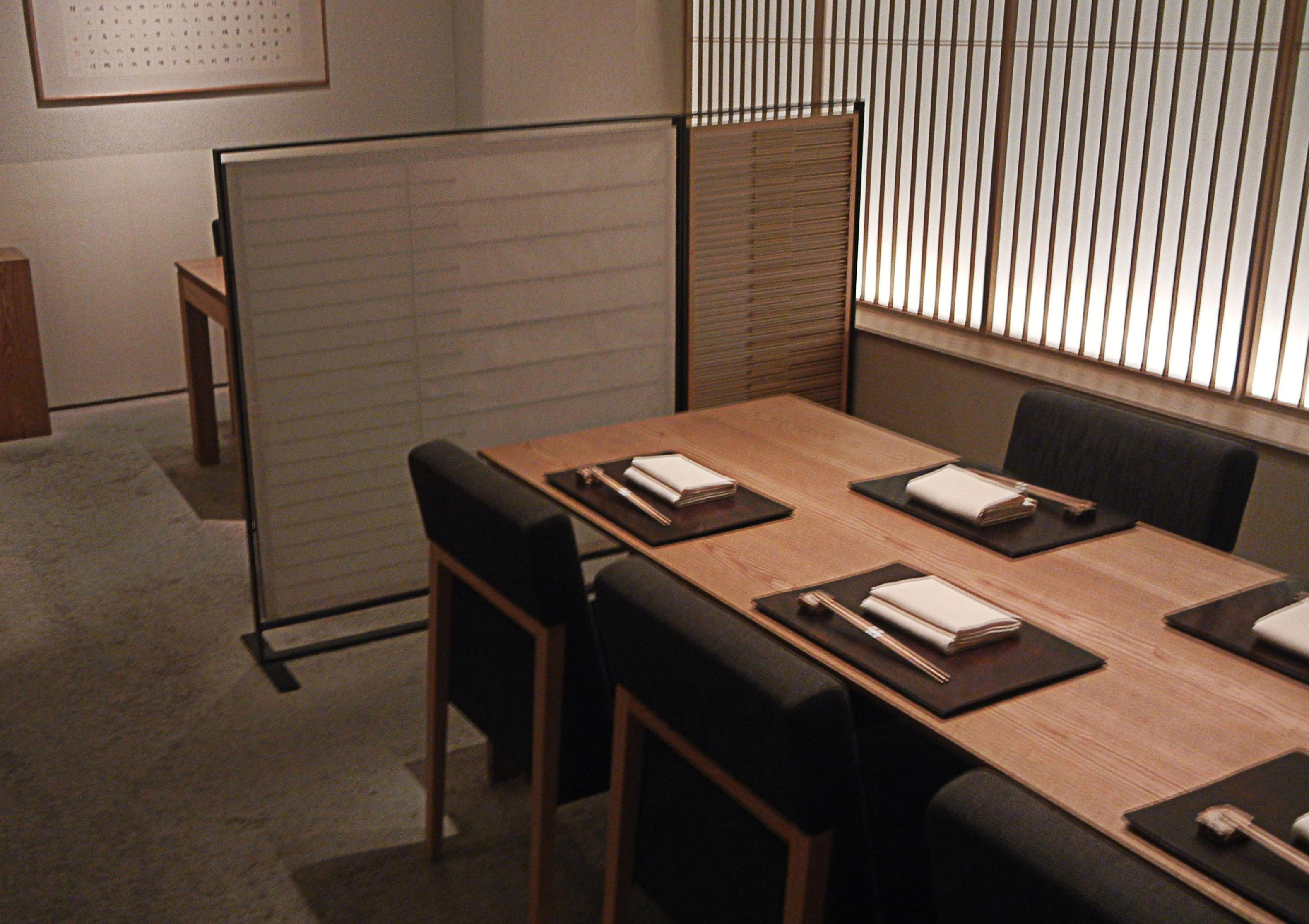
The atmosphere at Kagurazaka yakitori counters is quieter than the standing-room kushiyaki bars of Shinjuku or the high-volume izakaya chains. Conversation happens, but it competes with the sound of the grill, not with a DJ. The format suits solo diners as well as pairs; groups of four or more tend to shift the energy toward the social and away from the attentive, which is the wrong direction for a kitchen working at this level of precision. Arriving without a booking assumption in a neighbourhood where small counters fill quickly would be a miscalculation; the room's capacity and the 2024 Bib Gourmand recognition together make advance reservations the sensible approach.
For those exploring beyond yakitori while in the area, Kagurazaka rewards lateral movement: Aramaki and Aria di Takubo reflect different expressions of the neighbourhood's commitment to focused, technically serious cooking. Tokyo's broader dining ecosystem, from bars to hotels to the city's wider restaurant range, is mapped in our full Tokyo restaurants guide, our full Tokyo bars guide, and our full Tokyo hotels guide.
For those building a longer Japan itinerary, the yakitori tradition extends well beyond Tokyo. Ichimatsu in Osaka and Torisaki in Kyoto represent the format in Japan's two other major culinary cities. Broader itinerary options across Japan are covered in guides for HAJIME in Osaka, Gion Sasaki in Kyoto, akordu in Nara, Goh in Fukuoka, 1000 in Yokohama, and 6 in Okinawa. Tokyo's own wine-focused experiences and broader travel resources are indexed in our full Tokyo wineries guide and our full Tokyo experiences guide.
Know Before You Go
- Address: DEAR神楽坂 2F, Yaraicho 64-4, Shinjuku City, Tokyo
- Cuisine: Yakitori
- Price range: ¥¥
- Awards: Michelin Bib Gourmand 2024
- Getting there: Kagurazaka Station (Tokyo Metro Tozai Line) is the closest access point; the neighbourhood is walkable from Iidabashi Station on multiple lines
- Booking: No booking data confirmed; given the Bib Gourmand recognition and small-counter format, advance reservation is strongly advisable
- Phone / Website: Not publicly listed, check via Tableall, Omakase, or local concierge
Frequently asked questions
Is Yakitori SANKA suitable for children?
What should I expect atmosphere-wise at Yakitori SANKA?
What should I order at Yakitori SANKA?
Price and Positioning
| Venue | Cuisine | Price | Awards | Notes |
|---|---|---|---|---|
| Yakitori SANKAThis venue (the venue you are viewing) | Yakitori | Not listed | Michelin Bib Gourmand · Tabelog 100 #18 | Not listed |
| Harutaka | Edo-Style Omakase Sushi | $200–300 | 3 Michelin Stars · World's 50 Best #76 | Sushi |
| RyuGin | Modern Kaiseki | $500+ | 3 Michelin Stars · World's 50 Best #41 | Kaiseki, Japanese |
| L'Effervescence | Modern French with Japanese Influences | $200–300 | 3 Michelin Stars · World's 50 Best #69 | French |
| HOMMAGE | Modern French with Japanese Influences | $150–200 | 2 Michelin Stars · World's 50 Best #78 | Innovtive French, French |
| MAZ | Innovative Peruvian-Japanese Fusion | $150–200 | 2 Michelin Stars · World's 50 Best #28 | Innovative |
Recognition history
Dated appearances from independent guides and award organizations, with the underlying list record or original source where available.
Michelin Bib Gourmand
Michelin
Tabelog 100 #18 · No. 18
Tabelog · Tabelog 100 - Yakitori - EAST - 2025
Full recognition history (3 entries)
Michelin Bib Gourmand
Michelin
Continue exploring
More in Tokyo
Restaurants in Tokyo
All restaurants in Tokyo →


Bars in Tokyo
All bars in Tokyo →






Details
- Cozy
- Intimate
- Sophisticated
- Date Night
- Business Dinner
- Special Occasion
- Celebration
- Solo
- Chefs Counter
- Standalone
- Local Sourcing
- Set Menu
- Counter Dining
Current opening hours
- Monday
- Closed
- Tuesday
- 5:30–11 PM
- Wednesday
- 5:30–11 PM
- Thursday
- 5:30–11 PM
- Friday
- 5:30–11 PM
- Saturday
- 5–11 PM
- Sunday
- Closed
Hours can change for holidays and private events. Hours as of .
A cozy, intimate counter-only setting with a focused, refined atmosphere.