Westville Hells Kitchen
Westville Hell's Kitchen occupies a second-floor perch on 9th Avenue, placing it inside one of Midtown's most densely populated restaurant corridors. The Westville group built its reputation across Manhattan on a market-driven vegetable-forward approach that sits at a distinct remove from the fine-dining tier dominating nearby. For a neighbourhood where turnover is high, the brand's multi-location longevity says something about consistent positioning.
Pearl is the En Primeur Club membership app — saves, bookings, and concierge access live there. Same editors, same standards.
- Address
- 809 9th Ave 2nd floor, New York, NY 10019
- Phone
- +12129242202
- Website
- westvillenyc.com
- Directions
- Get directions
 Saves & bookings on Pearl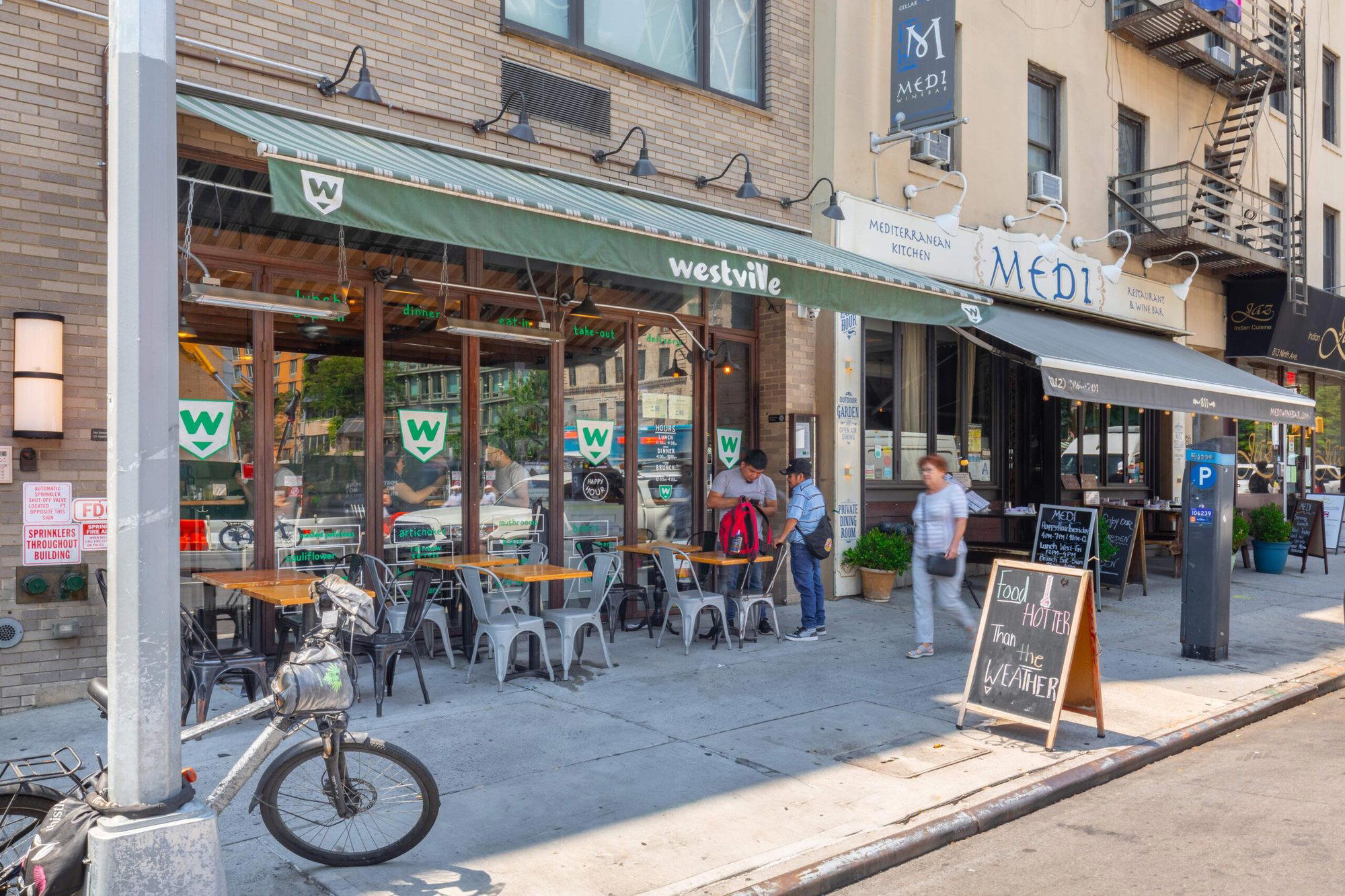
9th Avenue and the Casual Counter-Programming to Midtown's Fine-Dining Axis
Westville Hell's Kitchen is a casual restaurant in New York City serving American Comfort Food with Fresh Market Vegetables. The stretch of 9th Avenue running through the 40s and 50s now holds enough density, Thai, Mexican, American, Japanese, that the block functions less as a destination and more as a local dining infrastructure. Inside that ecosystem, Westville Hell's Kitchen occupies a specific niche: a second-floor room at 809 9th Avenue that trades on the brand's established vegetable-forward identity rather than on any single-location cult status. That positioning matters, because Hell's Kitchen as a whole has always served a dual population of theatre-adjacent tourists and working residents, and a brand with a proven format across multiple Manhattan addresses has a structural advantage over independent operators starting from zero.
Westville's format has carried across Manhattan locations, including the West Village, the East Village, the Upper East Side, and Hell's Kitchen. Each address has carried the same foundational idea: a rotating market board of vegetables treated as main-event rather than garnish, alongside direct American plates. In a city where casual-dining operators often fragment across brand identities as they grow, Westville's consistency of format across locations is the thing most worth noting. When the Hell's Kitchen outpost opened on the second floor of 809 9th Avenue, it inherited that accumulated identity rather than having to construct one independently.
How the Format Has Shifted as the Brand Has Grown
The evolution of any multi-location casual brand in New York involves a tension between maintaining the intimacy of its original format and absorbing the operational demands of scale. Westville's original West Village location built its following on a produce-led menu that felt more aligned with greenmarket sourcing culture than with the burger-and-cocktail casual dining that dominated its price tier through the 2000s. That was a meaningful distinction when it was established; by the time the Hell's Kitchen location arrived, the vegetable-forward positioning had moved from counter-cultural to mainstream, with competitors across every borough adopting similar language.
What the Hell's Kitchen outpost represents, then, is less a reinvention and more a consolidation. The second-floor space on 9th Avenue serves a neighbourhood that had already absorbed considerable dining investment, particularly as the Theatre District's pre-show economy pushed restaurant operators to develop formats that could handle high turnover before 8pm curtains. A casual, produce-heavy American menu with a known brand behind it fits that operational brief without requiring the kind of destination marketing that a new independent would need. For the reader comparing options in this corridor, that context is useful: Westville here is performing a different function than it did as a Village original.
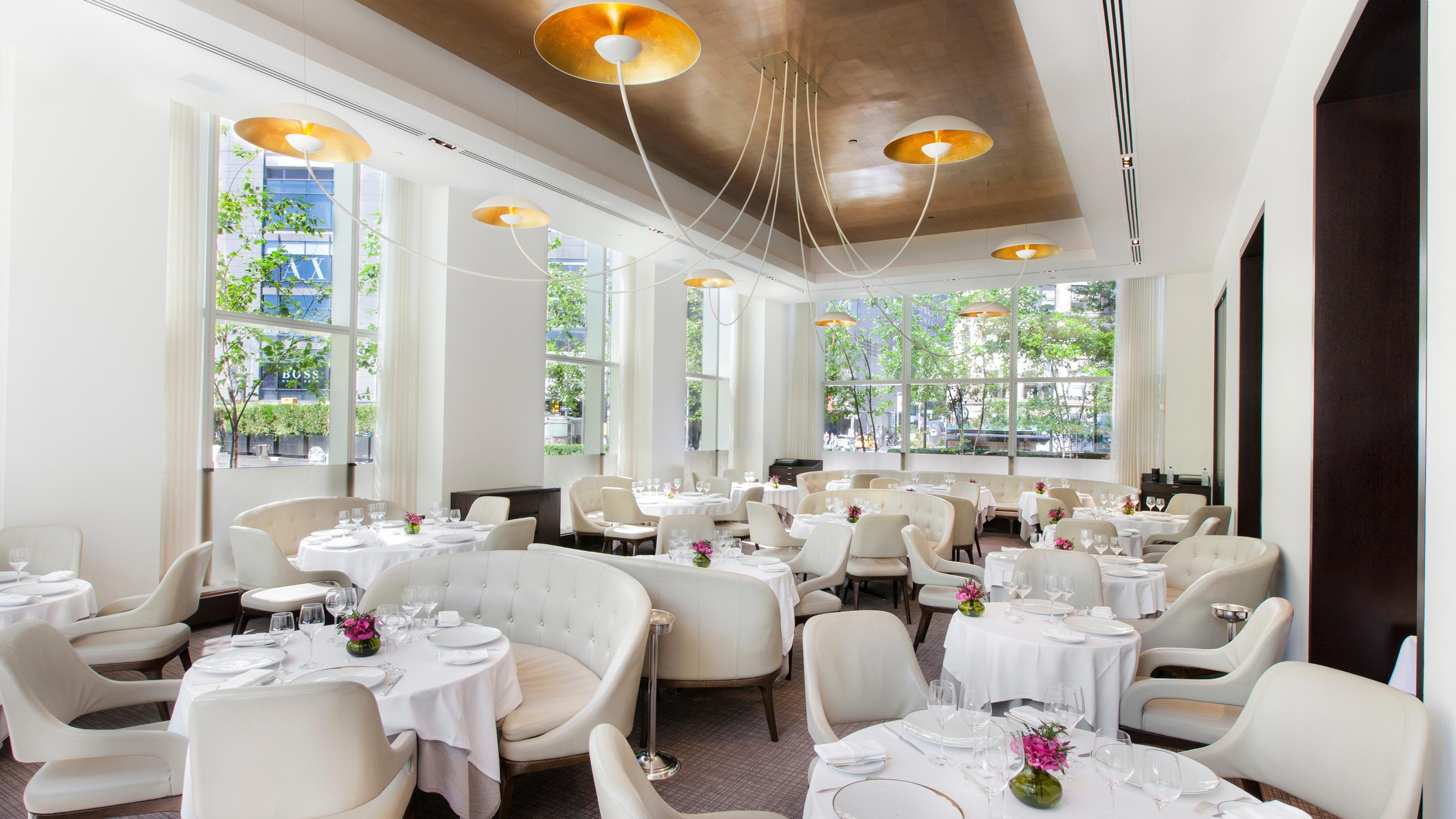
The contrast with the fine-dining tier anchored in Midtown's adjacent blocks is instructive. Restaurants like Le Bernardin, Per Se, and Masa operate at a price point and formality level that positions them in an entirely different competitive set. Similarly, modern Korean tasting-menu houses like Atomix and Jungsik New York serve a different function entirely. Westville sits in the tier below all of these: accessible pricing, walk-in friendly, daily-use rather than occasion-use. That is a smaller ambition in one sense and a more demanding one in another, because it has to earn repeat visits from people who could easily eat elsewhere on the same block without planning anything in advance.
What the Vegetable-Forward Positioning Actually Means in Practice
Across American casual dining, the language of vegetable-forward and market-driven has become so common that it risks losing informational content. The Westville group's version predates much of that inflation, which gives it a degree of historical credibility in the category even if the category itself has grown crowded. The practical expression, a rotating selection of vegetable sides that function as a build-your-own plate option, was distinctive enough when it debuted that it generated a genuine following among New Yorkers who wanted flexibility without the cognitive overhead of a long menu.
That format has influenced how the Hell's Kitchen location functions day-to-day. The second-floor setting separates it physically from the street-level noise of 9th Avenue, which has some bearing on the dining experience relative to ground-floor neighbours. The second-floor setting separates it physically from the street-level noise of 9th Avenue. What can be said is that second-floor casual dining in New York tends to attract a slightly more deliberate visit rather than a pure impulse walk-in, since the physical commitment of going upstairs filters the audience somewhat.
Locating Westville in the Wider American Casual Scene
The vegetable-forward casual model that Westville represents has counterparts across the United States, though most operate at different price tiers or with more explicit farm-to-table credentialing. At the ambitious end of American ingredient-focused dining, properties like Blue Hill at Stone Barns in Tarrytown and Single Thread Farm in Healdsburg make provenance the explicit subject of the meal. Further down the formality register, the same commitment to produce sourcing shows up in entirely different formats: Lazy Bear in San Francisco, Alinea in Chicago, and Providence in Los Angeles each reflect regional takes on ingredient-led ambition at high price points. Westville operates nowhere near that tier, but it occupies a position that matters because of its accessibility: it carries the produce-forward idea into daily-use territory where most New Yorkers actually eat most of the time.
Elsewhere in the country, the model finds expression through operators like Emeril's in New Orleans, Bacchanalia in Atlanta, and Addison in San Diego, all of which incorporate seasonal sourcing at their respective price tiers. Internationally, the conversation around vegetable-forward cooking has reached a different register entirely at places like 8 1/2 Otto e Mezzo Bombana in Hong Kong and Alain Ducasse at Louis XV in Monte Carlo, where produce sourcing is a luxury signal rather than a democratising one. The distance between those reference points and Westville Hell's Kitchen is the distance between occasion dining and neighbourhood infrastructure, and the latter is, harder to sustain across multiple years and multiple addresses.
Planning Your Visit
Address: 809 9th Avenue, 2nd Floor, New York, NY 10019. Reservations are recommended. The restaurant is open Monday through Friday from 11:30 AM to 10 PM, Saturday from 10 AM to 4 PM and 5 PM to 10 PM, and Sunday from 10 AM to 4 PM and 5 PM to 10 PM.
- Market Plate
- Turkey Burger
- Chicken Parmesan
- Mac and Cheese
- Grilled Cheese
- Lemon Herb Salmon
Similar Picks
Comparable venues nearby, for context on price, style, and recognition.
| Venue | Cuisine | Price | Notes |
|---|---|---|---|
| Westville Hells KitchenThis venue — the venue you are viewing | American Comfort Food with Fresh Market Vegetables | $$ | Not listed |
| Planet Hollywood New York | Classic American | $$ | Midtown-Times Square |
| Serendipity 3 - Upper East Side | Well-known American Desserts & Comfort Food | $$ | Upper East Side-Lenox Hill-Roosevelt Island |
| Honeybrains | Healthy American Neuroscience-Inspired | $$ | Greenwich Village |
| Egg | Egg-Centric American Cafe | $$ | Williamsburg |
| Malibu Farm | California Farm-to-Table | $$ | Financial District-Battery Park City |
Continue exploring
More in New York City
Restaurants in New York City
Browse all →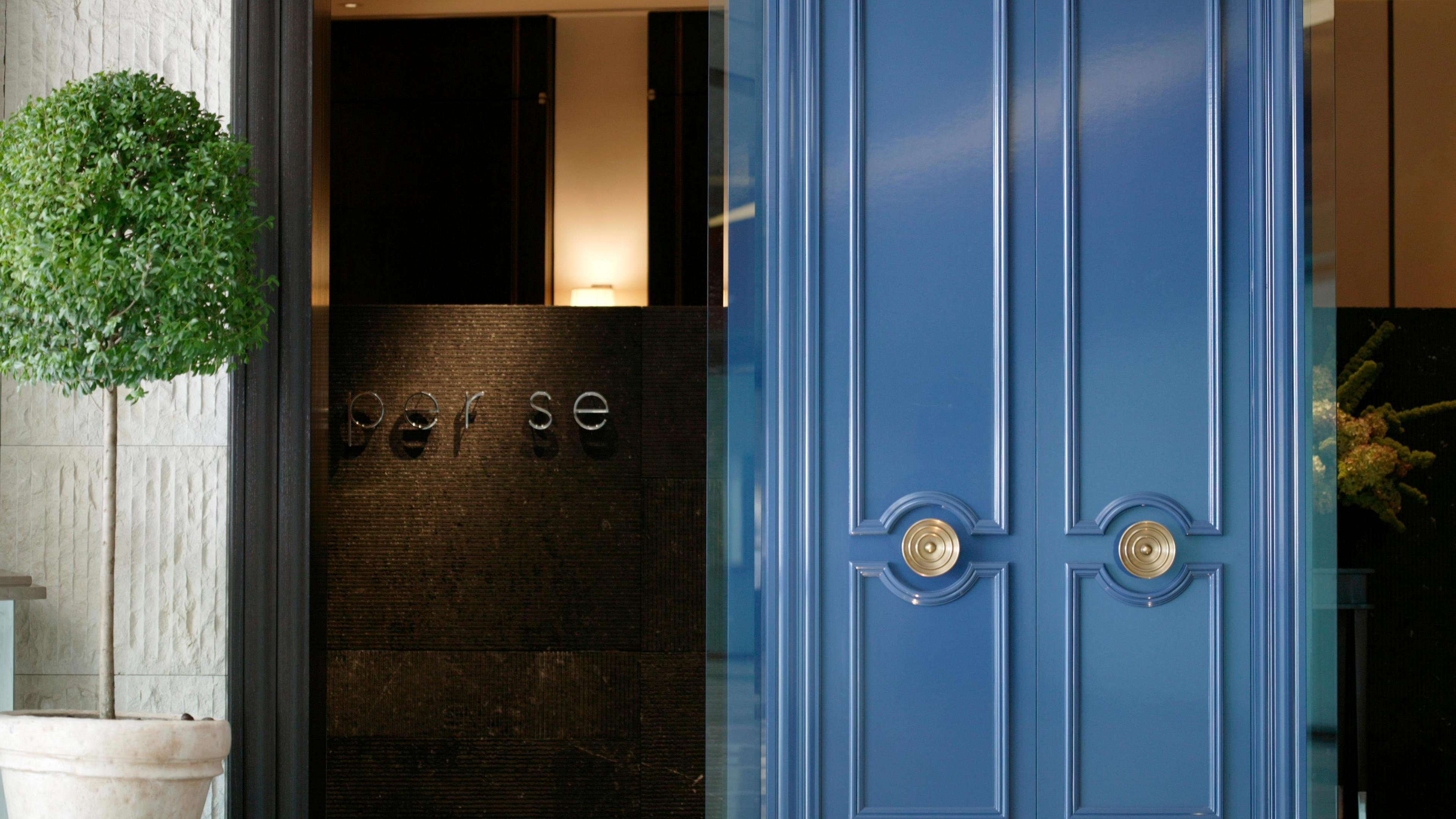
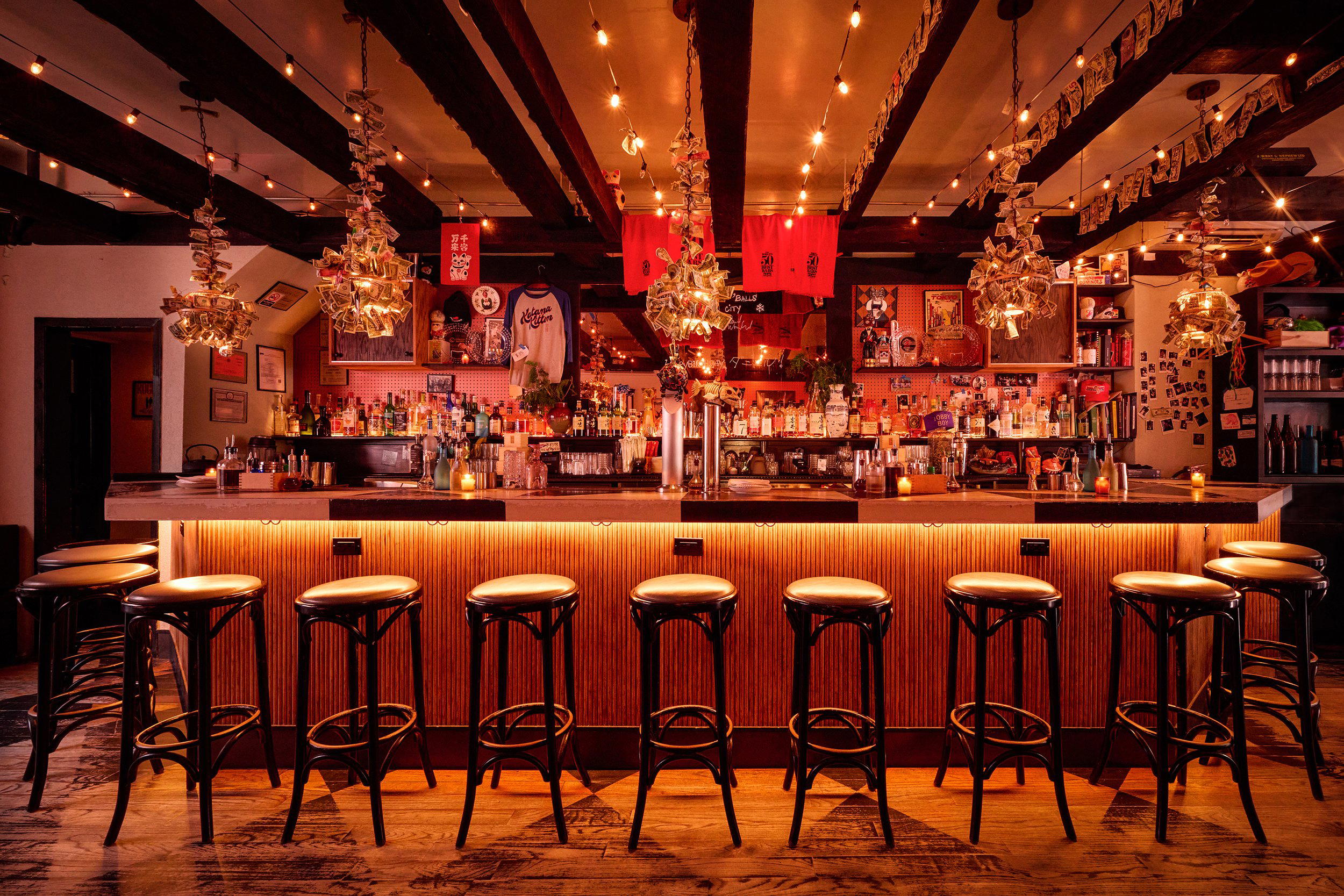
Bars in New York City
Browse all →

Hotels in New York City
Browse all →





At a Glance
- Cozy
- Rustic
- Casual
- Brunch
- Casual Hangout
- Family
- Group Dining
- Standalone
- Farm To Table
Current opening hours
- Monday
- 11:30 AM–10 PM
- Tuesday
- 11:30 AM–10 PM
- Wednesday
- 11:30 AM–10 PM
- Thursday
- 11:30 AM–10 PM
- Friday
- 11:30 AM–10 PM
- Saturday
- 10 AM–4 PM, 5–10 PM
- Sunday
- 10 AM–4 PM, 5–10 PM
Hours can change for holidays and private events. Last verified .
Warm and relaxed neighborhood atmosphere with rustic vibes and pleasant lighting; gets busy during peak hours but maintains friendly service.