Planet Hollywood New York
Planet Hollywood New York on West 42nd Street sits at the intersection of Times Square entertainment culture and the American theme-dining format that defined the 1990s. Part of the Hollywood-branded chain that built its identity around film memorabilia and celebrity association, it remains a reference point for understanding how spectacle-driven dining took hold in one of the world's most commercially intense restaurant districts.
Pearl is the En Primeur Club membership app — saves, bookings, and concierge access live there. Same editors, same standards.
- Address
- 136 W 42nd St, New York, NY 10036
- Phone
- +12123337827
- Website
- planethollywoodnyc.com
- Directions
- Get directions
 Saves & bookings on Pearl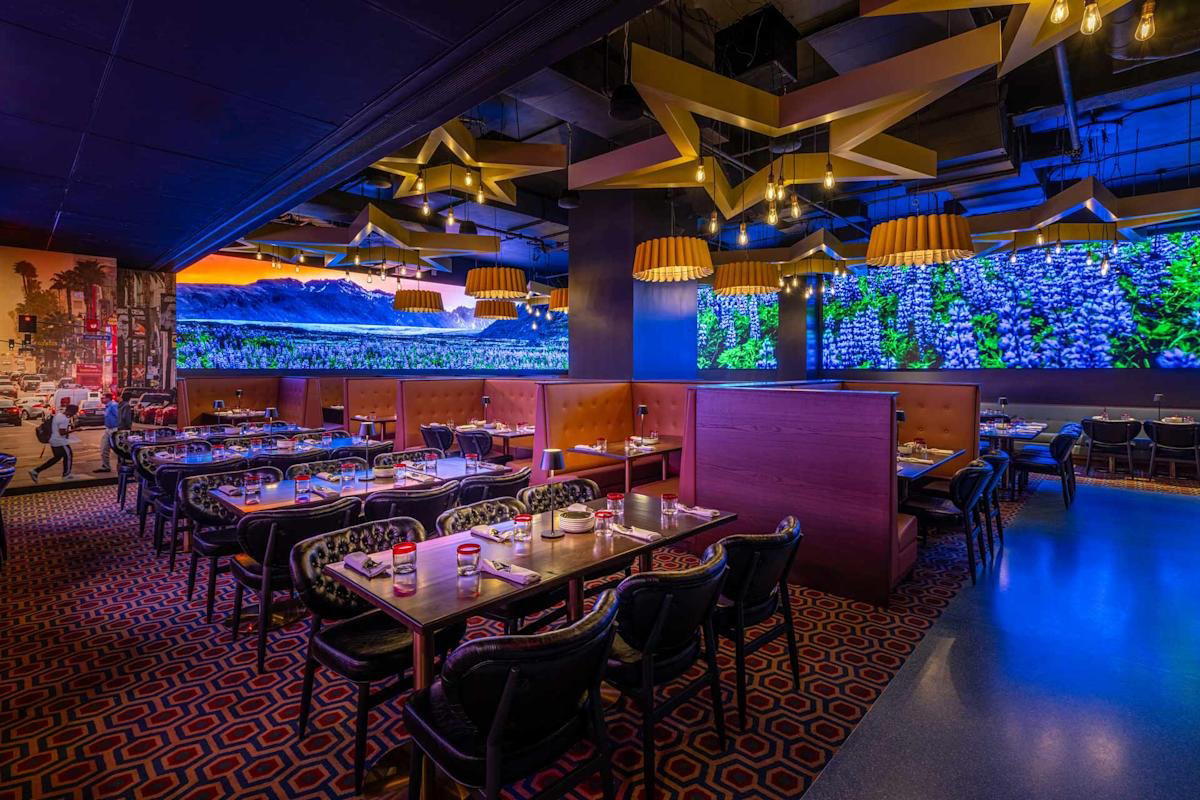
Times Square and the Architecture of Spectacle Dining
The Times Square location on West 42nd Street was not an accident of real estate: the block sits at the commercial and symbolic centre of one of the highest-footfall corridors in the United States, where the boundaries between retail, tourism, and hospitality have always been deliberately blurred. What Planet Hollywood represented, at that moment, was the thesis that a restaurant's primary currency could be atmosphere and association rather than culinary precision. That argument shaped an entire category of American dining, and its echoes are still visible in how Times Square's hospitality strip operates today.
The chain model that Planet Hollywood exemplified placed memorabilia, celebrity brand equity, and theatrical interiors ahead of kitchen investment. This was a deliberate menu architecture: the food existed to justify the room rather than the other way around. Understanding that inversion is essential to placing the venue in any honest critical context. The question the format asks is not what is on the plate but what the plate is doing inside a broader experience economy. Le Bernardin and Per Se represent the opposite pole, where the menu is the entire argument and the room is built to serve it.
Menu Structure as Concept Signal
Theme restaurant menus from the 1990s onward followed a recognisable architecture: broad American comfort categories (burgers, sandwiches, pasta, appetiser platters), accessible price points calibrated to tourist budgets, and portion sizes scaled for the expectation of value-over-refinement. The format was designed to eliminate decision fatigue for a transient audience with no prior relationship to the city's dining culture. This is structurally different from the tasting menu logic at Atomix or the omakase discipline at Masa.
What a menu structured around entertainment rather than cuisine tells you is that the kitchen is not the creative centre of the operation. The creative centre is the room: the rotating memorabilia, the branded merchandise retail, the association with Hollywood production and celebrity culture. This is not a criticism distinctive to Planet Hollywood; it is a description of the format it pioneered. Venues like Alinea in Chicago have since demonstrated that theatrical experience and culinary seriousness can coexist.
The 1990s Chain Boom and What It Built
Planet Hollywood's founding moment coincided with a specific cultural window: celebrity co-ownership as a branding mechanism, the commercialisation of Times Square under the urban renewal projects of the mid-1990s, and a national appetite for entertainment complexes that collapsed the distinction between restaurant, museum, and gift shop. The format spread rapidly across major American tourist cities. Emeril's in New Orleans represented a parallel but chef-led version of celebrity dining during the same era, where the brand was built around a named kitchen authority rather than Hollywood IP. The contrast between the two models illustrates how differently the 1990s dining boom resolved itself: one track led toward chef-driven destination restaurants, the other toward branded entertainment formats.
The celebrity-ownership model that Planet Hollywood used (its original stakeholders included Arnold Schwarzenegger, Sylvester Stallone, and Bruce Willis) was genuinely novel at its launch. It also proved fragile: the chain filed for bankruptcy in 1999 and again in 2001 before restructuring. That instability was partly a function of the format's dependence on novelty. Once the memorabilia became familiar and the celebrity association faded from the news cycle, there was limited culinary or experiential reason to return. The restaurants that have demonstrated longevity in New York, whether the multi-decade presence of Blue Hill at Stone Barns in the wider region or the sustained critical recognition of Jungsik New York, have done so by building the return visit around the food itself.
Where It Sits in the New York Context
New York's restaurant geography sorts itself fairly clearly by neighbourhood and by the type of diner each area draws. Times Square runs on international tourist volume, pre-theatre traffic, and the convention trade from Midtown hotels. The dining options in this corridor are calibrated accordingly: large format, tolerant of high turnover, oriented toward recognisable categories. This is not the environment that produces the kind of destination dining covered in depth at our full New York City restaurants guide, but it serves a distinct and genuinely large audience that has its own legitimate requirements from a night out.
For travellers whose primary destination is Times Square itself, Planet Hollywood functions as a legible, low-risk option in a block where navigating an unfamiliar menu in an unfamiliar city is not what most visitors want to do. That is a real hospitality function, even if it sits far outside the culinary tradition represented by Providence in Los Angeles, The French Laundry in Napa, or Addison in San Diego at the other end of the American fine dining spectrum.
Planning Your Visit
| Venue | Cuisine Focus | Price Tier | Booking Lead Time | Format |
|---|---|---|---|---|
| Planet Hollywood New York | American comfort/theme | Mid-range (tourist corridor) | Walk-in or same-day | Theme dining, entertainment |
| Le Bernardin | French seafood | $$$$ | Weeks in advance | Fine dining, tasting menu |
| Atomix | Modern Korean | $$$$ | Months in advance | Omakase-style counter |
| Masa | Japanese sushi | $$$$ | Months in advance | Omakase counter |
| Per Se | French contemporary | $$$$ | Weeks in advance | Tasting menu |
Planet Hollywood New York is located at 136 West 42nd Street, within walking distance of Times Square, Bryant Park, and the main Midtown hotel cluster. The format is walk-in accessible by nature, which suits a venue serving the Times Square tourist corridor. For travellers building a broader New York itinerary that includes serious restaurant meals, note that the venues at the upper end of the city's culinary register, from Single Thread Farm in Healdsburg to The Inn at Little Washington and Bacchanalia in Atlanta for regional comparison, require advance planning of a different order entirely.
Peers in This Market
Comparable venues nearby, for context on price, style, and recognition.
| Venue | Cuisine | Price | Notes |
|---|---|---|---|
| Planet Hollywood New YorkThis venue — the venue you are viewing | Classic American | $$ | Not listed |
| Pies ’n’ Thighs | Southern Fried Chicken & Pies | $$ | Prospect Heights |
| The Grey Dog, Flatiron | American Comfort Food & Brunch | $$ | Midtown South-Flatiron-Union Square |
| Tipsy Scoop | Boozy Ice Cream & Cocktail Barlour | $$ | Murray Hill-Kips Bay |
| Viand | Classic American Diner | $$ | Upper East Side-Carnegie Hill |
| Two Boots Pizza East Village | Cajun-Italian Fusion Pizza | $$ | East Village |
Continue exploring
More in New York City
Restaurants in New York City
Browse all →
Bars in New York City
Browse all →
Hotels in New York City
Browse all →





At a Glance
- Lively
- Energetic
- Well Known
- Trendy
- Group Dining
- Family
- Celebration
- Casual Hangout
- Live Music
- Craft Cocktails
Current opening hours
- Monday
- 11:30 AM–10 PM
- Tuesday
- 11:30 AM–10 PM
- Wednesday
- 11:30 AM–10 PM
- Thursday
- 11:30 AM–10 PM
- Friday
- 11:30 AM–11 PM
- Saturday
- 11:30 AM–11 PM
- Sunday
- 11:30 AM–10 PM
Hours can change for holidays and private events. Last verified .
High-energy atmosphere with interactive screens, dazzling lights, and innovative technology evoking Hollywood magic.