Honeybrains
Our verdict
Honeybrains at 372 Lafayette Street occupies a distinctive position in SoHo's casual dining circuit, where the menu is built around brain-health science rather than conventional culinary tradition. The concept bridges the gap between nutritionally rigorous eating and genuine flavor, a combination that has found a loyal following in a neighborhood that rewards both intellectual credibility and good food.

Pearl is the En Primeur Club membership app, where members save venues, book tables and use the concierge.

SoHo's Nutritional Precision, Served Without Apology
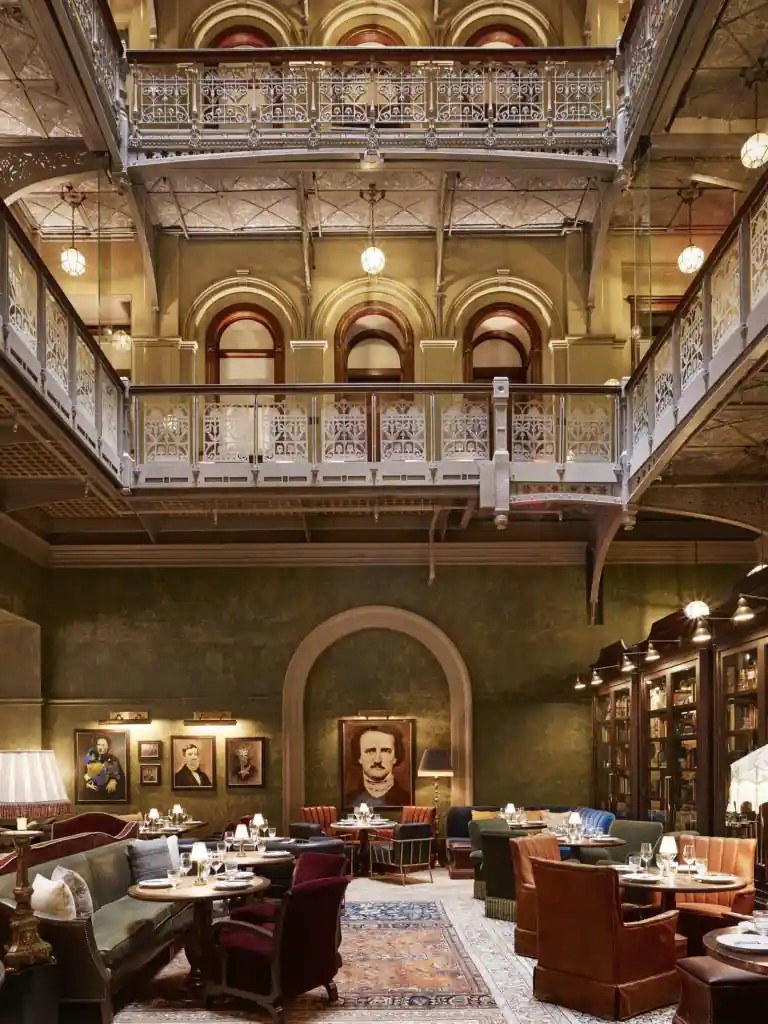
Lafayette Street in SoHo runs through one of New York's most commercially dense corridors, a stretch where the pressure to perform is built into the rent. The restaurants and cafes that hold ground here tend to do so by occupying a clear, defensible position rather than trying to compete across every dimension. Honeybrains, at 372 Lafayette St, has built that position around something relatively rare in American casual dining: a menu organized explicitly around cognitive and metabolic health, without retreating into the aesthetic austerity that health-driven concepts so often default to. The result is a dining room that reads as purposeful rather than prescriptive.
New York's wellness-dining tier has expanded considerably over the past decade, and it now splits roughly between two models. The first is performative restraint, raw, cold-pressed, and aggressively virtuous. The second is integration: the idea that nutritional density and culinary appeal can occupy the same plate. Honeybrains sits firmly in the second camp, and that positioning choice shapes everything from the sourcing logic to the way the room is designed to be used across multiple dayparts.
The Collaboration That Runs the Room
In any venue where the concept carries significant intellectual weight, and brain-health nutrition is a legitimately demanding subject, the dynamic between the kitchen and the front of the house becomes unusually consequential. At Honeybrains, that dynamic is structured around education as much as service. The team's job is not merely to take orders but to translate a menu built on specific dietary science into something a guest at any level of nutritional literacy can approach with confidence.
This kind of floor work requires a different skill set than traditional hospitality. The sommelier at a destination fine-dining counter like Le Bernardin is navigating a guest through a wine list built on decades of institutional knowledge; the service team at a concept-driven venue like Honeybrains is doing something adjacent but distinct: translating functional science into plain language without flattening the integrity of the concept. Whether that translation is consistently executed depends on training depth and staff retention, two variables that tend to differentiate concept-led venues from their more transactional competitors over time.
The kitchen's side of that collaboration involves sourcing and formulation decisions that are less visible to the guest but no less deliberate. Brain-health-focused menus typically prioritize omega-3-rich proteins, anti-inflammatory fats, complex carbohydrates, and low-glycemic sweeteners, ingredients that require more considered supplier relationships than a standard casual menu. In cities like New York, where supply chains are deep and specialty sourcing is competitive, this is achievable; the discipline lies in maintaining it consistently rather than treating it as a marketing position.
Where Honeybrains Sits in the New York Casual Dining Circuit
The $$$$ tier in New York is occupied by counters like Masa, Per Se, and Atomix, venues where price is directly indexed to formal culinary achievement, chef pedigree, and service architecture. Honeybrains operates in a different register entirely: a daytime-anchored, accessible format where the value proposition is functional rather than ceremonial. Comparing it to Jungsik New York would be a category error.
SoHo draws a high density of creative professionals, internationally mobile visitors, and residents who treat food choices as an extension of a broader lifestyle framework. A venue on Lafayette Street has access to that audience in a way that a comparable concept in a purely residential neighborhood would not. The foot traffic is self-selecting to a degree, which reduces the marketing burden and increases the probability of guests who already have some framework for understanding what brain-health eating actually means.
The casual dining wellness segment has also attracted serious operators in other American cities. Venues like Lazy Bear in San Francisco and mission-oriented farm-to-table programs like Blue Hill at Stone Barns outside New York have demonstrated that conceptual discipline, knowing exactly what you are and refusing to dilute it, produces durable reputations. The principle scales down as well as up. A cafe-format venue with clear intellectual architecture can hold a position as securely as a tasting-menu destination, provided the concept is genuinely executed rather than merely branded.
Planning Your Visit
Honeybrains is located at 372 Lafayette Street, SoHo, New York City. For visitors building a broader New York dining itinerary, see our full New York City restaurants guide. For reference, the table below positions Honeybrains against nearby fine-dining and concept-driven venues by format and booking approach.
| Venue | Format | Price Tier | Booking Required |
|---|---|---|---|
| Honeybrains | Casual / Daytime Concept | Accessible | Walk-in likely |
| Le Bernardin | Fine Dining / Tasting Menu | $$$$ | Advance booking essential |
| Per Se | Fine Dining / Tasting Menu | $$$$ | Weeks to months ahead |
| Atomix | Progressive / Counter | $$$$ | Advance booking essential |
| Jungsik New York | Progressive / À la carte | $$$$ | Recommended in advance |
Other reference points for concept-driven American dining include Alinea in Chicago, Single Thread Farm in Healdsburg, The French Laundry in Napa, Providence in Los Angeles, Addison in San Diego, Emeril's in New Orleans, Bacchanalia in Atlanta, and The Inn at Little Washington. For international context, see 8½ Otto e Mezzo Bombana in Hong Kong and Alain Ducasse at Louis XV in Monte Carlo.
Frequently asked questions
Where do I go for Honeybrains?
Honeybrains is located at 372 Lafayette St, New York, NY 10012, New York City.
What makes Honeybrains different from other health-focused restaurants in SoHo?
Most health-oriented venues in New York operate under broad wellness framing, clean eating, plant-forward, organic sourcing, without committing to a single, definable axis. Honeybrains narrows that considerably: brain health as the organizing principle is a more science-specific claim than general wellness, requiring the menu to cohere around ingredients and formulations that support cognitive function specifically. That specificity, centered at 372 Lafayette Street in SoHo, is what separates it from the wider category of New York health cafes.
What should I order at Honeybrains?
The menu at Honeybrains, located at 372 Lafayette Street in SoHo, is organized around brain-health ingredients rather than conventional cafe categories. The most direct strategy is to ask staff which dishes are currently emphasized as the kitchen's nutritional focus, the concept is specific enough that the team tends to be informed advocates for what they serve. Avoid defaulting to the safest-looking option; the concept rewards engagement with its more purposeful choices.
Should I book Honeybrains in advance?
Honeybrains operates as a daytime-oriented, casual concept in SoHo, which places it in a different booking tier than the reservation-required fine-dining rooms along the same Manhattan corridor. Walk-in access is the more likely scenario here, though Lafayette Street draws consistent foot traffic from both locals and visitors, so arriving at off-peak hours, mid-morning or mid-afternoon, is the practical hedge.
What do critics highlight about Honeybrains?
What the broader conversation around concept-driven casual dining in New York tends to focus on is coherence: whether the organizing principle, in this case, brain-health nutrition, is actually legible in what arrives at the table, rather than functioning as marketing framing applied to a generic menu. That is the test worth applying when assessing coverage of venues like Honeybrains at 372 Lafayette Street.
How does Honeybrains handle allergies?
A menu structured around specific nutritional criteria, as Honeybrains' is, tends to require more granular ingredient tracking than a standard casual cafe kitchen, which works in the diner's favor when allergy questions arise. The specificity of the concept at least suggests the kitchen engages with ingredient-level detail more deliberately than most.
Is Honeybrains worth it?
At a concept-driven casual venue in SoHo, value is almost entirely a function of alignment: if the organizing principle, brain-health nutrition as a specific, science-facing discipline, maps onto something you're actively thinking about, Honeybrains at 372 Lafayette Street delivers a level of conceptual focus that most New York cafes don't attempt. If you're looking for straightforward neighborhood dining, the concept adds a layer of intentionality that may feel like overhead rather than benefit.
How It Stacks Up
Comparable venues nearby, for context on price, style, and recognition.
| Venue | Cuisine | Price | Notes |
|---|---|---|---|
| HoneybrainsThis venue (the venue you are viewing) | Healthy American Neuroscience-Inspired | $10–20 | Not listed |
| Pies ’n’ Thighs | Southern Fried Chicken & Pies | $20–30 | Prospect Heights |
| Cafe Skye | Elevated American Bar Food | $20–30 | Lower East Side |
| The Tippler | American Bar Snacks & Cocktails | $30–50 | Chelsea-Hudson Yards |
| Westville Dumbo | Market-Driven American Comfort Food | $20–30 | Downtown Brooklyn-DUMBO-Boerum Hill |
| District Tap House | American Gastropub | $20–30 | Midtown-Times Square |