Wan's Cantonese serves classic Cantonese seafood and dim sum at 296-298 Victoria Street in Darlinghurst, with sustainable seafood and a smart casual setup.
Pearl is the En Primeur Club membership app — saves, bookings, and concierge access live there. Same editors, same standards.
- Address
- Classic Cantonese Cuisine, 296-298 Victoria Street, Darlinghurst NSW 2010, Australia
- Phone
- +61410879191
- Website
- wanscantonese.com.au
- Directions
- Get directions
 Saves & bookings on Pearl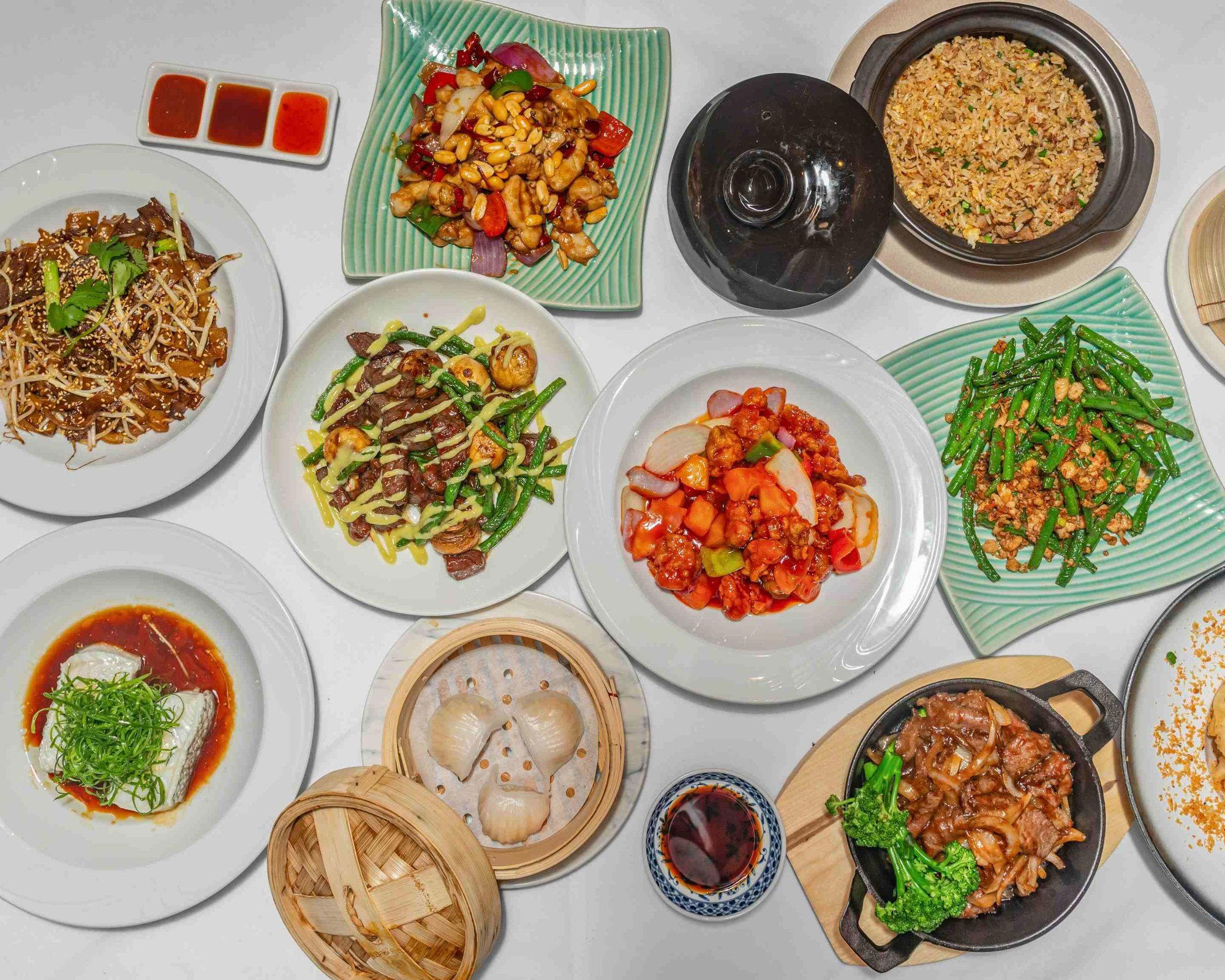
Victoria Street and the Cantonese Tradition in Sydney
Victoria Street in Darlinghurst runs between the dense inner-city restaurant strips of Kings Cross and Surry Hills, and it has long attracted the kind of dining rooms that survive on neighbourhood regulars rather than tourist foot traffic. The street's character is low-key and residential in patches, which makes the presence of a Cantonese restaurant at numbers 296-298 something worth considering carefully. Cantonese cuisine is not a monolith: it spans the austere restraint of Chiu Chow-style braising, the technical precision of dim sum, and the clean seafood preparations of Guangdong's coastal cooking. In Sydney, where Cantonese immigration stretches back to the nineteenth century, the cuisine has a longer local history than almost any other Chinese regional tradition. The question for any Cantonese room operating outside the Chinatown corridor in the CBD or the Cantonese-dense suburbs of Ashfield and Strathfield is whether it can hold to that tradition without softening it for a mixed-postcode audience.
What Cantonese Cooking Actually Demands
Cantonese cuisine sits at the intersection of ingredient sourcing, fire control, and timing in a way that punishes shortcuts. The hallmarks of serious Cantonese cooking are wok hei, the characteristic breath of the high-heat wok that requires BTU output well beyond domestic ranges; the patience of long braises measured in hours; and a respect for the primary ingredient that distinguishes the tradition from richer, sauce-forward schools of Chinese cooking. Roast meats, or siu mei, are a discipline in themselves, with whole roasted duck and char siu demanding a different infrastructure entirely from the stir-fry station. In metropolitan Sydney, a handful of Cantonese rooms in Hurstville, Eastwood, and the CBD have maintained that technical rigour. Wan's Cantonese on Victoria Street positions itself as a Cantonese address in an inner-city neighbourhood that more commonly registers as Italian or modern Australian territory. That positioning is either a calculated gap in the market or an inconvenience depending on what you are looking for. For Sydney diners accustomed to travelling to the outer suburbs for credible Cantonese, proximity counts for something.
The broader Sydney dining scene includes high-profile rooms like Rockpool and Saint Peter, both of which represent what serious Australian cooking looks like at the fine-dining register. The Cantonese tradition operates on a different axis entirely, one where the craft lies in classical method rather than seasonal innovation or chef-driven narratives. Internationally, rooms like Le Bernardin in New York City demonstrate what sustained technical commitment to a culinary tradition can produce over decades. Cantonese at its leading belongs in that conversation about craft-as-discipline, even if the price point and room format are entirely different.
The Darlinghurst Address
Positioning a Cantonese room on Victoria Street puts it in a neighbourhood where the dining frame of reference is primarily European. The inner-east Sydney dining corridor, which includes rooms like 10 William St and the broader stretch of Crown and Stanley Streets, has built its reputation on Italian, natural wine, and modern bistro formats. A Cantonese kitchen on Victoria Street is a different proposition, and its success depends partly on whether Darlinghurst residents are prepared to look beyond the suburb's default register. Sydney's inner-city appetite for Chinese food has historically been served by the CBD's Dixon Street precinct, but that precinct has gradually thinned as rents have moved and demographics have shifted. The argument for a Cantonese room at the Darlinghurst end of Victoria Street is that the neighbourhood now has a restaurant-going population with spending capacity and an interest in cuisine beyond European defaults, but without the willingness to commute to Eastwood or Hurstville on a Tuesday night.
Other Sydney rooms worth contextualising alongside Wan's Cantonese include 10 Pounds and 1021 Mediterranean, both of which occupy different cuisine traditions but share the inner-city positioning that requires a restaurant to work with a local rather than destination audience. For visitors to Sydney building a broader dining itinerary, the full picture is available through our full Sydney restaurants guide.
Cantonese in the Australian Context
Australia's relationship with Cantonese cuisine is unusually deep by Western-world standards. The Gold Rush of the 1850s brought Cantonese-speaking immigrants to Victoria and New South Wales in significant numbers, and the food traditions they carried shaped Australian Chinese cooking for a century. The style that developed, sometimes called Australian-Chinese, was its own thing: sweeter, saucier, further from the Guangdong source material than the cooking that arrived in later migration waves. The more recent decades have seen a recalibration, driven by immigration from Hong Kong and mainland China that prioritised culinary authenticity over local adaptation. That recalibration is most visible in the suburban Cantonese rooms of Sydney's south and west, where roast duck, har gow, and steamed fish with ginger and shallot are prepared to standards that hold up against any Hong Kong reference point. A room like Wan's Cantonese, with its Victoria Street address, sits in a slightly different conversation: it is not a suburban specialist targeting a community audience, nor is it a fusion room softening the tradition for an unfamiliar diner. Its name and address suggest a straightforwardly Cantonese offer in a neighbourhood that has rarely hosted one.
For a broader view of how restaurant traditions embed themselves in Australian cities, it is worth looking at the Melbourne comparison. Rooms like Attica in Melbourne and Brae in Birregurra represent the indigenous-ingredient and farm-driven end of Australian fine dining. That tradition has little overlap with Cantonese cooking, but the pattern of serious, single-cuisine commitment is shared. Sydney's dining scene also includes neighbourhood rooms across different registers: Bayly's Bistro in Kirribilli, bills in Bondi Beach, and Johnny Bird in Crows Nest each demonstrate how neighbourhood positioning shapes a room's identity and audience. The equivalent pattern for a Cantonese room in Darlinghurst is being tested at this address.
Beyond Sydney, the regional Australian dining scene has produced Cantonese and broader Chinese-influenced rooms in unexpected locations. Hungry Wolfs in Newcastle, Jaani Street Food in Ballarat, and Kulcha Restaurant Wollongong are evidence that serious regional cuisine is no longer confined to capital city postcodes. The comparative frame for Atomix in New York City is instructive here: that room demonstrates how a non-Western culinary tradition can operate at the highest technical register in a city where European fine dining has historically dominated. Cantonese in Sydney has not yet produced an equivalent flagbearer at that register, though the tradition clearly has the depth to support one.
Planning Your Visit
Wan's Cantonese is located at 296-298 Victoria Street, Darlinghurst NSW 2010. Reservations: Contact details are not currently published; walk-in availability is one direct approach. Dress: No dress code is specified. Access: Victoria Street, Darlinghurst is accessible from Kings Cross station and multiple bus routes along the inner-east corridor. Nearby dining context includes Bar Carolina in South Yarra and Barry Cafe in Northcote for Melbourne visitors building a comparative reference.
Where It Fits
Comparable venues nearby, for context on price, style, and recognition.
| Venue | Cuisine | Price | Notes |
|---|---|---|---|
| Wan's CantoneseThis venue — the venue you are viewing | Classic Cantonese Seafood & Dim Sum | $$$ | Not listed |
| The East Chinese Restaurant | Fine Dining Cantonese & Szechuan | $$$ | Sydney |
| Shanghai Fried Dumpling | Shanghai Fried Dumplings | $$ | Wolli Creek |
| East Ocean | Traditional Chinese Dim Sum & Seafood | $$$ | Haymarket |
| 25 Spices Hunan | Hunan Chinese | $$ | Haymarket |
| One Dining Teahouse & Restaurant | Modern Chinese Yum Cha | $$$ | Sydney |
Continue exploring
More in Sydney
Restaurants in Sydney
Browse all →
Bars in Sydney
Browse all →
Hotels in Sydney
Browse all →
At a Glance
- Elegant
- Sophisticated
- Sustainable Seafood
Current opening hours
- Monday
- Closed
- Tuesday
- Closed
- Wednesday
- 5–10 PM
- Thursday
- 5–10 PM
- Friday
- 12–3 PM, 5–10 PM
- Saturday
- 12–3 PM, 5–10 PM
- Sunday
- 12–3 PM, 5–10 PM
Hours can change for holidays and private events. Last verified .
Energetic atmosphere with modern finesse blending timeless Hong Kong flavors.