East Ocean on Sussex Street has anchored Sydney's Chinatown dining scene for decades, drawing crowds for its sprawling yum cha service and Cantonese banquet menus. The dining room operates at a scale that signals institutional confidence rather than boutique ambition, making it a reference point for the neighbourhood's Chinese dining tradition. For Sydney diners tracking the city's broader Chinese restaurant offer, it belongs in the conversation.
- Address
- 421-429 Sussex Street, Chinatown, Sydney, Australia
- Phone
- +61 2 9212 4198
- Directions
- Get directions
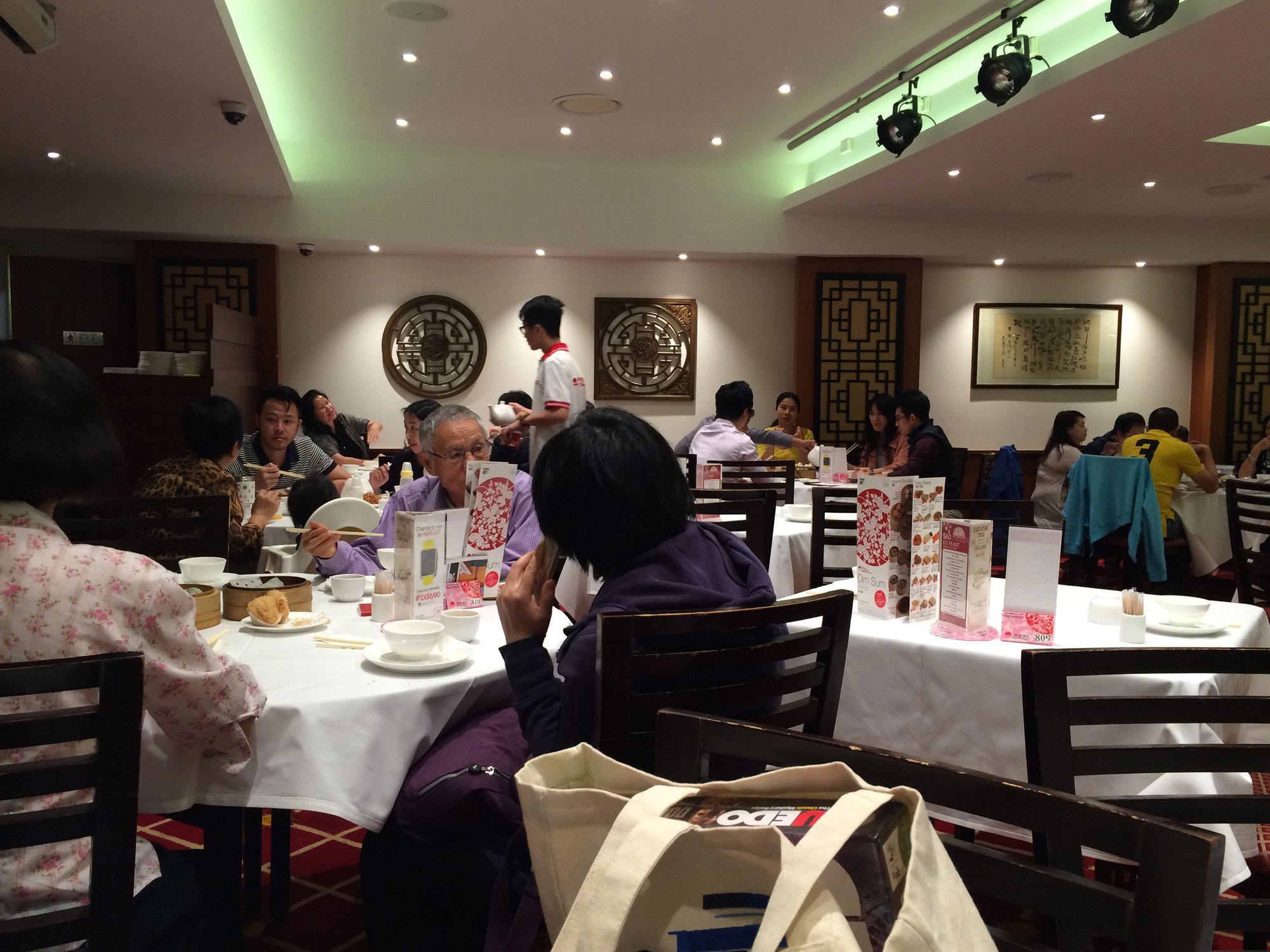
The Chinatown Table That Sets the Register
Sussex Street in Sydney's Chinatown runs on a particular logic: the street is dense, the signage competes loudly, and the restaurants that endure do so not through novelty but through volume of trust accumulated over years. East Ocean, at 421-429 Sussex Street, occupies the kind of floorspace that signals an operation built around large-group eating — extended families, weekend yum cha rituals, corporate banquets, and the particular Sydney tradition of gathering for Cantonese food in a room loud enough to require leaning in. The dining room is not intimate. That is the point. The scale here is an architectural argument about how Cantonese cooking is meant to be experienced: communal, sequential, and spread across a table crowded with shared plates.
Menu Architecture: How the Format Reveals the Kitchen
Cantonese restaurant menus, particularly those built around dual yum cha and dinner service, operate on two distinct registers. The daytime yum cha format is a menu delivered on wheels and trays, priced per basket, and structured around rapid succession: har gow first, then siu mai, then cheung fun, then the items that require a decision — whether to go for the turnip cake, the chicken feet, the lotus leaf rice. The logic is accumulation rather than narrative, and the kitchen's competence shows in how cleanly the dough holds, how the fillings are seasoned, and whether the timing of each round keeps pace with the table. Across Sydney's Chinatown, the yum cha format is the category benchmark: it is the service type that draws the broadest cross-section of the city's Chinese community, and a room's Saturday morning crowd is a reliable signal of standing. For context on how Sydney's broader restaurant scene positions itself, see our full Sydney restaurants guide.
The evening banquet menu at a venue of this type runs a different architecture: set menus for groups, whole-table ordering, dishes designed to be shared across eight or ten covers. Whole steamed fish, roast duck carved tableside, mud crab in ginger and shallot, tofu in various registers from silken to fried. The sequencing of a Cantonese banquet has its own protocol, cold dishes and roasts at the entry, then seafood, then poultry, then vegetables, then a starch to close. Venues that understand this structure do not rush the middle courses or anchor the meal on any single dish. The architecture is the experience. This is a meaningfully different approach from the tasting-menu logic that defines Sydney's contemporary fine dining tier, the kind of format deployed at places like AALIA or the produce-driven framework at Saint Peter, and understanding that difference is the precondition for reading East Ocean correctly.
Chinatown's Position in Sydney's Dining Map
Sydney's Chinese restaurant ecosystem is not confined to Chinatown. The suburban strips of Hurstville, Burwood, Chatswood, and Eastwood each carry dense concentrations of regional Chinese restaurants, Sichuan, Shanghainese, Hunanese, that have grown alongside the city's migration patterns over the past three decades. Chinatown proper, centred on Dixon Street and Sussex Street, operates somewhat differently: it functions partly as a destination for non-Chinese diners, partly as a convenience hub, and partly as a repository of the older Cantonese restaurant tradition that shaped Sydney's relationship with Chinese food in the first half of the twentieth century. East Ocean's address on Sussex Street places it squarely in that heritage zone. The framing matters because it shapes expectation: this is not the restaurant to visit for regional diversity or contemporary Chinese cooking experiments. It is a venue that operates within the Cantonese banquet and yum cha tradition, and it should be assessed against that tradition rather than the city's broader contemporary dining field. For a wider map of where Sydney eating is heading, Rockpool and Bathers Pavilion represent very different parts of the city's culinary register.
How East Ocean Compares Within Its Category
The Cantonese restaurant tier in Sydney is not uniform. At one end sit the newer, smaller venues in the inner suburbs running tight menus with premium sourcing and shorter operating hours. At the other end sit the large-format operations designed for high covers, long trading hours, and multi-generational family use. East Ocean sits in the latter cohort. This is a different competitive frame from the one applied to, say, 20 Chapel or the produce-forward venues that populate the city's contemporary scene. For Australian diners curious about how the country's broader fine dining landscape positions itself, destinations like Attica in Melbourne or Brae in Birregurra represent a completely different set of priorities.
What large-format Cantonese operations do well, when they are operating at their tier, is consistency at volume: the ability to turn a full dining room on a Sunday morning without losing grip on dumpling quality, to run a banquet for thirty without the kitchen dropping pacing in the middle courses. That operational competence is harder than it appears, and it is the measure by which the category is honestly assessed.
Planning Your Visit
East Ocean's Sussex Street location sits within walking distance of Town Hall and Central Station, making it accessible by multiple train lines. For weekend yum cha, arrival before the formal service rush, typically before 11:30am, is the practical approach to securing a table without a significant wait. Large-group bookings for banquet dinners warrant advance contact. Visitors planning a broader Sydney itinerary will find complementary perspectives across the city's drinking and hotel scene in our full Sydney bars guide, our full Sydney hotels guide, our full Sydney wineries guide, and our full Sydney experiences guide. For diners connecting Sydney to Australia's wider restaurant geography, Agrarian Kitchen in Hobart, Amaru in Armadale, and Bacchus in Brisbane each mark different coordinates on the national dining map. Internationally, the Cantonese banquet tradition can be benchmarked against the precision end of the spectrum, Le Bernardin in New York City and Atomix in New York City represent what the tasting-counter format looks like at its most technically disciplined, which is a useful contrast for understanding how differently the Chinese banquet tradition organises the relationship between kitchen and diner.
- steamed dumplings
- har gau
- siew mai
- char siu bao
- live seafood
- pork and truffle dumplings
- crispy duck
Reputation Context
A compact comparison to help you place this venue among nearby peers.
| Venue | Cuisine | Awards |
|---|---|---|
| East OceanThis venue — the venue you are viewing | Not listed | Not listed |
| Rockpool | Australian Cuisine | World's 50 Best |
| Saint Peter | Australian Seafood | World's 50 Best |
| BENTLEY Restaurant & Bar | Australian Modern | Not listed |
| Bennelong | Australian Cuisine | Not listed |
| Rockpool Bar & Grill | Australian Grill | Not listed |
Continue exploring
More in Sydney
Restaurants in Sydney
Browse all →
Bars in Sydney
Browse all →
Hotels in Sydney
Browse all →

At a Glance
- Elegant
- Lively
- Classic
- Group Dining
- Family
- Celebration
- Casual Hangout
- Private Dining
- Byob
- Corkage Allowed
- Sustainable Seafood
Spacious and elegant with decorative fish-print chairs and aquarium displays; however, cleanliness concerns including dirty carpets and patches of mold have been noted in recent reviews.
Know Before You Go
- Getting there
- 421-429 Sussex Street, Chinatown, Sydney, Australia