Skip to Main Content
Minimalist Coffee Roastery Cafe

Google: 4.4 · 1,360 reviews

← Collection
Kyoto, Japan

Walden Woods Kyoto

Price≈$8
Dress CodeCasual
ServiceCasual
NoiseQuiet
CapacitySmall
Tabelog

Walden Woods Kyoto sits within a city where the ritual of the meal carries as much weight as the food itself. Kyoto's dining culture prizes sequence, restraint, and seasonal precision above spectacle, and this address places itself squarely in that tradition. For travelers building an itinerary around serious Japanese dining, it belongs in the same conversation as the city's established kaiseki houses.

Pearl is the En Primeur Club membership app — saves, bookings, and concierge access live there. Same editors, same standards.

Walden Woods Kyoto restaurant in Kyoto, Japan
About

Where the Meal Moves at Kyoto's Pace

Kyoto imposes a discipline on its restaurants that few other cities manage. The pace here is not leisurely by accident: it is the product of a culinary culture that treats the progression of courses as a form of argument, each dish placed in deliberate sequence to articulate something about the season, the region, and the moment. Restaurants that thrive in this city tend to understand that the ritual of dining is as load-bearing as any ingredient. Walden Woods Kyoto positions itself within that framework, in a city where the question of how a meal unfolds is treated with the same seriousness as what arrives on the plate.

Kyoto's dining culture has long operated on a principle of earned intimacy. Rooms are small, reservations are guarded, and the relationship between kitchen and guest is structured rather than casual. This is the context in which venues like Gion Sasaki and Hyotei have built their reputations: not through volume or visibility, but through the sustained quality of a repeated ritual. Walden Woods Kyoto operates within that same gravitational field.

The Architecture of a Kyoto Meal

To understand where Walden Woods Kyoto sits, it helps to understand what Kyoto asks of its restaurants. The kaiseki tradition, which structures Japanese haute cuisine around a sequence of small courses tracking the season, places unusual demands on a kitchen. The format requires precision not just in cooking technique but in pacing and proportion. Too fast, and the meal feels perfunctory. Too slow, and the logic of the sequence dissolves. The restaurants that have earned sustained recognition in Kyoto, such as Kikunoi Honten and Mizai, have all demonstrated that they understand this rhythm at an institutional level.

What distinguishes Kyoto's leading tables from the broader category of serious Japanese dining is their relationship to the calendar. Ingredients shift not just by season but by week, and menus in the city's most attentive kitchens reflect that granularity. A meal in early autumn carries a different emotional register than one in late spring, and the leading Kyoto restaurants make that difference legible through the food. This is the tradition Walden Woods Kyoto enters, and the standard against which it should be read.

Across Japan, the model of intimate, format-driven dining has proven durable. Harutaka in Tokyo and HAJIME in Osaka each demonstrate how this structure translates across different culinary registers, from sushi counter to avant-garde kaiseki. akordu in Nara shows how the same principle of sequential, season-led dining can accommodate European technique within a Japanese framework. Walden Woods Kyoto enters a conversation that extends well beyond the city's borders.

Ritual, Restraint, and the Room

In Kyoto, the physical environment of a restaurant is understood as part of the ritual rather than a backdrop to it. The arrangement of space, the temperature of the room, the sound level, the quality of light: these are not incidental. Houses like Isshisoden Nakamura have long demonstrated that the setting of a Kyoto meal contributes directly to its meaning. The architecture of stillness that characterizes the city's serious dining rooms is a deliberate choice, not a default.

This cultural preference for understatement places Kyoto in an interesting position relative to other major dining cities. Where Tokyo rewards technical spectacle and Osaka prizes warmth and abundance, Kyoto's finest tables tend to favor what might be called productive restraint: the sense that something has been withheld for good reason, that the meal is calibrated rather than maximized. It is a harder standard to meet than it appears, and it is the one against which Walden Woods Kyoto will be judged by the city's regular visitors.

The format-driven discipline of Kyoto dining also has implications for how guests should approach a reservation. In rooms operating at this register, the guest's role is as structured as the kitchen's. Arriving on time, allowing the pace to develop without rushing, and resisting the temptation to reorder or redirect the meal: these are not etiquette niceties but functional requirements for the experience to cohere. This is the context in which venues across the region, from Goh in Fukuoka to the more rurally situated æ¹é庵 in Takashima, have built their reputations for seriousness.

Planning a Visit

Kyoto's premium dining tier requires advance planning regardless of the specific venue. The city's most sought-after tables, including the kaiseki houses that anchor its international reputation, typically require bookings weeks to months ahead, particularly during cherry blossom season in late March and April and the autumn foliage period in November. These windows represent peak demand and the highest competition for reservations. Visitors arriving outside these periods will find the booking process more navigable, though Kyoto's serious restaurants rarely hold walk-in capacity at the upper end of the market. Consulting our full Kyoto restaurants guide before finalizing an itinerary is advisable for anyone building a multi-night dining program in the city.

For travelers who want to extend the format-driven dining experience beyond Kyoto, the Kansai and wider Japan circuit offers strong options at comparable registers. äžæ¬æ å·å¶ in Nanao and åºç¾œå± in Nishikawa Machi represent the kind of regional Japanese dining that rewards travelers willing to move beyond the major urban centers. For a different register entirely, Bistro Ange in Toyohashi and Birdland in Sakai illustrate how Japan's serious dining culture extends into specialized formats well outside the kaiseki tradition. Internationally, the structural parallels between Kyoto's sequence-driven dining and the approach at Atomix in New York City or the precision cookery at Le Bernardin are worth noting for context.

Within Kyoto itself, å€å»ä»å±±ä¹ in Sapporo represents an interesting counterpoint: a northern Japanese approach to seasonal cooking that shares the calendar-awareness of Kyoto tradition while operating in an entirely different culinary climate. These comparisons are useful for calibrating expectations before arriving in a city as specific as Kyoto in its demands.

Signature Dishes
CaneléMatcha soft serveWalden Blend coffee
Frequently asked questions

Category Peers

A quick look at comparable venues, using the data we have on file.

At a Glance
Vibe
  • Minimalist
  • Cozy
  • Modern
  • Hidden Gem
Best For
  • Casual Hangout
  • Solo
Experience
  • Standalone
Dress CodeCasual
Noise LevelQuiet
CapacitySmall
Service StyleCasual
Meal PacingQuick Bite

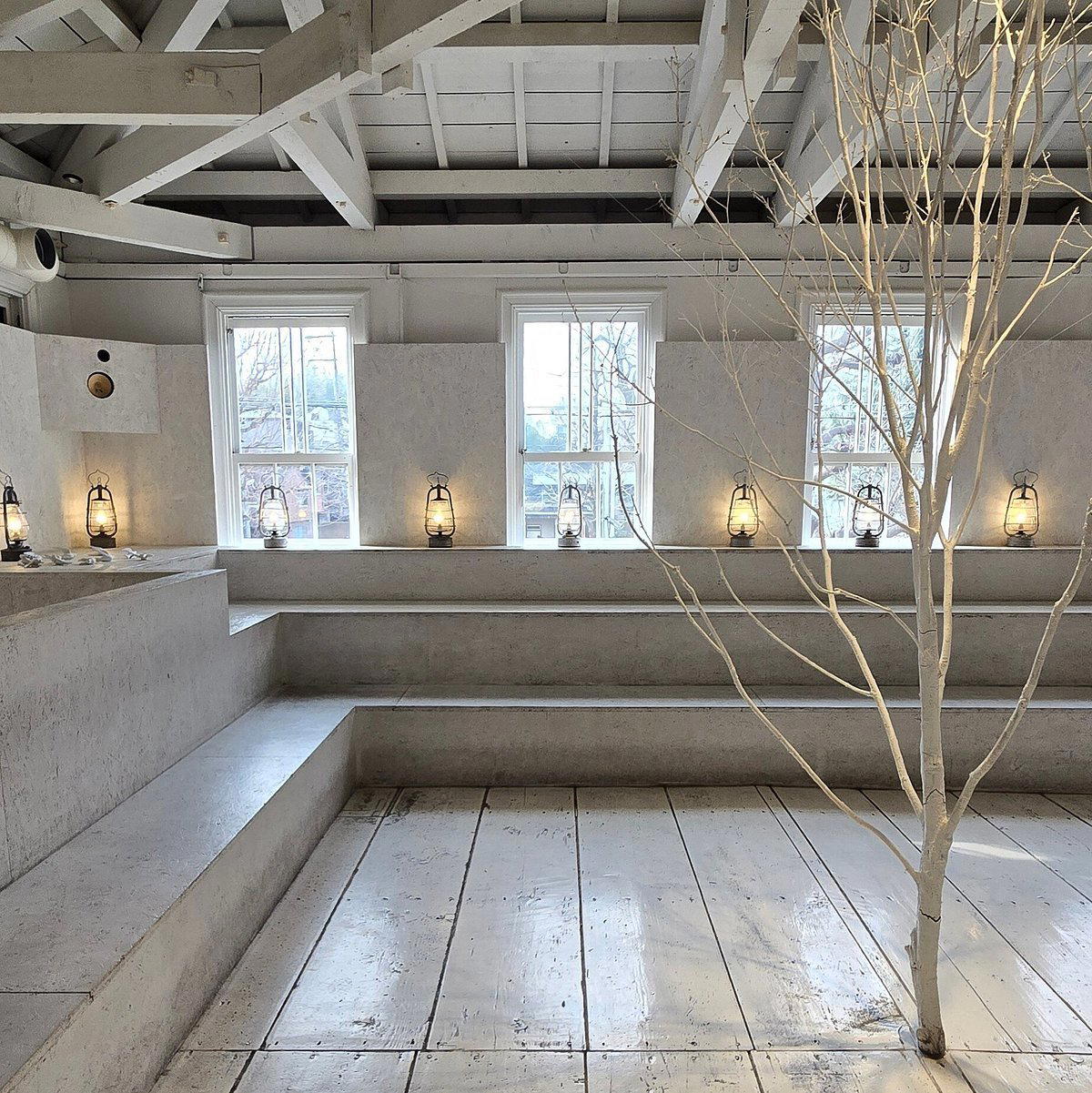
Warm lighting in a pure white space creating a calming, forest-like tranquility with cozy upstairs bench seating around a central tree.

Signature Dishes
CaneléMatcha soft serveWalden Blend coffee