Viride brings contemporary Italian cooking to Rome with a focus on restraint and ingredient clarity, placing it in the city's growing tier of refined modern restaurants that treat simplicity as a discipline rather than a default. The approach aligns Viride with a wider Italian tradition that prizes technique deployed quietly, in service of produce rather than spectacle. Booking ahead is advisable for this level of the Roman dining scene.

Pearl is the En Primeur Club membership app — saves, bookings, and concierge access live there. Same editors, same standards.
The Case for Restraint in Rome's Contemporary Dining Scene
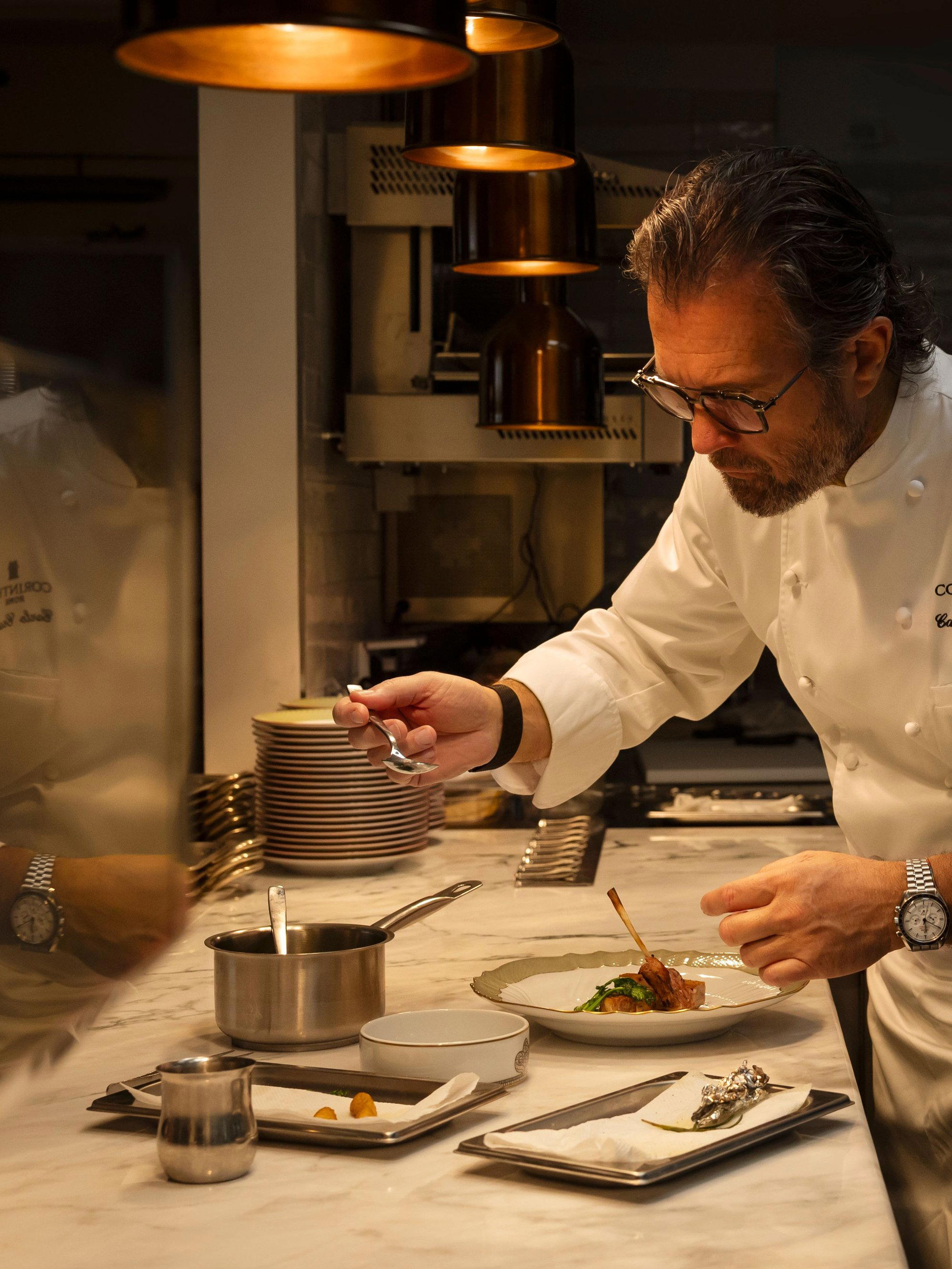
Rome's fine dining map has, over the past decade, split into two recognisable camps. One delivers the theatrical, internationally legible tasting menu format, architectural plating, global technique, elaborate amuse-bouches, with venues like La Pergola and Il Pagliaccio occupying its upper tier. The other is quieter, harder to categorise, and more interesting: a cohort of contemporary Italian tables where the intellectual exercise is subtraction rather than addition. Viride is a restaurant in Rome serving Contemporary Italian Fine Dining. Its identity is built on the Italian principle that fewer, better ingredients, handled with precision and left to speak clearly, constitute one demanding form of cooking, not the easiest.
That philosophy has deep roots in the Italian kitchen. The canonical dishes of regional Italian cooking have always derived power from compression: a good Roman cacio e pepe is only as good as the quality of pecorino and the control of the pasta water. Scale that logic up to a contemporary restaurant format, and the margin for error shrinks dramatically. There is no reduction sauce complex enough to compensate for a second-rate ingredient, and no technique theatrical enough to distract from produce that is merely adequate. The kitchens at venues like Enoteca La Torre and Acquolina have both demonstrated that Rome has the supplier networks to sustain this kind of cooking at a high level. Viride operates within that same supply logic.
Where Viride Sits in the Roman Contemporary Tier
Contemporary Italian cooking in Rome now occupies a broad middle ground between the city's trattoria culture and its small constellation of Michelin-recognised tables. Within that space, restaurants are increasingly differentiating by philosophy as much as by price point. Venues such as Achilli al Parlamento have built reputations around wine-forward, ingredient-led formats, while the creative Italian tier, represented in Rome and further afield by places like Osteria Francescana in Modena and Le Calandre in Rubano, pursues a more conceptual register.
Viride's positioning is closer to the former than the latter. The emphasis is on recognisable Italian forms made legible through ingredient quality and kitchen discipline, rather than through conceptual reframing. This is not a lesser ambition, it is, in many respects, a harder one to sustain, because the cooking has nowhere to hide. Comparable approaches in other Italian cities can be found at Ristorante Berton in Milan and Il Piastrino in Pennabilli, restaurants where technique is present but not announced.
The Logic of Simplicity as a Kitchen Discipline
Across the Italian fine dining tier, particularly durable reputations belong to kitchens that have resisted the temptation to import complexity for its own sake. Dal Pescatore in Runate has sustained three Michelin stars for decades on cooking that looks, at a glance, almost modest. Atelier Moessmer Norbert Niederkofler in Brunico has built its recognition around a strict regional sourcing discipline that reduces rather than expands the ingredient palette. Enoteca Pinchiorri in Florence, at the opposite end of the scale register, demonstrates that classical Italian structure can absorb enormous investment without losing coherence, but only when the foundations are sound.
What this tradition establishes is a clear evaluative standard: simplicity in Italian fine dining is not a style choice but a commitment that must be honoured through sourcing, technique, and menu discipline consistently. A kitchen operating at this level needs seasonal produce rotated with genuine responsiveness to what is available rather than what is planned, and it needs cooking that applies heat and time with accuracy rather than instinct. In Rome, where the local produce calendar is generous, white truffles from the Umbrian border, seafood from Fiumicino, offal from the city's own butchery traditions, a kitchen with this discipline has significant raw material to work with.
Rome's Dining Scene as Context
Rome is not Milan or Tokyo in terms of fine dining density, and that is partly a structural feature of the city's identity. The trattoria tradition here is too strong, too deeply embedded in neighbourhood life, to be displaced by tasting-menu culture. What has happened instead is that a layer of contemporary Italian cooking has grown alongside the traditional tier rather than replacing it, drawing on the same seasonal logic and regional loyalty but applying it through a more considered kitchen discipline.
That dynamic makes Viride's approach particularly well-suited to the city. Cooking that foregrounds produce quality and restraint reads, in Rome, as continuous with the city's culinary values rather than in tension with them. The same could not necessarily be said of a more abstract or technique-forward format. For visitors exploring the full range of the city's serious restaurants, Viride sits in a different register from the grand-hotel dining of La Pergola or the creative Italian idiom of Enrico Bartolini's style, and that difference is the point. A rounded view of Rome's contemporary scene requires both registers.
Budget Reality Check
Comparable venues nearby, for context on price, style, and recognition.
| Venue | Cuisine | Price | Notes |
|---|---|---|---|
| VirideThis venue — the venue you are viewing | Not listed | $$$$ | Not listed |
| J.K. Place Roma | Campo Marzio, Modern Italian | $$$$ | Not listed |
| Modius Restaurant | Pigna, Traditional Roman Cuisine | $$$ | Not listed |
| Sora Lella | San Angelo, Traditional Roman Trattoria | $$$ | Not listed |
| Assunta Madre | Not listed | $$$ | Regola, Classic Roman Osteria with Fresh Seafood |
| Cafè Corrientes | Not listed | $$$ | Gianicolese, Italian Steakhouse with Argentinian Grill |
Continue exploring
More in Rome
Restaurants in Rome
Browse all →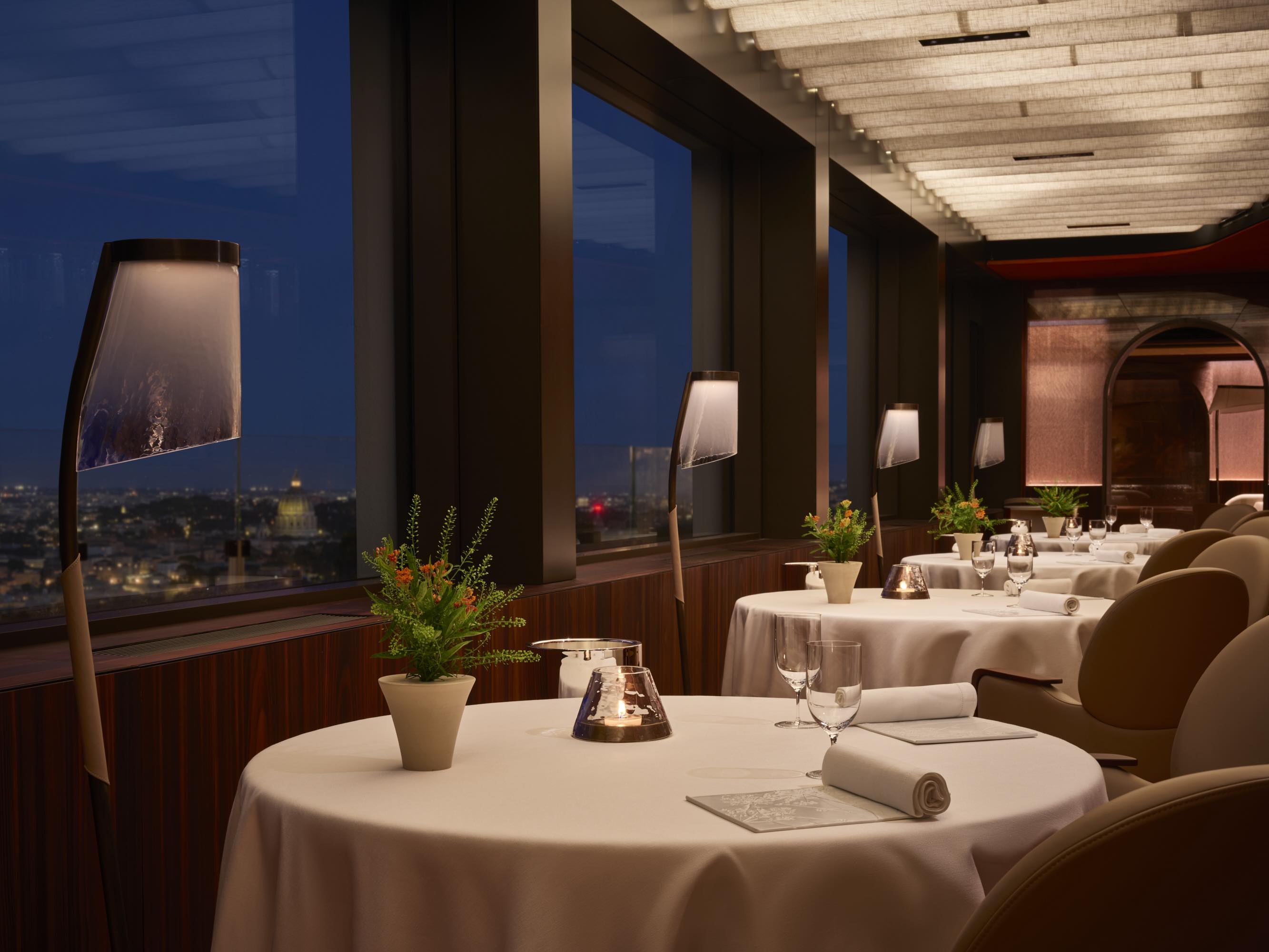
Bars in Rome
Browse all →
Hotels in Rome
Browse all →

At a Glance
- Elegant
- Sophisticated
- Intimate
- Modern
- Date Night
- Special Occasion
- Hotel Restaurant
- Garden
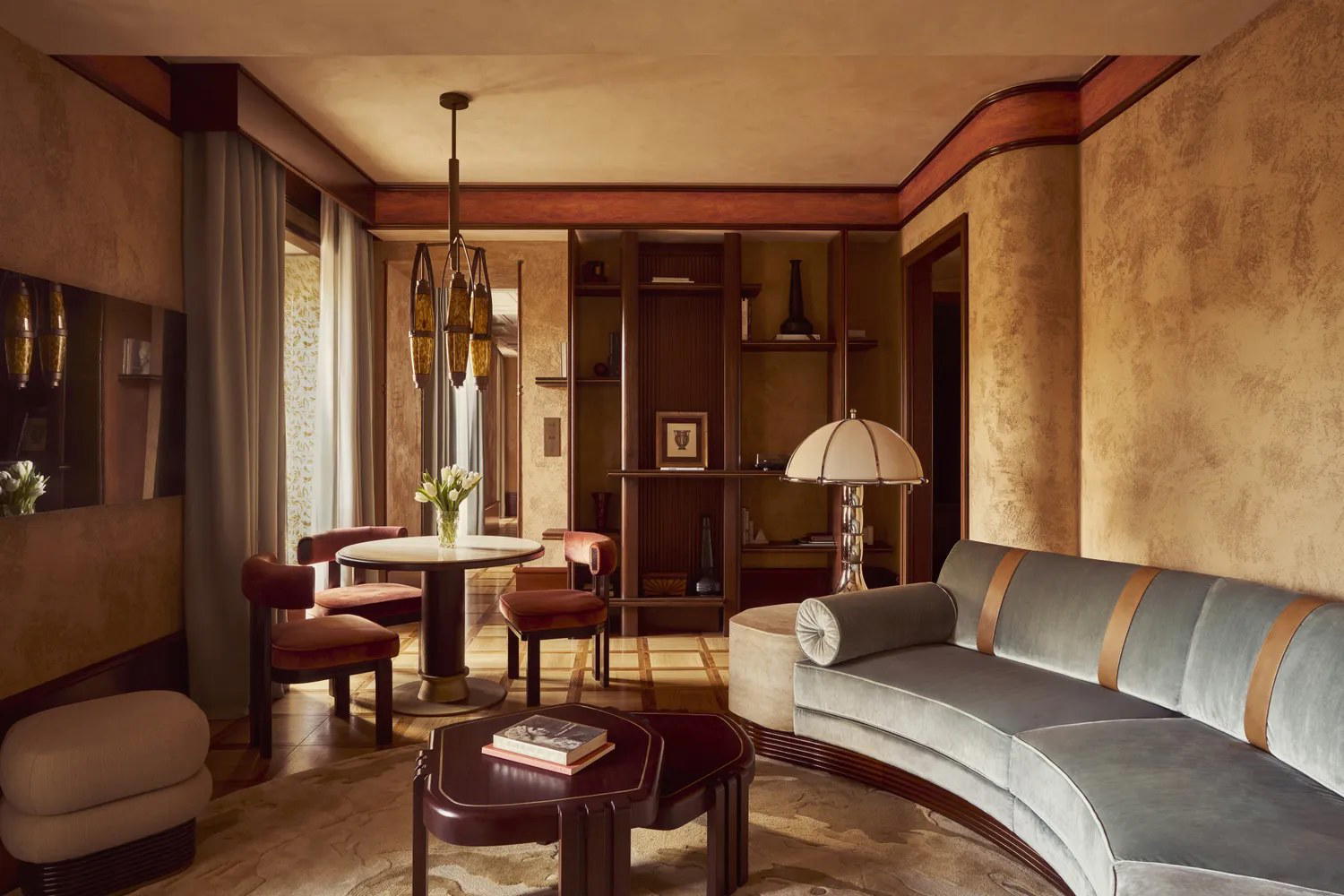
Quiet elegance inspired by Rome’s hidden gardens, with a refined setting for contemporary Italian tasting menus.