Villaggio Ristorante
Villaggio Ristorante operates out of Whitestone, one of Queens' quieter residential enclaves, at a remove from the density of Manhattan's Italian dining corridor. The address alone signals a neighbourhood-first operation rather than a destination play for tourists — the kind of Italian-American table that sustains itself on repeat locals rather than review cycles. For those tracking the outer boroughs' dining evolution, it sits in an instructive position.
Pearl is the En Primeur Club membership app — saves, bookings, and concierge access live there. Same editors, same standards.
- Address
- 150-07 14th Rd, Whitestone, NY 11357
- Phone
- +17187471111
- Website
- villaggiohome.com
- Directions
- Get directions
 Saves & bookings on Pearl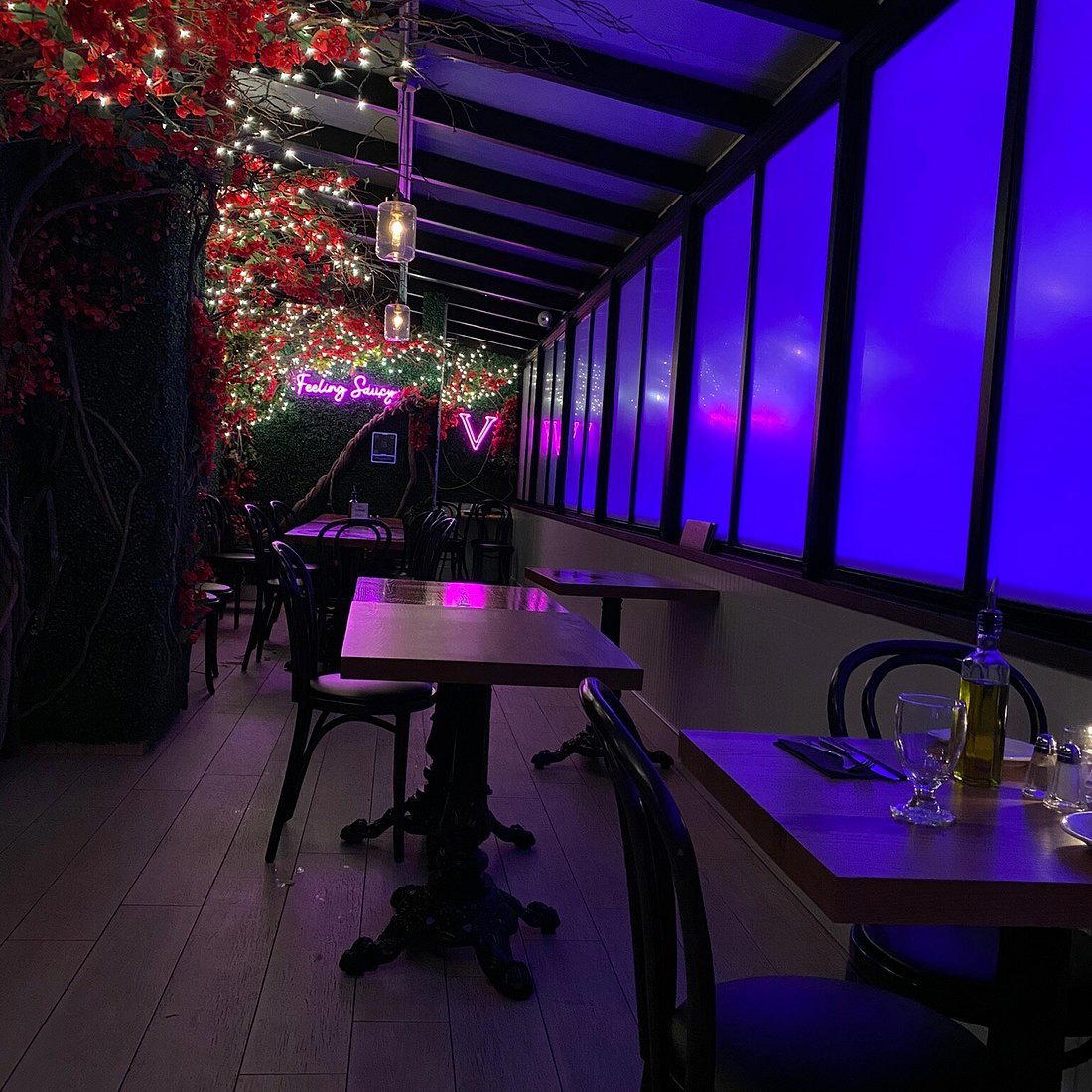
Whitestone and the Outer-Borough Italian Question
The Italian-American restaurant in New York City occupies a complicated place in the current dining conversation. At one end, you have the red-sauce institutions of the West Village and Arthur Avenue in the Bronx, operating as much as cultural landmarks as restaurants. At the other, a newer wave of Italian addresses in Manhattan — some Michelin-decorated, some not — has pushed the category toward regional Italian formality, with sourcing narratives and imported product lists to match. Villaggio Ristorante, at 150-07 14th Road in Whitestone, Queens, belongs to neither of those poles. It operates in the space between: a neighbourhood dining room in a residential corner of the outer boroughs, serving a community that has largely been eating Italian food in this zip code for generations.
Whitestone is not a neighbourhood that registers much on the dining radar of critics or aggregators. It sits at the northeastern edge of Queens, close to the Bronx-Whitestone Bridge, and its commercial strips are oriented toward residents rather than visitors. That context shapes what a restaurant like Villaggio is actually doing: it is not competing with Le Bernardin or Per Se for destination diners, and it is not trying to. The competitive set here is local, the other Italian-American tables within a short drive, the family-run trattorias that have held the same blocks for decades.
What Outer-Borough Italian Tells You About the City
New York's outer-borough Italian dining corridor is, in many respects, a more accurate record of Italian-American food culture than anything in SoHo or the Flatiron. The communities in northeastern Queens and the adjacent Bronx have maintained a continuity of Italian-American cooking traditions that Manhattan's restaurant economy has largely replaced with concept-driven formats. The dishes that appear on menus in Whitestone, Howard Beach, or Pelham Bay are not necessarily calibrated for press attention, they are calibrated for the people who grew up eating them.
This is the context in which sustainability, in its broadest sense, becomes relevant. The most durable form of environmental and cultural sustainability in American dining is the neighbourhood restaurant that survives without relying on trend cycles, media attention, or tourist traffic. These operations maintain relationships with local suppliers not because of a marketing strategy but because those relationships predate the current conversation about ethical sourcing. Restaurants like Blue Hill at Stone Barns in Tarrytown have made farm-to-table sourcing a formal, documented program; outer-borough Italian-American restaurants have often operated on informal versions of the same logic for decades, buying from local purveyors and adjusting menus with the season without announcing it as a philosophy.
The contrast is instructive. Nationally recognized restaurants that have built sustainability programs into their identities, Single Thread Farm in Healdsburg, Lazy Bear in San Francisco, Providence in Los Angeles, operate with documented sourcing transparency and the resources to communicate it. The neighbourhood trattoria rarely has either, but the underlying practice of cooking with what is available locally, reducing waste through portion discipline, and running a menu that does not require global supply chains is structurally similar.
The Whitestone Address: What It Means for Diners
Getting to Whitestone from central Manhattan requires commitment. The neighbourhood is not well-served by subway, and the practical approach is car or car service, with the Whitestone Bridge accessible from the Bronx or the Grand Central Parkway from Queens. This is, functionally, a 30-to-45-minute drive from Midtown depending on traffic conditions, similar in travel time to dining in parts of New Jersey that draw destination traffic, but without the same critical infrastructure around it. Diners who make the trip are almost invariably doing so for a specific reason: a local recommendation, a family connection, or a deliberate interest in what outer-borough dining looks like outside the media circuit.
That distance from the review cycle is, for some diners, precisely the point. The Manhattan Italian addresses that receive sustained critical attention, and there are strong ones across the price spectrum, operate in a different register from a Whitestone neighbourhood room. For context on that upper tier, our full New York City restaurants guide maps the city's dining options across neighbourhoods and price points.
Italian-American Cooking as a Category
The Italian-American canon, baked ziti, veal parmigiana, linguine alle vongole, tiramisù from a house recipe, is not a lesser version of Italian cooking. It is a distinct tradition that evolved from the food practices of Southern Italian immigrants in the late nineteenth and early twentieth centuries, adapted to American ingredient availability and American appetites. The difference between a Neapolitan trattoria and an Italian-American neighbourhood restaurant in Queens is not a hierarchy; it is a translation, and one that has produced its own legitimate culinary logic.
That tradition is what places like Villaggio maintain, knowingly or not. The comparison set for this kind of operation is not Atomix or Masa or Jungsik New York. It is not even Alinea in Chicago or The Inn at Little Washington. The point of reference is the neighbourhood itself and the decades of Italian-American cooking that preceded the current restaurant in the same rooms or on the same blocks. That is a different kind of pedigree, and not an unserious one.
For international context, Italian fine dining has its own separate register, 8½ Otto e Mezzo Bombana in Hong Kong and Alain Ducasse at Louis XV in Monte Carlo represent the formal European end of the spectrum. American regional restaurants with strong sourcing programs, Bacchanalia in Atlanta, Addison in San Diego, Emeril's in New Orleans, sit in a different category again. A Whitestone neighbourhood restaurant occupies none of these tiers. It occupies its own, which is the point.
Planning Your Visit
Address: 150-07 14th Road, Whitestone, NY 11357. Getting there: Car is the practical option from Manhattan; allow 35-50 minutes from Midtown. Dress: Neighbourhood Italian rooms in this part of Queens are generally casual to smart-casual.
How Villaggio Ristorante compares with similar nearby venues.
| Venue | Cuisine | Price |
|---|---|---|
| Legend of Taste | Chinese | $$ |
| Little Pepper | Sichuan | Not listed |
| Tong Sam Gyup Goo Yi | Korean | $$ |
| Ben’s Kosher Deli | Jewish Delicatessen | Not listed |
Continue exploring
More in New York City
Restaurants in New York City
Browse all →
Bars in New York City
Browse all →

Hotels in New York City
Browse all →





At a Glance
- Cozy
- Classic
- Intimate
- Family
- Group Dining
- Casual Hangout
- Open Kitchen
Current opening hours
- Monday
- 12–9 PM
- Tuesday
- 12–9 PM
- Wednesday
- 12–9 PM
- Thursday
- 12–9 PM
- Friday
- 12–10 PM
- Saturday
- 12–10 PM
- Sunday
- 12–9 PM
Hours can change for holidays and private events. Last verified .
Cozy, dimly lit, and welcoming with warm decor.
Know Before You Go
- Getting there
- 150-07 14th Rd, Whitestone, NY 11357