Google: 4.6 · 280 reviews
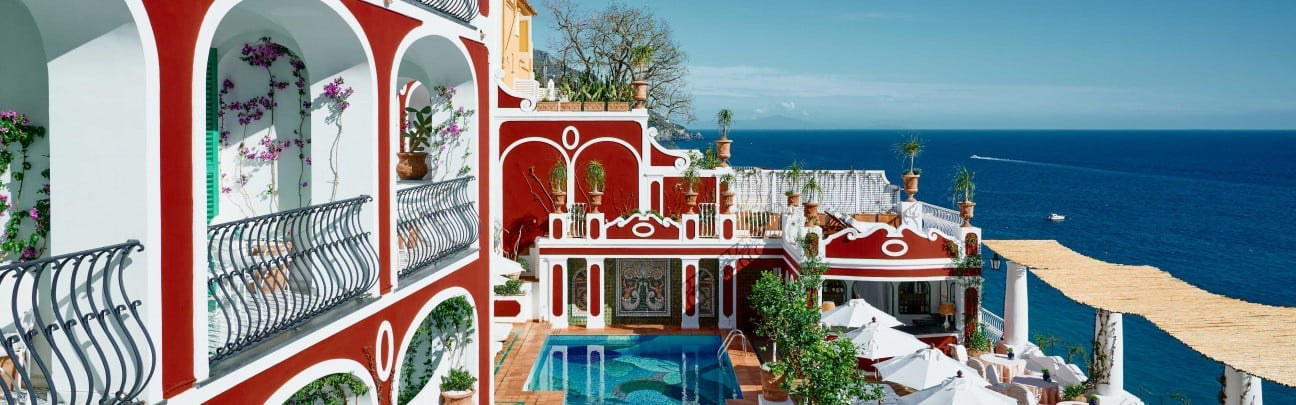
Villa TreVille occupies one of the Amalfi Coast's most architecturally distinct addresses, a cliff-side compound in Positano at Via Arienzo 30 where the boundary between private residence and hotel has always been deliberately thin. The property sits in a tier of Positano accommodation defined by seclusion over scale, drawing guests who want proximity to the coast's social energy without being absorbed by it. Advance planning is advisable; the Amalfi Coast's peak season runs from June through late August.
 Discover on Pearl
Pearl is the En Primeur Club membership app — saves, bookings, and concierge access live there. Same editors, same standards.
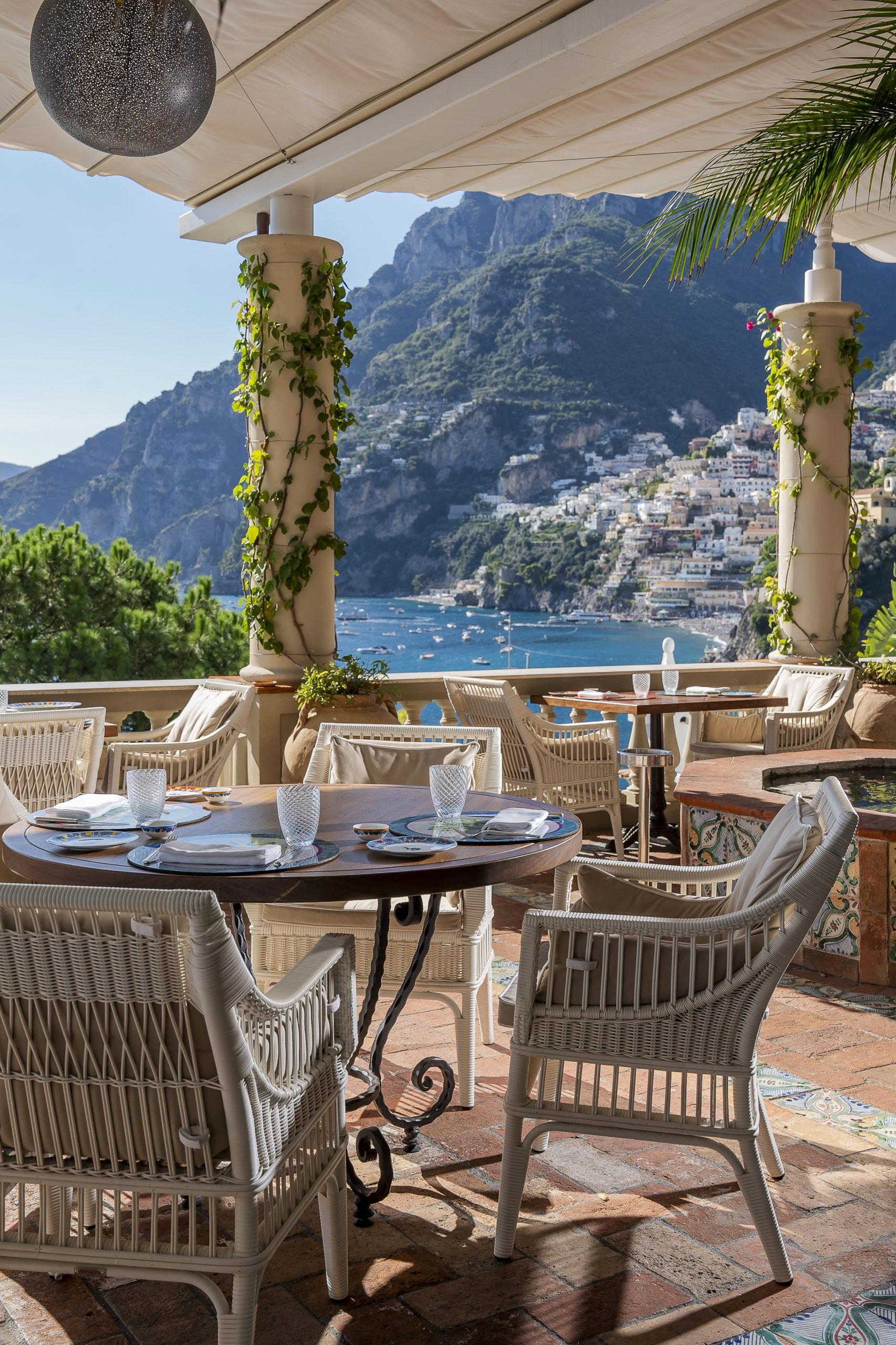
Arriving on the cliff: the approach as part of the ritual
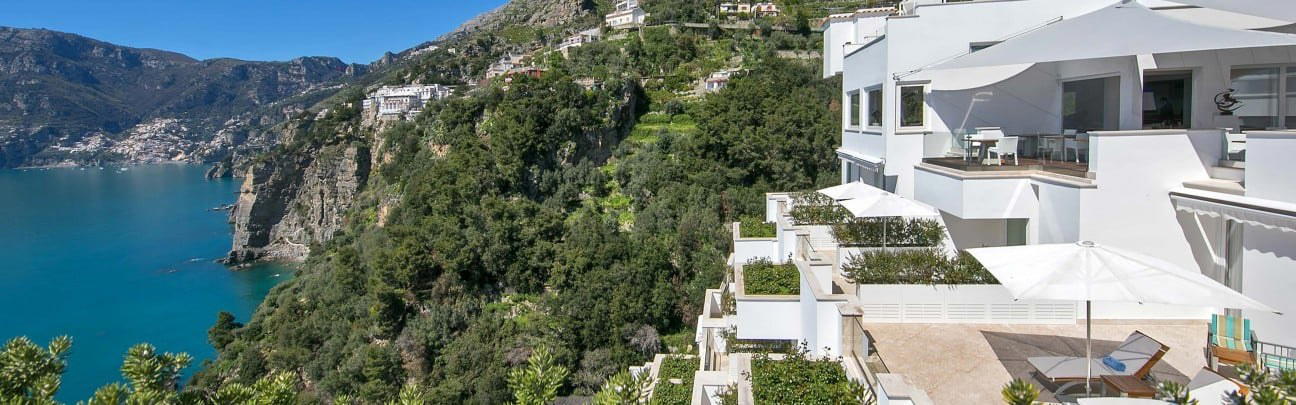
Most of Positano's accommodation arrives via the same calcified route: the winding SS163, a queue of cars, and a descent on foot through the town's layered ceramic-shop corridor. Villa TreVille, at Via Arienzo 30, operates differently. The property sits on a cliff face east of the main beach, in a section of coastline where the architecture has less to prove because the geology does the work. Reaching it means disengaging from the town's choreography, which is, in many ways, the first signal of what kind of stay this is.
On the Amalfi Coast, arrival is not incidental. The coastal road narrows, then widens, then narrows again; boats approach from Capri or Amalfi and dock below. How a property positions itself relative to these arrival rituals tells you something about its self-conception. Properties that accept the chaotic approach as a given tend to compensate with interiors. Properties like Villa TreVille use the approach itself as part of the editorial: the physical effort of getting there filters the guest list before any check-in happens.
Where this property sits in Positano's accommodation tier
Positano's hotel market has stratified clearly over the past decade. At one end, properties like Le Sirenuse maintain institutional status, with decades of recognition from travel press and a room count that allows the kind of operational consistency that independent villas cannot match. In the mid-tier, Al Palazzo and comparable addresses offer Mediterranean cuisine at price points (around €€€) that make them accessible to a broader visitor base.
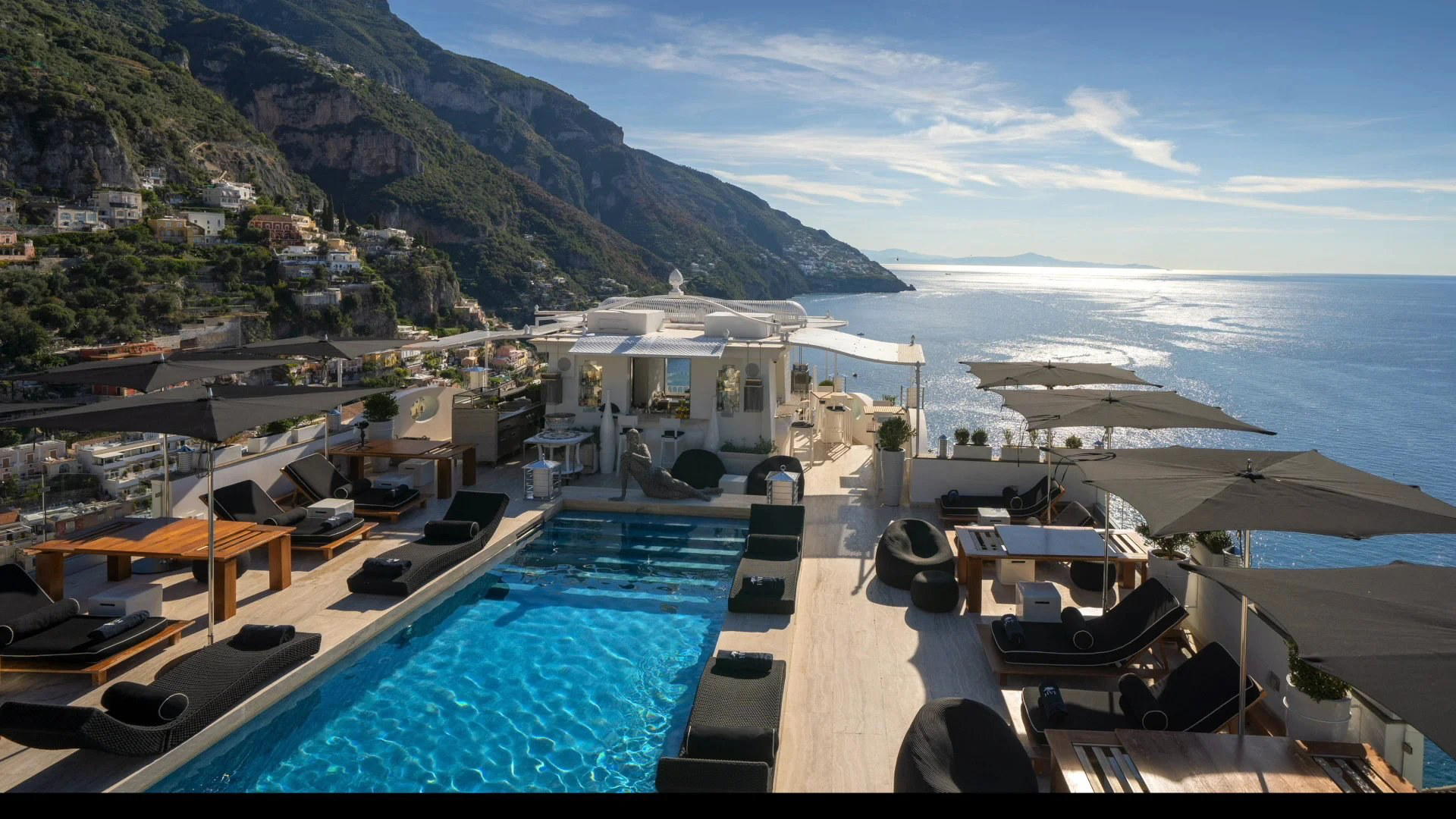
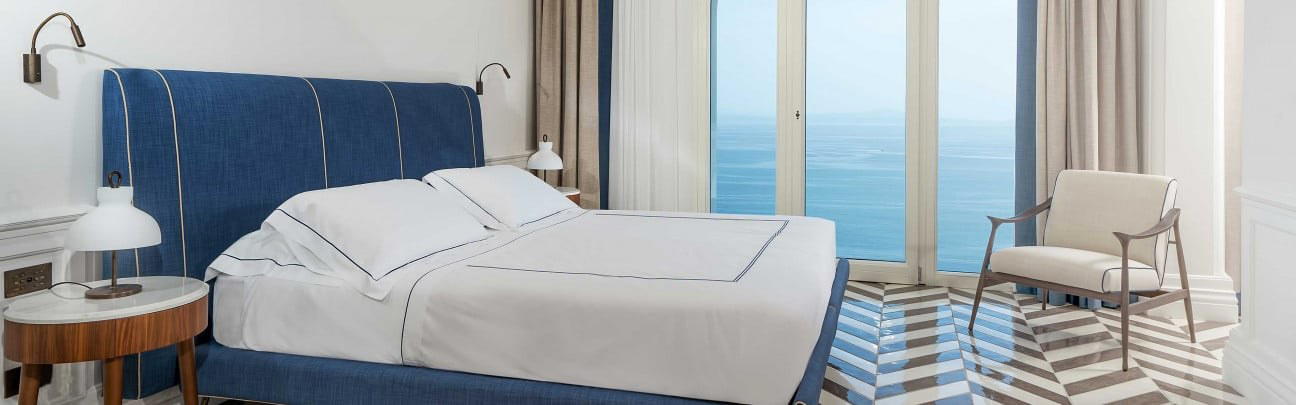
Villa TreVille occupies neither of those categories. It functions more like a private compound than a hotel in the conventional sense, a model that has become increasingly common in the coastal luxury segment across southern Italy. This tier trades amenity breadth for atmosphere density: fewer keys, less public-facing programming, and a physical setting that is the primary product. Guests booking into properties at this level are making a different calculation than guests booking a large-footprint resort. They are paying, in part, for what the property refuses to include.
For dining context, the surrounding Positano scene covers significant range. Chez Black anchors the casual, seafront-pizza end of the spectrum. Da Vincenzo represents dependable Campanian cooking at an accessible price point (€€). Li Galli and Il San Pietro di Positano operate in the contemporary and Italian coastal registers at the upper price tier (€€€€). Guests staying at Villa TreVille are likely to move between these options rather than relying solely on on-site dining, which is consistent with how this property type typically operates. See our full Positano restaurants guide for a complete picture of the dining scene.
The dining ritual on the Amalfi Coast: pacing, setting, and expectation
Southern Italian coastal dining follows a specific temporal logic that differs from northern Italian restaurant culture and from the tasting-menu formalism found at properties like Osteria Francescana in Modena or Le Calandre in Rubano. The meal here is unhurried not as a design choice but as a structural norm. Lunch can extend across two hours without the table feeling pressured; dinner at coastal restaurants typically starts late by northern European standards, with 8 p.m. or later being standard in peak season.
The product logic along this coast remains anchored to proximity: seafood caught in the Tyrrhenian, lemons from the Amalfi groves, and olive oil pressed in the hills above Positano. This is a different culinary idiom than the technique-driven abstraction you find at, for instance, Reale in Castel di Sangro or Piazza Duomo in Alba. The sophistication here is in sourcing proximity and execution simplicity, not in transformation. Grilled fish plated over lemon and herbs is not a lesser ambition; it is a different one, and the coastal setting makes the argument for it more effectively than any menu description could.
For guests dining at Villa TreVille, this broader coastal rhythm applies. The setting's elevation above the waterline shifts the visual context of a meal in ways that lower-lying restaurants cannot replicate. The horizon line, the angle of afternoon light across the water, the sound pattern of a cliff-side location: these are the atmospheric variables that cliff-leading properties trade in. They are not decorative additions to the meal; for many guests, they are the meal's primary component.
The Italian coastal property tier: a broader pattern
Villa TreVille fits into a pattern visible across several Italian coastal and island destinations: the conversion of large private villas into limited-key hotels that retain a residential scale and aesthetic. This model exists in tension with the branded luxury hotel, which offers predictability and service-standard consistency across a larger staff-to-guest ratio. The villa model offers something the branded property cannot: the sense that the physical space was not designed for hospitality but has been adapted to it, and that the adaptation was incomplete enough to preserve character.
The trade-off is real. Service depth, F&B programming, and amenity consistency vary significantly in this tier, and guests who arrive with resort-hotel expectations sometimes find the informality disorienting. Guests who understand the model arrive knowing that the property's distinction lies in its architecture, its position, and its restraint, not in a curated experience program. Italy's most discussed fine-dining destinations, from Dal Pescatore in Runate to Enoteca Pinchiorri in Florence and Enrico Bartolini in Milan, operate within structured, high-service frameworks that are very different from what a villa-format property offers. Understanding those distinctions is part of planning a stay on the Amalfi Coast at this level.
For comparative reference outside Italy, the operational gap between a cliff-side villa property and a full-service urban dining institution is similar to the distance between Positano's seasonal coastal restaurants and a year-round program like Le Bernardin in New York City or Atomix in New York City. Different categories, different metrics, different guest contracts.
Planning a stay: timing, access, and practical context
The Amalfi Coast's peak season runs from June through late August, when road congestion on the SS163 is at its most severe and boat services from Naples and Capri run at full frequency. Visiting in May or September offers materially better access conditions and, at this tier of property, often better rate availability. April and October remain viable months weather-wise, though some smaller properties in the area operate on a seasonal schedule.
Getting to Positano from Naples Centrale by road takes roughly 90 minutes in low-traffic conditions; by ferry from Molo Beverello, the journey is approximately 75 to 80 minutes depending on service type. The cliff-side location of Villa TreVille means water taxi or private boat access from the main beach is typically the most practical option for luggage transfer, a logistical detail worth confirming at booking. Nearby Campanian dining references worth noting include Quattro Passi in Marina del Cantone, a two-Michelin-star address reachable by boat from Positano, and Atelier Moessmer Norbert Niederkofler in Brunico for context on how Italy's fine-dining tier is evolving beyond the coast. Uliassi in Senigallia offers a further data point on Italy's coastal fine-dining register for those building a broader Italian itinerary.
Cuisine and Recognition
A compact peer snapshot based on similar venues we track.
| Venue | Cuisine | Price | Awards |
|---|---|---|---|
| Villa TreVilleThis venue — the venue you are viewing | |||
| La Sponda | Contemporary European, Mediterranean Cuisine | €€€€ | |
| Li Galli | Contemporary | €€€€ | Michelin 1 Star |
| Chez Black | Italian-Pizzeria | ||
| Al Palazzo | Mediterranean Cuisine | €€€ | |
| Da Vincenzo | Campanian | €€ |
Continue exploring
More in Positano
Restaurants in Positano
Browse all →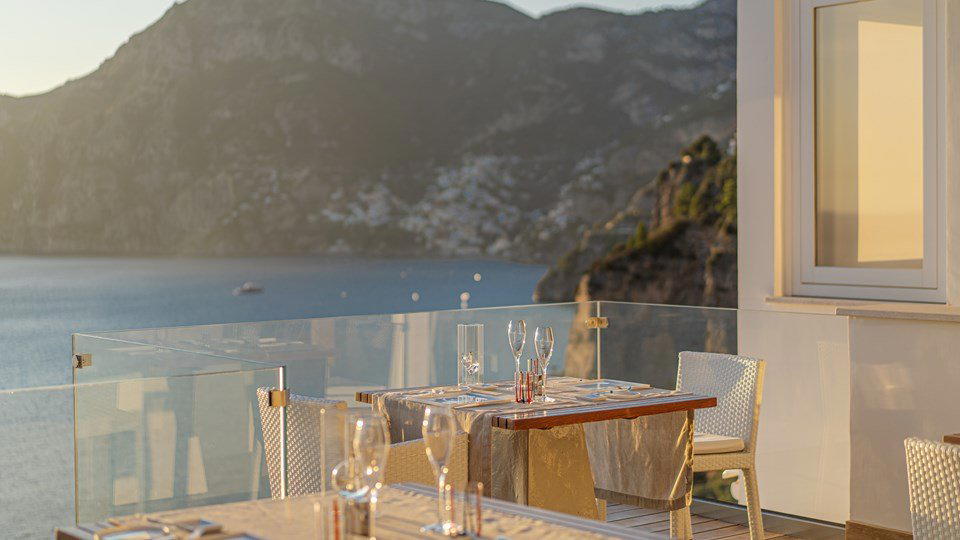
Bars in Positano
Browse all →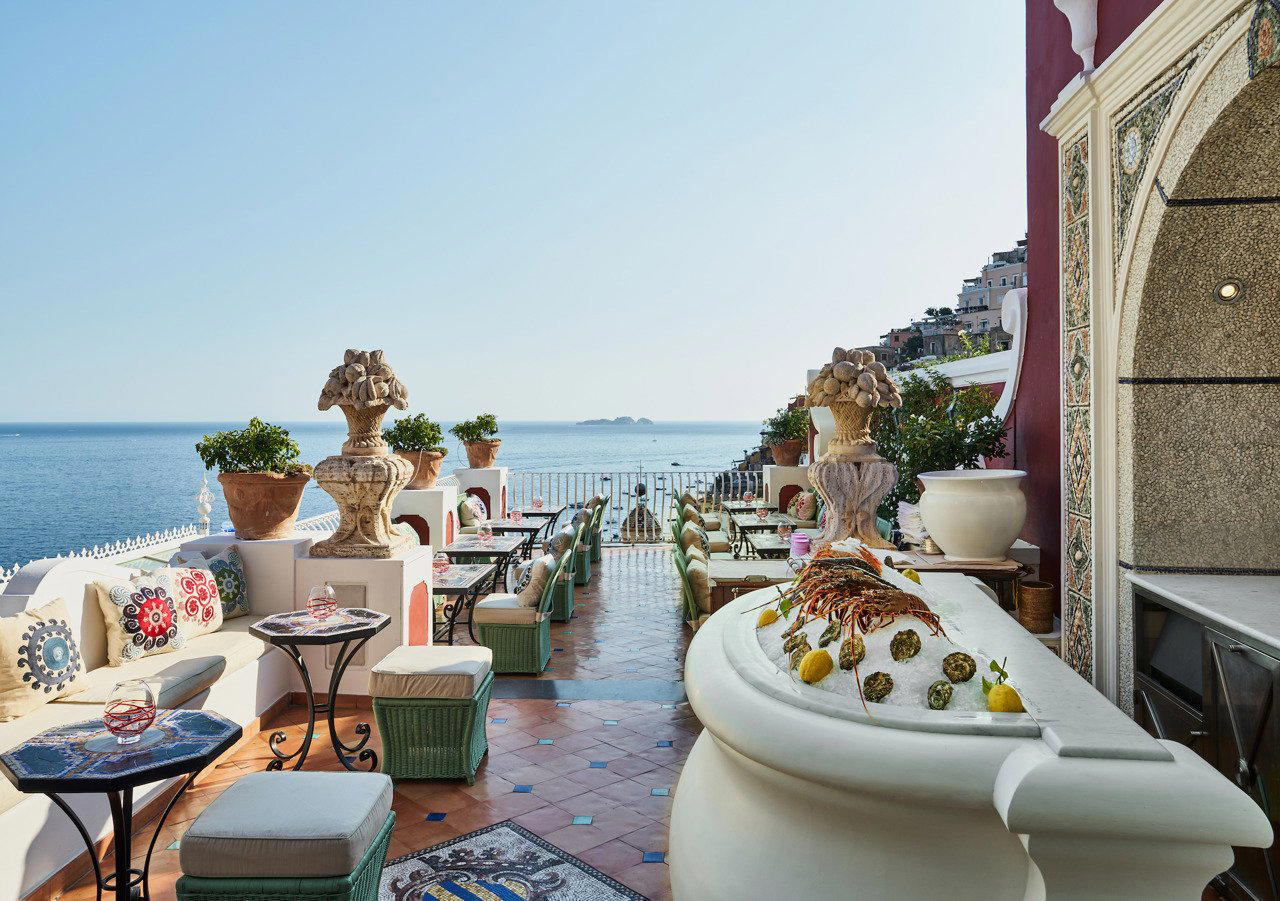
Hotels in Positano
Browse all →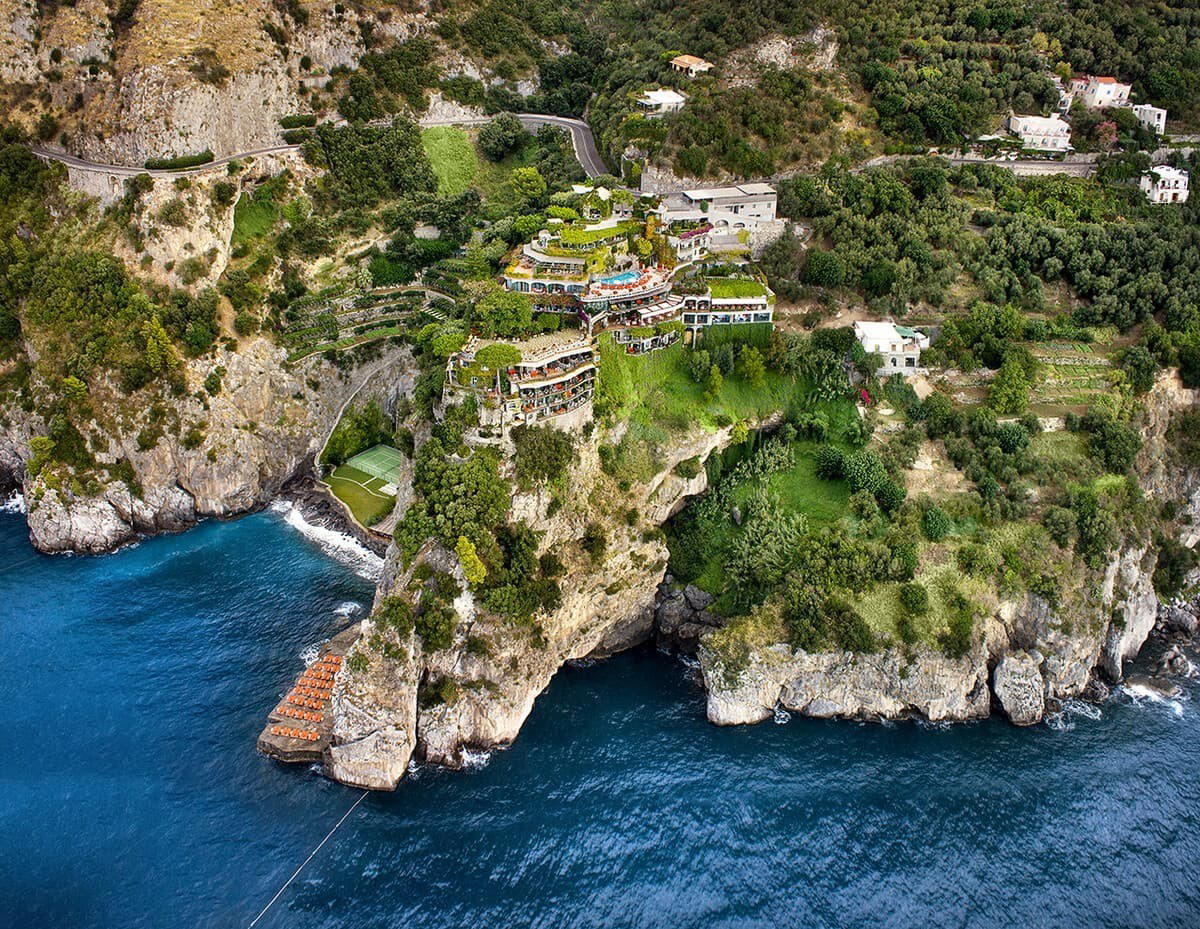
At a Glance
- Romantic
- Elegant
- Scenic
- Sophisticated
- Intimate
- Opulent
- Date Night
- Special Occasion
- Terrace
- Panoramic View
- Hotel Restaurant
- Waterfront
- Extensive Wine List
- Farm To Table
- Local Sourcing
- Organic
- Waterfront
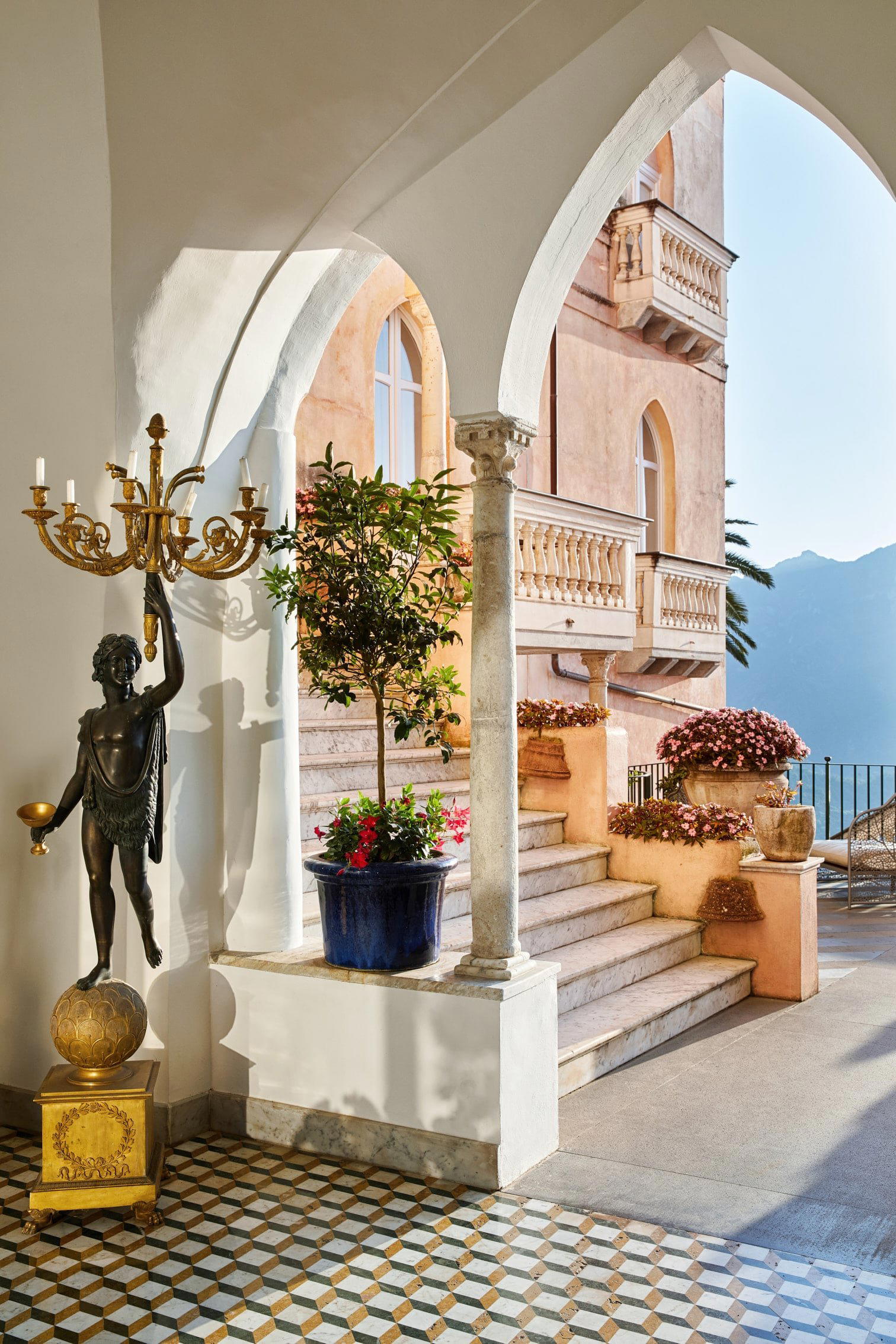
Lanterns flicker casting soft shadows around the terrace, enveloping diners in a spellbinding, theatrical glow amidst serene sea views.