Vic Braseria occupies a corner of Eixample's residential grid at Carrer de Sicília 202, positioned in a neighbourhood where Barcelona's everyday dining culture runs alongside some of the city's most serious restaurant ambitions. Without the awards and tasting-menu architecture of the Eixample's upper tier, it represents a different register of the city's dining offer, one worth understanding on its own terms before you book.
Pearl is the En Primeur Club membership app — saves, bookings, and concierge access live there. Same editors, same standards.
- Address
- C. de Sicília, 202, Eixample, 08013 Barcelona, Spain
- Phone
- +34935321691
- Website
- vicbraseria.com
- Directions
- Get directions
 Saves & bookings on Pearl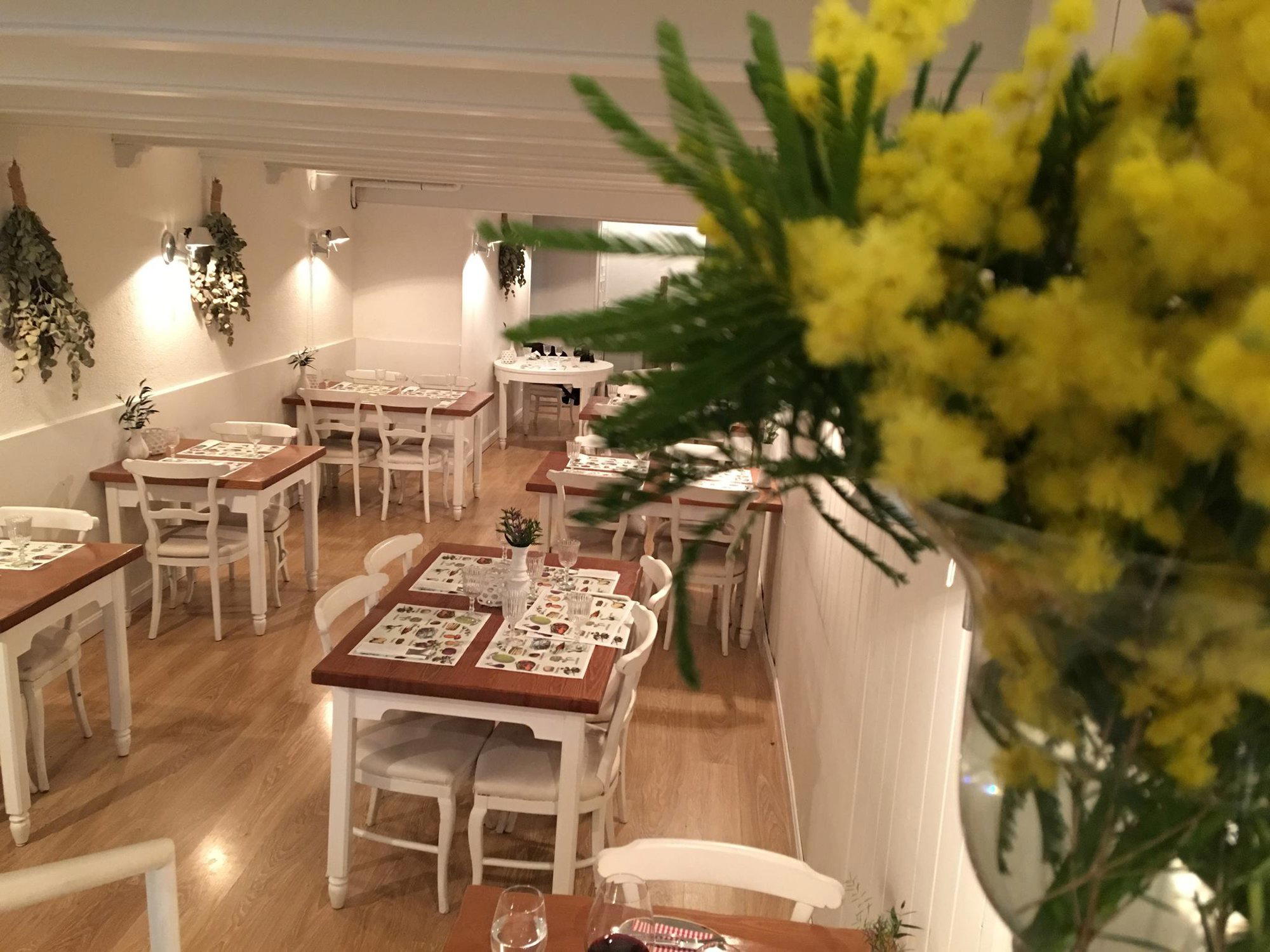
Eixample's Dining Register: Where Braseria Fits
Vic Braseria is a restaurant in Barcelona's Eixample district, serving Catalan Grill Steakhouse cooking at C. de Sicília, 202. Barcelona's Eixample district operates across several distinct dining tiers simultaneously. At one end, tasting-menu destinations like Cocina Hermanos Torres, Disfrutar, and Lasarte anchor the neighbourhood in Spain's creative fine-dining conversation, placing Barcelona alongside El Celler de Can Roca in Girona and Arzak in San Sebastián as a pillar of the country's restaurant culture. At the other end, the neighbourhood's residential streets support a parallel economy of braseries and neighbourhood restaurants that feed Eixample's dense resident population with none of the booking theatre or tasting-menu commitment. Vic Braseria, at Carrer de Sicília 202, sits in that second register.
The braseria format itself has a specific grammar in Catalonia. It is not a bistro in the French sense, nor a tapas bar, nor a restaurant in the full-service tasting-menu mould. A braseria implies a grill-forward kitchen, a menu built around proteins and seasonal vegetables cooked over fire or high heat, and a format that allows for sharing without demanding it. The category sits closer to the Catalan tradition of cuina de mercat, market-driven cooking oriented around what's available rather than what a creative brief demands. That approach tends to produce food that reads as direct on paper but depends entirely on sourcing and execution for its quality differential.
The Address and What It Signals
Carrer de Sicília runs through the right side of Eixample's grid, in the zone the city sometimes calls Eixample Dret. This is not the tourist-facing stretch near Passeig de Gràcia where ABaC and Enigma draw visitors with destination-dining profiles. Carrer de Sicília at number 202 is further east, in a section of the grid that functions primarily as a residential neighbourhood, with the foot traffic patterns and local-clientele composition that implies. Restaurants in this part of Eixample tend to earn their trade from repeat local customers rather than from tourist flow, which creates a different set of incentives around consistency and value than you find at the neighbourhood's more visible addresses.
For the traveller approaching Barcelona with a structured restaurant itinerary, this geography is a planning signal. The city's highest-profile creative restaurants, Disfrutar with its three Michelin stars, Cocina Hermanos Torres with its dramatic converted greenhouse setting, demand advance planning measured in months. Vic Braseria operates in a category where the booking dynamic is fundamentally different, and where the decision to visit is typically made at a different point in a trip's planning cycle.
Planning Around the Braseria Category
What that absence signals, practically, is that this is a category of restaurant where the planning approach differs from destination dining. Spain's braseria and neighbourhood restaurant tier rarely operates with the months-ahead reservation infrastructure that surrounds a place like Mugaritz in Errenteria or Quique Dacosta in Dénia. The norm is same-week or same-day contact, though this varies by venue and by season.
Barcelona's restaurant season has two distinct pressure points: the summer tourist peak from June through August, when the city's more residential restaurants can fill unexpectedly even at short notice, and the local dining season from September through November, when Catalan produce is at its most varied and the city's resident population returns from summer dispersal to its regular tables. For a braseria on the residential side of Eixample, the autumn window tends to produce one coherent version of what a kitchen of this type does: autumn vegetables, game where it appears, mushrooms from the Pyrenean foothills that supply Barcelona's markets. That seasonal logic is worth factoring into timing decisions regardless of the specific restaurant, because it reflects how the braseria format works well across the category.
For those building a Barcelona itinerary with multiple restaurant bookings, the city's top tier requires the longest lead time and is worth anchoring first. Creative tasting-menu seats at Disfrutar or Lasarte often need three to four months of advance notice for prime slots. Neighbourhood braseries and mid-tier restaurants fill the surrounding meals in a trip's structure, and the booking calculus for them is correspondingly looser. Knowing which category a venue belongs to before you begin planning saves the mismatch of arriving at a neighbourhood address with destination-dining expectations, or conversely, approaching a serious fine-dining room without the lead time its booking system requires.
Barcelona's Braseria Tradition in Context
Spain's broader restaurant culture has made the country a reference point across multiple categories. Restaurants like Martin Berasategui in Lasarte-Oria, Azurmendi in Larrabetzu, Aponiente in El Puerto de Santa María, Atrio in Cáceres, and Ricard Camarena in València have contributed to an international conversation about what Spanish cooking means at the highest level. That reputation, however, was built partly on a foundation of serious everyday cooking that the country's market-to-table tradition has maintained across generations. The braseria is one expression of that everyday seriousness: a format that doesn't reach for technique as a selling point, but depends on the quality of its sourcing and the directness of its execution.
Barcelona's relationship with this format is long-standing. The city's mercat culture, anchored by markets like Santa Caterina and the Boqueria, has historically supported a class of restaurants whose cooking intelligence expresses itself in selection rather than transformation. The braseria format is the natural restaurant expression of that logic. The comparison tier worth keeping in mind when assessing any particular braseria isn't the city's tasting-menu rooms but rather the category itself: how well does the kitchen use what the market provides, and does the format deliver what it promises?
For context on how Barcelona's most serious dining rooms approach the city's food culture from the opposite end of the spectrum, our full Barcelona restaurants guide maps the full range from neighbourhood tables to destination addresses. For reference points outside Spain entirely, Le Bernardin in New York City and Atomix in New York City illustrate how different cities have built their own hierarchies of restaurant seriousness, each with its own booking infrastructure and category logic.
Know Before You Go
- Address: C. de Sicília, 202, Eixample, 08013 Barcelona, Spain
- Neighbourhood: Eixample Dret (right side of the Eixample grid, residential character)
- Format: Braseria, grill-forward, market-driven, sharing-friendly without being tapas-format
- Booking approach: No confirmed online booking or phone data available; for braseries in this neighbourhood tier, same-week contact is typically sufficient outside peak tourist season
- Leading timing: Autumn (September to November) aligns with peak Catalan market produce and local dining season
- Price tier: About $30 per person
Just the Basics
Comparable venues nearby, for context on price, style, and recognition.
| Venue | Cuisine | Price | Notes |
|---|---|---|---|
| Vic BraseriaThis venue — the venue you are viewing | el Fort Pienc, Catalan Grill Steakhouse | $$ | Not listed |
| Can Ramonet | Not listed | $$ | la Barceloneta, Traditional Catalan Seafood and Rice |
| Petit Muu | la Dreta de l'Eixample, Spanish Barbecue | $$ | Not listed |
| Pepa Tomate | la Vila de Gracia, Modern Catalan Tapas | $$ | Not listed |
| La Platilleria | el Poble Sec, Modern Spanish Tapas | $$ | Not listed |
| Las Palmeras - Casino Seat | la Marina de Port, Traditional Spanish | $$ | Not listed |
Continue exploring
More in Barcelona
Restaurants in Barcelona
Browse all →
Bars in Barcelona
Browse all →
Hotels in Barcelona
Browse all →
At a Glance
- Classic
- Elegant
- Cozy
- Date Night
- Family
- Group Dining
- Business Dinner
- Open Kitchen
- Extensive Wine List
- Local Sourcing
Current opening hours
- Monday
- 1–4 PM, 7–11 PM
- Tuesday
- 1–4 PM, 7–11 PM
- Wednesday
- 1–4 PM, 7–11 PM
- Thursday
- 1–4 PM, 7–11 PM
- Friday
- 1–4 PM, 7–11 PM
- Saturday
- 1–4 PM, 7–11 PM
- Sunday
- Closed
Hours can change for holidays and private events. Last verified .
Simply decorated with white interiors, bright, spacious, and classically elegant, providing a welcoming atmosphere suitable for couples, families, and friends.