Can Ramonet occupies a corner of Barceloneta that has fed sailors, fishermen, and eventually tourists for generations. Sitting on Carrer de la Maquinista in Ciutat Vella, it represents the older, more grounded register of Barcelona seafood eating: the kind of place where the room does the talking before the menu arrives. A reference point for traditional Catalan coastal cooking in a neighbourhood increasingly defined by its contrasts.
Pearl is the En Primeur Club membership app — saves, bookings, and concierge access live there. Same editors, same standards.
- Address
- Carrer de la Maquinista, 17, Ciutat Vella, 08003 Barcelona, Spain
- Phone
- +34933193064
- Website
- canramonet.es
- Directions
- Get directions
 Saves & bookings on Pearl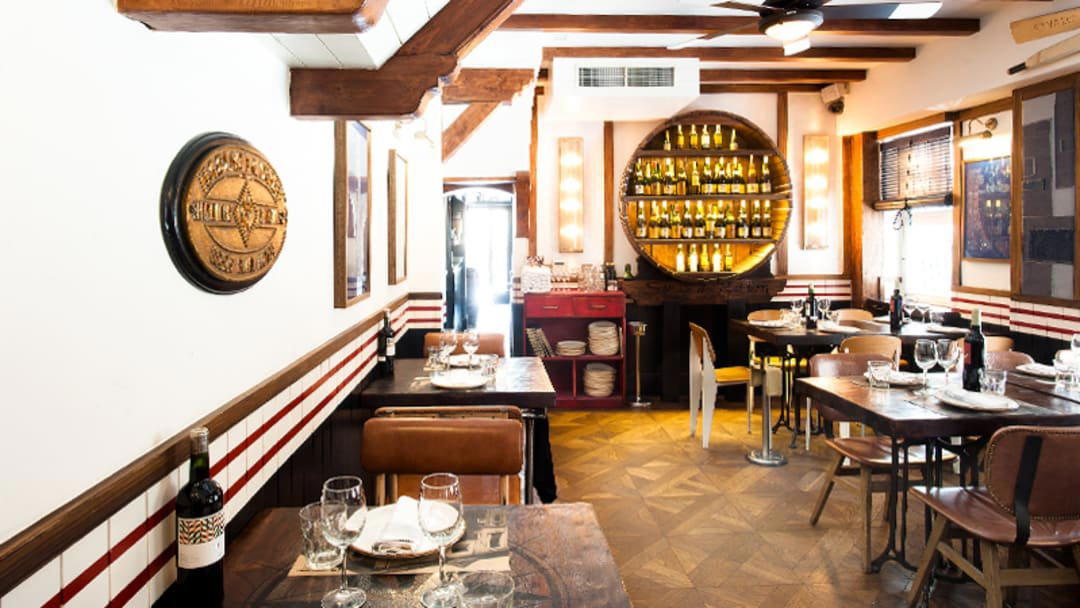
What the Room Tells You Before You Order
Can Ramonet is a restaurant in Barcelona, Spain, serving traditional Catalan seafood and rice at about $29 per person. At the leading sit the modernist counters and tasting menus, places like Disfrutar and Enigma, where the architecture is deliberately disorienting and the food arrives as provocation. Then there is everything below that register: the taberna, the old bodega, the marisqueria. Can Ramonet, on Carrer de la Maquinista in Barcelona's Ciutat Vella, belongs to that second world.
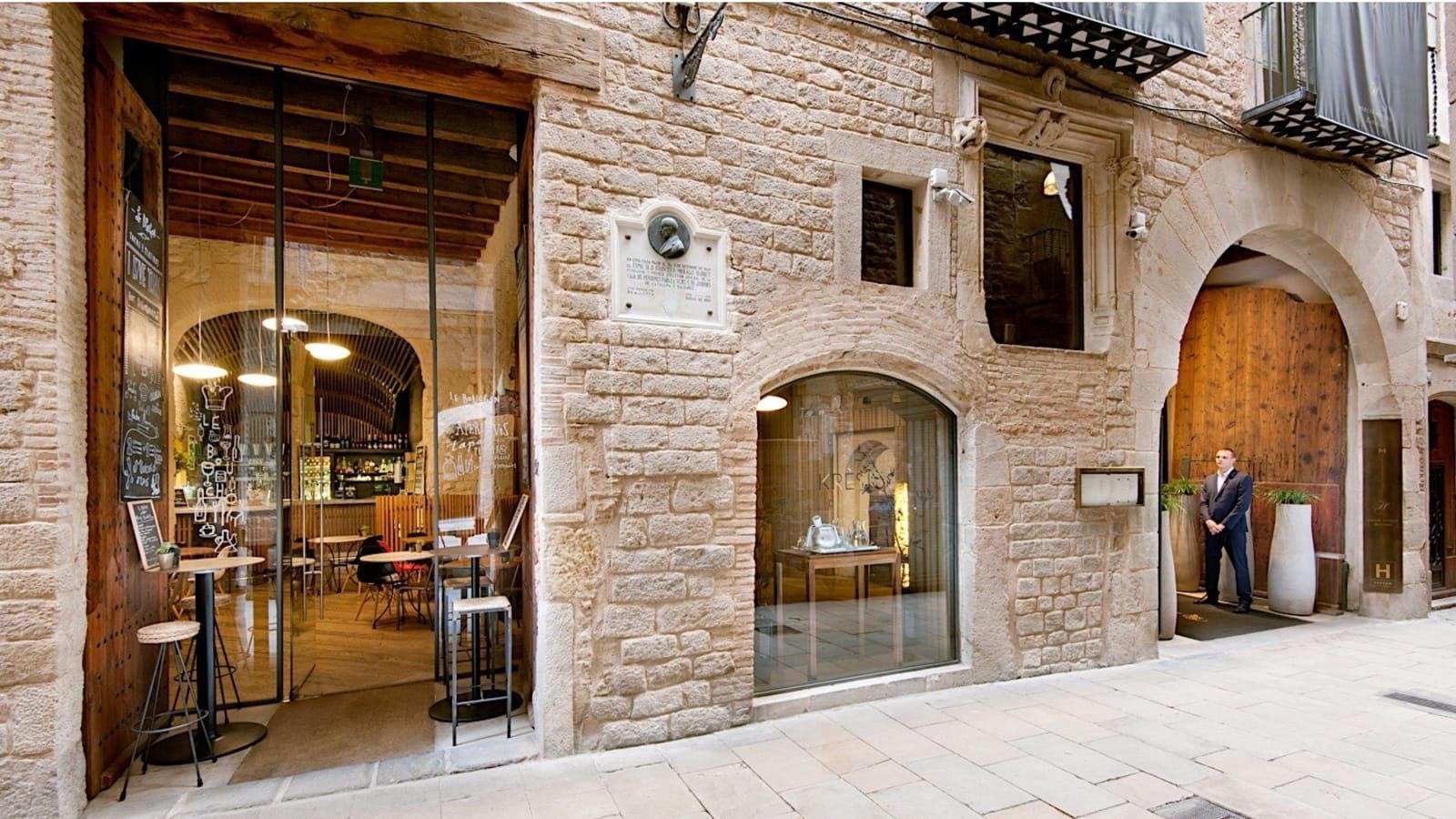
Barceloneta itself is a neighbourhood shaped by utility before it was shaped by tourism. Its grid of narrow streets was designed for density, not spectacle. Can Ramonet sits inside that logic. The building's facade carries age without performing it: stone, timber framing, the kind of patina that accumulates over decades rather than being installed by an interior designer. The room inside continues that register, with the low-lit, close-quartered feel common to Barcelona's surviving traditional bodegas. Barrels, bottles, dark wood, and a lack of acoustic treatment that means the room fills with noise the moment it fills with people. The design argument here is absence of design: no intervention, no concept, just a physical container that has absorbed the character of the neighbourhood over time.
That kind of space increasingly functions as a statement in a city where creative fine dining has moved aggressively upmarket. Barcelona now hosts particularly technically demanding restaurants in Spain, including Cocina Hermanos Torres, ABaC, and Lasarte. Against that backdrop, a room that has not been renovated into relevance carries its own kind of authority.
The Catalan Bodega Tradition and Where Can Ramonet Sits Inside It
The bodega-restaurant is a Barcelona institution, distinct from a tapas bar and distinct from a formal restaurant. It evolved from wine storage and retail into eating, which is why the leading examples still feel more like cellars than dining rooms. The format prioritises informality, shared plates, and wine sold at close to retail prices from bottles stored on-site. The restaurant's address on Carrer de la Maquinista places it in the older residential core of the neighbourhood rather than on the seafront promenade.
That positioning matters. The closer to the beach, the more a Barceloneta restaurant tends to adjust its offer toward the visitor. Restaurants a street or two back from the waterfront operate under different commercial logic, and the room at the restaurant reflects that: it is sized for a neighbourhood audience, not a promenade one.
In Spain's broader coastal cooking tradition, Catalan seafood occupies a specific place. The suquet, the romesco, the all-i-oli applied to grilled fish, the use of local shellfish from the Ebro delta and the Costa Daurada: these are the markers of the tradition the restaurant operates within. Compared to the fish cooking at Aponiente in El Puerto de Santa María or the radical reinterpretation happening at Quique Dacosta in Dénia, this is cooking that does not seek to reframe its source material. The tradition is the point.
Ordering at Can Ramonet: What the Cuisine Rewards
Traditional Catalan coastal restaurants are leading read through their raw material sourcing rather than their technique. The technique in this register is largely settled: grilling, frying, braising with sofregit, dressing with romesco or all-i-oli. What varies is the quality of the fish and shellfish, the freshness of the market supply, and the kitchen's discipline in not overcooking. In a room like this, those variables matter more than any individual dish name on the menu.
The category of dishes to prioritise at any serious Barceloneta marisqueria is whatever reflects the day's market: the gambes de Palamós if available, the cloïsses, the calamar a la planxa, the whole fish grilled simply. These are not complex dishes. Their complexity is in sourcing, timing, and restraint. The second category worth attention in a bodega format is the wine list, which in the leading examples skews toward Catalan DO bottles, particularly from Penedès, Priorat, and Terra Alta, at prices that reflect the cellar-model origin of the institution.
Barcelona's Seafood Eating at Different Price Points
The restaurant operates in a register that Barcelona needs more than it gets credit for. The city's dining conversation is dominated by its Michelin presence, and correctly so: El Celler de Can Roca in Girona is the obvious regional benchmark, while within the city, the progressive tasting menu format at Disfrutar and the structural ambition of Cocina Hermanos Torres define Barcelona's international reputation. But the city's food culture is not only those rooms. The bodega-marisqueria tier, when executed well, provides something the tasting menu cannot: immediacy, informality, and a direct line to a cooking tradition that predates the avant-garde by centuries.
The traditional coastal restaurant occupies the same structural role in Barcelona that a classic fish house occupies in New York or San Francisco. Against the elaborate technique on display at Le Bernardin in New York City or the format experimentation at Lazy Bear in San Francisco, a room like Can Ramonet is not competing on the same terms. It is competing on a different claim entirely: that cooking within a tradition, in a room shaped by decades of use, in a neighbourhood with a specific identity, is its own form of authority.
For visitors building a Barcelona itinerary that spans registers, the restaurant works well before or after an evening at the city's more elaborate dining rooms.
Planning Your Visit
Know Before You Go
- Address: Carrer de la Maquinista, 17, Ciutat Vella, 08003 Barcelona
- Neighbourhood: Barceloneta, within walking distance of the Barceloneta metro station (L4)
- Seasonal market supply varies through the year.
- Format: Traditional bodega-marisqueria; suited to sharing plates and informal pacing
- Nearby context: Barceloneta's restaurant density is high; the streets immediately around Carrer de la Maquinista skew more local than the beachfront strip
Peers in This Market
Comparable venues nearby, for context on price, style, and recognition.
| Venue | Cuisine | Price | Notes |
|---|---|---|---|
| Can RamonetThis venue — the venue you are viewing | Traditional Catalan Seafood and Rice | $$ | Not listed |
| Casa Delfin | Traditional Catalan Tapas | $$ | Sant Pere, Santa Caterina i la Ribera |
| Rambla 92 | Spanish Tapas | $$ | la Dreta de l'Eixample |
| Restaurant Pasa Tapas | Traditional Spanish Tapas & Paella | $$ | Sant Pere, Santa Caterina i la Ribera |
| La Paella de Su | Authentic Valencian Paella | $$ | la Dreta de l'Eixample |
| Al Bistró | Authentic Spanish & Mediterranean Bistro | $$ | Sant Antoni |
Continue exploring
More in Barcelona
Restaurants in Barcelona
Browse all →
Bars in Barcelona
Browse all →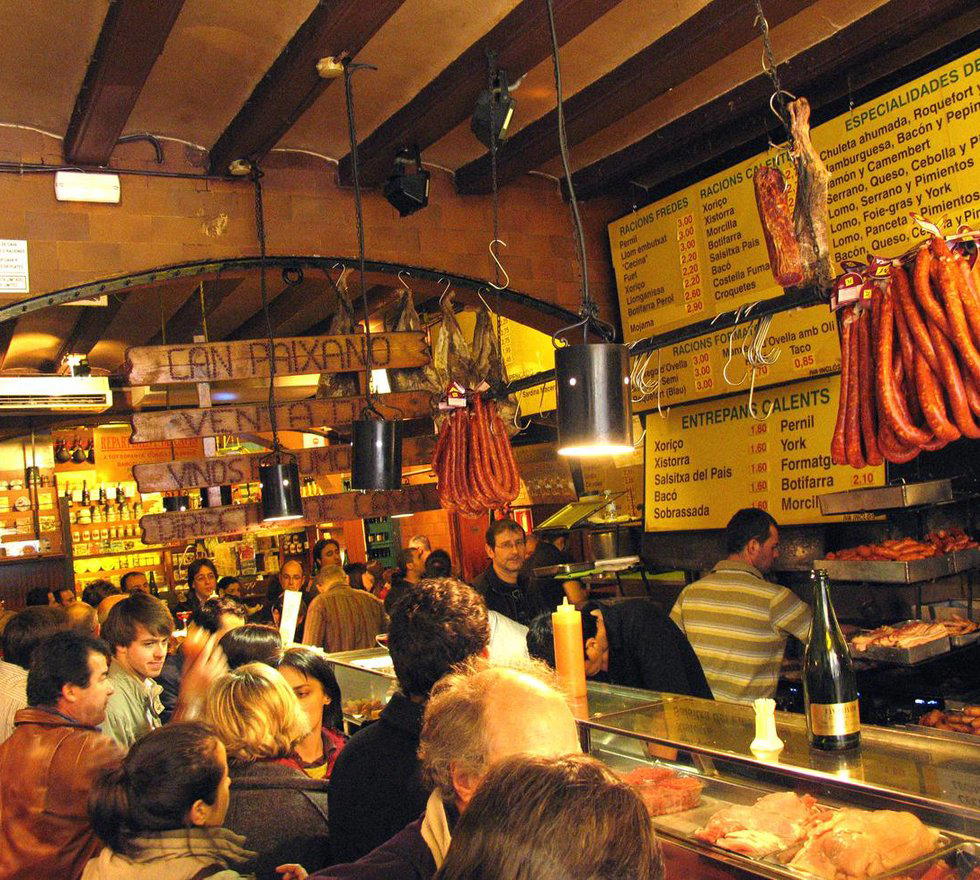
Hotels in Barcelona
Browse all →
At a Glance
- Classic
- Lively
- Well Known
- Group Dining
- Casual Hangout
- Historic Building
- Local Sourcing
Current opening hours
- Monday
- 1 PM–12 AM
- Tuesday
- 1 PM–12 AM
- Wednesday
- 1 PM–12 AM
- Thursday
- 1 PM–12 AM
- Friday
- 1 PM–12 AM
- Saturday
- 1 PM–12 AM
- Sunday
- 1 PM–12 AM
Hours can change for holidays and private events. Last verified .
Lively atmosphere blending Mediterranean history with quick service in a classic Barceloneta tavern setting.