Forno da Filoncino
Our verdict
Via dell'Idrovolante, 25 sits on Lido di Ostia's coastline, where the Tyrrhenian fishing tradition meets Rome's appetite for honest seafood. The address places it in a neighbourhood defined by proximity to the sea and the rhythms of local catch, a context that shapes what arrives on the plate. For those exploring Ostia's dining scene, this is a useful reference point in our full Lido Di Ostia restaurants guide.

Pearl is the En Primeur Club membership app, where members save venues, book tables and use the concierge.
The menu
What to order
- Pizza alla pala
- Supplì
Where the Tyrrhenian Coast Sets the Table
Lido di Ostia occupies an unusual position in the Italian coastal dining conversation. Thirty kilometres southwest of Rome's city centre, it is close enough to draw a steady flow of Romans seeking the sea, yet far enough from the tourist circuits to retain the cadence of a working port town. The seafront along Via dell'Idrovolante carries that duality in physical form: residential buildings giving way to stretches of beach clubs, trattorias, and fish counters where the day's catch determines the afternoon's menu. This is not the curated litorale of the Amalfi Coast or the show-kitchen glamour you find at Quattro Passi in Marina del Cantone. Ostia's version of coastal dining is more functional, more rooted in the habits of people who actually live beside the water.
The address Via dell'Idrovolante, 25 sits within this context. The street name itself references the seaplane station that once operated in this part of Ostia, a detail that positions the neighbourhood as one with genuine maritime history rather than a manufactured seaside identity. That history informs the sourcing logic that governs Italian coastal cooking at its most honest: what the Tyrrhenian yields on a given morning is what the kitchen works with.
The Sourcing Logic of the Roman Coastline
Italian coastal cuisine, at every price point, operates on a principle that inland restaurants rarely achieve in the same way: proximity to source compresses the distance between catch and plate. Along the Lazio coast, this means fish markets where trawlers unload before dawn, and kitchens that calibrate their menus in response. The tradition is visible across Italy's serious seafood addresses, from Uliassi in Senigallia on the Adriatic, where Mauro Uliassi's three-Michelin-star kitchen treats the local catch as the creative engine of the menu, to Gambero Rosso in Marina di Gioiosa Ionica on the Calabrian Ionian coast.
What distinguishes Ostia from many Italian resort coastlines is the continuity of its fishing activity. The Fiumicino and Ostia fishing communities have maintained operational trawler fleets through decades when other Lazio coastal areas shifted toward tourism-only economies. That sustained presence means the supply chain feeding local kitchens remains grounded in actual catch volume rather than imported product dressed up with local branding. For a neighbourhood restaurant on Via dell'Idrovolante, that infrastructure is the baseline condition of cooking: seasonal availability drives the menu rather than a fixed card designed for year-round consistency.
This ingredient-first logic is not unique to Ostia, but it is less compromised here than in coastal towns that have fully pivoted to serving visitors. The regulars who return to addresses in this neighbourhood are Roman families and locals who would notice immediately if the fish tasted like it had travelled. That accountability shapes kitchen decisions in ways that formal awards programmes do not always capture. Compare this to the more formally recognised tier of Italian seafood cooking at Reale in Castel di Sangro or the Adriatic-facing ambition of the broader Italian fine dining scene documented through houses like Osteria Francescana in Modena and Piazza Duomo in Alba, and the difference is not simply one of formality but of the social contract between kitchen and customer.
Ostia in the Wider Italian Dining Conversation
Italy's highest-recognition dining tier, the constellation of addresses that includes Le Calandre in Rubano, Dal Pescatore in Runate, Enoteca Pinchiorri in Florence, Enrico Bartolini in Milan, and Casa Perbellini 12 Apostoli in Verona, operates with tasting menus, advance booking requirements, and prices that reflect the investment in formal technique. Ostia's neighbourhood restaurants occupy a different register entirely, one that Italian food culture has always maintained alongside its fine dining tier: the trattoria or osteria model where the measure of quality is sourcing discipline and consistency rather than creative statement-making.
That model has its own rigour. In Rome itself, the closest equivalent in the refined seafood register is La Pergola, the three-Michelin-star address atop the Rome Cavalieri hotel, where Heinz Beck's cooking operates at the formal extreme of what Roman dining can produce. Ostia's restaurants are not competing in that space. They occupy the far larger middle ground where most Italian eating actually happens, and where ingredient provenance functions as the primary quality signal rather than technique or presentation.
For travellers approaching from beyond Italy, the comparison point might be the sourcing rigour applied at the top of the Atlantic seafood tradition, as practiced at Le Bernardin in New York City, or the seasonal-produce logic seen at Atomix. The underlying philosophy, that the leading cooking starts with what is freshest and most available, translates across those very different contexts. Ostia applies it without ceremony.
Planning a Visit to Via dell'Idrovolante
Lido di Ostia is accessible from central Rome via the Roma-Lido railway line, a journey of approximately 30 to 35 minutes from Porta San Paolo station near Piramide on the Metro B line. The line runs frequently and connects directly to Lido Centro station, from which Via dell'Idrovolante is a short walk toward the seafront. Visitors arriving by car will find the address direct to locate along the coastal strip.
Seasonality matters on this stretch of coast. Summer months bring a much higher volume of Romans escaping the city heat, which means the beach clubs and seafront restaurants operate at full pace from June through August. The shoulder months of April, May, September, and October tend to offer more relaxed conditions and, in many cases, the more compelling catch, as summer waters around Ostia can be warmer and less productive for certain species. Autumn is when the Tyrrhenian fishing season for some of the most prized local fish reaches its peak, and kitchens that follow the catch cycle will reflect that on the plate.
For the most current information, we recommend consulting our full Lido Di Ostia restaurants guide, which covers the neighbourhood's dining options with updated logistics. For context on Italy's broader fine dining spectrum, the guides to Atelier Moessmer Norbert Niederkofler in Brunico, Da Vittorio in Brusaporto, and Villa Crespi in Orta San Giulio offer useful reference points for how the country's formal dining tier operates alongside neighbourhood addresses like this one.
Frequently asked questions
Is Via dell'Idrovolante, 25 suitable for children?
Lido di Ostia has a long tradition as a family seaside destination for Romans, and coastal trattorias in the area generally accommodate families without issue. The address on Via dell'Idrovolante places it within a residential coastal neighbourhood rather than a dense city-centre dining strip, which typically signals a more relaxed, family-tolerant setting.
Is Via dell'Idrovolante, 25 better for a quiet night or a lively one?
Lido di Ostia dining tends to follow the rhythm of the beach: busier on summer weekends, quieter on weekday evenings outside peak season. Via dell'Idrovolante sits in a residential coastal zone of Rome (postal code 00121), which points toward a neighbourhood-restaurant atmosphere rather than a high-volume tourist circuit. For a quieter table, a midweek visit outside July and August is the reliable call along this stretch of coastline.
How do you get to Via dell'Idrovolante, 25 from central Rome?
The address at Via dell'Idrovolante, 25, 00121 Roma RM is reachable from central Rome via the Roma-Lido railway line in approximately 30 to 35 minutes from Porta San Paolo station. Lido di Ostia sits roughly 30 kilometres southwest of the city centre, making it a practical half-day or evening trip from Rome without requiring a car. The rail connection is the standard local approach and runs frequently throughout the day.
What do regulars order at Via dell'Idrovolante, 25?
What can be said is that restaurants operating on the Roman coast at Ostia are positioned within 30 kilometres of the Tyrrhenian Sea, and the sourcing logic of Italian coastal dining at this proximity typically centres on daily catch rather than fixed signatures. For current dish information, reaching the venue directly remains the reliable route.
How It Stacks Up
| Venue | Cuisine | Price | Awards | Notes |
|---|---|---|---|---|
| Via dell'Idrovolante, 25This venue (the venue you are viewing) | Italian Bakery & Pizza | $10–20 | Not listed | Not listed |
| Atelier Moessmer Norbert Niederkofler | Modern Alpine Fine Dining | $300–500 | 3 Michelin Stars · World's 50 Best #20 | Italian, Creative |
| Dal Pescatore | Classic Italian Fine Dining | $200–300 | 3 Michelin Stars · World's 50 Best #38 | Italian, Italian Contemporary |
| Enoteca Pinchiorri | Contemporary Italian Fine Dining | $200–300 | 3 Michelin Stars · World's 50 Best #32 | Italian - French, Italian Contemporary |
| Enrico Bartolini | Modern Italian Fine Dining | $300–500 | 3 Michelin Stars · World's 50 Best #85 | Creative |
| Le Calandre | Modern Italian Fine Dining | $200–300 | 3 Michelin Stars · World's 50 Best #31 | Progressive Italian, Creative |
Continue exploring
More in Lido Di Ostia
Restaurants in Lido Di Ostia
All restaurants in Lido Di Ostia →
Bars in Lido Di Ostia
Browse all →

Details
- Rustic
- Cozy
- Brunch
- Casual Hangout
- Local Sourcing
- A La Carte
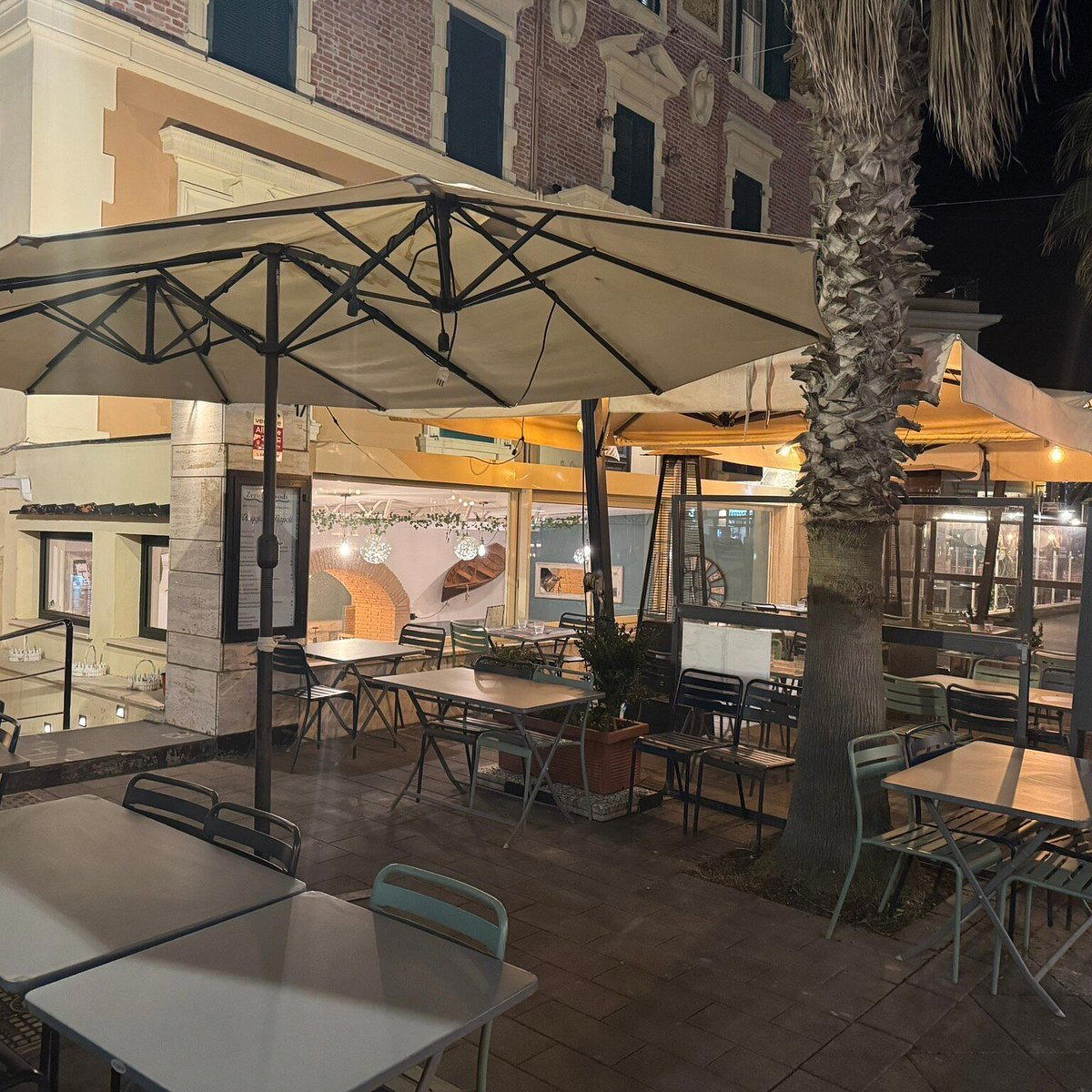
Casual bakery atmosphere with warm, welcoming vibe focused on fresh baked goods.