
Tabelog 100 #85
Our verdict
Tokyo’s vegetarian Indian dining sits in a different register from the city’s luxury tasting counters: modest pricing, long hours, and ingredient clarity matter more than ceremony. VEG KITCHEN in Taito fits that brief, with Tabelog 100 recognition for Asian and ethnic cuisine in Tokyo and a vegetable-forward format that gives plant-based diners a practical anchor near Okachimachi.

Pearl is the En Primeur Club membership app, where members save venues, book tables and use the concierge.
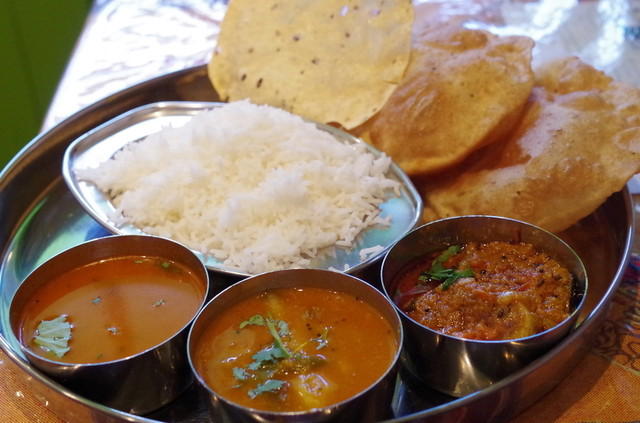
The menu
What to order
- South Indian dosa
- Thali
- Keema curry (veg)
- Dal Makhani
- Indian-Chinese dishes
Approaching VEG KITCHEN in Tokyo, the mood shifts from trophy-dining theatre to the practical pleasures of a small, casual restaurant: efficient lunch, relaxed dinner and serious food without price signalling. VEG KITCHEN fits that register: an Indian, Indian curry, Asian and ethnic listing, presented as a practical Tokyo meal rather than a luxury performance.
That matters in Tokyo, where casual dining can require as much planning as formal reservations, especially when visitors want something specific, affordable and easy to fit into a day. Indian and curry-focused cooking often offers a useful framework for flavour, with grains, dairy, spices and vegetables able to carry a meal confidently. Here, the appeal is less novelty than utility in a city where the best everyday addresses are not always obvious to travellers.
Indian and curry-focused cooking in a city that often rewards specialists
Tokyo’s deep curry culture spans many styles, from Japanese curry rice to specialist curry rooms and Indian restaurants. VEG KITCHEN sits within that broader field. Its public category listing is clear: Indian, Indian curry, Asian and ethnic. That changes the meal’s expectation: the restaurant is not being sold as ceremony, but as a focused casual address with a defined role in the city’s dining map.
Recognition gives that usefulness critical weight. VEG KITCHEN was selected for Tabelog Hyakumeiten in 2024. In Tokyo, where user-review culture is severe and category competition dense, that listing suggests the restaurant is understood as more than simple neighbourhood convenience. Its Tabelog score is 3.52, which reads differently in Japan than on global platforms; on Tabelog, mid-three scores can mark a restaurant with recognised specialist appeal.
Ingredient handling is the quiet point. A curry-focused Indian kitchen depends less on luxury product than on the command of staples: lentils, rice, flour, greens, root vegetables, dairy, spice blends and pickles. Tokyo’s premium dining often measures seriousness through provenance, counter scarcity or elaborate service. This format asks whether everyday cooking can hold attention across a full meal, a useful counterweight to trophy dining, especially for visitors already planning richer Tokyo bookings.
For a broader Tokyo plan, compare this address with narrowly Japanese formats, not only other curry rooms. Other Tokyo dining rooms may focus on charcoal, skewers, seafood or formal counters, while curry-focused diners can also look across the city’s many casual specialist options. The comparison shows how wide Tokyo’s casual tier has become: curry, Indian cooking and other everyday formats can all sit below formal dining while giving distinct reasons to cross town.
Tokyo makes the format more useful than fashionable
The location is part of the argument. Tokyo rewards practical dining as much as rarity: office foot traffic, shopping days, train-led movement and meals that work for lunch, friends, children or a quick dinner. VEG KITCHEN does not need to perform luxury scarcity. Its role is clearer as a dependable casual restaurant within the city’s broad dining field.
That low-friction structure gives the kitchen value distinct from higher-priced Asian and ethnic restaurants in Tokyo. Hasu no Sato Shin okachimachi honten, in the local comparison set, runs in a different rhythm, while Andhra Kitchen sits in a related Indian-dining conversation. Raffles curry occupies a curry bracket that may also interest budget-minded diners. VEG KITCHEN’s appeal is the combination of category focus, Tabelog recognition and modest spend. Dinner and lunch are both listed at JPY 1,000 to JPY 1,999.
The practical information points to a casual Tokyo room rather than a formal destination built around ceremony. The important facts are simple: the public category listing covers Indian, Indian curry, Asian and ethnic, the restaurant has 2024 Tabelog Hyakumeiten recognition, and the listed budget keeps it in a repeatable everyday range. These details are not glamorous, but they decide whether a restaurant fits an actual Tokyo day.
For wider itinerary building, this stop belongs beside Our full Tokyo restaurants guide, with adjacent planning through Our full Tokyo hotels guide, Our full Tokyo bars guide, Our full Tokyo wineries guide and Our full Tokyo experiences guide. It also sits in a broader national and international conversation about casual specialist food, where unnamed curry rooms, cafés, bar counters and quick-service kitchens can be as useful to a trip as formal reservations.
The reader decision: dietary clarity without luxury theatre
The editorial case for VEG KITCHEN is strongest for diners wanting a Tokyo meal that is specific, affordable and easy to understand without becoming a logistical project. The listed budget covers both lunch and dinner at JPY 1,000 to JPY 1,999, keeping the restaurant in a range that can work as a main plan or as a reset between more elaborate meals. Its 2024 Tabelog Hyakumeiten recognition gives that practical usefulness an added signal of credibility.
Travellers seeking chef biography, counter intimacy or trophy-service choreography should look elsewhere. The value is grounded: a recognised Indian and curry-focused kitchen in Tokyo, priced for repeat use rather than ceremony. It works as a corrective meal between richer Tokyo bookings, or as the main plan for diners who want the category to be clearly stated before they go. Other casual Tokyo choices show the city’s broad low-to-mid price range, but this address has the clearer role for curry-minded diners: it makes the format legible, affordable and easy to place within a Tokyo itinerary.
Frequently asked questions
When is VEG KITCHEN open?
Check VEG KITCHEN’s official channels for current opening hours before visiting.
Is VEG KITCHEN expensive?
Pricing at VEG KITCHEN is listed as JPY 1,000 - JPY 1,999 for both lunch and dinner.
Where exactly is VEG KITCHEN?
Tokyo.
What do critics highlight about VEG KITCHEN?
Critics point to its Tabelog Hyakumeiten recognition for 2024 and its Tabelog score of 3.52. The draw is clear: Indian, Indian curry, Asian and ethnic cooking in Tokyo at a listed lunch and dinner range of JPY 1,000–JPY 1,999.
Can VEG KITCHEN handle vegetarian requests?
Check VEG KITCHEN’s official channels for the latest details. The public category listing covers Indian, Indian curry, Asian and ethnic cooking in Tokyo.
Quick Comparison
Comparable venues at a similar level for quick context.
| Venue | Cuisine | Price | Awards | Notes |
|---|---|---|---|---|
| VEG KITCHENThis venue (the venue you are viewing) | Vegetarian Indian (South & North Indian, Indo-Chinese) | $10–20 | Tabelog 100 #85 | Not listed |
| Anjuna | Traditional Indian curry house | Not listed | Tabelog 100 #65 | Hino |
| Gin Cock | Indian-style curry house | $10–20 | Tabelog 100 #79 | Chiyoda |
| Kerala no Kaze no Morning | Kerala South Indian Breakfast | $10–20 | Tabelog 100 #73 | Ōta |
| PondyBhavan Musashi nitta | Traditional South Indian restaurant | $10–20 | Tabelog 100 #52 | Ōta |
| Curry & Spice Bar Curry Bito | Indian-style Curry & Spice Bar | $10–20 | Tabelog 100 #56 | Chiyoda |
Recognition history
Dated appearances from independent guides and award organizations, with the underlying list record or original source where available.
Tabelog 100 #85 · No. 85
Tabelog · Tabelog 100 - Asian cuisine / Ethnic cuisine - TOKYO - 2024
Continue exploring
More in Tokyo
Restaurants in Tokyo
All restaurants in Tokyo →









Details
- Group Dining
- Family
- Casual Hangout
- Solo
- Late Night
- Standalone
- A La Carte
- Beer
- Wine
- Chai
- Vegetarian Friendly
- Vegan Options
- Halal
Current opening hours
- Monday
- 11 AM–3 PM, 5–10 PM
- Tuesday
- 11 AM–3 PM, 5–10 PM
- Wednesday
- 11 AM–3 PM, 5–10 PM
- Thursday
- 11 AM–3 PM, 5–10 PM
- Friday
- 11 AM–3 PM, 5–10 PM
- Saturday
- 11 AM–3 PM, 5–10 PM
- Sunday
- 11 AM–3 PM, 5–10 PM
Hours can change for holidays and private events. Hours as of .