Tabelog 100 #56
Our verdict
A nine-seat counter in Iidabashi puts Tokyo’s spice-curry culture into a compact bar format, with vegetable-focused options, drinks that include wine, cocktails, and shochu, and recognition on Tabelog’s Asian and Ethnic Tokyo 100 list for 2024. Curry & Spice Bar Curry Bito is a small-format choice for readers tracking the city’s serious casual curry scene rather than formal dining.

Pearl is the En Primeur Club membership app, where members save venues, book tables and use the concierge.
The menu
What to order
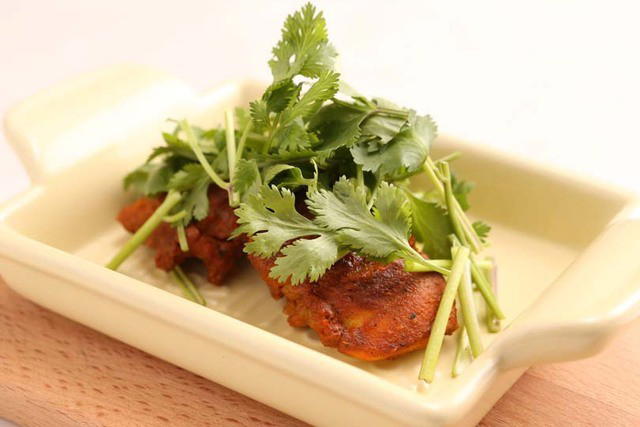
- Original Indian curry
- Creative spice dishes
In Tokyo, the scale speaks before the menu: direct and casual rather than theatrical. Tokyo curry moves between office-lunch speed, specialist obsession, and drinking-food flexibility; Curry & Spice Bar Curry Bito sits in that overlap, treating spice seriously without turning the meal into a tasting menu.
Tokyo curry has a split personality. One side serves fast, low-cost lunches for office districts and station neighborhoods. Another has become a specialist category with dedicated followings and queues closer to ramen culture than conventional restaurants. Tokyo suits the middle lane: practical, concentrated, and low on theatre.
A casual room and the discipline of a spice bar
A focused curry meal changes the rhythm. It narrows the distance between cooking and guest experience, reduces tolerance for slack service, and makes pacing part of the meal. In Tokyo, this kind of format rewards single diners and small parties: not private-room ceremony, but a close read of what a kitchen can do when the room feels focused.
That format explains why the bar element matters. Curry in Tokyo is no longer limited to daytime plates and quick turnover. Here, the category widens into Asian, ethnic, curry, and dining-bar territory. Editorially, that places the restaurant apart from simple curry-only lunch counters. The meal stays casual, but the structure suggests spice-led cooking and a room built around direct service.
The appeal is not built on formality. Tokyo’s spice-curry scene has been shaped by local preferences for layered, precise seasoning rather than simple heat. A kitchen working in the Asian, ethnic, curry, and dining-bar category belongs to the newer casual-specialist strand, where curry is judged by balance, structure, repeatability, and intensity.
For readers mapping Tokyo by category, this address pairs best with broader city research rather than a single-destination itinerary. Tokyo’s dining range is easier to read through contrasts: other seafood counters, casual dining rooms, yakitori specialists, café formats, and curry reference points across the city. Together, they show Tokyo’s casual dining intelligence distributed across sharply defined formats, not only luxury rooms.
Recognition that points to a serious casual tier
The clearest trust signal is Tabelog’s 2024 recognition, with Curry & Spice Bar Curry Bito listed in the Asian, ethnic, curry, and dining-bar category. That recognition is more useful than a vague claim of popularity: the restaurant is read across both curry and broader Asian-ethnic territory, exactly where Tokyo spice specialists can be harder to classify.
The listing’s 3.69 score should be read in Tokyo context. Tabelog scores in Japan are conservative compared with many global review platforms; high-threes numbers can signal a serious following, especially for casual restaurants. The right comparison is not luxury omakase or French tasting menus, but other specialist Asian and curry addresses competing for repeat local attention.
Among the provided Tokyo comparison set, category and format separate the restaurant from other Asian dining such as Kin Fuku Hong Kong Bishoku, and from broader casual Asian choices such as Old Thailand Iidabashi ten, TOKYO BHAVAN, Garak, and Yu. Curry & Spice Bar Curry Bito occupies a narrower lane: spice-led, casual, and modestly priced, with a listed range of JPY 1,000 - JPY 1,999. The format gives the kitchen and service less room to hide, which is why this kind of place can reveal more than a larger restaurant with a deeper menu.
There is also a Tokyo argument. The city’s practical weekday movement and more leisurely dining culture give spice-curry and Asian casual restaurants an audience that cares about food without always wanting the cost, duration, or formality of a full evening reservation. Tokyo does this pattern well: a specialist can carry authority without asking the guest to perform fine-dining seriousness.
How to place it within a Tokyo itinerary
This is not a proxy for Tokyo luxury dining. It is better understood as a specialist stop for travelers who already plan by city and category. Build it into a Tokyo route, then let the rest of the trip cover the city’s broader range through our full Tokyo restaurants guide, our full Tokyo hotels guide, our full Tokyo bars guide, our full Tokyo wineries guide, and our full Tokyo experiences guide.
For a wider Japan comparison, the point is not ranking curry against every regional form of casual dining, but seeing how focused concepts travel across cities. Across Japan, casual counters, cafés, contemporary dining rooms, regional curry shops, and neighborhood restaurants show the same national pattern: defined formats can carry serious editorial weight when the concept is disciplined.
Internationally, the parallel is scale rather than cuisine. In other major dining cities, specialist bars and casual Japanese formats make the same traveler’s point: the valuable meal is often the one with a narrow brief, clear bar logic, and enough recognition to separate it from generic casual dining. In Tokyo, that is where Curry & Spice Bar Curry Bito earns its place.
Frequently asked questions
Where is Curry & Spice Bar Curry Bito in Tokyo?
Tokyo.
What should I budget for a meal at Curry & Spice Bar Curry Bito?
Pricing at Curry & Spice Bar Curry Bito is listed as JPY 1,000 - JPY 1,999.
What time does Curry & Spice Bar Curry Bito open and close?
Specific opening hours were not provided in the verified venue data, so check directly with Curry & Spice Bar Curry Bito before visiting.
What's Curry & Spice Bar Curry Bito best at?
Its strongest point is its focused position in Tokyo’s Asian, ethnic, curry, and dining-bar category. The 2024 Tabelog recognition and 3.69 score give that focus clear outside validation.
Can Curry & Spice Bar Curry Bito adjust for dietary needs?
Specific dietary-accommodation details were not provided in the verified venue data, so contact Curry & Spice Bar Curry Bito directly before visiting if you have dietary requirements.
Is Curry & Spice Bar Curry Bito suitable for children?
Specific child-policy details were not provided in the verified venue data. For family visits, confirm directly with Curry & Spice Bar Curry Bito before going.
Recognition, Side-by-Side
Nearby venues at a similar price tier for orientation.
| Venue | Cuisine | Price | Awards | Notes |
|---|---|---|---|---|
| Curry & Spice Bar Curry BitoThis venue (the venue you are viewing) | Indian-style Curry & Spice Bar | $10–20 | Tabelog 100 #56 | Not listed |
| Ethiopia Curry Kitchen Takadanobaba ten | Japanese Curry | $1–10 | Tabelog 100 #72 | Shinjuku |
| Curry Shop Hatsukoi | Creative Spice Curry & Craft Biryani | $10–20 | Tabelog 100 #23 | Shibuya |
| Tandoor Bar Kamalpur Kiba ten | Creative Indian Tandoor Bar | $20–30 | Tabelog 100 #71 | Kōtō |
| Tokyo Bombay Ebisu honten | Indian Curry House | Not listed | Tabelog 100 #90 | Shibuya |
| Curry Spice Gelateria KALPASI | Indian-style curry and spice gelato | $10–20 | Tabelog 100 #17 | Setagaya |
Recognition history
Dated appearances from independent guides and award organizations, with the underlying list record or original source where available.
Tabelog 100 #56 · No. 56
Tabelog · Tabelog 100 - Asian cuisine / Ethnic cuisine - TOKYO - 2024