Val Pomaro
Val Pomaro sits on Via Scalette in Arquà Petrarca, among the more preserved medieval hill villages in the Euganean Hills south of Padua. The restaurant draws on the agricultural character of the surrounding countryside, placing it within a small category of Veneto trattorie where the provenance of ingredients defines the menu rather than decorates it. For travellers routing through the Paduan hinterland, it represents the kind of destination that rewards a detour from the main road.
Pearl is the En Primeur Club membership app — saves, bookings, and concierge access live there. Same editors, same standards.
- Address
- Via Scalette, 19, 35032 Arquà Petrarca PD, Italy
- Phone
- +393206650364
- Website
- ristorantevalpomaro.it
- Directions
- Get directions
 Saves & bookings on Pearl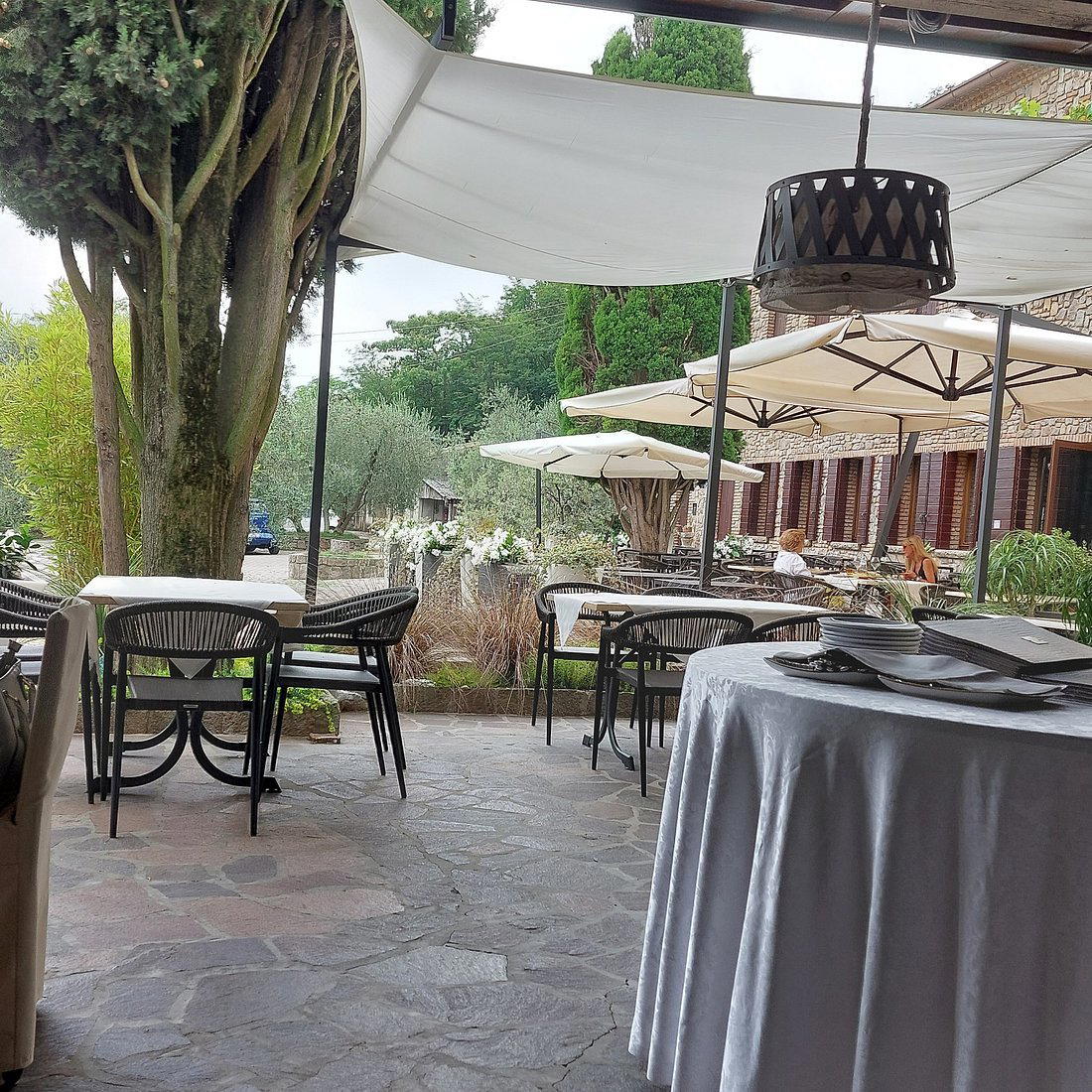
Stone, Slope, and the Particular Logic of Eating in Arquà Petrarca
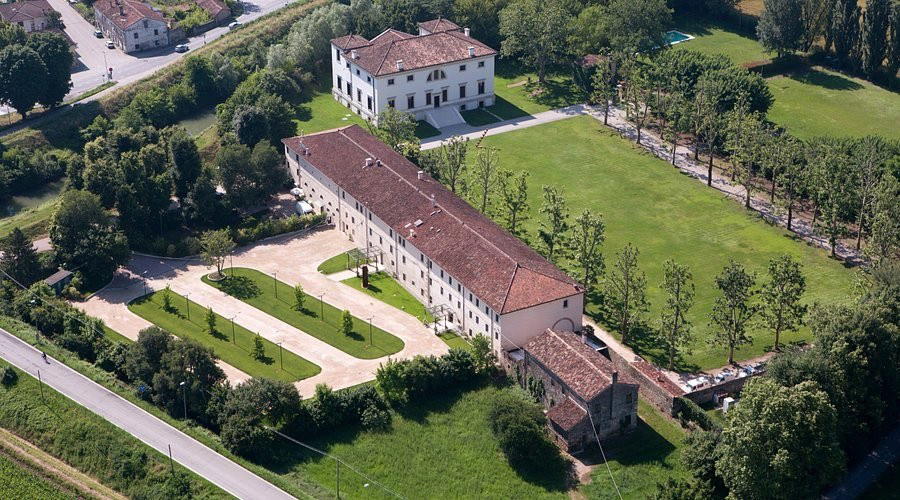
Approaching Arquà Petrarca from the Paduan plain, the road tightens as it climbs into basalt and trachyte, past terraced vineyards and olive groves that have occupied this volcanic pocket of the Euganean Hills since Roman times. The village itself is among the more intact medieval settlements in the Veneto: narrow calate, stone archways, and a quietness that owes as much to population as to topography. Via Scalette — a stepped lane that reads exactly as its name suggests — places Val Pomaro inside this physical logic. You arrive on foot. The surroundings do a significant portion of the work before a plate reaches the table.
That geographical specificity matters when thinking about what a restaurant in this location is actually doing. Arquà Petrarca is not a dining destination in the way that, say, Rubano is for Le Calandre, or Alba for Piazza Duomo. There is no density of starred kitchens pulling a critical mass of food-motivated visitors. What draws people here is the village itself, the house of Petrarch, the loquat trees, the particular amber light of late afternoon on volcanic stone, and the restaurants that work within this context operate accordingly. They answer to the place rather than to a culinary programme imposed upon it.
The Euganean Hills as Larder
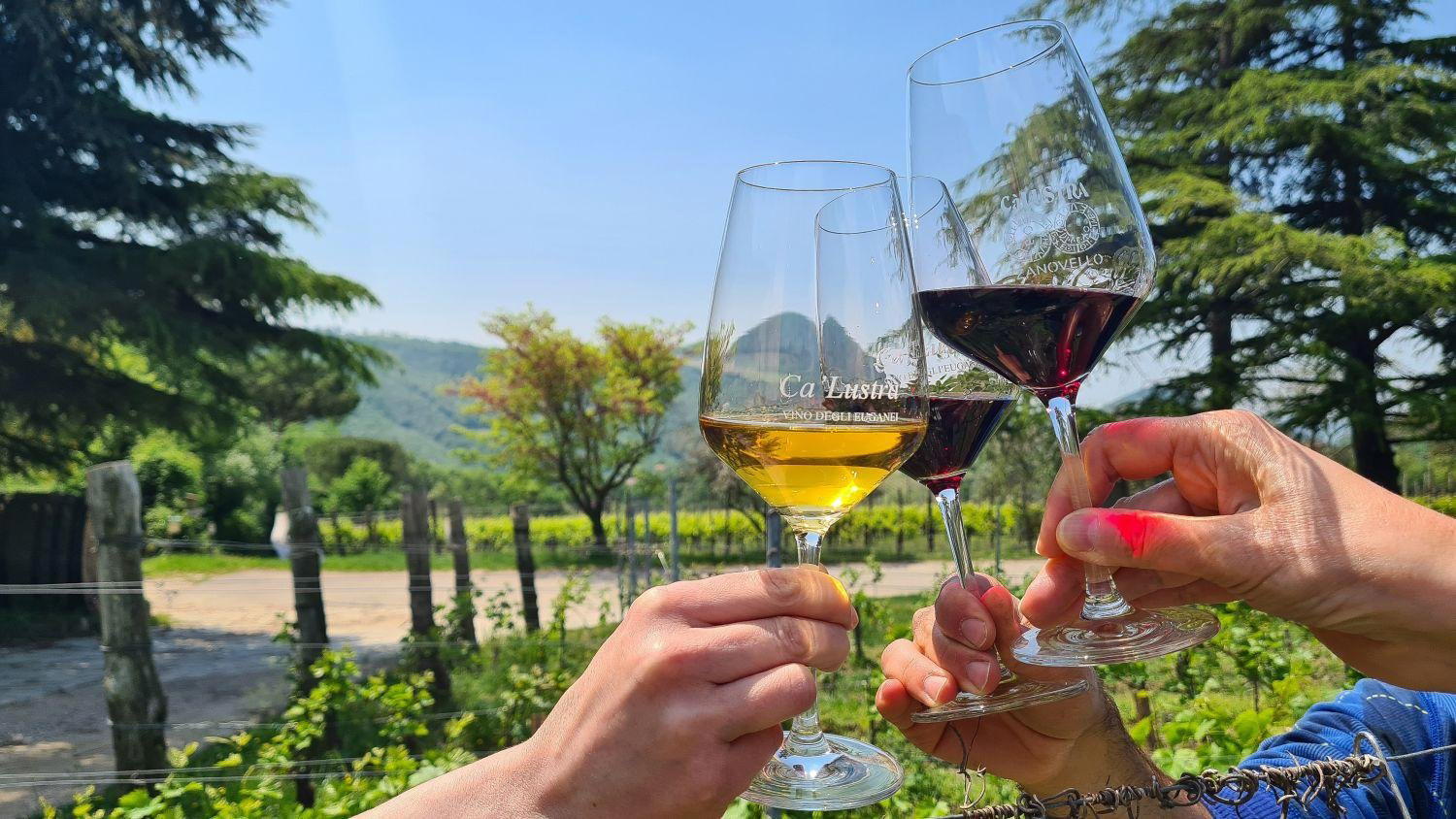
The Colli Euganei constitute one of the Veneto's most geologically distinct growing zones: volcanic soil, warm microclimates sheltered from Alpine cold, and a long agricultural tradition that runs from the Roman centuriation of the plain below to the DOC wine designations recognised in the late twentieth century. This combination produces ingredients with a regional character that is genuinely different from the alluvial flatlands of the Po Delta or the lake country to the north. Olive oil pressed from the hills' small-fruited cultivars carries a grassy, slightly bitter edge. The Fior d'Arancio Moscato grown on these slopes, a DOCG since 2010, is aromatic in a way that distinguishes it clearly from Moscato d'Asti. Wild herbs, foraged mushrooms, and the particular freshwater fish of the Euganean springs all feed into a local culinary vocabulary that predates any modern farm-to-table framing.
Val Pomaro's address on Via Scalette places it inside this supply geography rather than at a remove from it. Restaurants in villages of this scale typically source within tight radii, not as a marketing position but as a practical consequence of where they are. The farms and smallholdings of the Colli Euganei are, in many cases, within walking or cycling distance. That proximity shapes what appears on the menu across seasons, linking the kitchen directly to what the hills are producing rather than what a wholesale distributor can deliver.
This is the context in which to think about Val Pomaro's role, rather than comparing it against the technical ambition of, for instance, Osteria Francescana in Modena or the coastal seafood tradition that defines Uliassi in Senigallia. In Arquà Petrarca, the closest direct comparison for this style of eating is La Montanella, which has occupied its own position in the village's dining scene for decades and offers a useful reference point for what the category looks like when executed with consistency.
What the Setting Asks of the Food
Restaurants embedded in heritage villages face a particular editorial question: does the food justify the journey, or does the journey justify the food? In cities, Milan, where Enrico Bartolini operates, or Rome, where La Pergola anchors the top end of the market, restaurants compete on terms that are legible across a broad, informed audience. In a village of fewer than five hundred residents, the calculus shifts. Atmosphere and provenance carry more weight. The expectation is for food that reflects the place honestly, cooked without artifice, and priced in a way that matches the informal character of the setting.
The Veneto's trattoria tradition is one of the more durable in northern Italy, partly because the region's ingredient wealth, from Valpolicella and Soave wines to Asiago and Monte Veronese cheeses, from Vialone Nano rice to white asparagus from Bassano, gives cooks enough to work with without reaching beyond the regional larder. A kitchen in the Euganean Hills can draw on that wider Veneto tradition while centering its identity on the more local specificity of volcanic-soil produce and hill-village cooking techniques. Braised meats, hand-rolled pasta, pulse-based soups, and preparations that reflect the contadino economy of the hills have a particular credibility here that they would lack in an urban setting.
Planning a Visit
Arquà Petrarca sits roughly forty kilometres southwest of Padua, accessible by car along the SS16 and regional roads into the hills; there is no practical public transport option for the final approach to the village. The village's pedestrian character means parking is found at the foot of the hill, with a short walk up to the historical centre. For travellers already routing through the Veneto, combining, for instance, Padua with a night in Verona where Casa Perbellini 12 Apostoli represents the high end of the local dining spectrum, Arquà Petrarca fits naturally as a half-day stop. Visiting on a weekday in spring or autumn avoids the weekend domestic tourism that the village attracts during its loquat festival season. As with most small trattorie in Italy, calling ahead is the practical approach; given the absence of confirmed online booking infrastructure, direct contact before arriving is advisable, particularly for larger groups or weekend visits. See our full Arquà Petrarca restaurants guide for broader context on eating and drinking in the area.
Where Val Pomaro Sits in the Broader Italian Dining Picture
Italian dining at its most discussed tier occupies a different world from the village trattoria. The destination restaurants that draw international bookings months in advance, Dal Pescatore in Runate, Reale in Castel di Sangro, Da Vittorio in Brusaporto, Atelier Moessmer Norbert Niederkofler in Brunico, Villa Crespi in Orta San Giulio, Quattro Passi in Marina del Cantone, or Enoteca Pinchiorri in Florence, operate on criteria of technical range, wine programme depth, and international recognition that are simply not the relevant frame for a trattoria on a stepped lane in a village of medieval stone. The comparison set that matters is local, seasonal, and grounded in the specific agricultural character of the Euganean Hills. Within that frame, a meal at Val Pomaro is evaluated on whether it represents the place honestly, whether it uses its proximity to the hills' produce intelligently, and whether the experience of eating in Arquà Petrarca is enhanced rather than undermined by the food. Those are the terms on which it deserves to be assessed.
- mezza farina pizza
- vaporosa pizza
- napoletana pizza
- cacio e pepe with artichokes
- mortazza pizza
- cotechino with puree
- branzino
How Val Pomaro Arqua Petrarca compares with similar nearby venues.
| Venue | Cuisine | Price |
|---|---|---|
| La Torre | Traditional Cuisine | €€ |
Continue exploring
More in Arqua Petrarca
Restaurants in Arqua Petrarca
Browse all →
Bars in Arqua Petrarca
Browse all →
Hotels in Arqua Petrarca
Browse all →
At a Glance
- Elegant
- Romantic
- Scenic
- Cozy
- Classic
- Date Night
- Group Dining
- Family
- Celebration
- Special Occasion
- Terrace
- Garden
- Private Dining
- Panoramic View
- Historic Building
- Beer Program
- Farm To Table
- Local Sourcing
- Organic
- Garden
- Mountain
Current opening hours
- Monday
- Closed
- Tuesday
- Closed
- Wednesday
- 12–3 PM, 7:30–10 PM
- Thursday
- 12–3 PM, 7:30–10 PM
- Friday
- 12–3 PM, 7:30–10 PM
- Saturday
- 12–3 PM, 7:30–10 PM
- Sunday
- 12–3 PM, 7:30–10 PM
Hours can change for holidays and private events. Last verified .
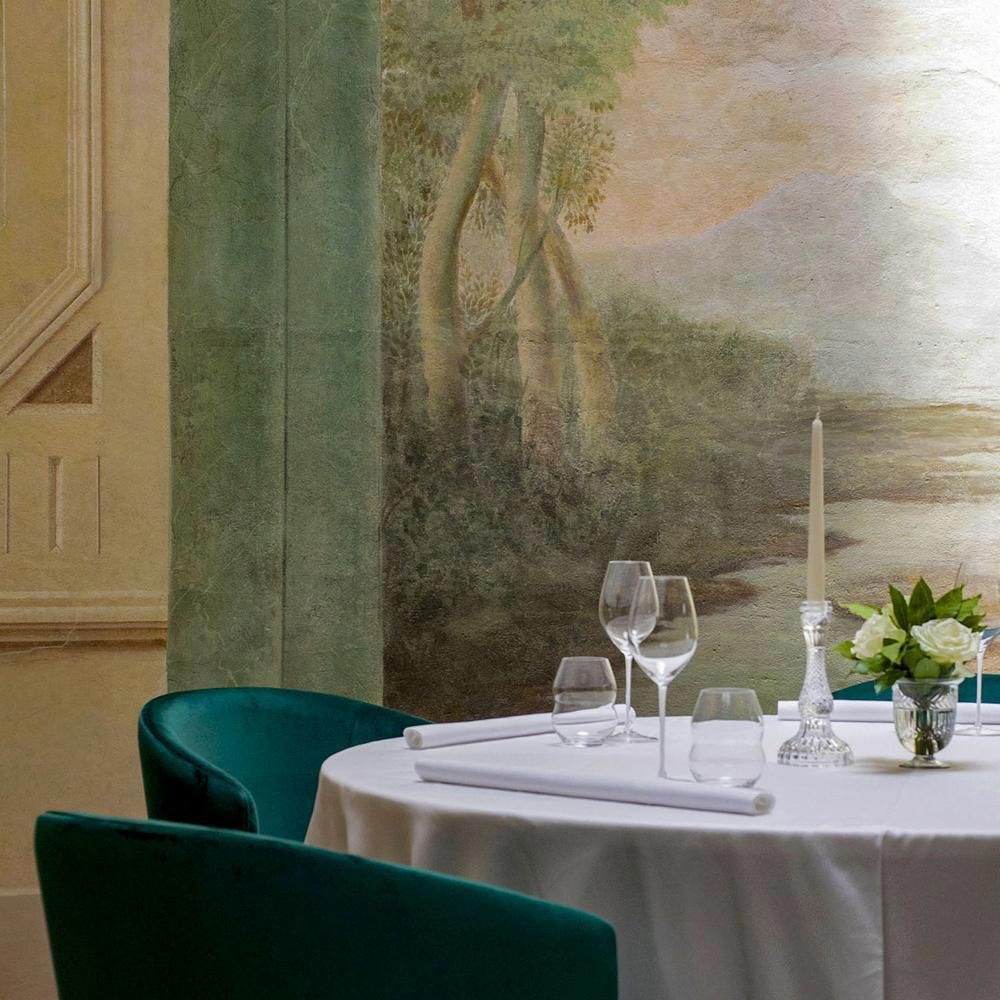
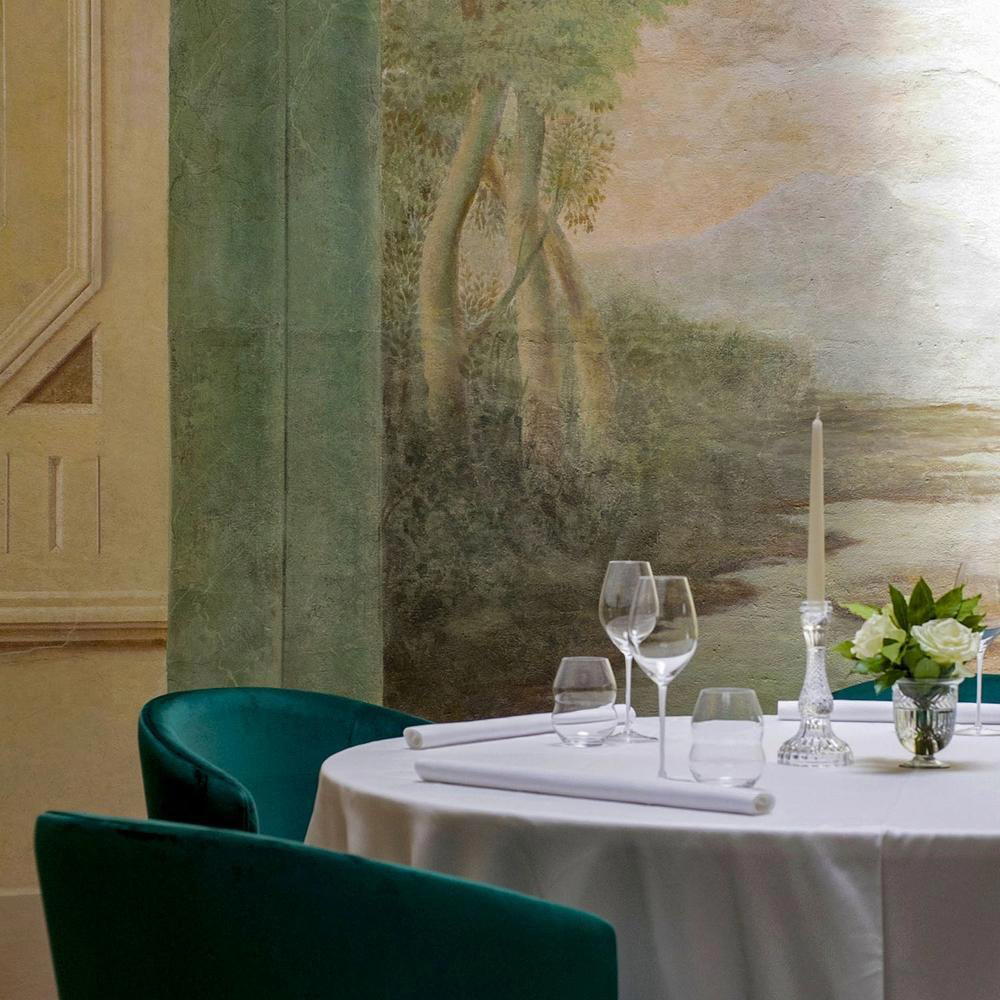
Elegant yet warm atmosphere with white linen tablecloths, wood-burning fireplace in winter, and panoramic terrace views of the surrounding hills; refined but unpretentious.