


Ushidoki Wagyu Kaiseki on Tras Street applies kaiseki discipline to a single premium ingredient: Japanese wagyu. Ranked #183 in Opinionated About Dining's Top Restaurants in Asia for 2025 and holding a Michelin Plate, it occupies a niche that separates it from Singapore's broader Japanese fine-dining field. Lunch service runs Tuesday through Friday; dinner runs six nights a week.
Pearl is the En Primeur Club membership app — saves, bookings, and concierge access live there. Same editors, same standards.
- Address
- 57 Tras St, #01-01, Singapore 078996
- Phone
- +65 9643 5564
- Website
- ushidoki.com
- Directions
- Get directions
 Saves & bookings on Pearl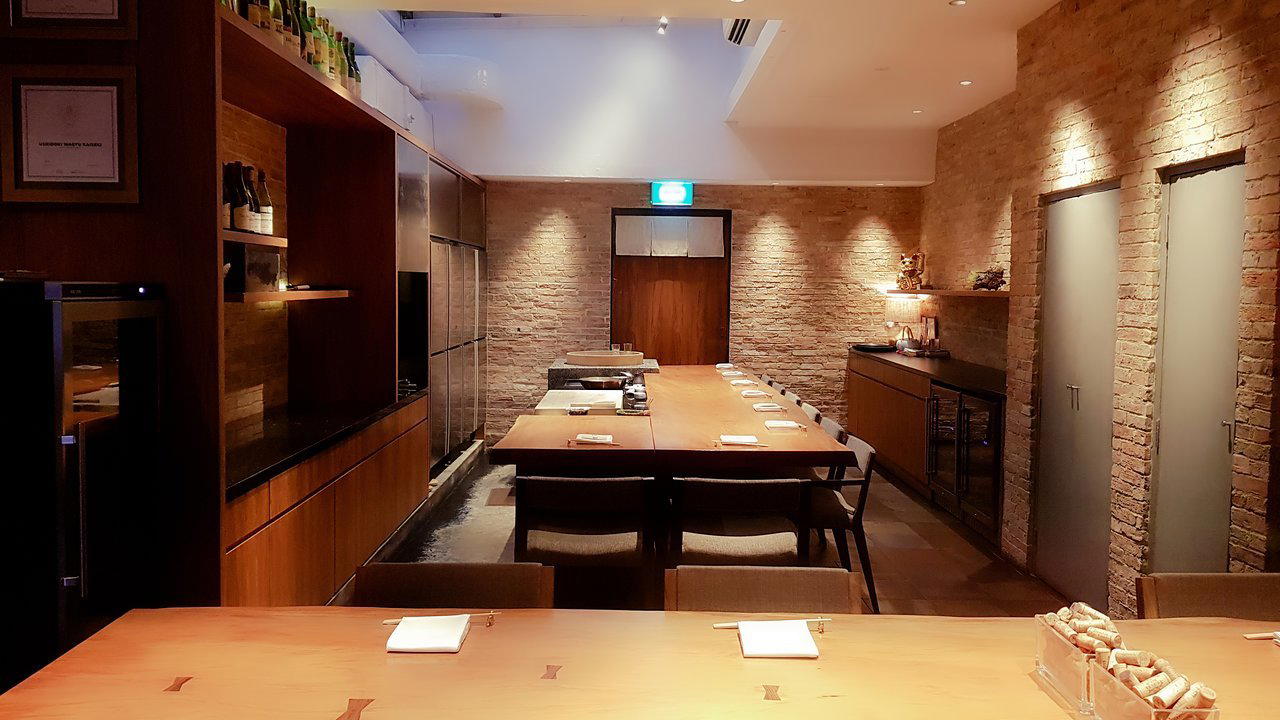
Where Kaiseki Meets the Cut
Ushidoki Wagyu Kaiseki is a Japanese restaurant on Tras Street in Singapore, serving wagyu kaiseki at the $$$$ tier. The shophouse strip sits a short walk from the CBD but feels several removes from it, lined with narrow facades and ground-floor restaurants that favour depth over spectacle. Ushidoki Wagyu Kaiseki occupies one of these shophouses at number 57, and the physical approach, unassuming frontage, dim interior light, the absence of promotional signage, signals the format before you're seated: this is a kitchen that assumes your commitment, not one auditioning for it.
That format is specific. Kaiseki, as a culinary structure, organises a succession of courses around seasonality, technique progression, and visual proportion. What Ushidoki does differently is anchor the progression in a single ingredient category: Japanese wagyu. That constraint sounds limiting until you consider the actual range it permits, different cuts, different preparation temperatures, different fat expressions, different accompaniments drawn from kaiseki's classical vocabulary of broths, pickles, and grains. The result sits in a niche that few restaurants in Asia occupy with the same discipline.
Critical Reception and What It Signals
Industry recognition tracks Ushidoki's trajectory clearly. Opinionated About Dining listed the restaurant as Highly Recommended in 2023, then assigned it a numerical rank of #212 in 2024. By the 2025 edition, that rank had moved to #183. The upward movement across three consecutive cycles is the more instructive data point: it suggests sustained rather than momentary critical attention.
The Michelin Plate designation, awarded in 2024, positions the restaurant within Singapore's formal recognition hierarchy. That gap matters less here than in other categories. Wagyu kaiseki is a narrow enough format that peer comparison across cuisine types becomes less useful than comparing it against the small group of Japanese restaurants in Singapore operating at the same price point and precision level. On that basis, the consistent Opinionated About Dining recognition is the more relevant trust signal: OAD's Asia list applies a specifically calibrated lens to Japanese and Japanese-influenced dining, and repeated placement there carries weight in this category.
Singapore's Japanese fine-dining field is broader than most cities outside Japan. Keyaki, Shunsui, and Ichigo Ichie each represent distinct approaches to Japanese cuisine in the city, ranging from teppanyaki and kaiseki through to contemporary Japanese. Ushidoki's wagyu-centred kaiseki format separates it from that peer group structurally. It is making a different argument: that a single premium protein, treated with kaiseki rigour, justifies a full tasting progression.
The Format in Context
Wagyu as a category requires a word of calibration. Within Japan, there are regional designations, Kobe, Matsusaka, Ohmi, Yonezawa, each with certified production standards and distinct fat-to-muscle ratios. At the price point Ushidoki occupies ($$$$), the sourcing conversation is implicit rather than decorative. A restaurant working at this level with Japanese beef as its central subject is committed to procurement standards that justify the format. Chef Hirohashi Nobuaki leads the kitchen, and the progression through the kaiseki structure is built around that procurement foundation.
For comparison, kaiseki houses operating at equivalent price and recognition levels in Japan, among them Isshisoden Nakamura in Kyoto, Kagurazaka Ishikawa in Tokyo, and Kashiwaya in Osaka, anchor their sequences in seasonal produce and regional fish. Wagyu appears in those menus but rarely as the structural spine. What Ushidoki does is closer to a specialist argument: that wagyu, handled across sufficient technique range, can carry the full arc of a kaiseki progression. That argument has found an audience in Singapore's market, where access to Japan-sourced premium beef and a dining public comfortable with high tasting-menu prices align in a way that supports this format.
Japanese kaiseki operating outside Japan also surfaces in contexts like Myojaku, Azabu Kadowaki, Ginza Fukuju, and Gion Matayoshi, all operating within Japan's own demanding dining hierarchy. Internationally, Hayato in Los Angeles represents the format transplanted to North America. Ushidoki's position in Singapore makes it part of a small global cohort of kaiseki addresses operating at the premium tier outside Japan, each adapting the structure to local supply conditions while maintaining format discipline.
Google Reviews and the Diner Signal
At 173 reviews, the volume is consistent with a low-capacity, reservation-required format where the reviewer base skews toward intentional diners rather than passing traffic. The 4.8 figure, rather than reflecting broad popularity, reflects the experience of diners who arrived with specific expectations for wagyu kaiseki and found those expectations met.
Planning Your Visit
Ushidoki Wagyu Kaiseki is at 57 Tras Street, #01-01, Singapore 078996. Hours: Dinner runs Monday and Saturday from 6 to 10:30 pm. Lunch is available Tuesday through Friday, 12 to 2:30 pm, with dinner continuing on those same evenings from 6 to 10:30 pm. The restaurant is closed on Sundays. Price: The restaurant operates at the $$$$ tier. Reservations are essential.
Quick Comparison
Comparable venues nearby, for context on price, style, and recognition.
| Venue | Cuisine | Price | Awards | Notes |
|---|---|---|---|---|
| Ushidoki Wagyu KaisekiThis venue — the venue you are viewing | Wagyu Kaiseki | $$$$ | Michelin Plate | Not listed |
| Sushi Yuki | Edomae-style Omakase | $$$$ | Michelin Plate | SELEGIE |
| Shatōburian | Premium Japanese Yakiniku | $$$$ | Not listed | BOULEVARD |
| Sushi Ryujiro | Edomae Omakase | $$$$ | Michelin Plate | BOULEVARD |
| Sushi Hare | Japanese Omakase | $$$$ | Michelin Plate | CHINATOWN |
| Gunther's | Modern French Cuisine | $$$$ | Michelin Plate | BUGIS |
Recognition history
Dated appearances from independent guides and award organizations, with the underlying list record or original source where available.
Michelin Guide Plate
Michelin Guide
Opinionated About Dining Top Restaurants in Asia Recommended
Opinionated About Dining
Wine Spectator Best of Award of Excellence
Wine Spectator
Opinionated About Dining Top Restaurants in Asia Ranked #183
Opinionated About Dining
Michelin Plate
Michelin
Opinionated About Dining Top Restaurants in Asia Ranked #212
Opinionated About Dining
Opinionated About Dining Top Restaurants in Asia Highly Recommended
Opinionated About Dining
Continue exploring
More in Singapore
Restaurants in Singapore
Browse all →
Bars in Singapore
Browse all →
At a Glance
- Elegant
- Intimate
- Sophisticated
- Special Occasion
- Date Night
- Business Dinner
- Chefs Counter
- Private Dining
- Sake Program
Current opening hours
- Monday
- 6–10:30 PM
- Tuesday
- 12–2:30 PM, 6–10:30 PM
- Wednesday
- 12–2:30 PM, 6–10:30 PM
- Thursday
- 12–2:30 PM, 6–10:30 PM
- Friday
- 12–2:30 PM, 6–10:30 PM
- Saturday
- 6–10:30 PM
- Sunday
- Closed
Hours can change for holidays and private events. Last verified .
Relaxing, elegantly decorated with focus on food and chef's counter; intimate shophouse setting with private rooms.