Umiya
Umiya occupies a quietly residential stretch of West Flamingo Road, positioning itself at some remove from the Strip's more theatrical dining circuit. The address alone signals a different intent: a neighborhood-scale Japanese operation that draws locals and in-the-know visitors rather than walk-in casino traffic. Sparse data makes confident specifics difficult, but the address and name point toward a focused Japanese format worth tracking.
Pearl is the En Primeur Club membership app — saves, bookings, and concierge access live there. Same editors, same standards.
- Address
- 4465 W Flamingo Rd, Las Vegas, NV 89103
- Phone
- +17023656195
- Website
- umiyalv.com
- Directions
- Get directions
 Saves & bookings on Pearl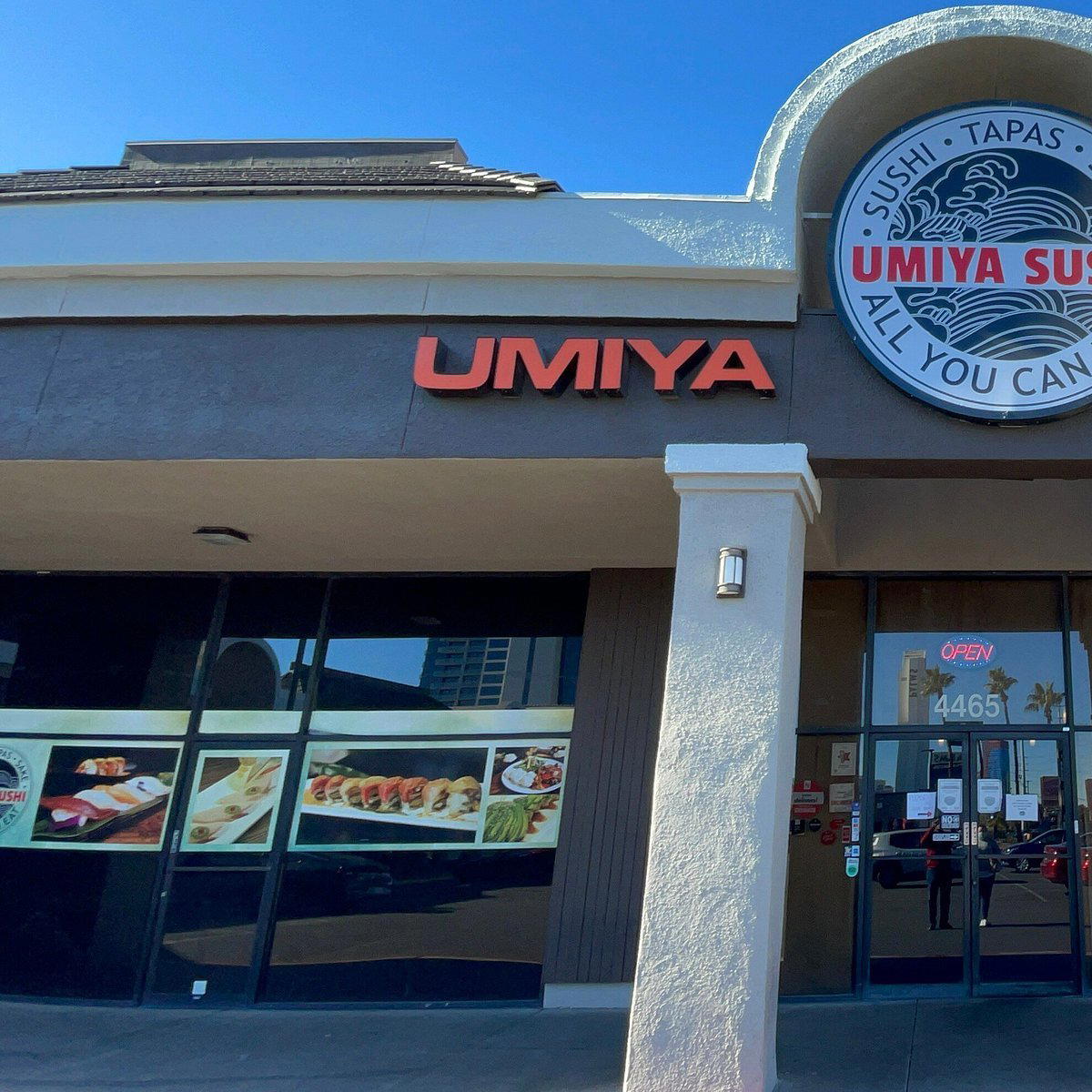
Off the Strip, On Its Own Terms
Las Vegas dining has long operated on two parallel tracks: the mega-resort spectacle corridor, where celebrity-chef satellites from Craftsteak to Bazaar Meat anchor hotel floors and compete for convention-circuit dollars, and a quieter residential grid where locals-first Japanese, Korean, and pan-Asian rooms do the more interesting work. Umiya is a Japanese restaurant in Las Vegas serving all-you-can-eat sushi at 4465 West Flamingo Road. Umiya belongs to the second track. That zip code puts it well west of the neon, in a corridor of strip malls and apartment complexes where the dining decision-making is driven by repeat visits and word of mouth rather than concierge recommendations.
That geography is itself an editorial signal. In Las Vegas, the restaurants that survive on West Flamingo without a hotel subsidy or tourist foot traffic tend to be leaner, more focused operations. The overhead calculus forces menu discipline in a way that resort dining rarely demands. Its positioning in that neighborhood places it alongside 108 Eats and 18bin, both of which have built followings among the city's non-resort dining circuit.
What the Address Tells You About the Menu
Japanese restaurants operating at neighborhood scale in American cities tend to resolve into a handful of formats: the sushi bar anchored by a single itamae, the ramen-and-small-plates hybrid, the izakaya with rotating seasonal specials, or the rare omakase room that keeps prices accessible by shedding the resort markup. Each format carries its own menu logic, and the logic matters as much as any individual dish.
The omakase model, as practiced at some of Las Vegas's more serious Japanese counters, uses the chef's sequencing to tell a story about seasonality and technique. Aburiya Raku, which established a benchmark for serious Japanese cooking away from the Strip years before the neighborhood became a recognized dining destination, demonstrated that Las Vegas diners would travel west for the right kitchen. Blue Ribbon Sushi Bar and Grill demonstrated the same from the resort side: that a focused, quality-first sushi program could hold its own in a city that once treated Japanese food as a buffet category.
The izakaya format, by contrast, structures a meal through accumulation rather than sequence. Small dishes arrive in loose order, drinks anchor the pacing, and the menu's breadth is part of the offer. That format suits neighborhood dining particularly well because it accommodates tables of varying size and appetite without the friction of prix-fixe commitment. For comparison, 777 Korean Restaurant and A Different Beast operate in adjacent format territories on the local circuit, each with its own approach to the small-plates, sharing-table model.
What can be said is that the name, the address, and the absence of a hotel affiliation combine to suggest a self-contained operation with a defined point of view, the kind of room where the menu is an expression of culinary priorities rather than a hedge against the widest possible audience.
Las Vegas Japanese Dining in Context
The broader American conversation about Japanese cooking has shifted considerably over the past decade. Cities like New York and Los Angeles now support multiple tiers of omakase, from $50 counter lunches to $500-plus omakase experiences that compete on the same aspirational plane as Le Bernardin in New York City or Providence in Los Angeles. The Michelin and 50 Best ecosystems have validated Japanese technique as a fine-dining category in its own right, and rooms like Atomix in New York City have demonstrated that Asian culinary traditions can anchor formally ambitious dining experiences in the country.
Las Vegas has absorbed some of this shift but remains structured differently. The resort economy creates unusual pricing dynamics: a celebrity-brand sushi counter inside a casino can charge $300 per head while a technically equivalent neighborhood counter charges $80, because the resort counter is selling an experience that includes the casino floor, the light show, and the brand association. For diners who want the cooking without the theater, the West Flamingo corridor offers an alternative that national publications rarely cover but that locals map carefully.
That dynamic is not distinctive to Las Vegas. In cities as different as San Francisco and Chicago, technically serious cooking sometimes happens at a remove from the neighborhoods that attract critical attention. Lazy Bear in San Francisco built its reputation in the Mission before the Mission became a dining destination. Alinea in Chicago operates in Lincoln Park rather than the Loop. Single Thread Farm in Healdsburg and Addison in San Diego have each shown that serious culinary ambition doesn't require a flagship-district address. The pattern holds: particularly considered rooms choose their geography deliberately, away from the price-inflating gravitational pull of particularly visible corridors.
Planning a Visit
West Flamingo Road is car-dependent from most hotel addresses on the Strip, a drive of roughly fifteen to twenty minutes depending on traffic and point of origin. That distance removes Umiya from the walk-in economy entirely, which means guests who show up are self-selected: they came because they meant to. Reservations are recommended.
For visitors building a multi-night Las Vegas dining itinerary, the EP Club guide to Las Vegas restaurants maps the broader scene across both the resort corridor and the off-Strip circuit. The French Laundry in Napa, Blue Hill at Stone Barns in Tarrytown, The Inn at Little Washington, Emeril's in New Orleans, and 8 1/2 Otto e Mezzo Bombana in Hong Kong, each representing a different approach to the question of what a serious room owes its guests in terms of format, setting, and culinary point of view.
Recognition Snapshot
Comparable venues nearby, for context on price, style, and recognition.
| Venue | Cuisine | Price | Notes |
|---|---|---|---|
| UmiyaThis venue — the venue you are viewing | All-You-Can-Eat Sushi | $$ | Not listed |
| Sushi Love Las Vegas | Japanese Sushi | $$ | Trails at Warme Springs |
| Naked Fish's Sushi & Grill | Japanese Sushi & Grill | $$ | Southwest Las Vegas |
| Monta Japanese Noodle House | Japanese Ramen Noodle House | $$ | The Asian District |
| Soho Japanese Restaurant | Modern Japanese Sushi | $$$ | Arden |
| Sushi Fever | Traditional Japanese Sushi | $$ | West Sahara |
Continue exploring
More in Las Vegas
Restaurants in Las Vegas
Browse all →
Bars in Las Vegas
Browse all →
At a Glance
- Modern
- Trendy
- Group Dining
- Casual Hangout
- Family
- Standalone
- Sake Program
Current opening hours
- Monday
- 11:30 AM–12:30 AM
- Tuesday
- 11:30 AM–12:30 AM
- Wednesday
- 11:30 AM–12:30 AM
- Thursday
- 11:30 AM–12:30 AM
- Friday
- 11:30 AM–12:30 AM
- Saturday
- 11:30 AM–12:30 AM
- Sunday
- 11:30 AM–12:30 AM
Hours can change for holidays and private events. Last verified .
Stylish and contemporary atmosphere with moderate noise levels.