Sushi Fever
Sushi fever runs at a different temperature on Las Vegas's west side. Located at 7985 W Sahara Ave, this neighborhood sushi spot operates at a remove from the Strip's theatrical dining circuit, drawing regulars who prioritize the ritual of the meal over spectacle. For a city where Japanese dining ranges from $400 omakase counters to all-you-can-eat conveyor belts, it occupies a telling middle register.
Pearl is the En Primeur Club membership app — saves, bookings, and concierge access live there. Same editors, same standards.
- Address
- 7985 W Sahara Ave, Las Vegas, NV 89117
- Phone
- +17028382927
- Website
- sushifevervegas.com
- Directions
- Get directions
 Saves & bookings on Pearl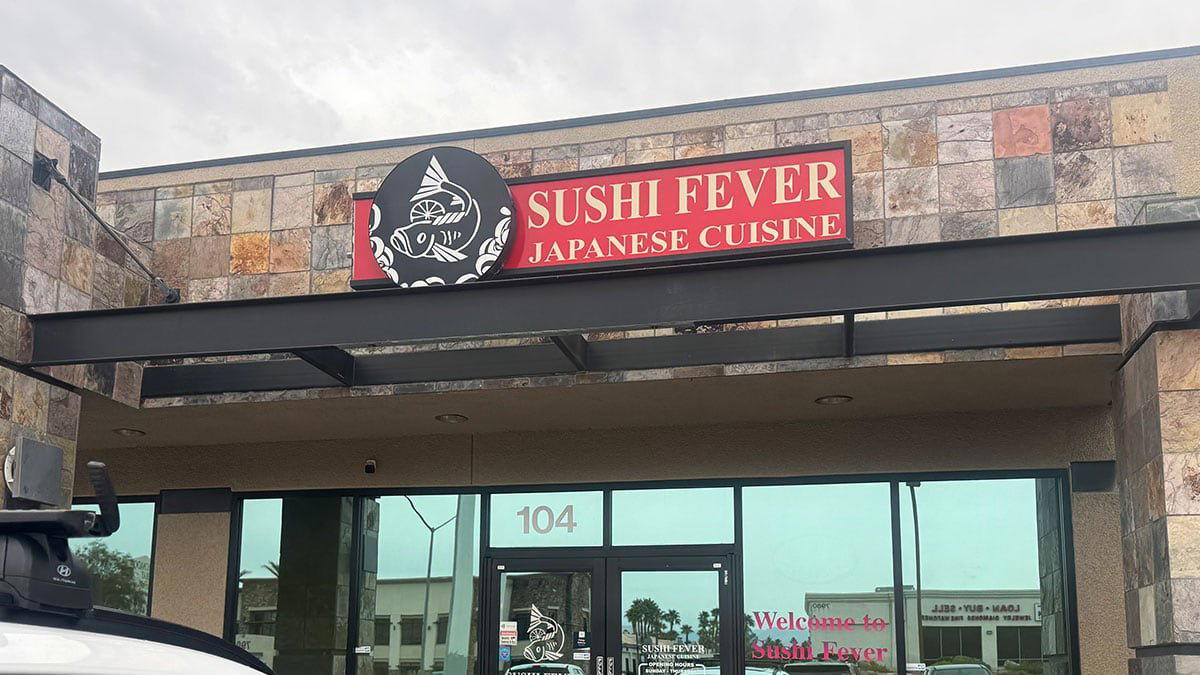
West of the Strip, Inside the Ritual
Las Vegas has built two largely separate Japanese dining economies. The first runs along the Strip and its hotel corridors: omakase counters with celebrity chef affiliations, sake lists priced for casino expense accounts, and the theatrical architecture of the reveal. The second exists in the residential grid to the west and northwest of downtown, where Japanese restaurants serve communities rather than conventions. Sushi Fever is a traditional Japanese sushi restaurant at 7985 W Sahara Ave in Las Vegas.
That goes to properties like Craftsteak or the genre-mixing kitchens around the Arts District, venues like A Different Beast and 18bin that attract the food-curious traveler. The west-side neighborhood sushi category runs quieter, and that quietness is partly the point.
The Pacing of a Neighborhood Counter
Sushi, as a dining form, carries its own built-in ritual logic that operates independent of any particular venue. The sequence of nigiri moves from lighter, cleaner fish toward richer, fattier cuts. The chef reads the table. The diner follows. In high-end omakase rooms, the pacing is orchestrated down to the minute; at neighborhood counters, it is looser but still present as a kind of shared understanding between kitchen and guest. The dining ritual at a place like Sushi Fever is shaped by that looser grammar: orders arrive at a pace set partly by the kitchen's rhythm and partly by the table's appetite, with no scripted arc forcing the meal toward a predetermined conclusion.
This is a materially different experience from the controlled progression you encounter at counter-format rooms built around a single prix-fixe sequence. At institutions like The French Laundry or Atomix in New York City, the meal's structure is the product. At a neighborhood sushi spot, the structure is more negotiable, and that negotiability is its own kind of hospitality. You are not submitting to a sequence; you are building one, piece by piece, which places more interpretive responsibility on the diner.
Where Japanese Dining Sits in Las Vegas
Las Vegas's Japanese dining tier has expanded considerably in the past decade. The upper end includes omakase counters and high-volume Japanese-inflected steakhouses attached to major hotel properties. The mid-tier, where neighborhood sushi restaurants operate, is less documented but more heavily used by local diners who eat Japanese food multiple times a month rather than once on a special occasion. The comparison set for a place like Sushi Fever is not Le Bernardin in New York City or Providence in Los Angeles; it is Blue Ribbon Sushi Bar and Grill and Aburiya Raku, restaurants where the ritual of the meal matters but the price of admission remains accessible to repeat visits.
That positioning also means Sushi Fever competes on consistency and familiarity rather than on spectacle or credential. A diner who returns six times a year to the same neighborhood counter is developing a different kind of relationship with the food than someone who visits once for a milestone occasion. The meal becomes a known quantity, and the pleasure shifts from discovery toward the satisfaction of a ritual performed well.
Las Vegas's broader dining scene, documented in our full Las Vegas restaurants guide, spans the full spectrum from this kind of neighborhood regularity to the technically demanding long-form dinners at venues like Alinea in Chicago or Single Thread Farm in Healdsburg, which increasingly draw comparison when critics discuss what destination dining in America looks like. The restaurant sits well outside that conversation, which is neither a criticism nor a limitation. It is a description of what the venue is designed to do.
Reading the Room at W Sahara
The west Las Vegas residential corridor attracts a cross-section of the city's non-tourist population: working professionals, Korean and Japanese diaspora communities, families who live in the sprawl beyond the resort zone. The dining rooms along this stretch operate accordingly, with an informality and directness that reads differently from the curated environments along the Strip. At venues like 108 Eats and 777 Korean Restaurant, the implicit contract with the diner is similar: competent execution of familiar forms, served without theater, at a price that makes return visits rational rather than aspirational.
Sushi as a category sits particularly well inside this framework. The cuisine's inherent respect for ingredient quality gives even a mid-register neighborhood counter a built-in discipline. Fish selection, rice temperature, and cutting technique are either present or they are not; there is less room for the kitchen to paper over shortcomings with elaborate saucing or presentation than there is in, say, a French brasserie format. Bardot Brasserie, one of Las Vegas's more visible French rooms, operates in a genre where theater can substitute for substance. Sushi is less forgiving, and that structural honesty tends to keep neighborhood counters more reliable than their price points might suggest.
Dining at Sushi Fever: What to Expect
The meal at a neighborhood sushi counter is, in its leading form, a conversation between kitchen and table conducted in courses of two or three pieces. The diner's role is to stay engaged: to eat nigiri promptly, to note what the chef sends without instruction, and to ask questions when something arrives that requires context. This is not the rigid protocol of high-end omakase, where eye contact and silence signal respect; it is a more relaxed version of the same underlying etiquette. The ritual still exists, but it bends to accommodate casual company and a shorter attention span.
For visitors coming from dining cultures shaped by the long-form tasting menu tradition represented by venues like Blue Hill at Stone Barns in Tarrytown, Addison in San Diego, or The Inn at Little Washington, the shift to a neighborhood counter register requires a recalibration of expectations. The pleasure is different in kind, not merely in degree. And for visitors making a wider exploration of American dining culture that extends to Emeril's in New Orleans or Lazy Bear in San Francisco, the west Las Vegas neighborhood counter adds a perspective that the Strip-centric dining map tends to omit entirely. Similarly, those familiar with the technical rigor of 8 1/2 Otto e Mezzo Bombana in Hong Kong will find this a consciously different register of dining ambition.
Planning Your Visit
Address: 7985 W Sahara Ave, Las Vegas, NV 89117. Reservations: Walk-in friendly. Dress: Casual. Budget: About $25 per person. Timing: Mon through Thu and Sun, 11 AM to 10 PM; Fri and Sat, 11 AM to 11 PM.
Compact Comparison
Comparable venues nearby, for context on price, style, and recognition.
| Venue | Cuisine | Price | Notes |
|---|---|---|---|
| Sushi FeverThis venue — the venue you are viewing | West Sahara, Traditional Japanese Sushi | $$ | Not listed |
| Kabuki Japanese Restaurant | Not listed | $$ | Boulder Junction, Japanese Sushi & Traditional |
| Blue Ribbon Sushi Bar & Grill | Not listed | $$$ | Red Rock Casino Resort & Spa, Japanese Sushi Bar & Grill |
| Naked Fish's Sushi & Grill | Not listed | $$ | Southwest Las Vegas, Japanese Sushi & Grill |
| GYU+ Social | Not listed | $$$ | The Asian District, Modern Japanese Small Plates & Wagyu Steakhouse |
| Monta Japanese Noodle House | Not listed | $$ | The Asian District, Japanese Ramen Noodle House |
Continue exploring
More in Las Vegas
Restaurants in Las Vegas
Browse all →
Bars in Las Vegas
Browse all →
At a Glance
- Classic
- Cozy
- Casual Hangout
- Group Dining
- Family
- After Work
- Late Night
- Standalone
- Sustainable Seafood
Current opening hours
- Monday
- 11 AM–10 PM
- Tuesday
- 11 AM–10 PM
- Wednesday
- 11 AM–10 PM
- Thursday
- 11 AM–10 PM
- Friday
- 11 AM–11 PM
- Saturday
- 11 AM–11 PM
- Sunday
- 11 AM–10 PM
Hours can change for holidays and private events. Last verified .
Casual, welcoming neighborhood atmosphere with friendly staff that makes guests feel at home while enjoying quality sushi.