Among Manhattan's omakase counters, Umi operates in the upper tier occupied by counters where seasonal discipline and multi-course precision define the format, not just the ingredient list. It sits in direct comparison with peers like Masa in terms of ambition and price positioning, drawing serious sushi diners who treat the reservation itself as a planning exercise.
 Discover on Pearl
Pearl is the En Primeur Club membership app — saves, bookings, and concierge access live there. Same editors, same standards.
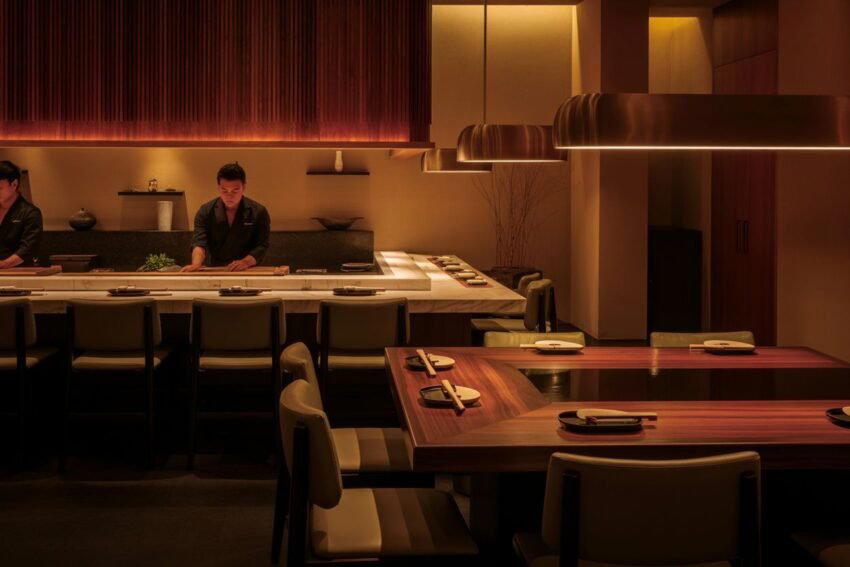
The Counter and What It Represents
Umi is a Japanese sushi restaurant in Manhattan, New York City, with a casual dress code and walk-in-friendly service, priced at about $25 per person. The room invites the kind of attention you bring to a concert rather than a dinner party, and that disposition is the appropriate one. Umi occupies that upper register. The room invites the kind of attention you bring to a concert rather than a dinner party, and that disposition is the appropriate one.
The aesthetic principles governing this tier of Japanese dining in New York draw directly from kaiseki tradition, even when the menu itself is sushi-led. Kaiseki, at its core, is a philosophy of seasonal correspondence: each course reflects a moment in the calendar, a particular ingredient at its precise point of readiness, a presentation that echoes natural form rather than imposing geometry onto it. The counter format enforces this logic. There is no menu to browse, no negotiation. The chef reads the season, the sourcing, and the room, and the meal follows from that reading.
Where Umi Sits in the New York Omakase Market
New York's leading omakase counters now operate in a distinct competitive set that prices and positions against a handful of peers rather than against the city's broader Japanese dining pool. Masa, the most discussed reference point in this category, set a price ceiling that the market has largely accepted as the signal for maximum ambition. Umi enters this conversation as a counter with serious intent, drawing comparisons from diners who cross-shop within this narrow tier before committing a reservation.
The comparison set matters. Counters at this level are not competing with the city's mid-range Japanese restaurants any more than Le Bernardin or Per Se compete with neighbourhood bistros. The competitive logic is different: guests are choosing between a small number of formats where the evening is the commitment, the booking lead time is substantial, and the per-head spend clears a threshold that signals a specific tier of intent. Within that set, what distinguishes one counter from another is rarely ingredient quality in isolation, since sourcing at this level is broadly comparable. The differentiator is editorial control over the progression: how the courses sequence, where restraint is applied, and whether the meal builds a coherent argument or simply presents a parade of expensive fish.
By that measure, the kaiseki-influenced omakase model that Umi represents is doing something structurally different from a maximalist counter. It is asking the meal to mean something beyond its component parts, which is a harder brief to execute and a more demanding one for the guest to receive.
The Kaiseki Frame and Why It Applies Here
It is worth understanding what kaiseki actually demands before applying the term to an omakase room. The tradition, which developed within the context of Japanese tea ceremony culture before expanding into multi-course banquet format, imposes a rigorous seasonal logic on every element: the ceramics, the arrangement, the garnish, the temperature sequencing. A kaiseki meal in Kyoto might run to twelve or fifteen courses, each carrying a reference to the season so specific that the same menu could not be served a month earlier or later without losing coherence.
New York counters that operate within this tradition adapt it to the sushi and Japanese fine dining context rather than replicating the full kaiseki form. The application is philosophical rather than literal. What it produces is a meal that rewards attention and punishes distraction. Diners who arrive treating the counter as a backdrop for conversation tend to miss the point. Those who engage with the pacing, notice the ceramic choices, and follow the progression from delicate to rich to cleansing find something closer to a structured aesthetic experience than a restaurant dinner in the conventional sense.
This places Umi in a peer group that includes not just other New York counters but, by ambition and format, destination restaurants elsewhere in the country where the kaiseki influence is explicit. Single Thread Farm in Healdsburg runs an eleven-course format with kaiseki-influenced seasonal discipline. Alinea in Chicago applies a different intellectual rigour to multi-course progression. Lazy Bear in San Francisco works a communal counter format with similar commitment to intentional sequencing. The shared logic across these rooms is that the chef controls not just what you eat but when you eat it, in what order, and at what pace, which is a significant transfer of authority that guests in these rooms have agreed to in advance.
Planning the Visit
At this tier of New York dining, the planning question precedes everything else. Counters like Umi, Masa, and the small cohort around them operate on booking windows that reflect genuine scarcity rather than manufactured exclusivity. The seat count at any serious omakase counter is deliberately small, typically between eight and fourteen, and multiple seatings per evening are uncommon at the top of the market. The arithmetic is direct: a room with ten seats and one seating generates limited daily availability, and demand at this price and reputation level is not limited.
Anyone treating this as a same-week booking exercise will find it does not function that way. The practical model for counters at this level, whether in New York, at Providence in Los Angeles, or internationally at 8 1/2 Otto e Mezzo Bombana in Hong Kong, is to plan around the reservation rather than booking around plans. New York's own omakase calendar tends to fill faster around the autumn and winter months, when seasonal ingredients align most clearly with the kaiseki tradition and demand from visiting diners peaks alongside the city's cultural calendar.
For the broader New York dining picture, our full New York City restaurants guide maps the city's current scene across categories. For context on where to stay while planning a visit that anchors around a counter dinner, the New York City hotels guide covers the relevant options by neighbourhood and positioning. The city's bar scene, which pairs naturally with a pre-counter aperitif or post-dinner drink, is covered in the New York City bars guide.
Other high-ambition New York rooms that occupy adjacent territory on a serious dining itinerary include Saga and César, both of which operate multi-course formats with their own editorial commitments. The wider American fine dining context, for guests building a broader itinerary, includes The French Laundry in Napa, Emeril's in New Orleans, and Alain Ducasse at Louis XV in Monte Carlo for international reference. Further New York area resources include the New York City wineries guide and New York City experiences guide.
Know Before You Go
- Format: Omakase counter, kaiseki-influenced multi-course progression
- Cuisine: Japanese, sushi and omakase
- Location: Manhattan, New York City
- Booking: Advance planning required; operates within the lead-time norms of Manhattan's leading omakase tier
- comparable set: Masa, high-end Manhattan omakase counters
- Context links: NYC restaurants guide | NYC hotels guide | NYC bars guide
The Essentials
Comparable venues nearby, for context on price, style, and recognition.
| Venue | Cuisine | Price | Notes |
|---|---|---|---|
| UmiThis venue — the venue you are viewing | Fresh Meadows, Japanese Sushi | $$ | |
| Fuji Hibachi - Times Square | Hell's Kitchen, Hibachi Japanese Grill | $$ | |
| Katsuhama | $$ | Midtown-Times Square, Authentic Japanese Tonkatsu | |
| IPPUDO Westside | $$ | Hell's Kitchen, Hakata-Style Tonkotsu Ramen | |
| Hide-Chan Ramen | Hell's Kitchen, Hakata Tonkotsu Ramen | $$ | |
| Momo Sushi Shack | $$ | East Williamsburg, Brooklyn-Style Japanese Sushi Shack |
Continue exploring
More in New York City
Restaurants in New York City
Browse all →
Bars in New York City
Browse all →
Hotels in New York City
Browse all →
Wineries in New York City
Browse all →
At a Glance
- Cozy
- Casual Hangout
- Family
Cozy and welcoming with aesthetically pleasing decor.