Katsuhama
Katsuhama on East 47th Street sits inside Midtown Manhattan's compact Japanese dining corridor, where a long-standing reputation for tonkatsu has kept it relevant across decades of neighbourhood change. The restaurant draws a lunch crowd from surrounding offices and a dinner clientele that seeks out a specific, pork-focused tradition rather than broad-menu Japanese cooking. It occupies a clear niche in a city that increasingly rewards specialisation.
Pearl is the En Primeur Club membership app — saves, bookings, and concierge access live there. Same editors, same standards.
- Address
- 11 E 47th St, New York, NY 10017
- Phone
- +12127585909
- Website
- katsu-hama.site
- Directions
- Get directions
 Saves & bookings on Pearl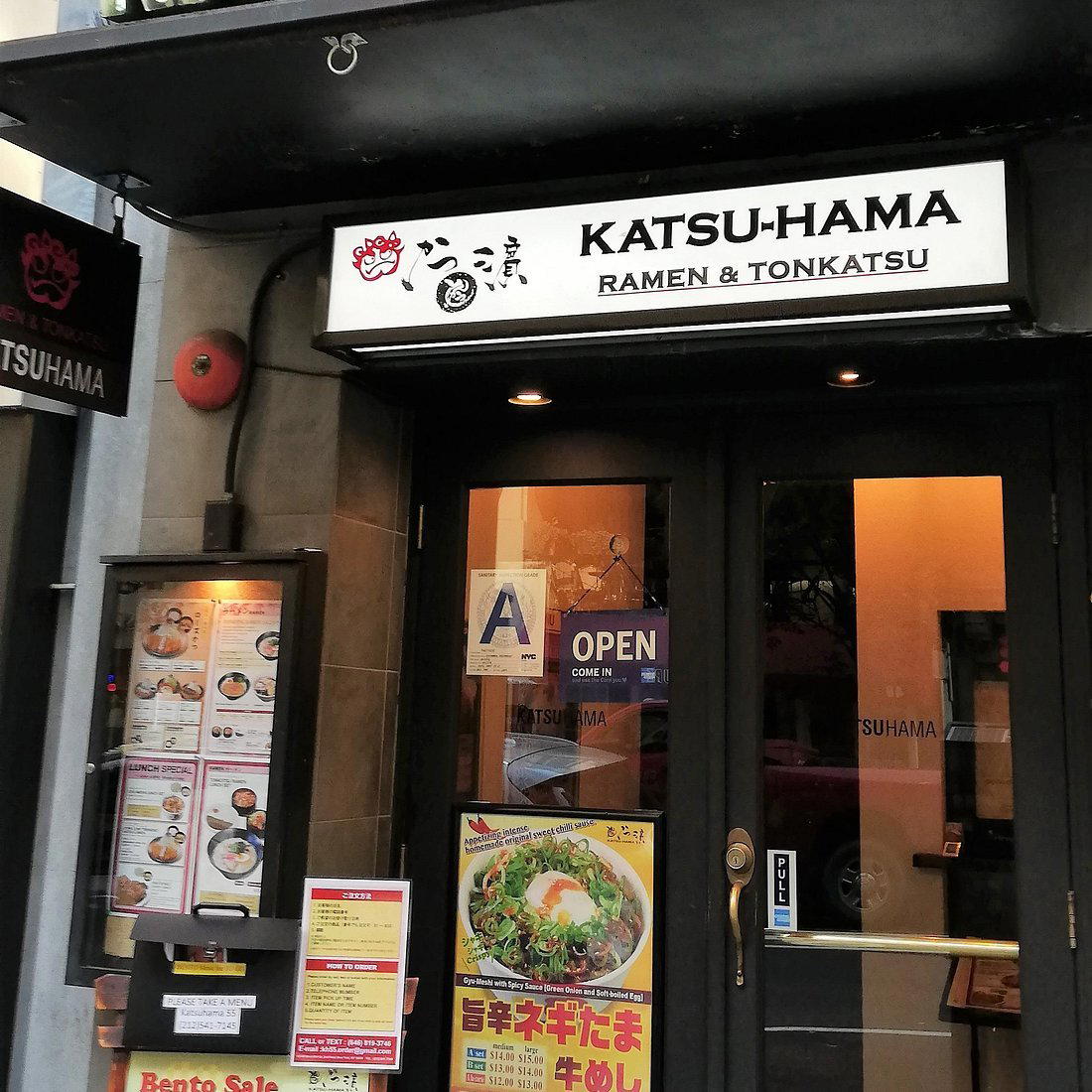
A Midtown Constant in a Changing Japanese Dining Scene
Japanese cuisine in New York has moved through several distinct phases over the past four decades. The first wave, concentrated in Midtown, was built around accessibility and volume: sushi bars, ramen counters, and tonkatsu houses that served the business lunch crowd and the growing Japanese expatriate community. The second wave, arriving through the late 1990s and 2000s, pushed toward formality and price, producing the high-stakes omakase counters that now define the city's upper tier. Masa, on the far west side, represents the apex of that second movement: a counter where a single meal can approach four figures. Katsuhama, at 11 East 47th Street, belongs to a different, older stratum, one that predates the omakase arms race and has, in various forms, persisted through it.
That persistence is the story. Midtown's restaurant stock turns over faster than most of the city's other dining corridors. Office buildings dictate the rhythm, and tenants shift with corporate relocations. Restaurants that survive across multiple decades in this zip code tend to do so by serving a specific, repeatable purpose rather than chasing trends. Katsuhama has occupied that role as a specialist tonkatsu destination, holding its position while the broader Midtown Japanese scene has fragmented into omakase-only rooms, fast-casual ramen chains, and izakaya-style formats.
What Tonkatsu Specialisation Looks Like in This Market
Tonkatsu, breaded, deep-fried pork cutlet, is one of the more technically exacting items in Japanese everyday cooking. The variables are narrow but unforgiving: the cut and thickness of the pork, the grade and texture of the panko, the temperature and freshness of the frying oil, the resting time before the cutlet is sliced. In Japan, dedicated tonkatsu-ya operate on the same specialist logic as tempura counters or soba-ya: one category, refined over time, served without distraction. That model travels imperfectly to New York, where real estate costs push most operators toward broader menus to maximise covers and per-table revenue.
Katsuhama's continued focus on tonkatsu places it in a small peer group in the city. Most Japanese restaurants in Midtown have expanded their menus over time to hedge against shifting lunch and dinner demand. A specialist tonkatsu format in this corridor is a deliberate choice with real commercial trade-offs, and the restaurant's longevity suggests the trade-off has been sustainable.
The East 47th Street Address and Its Dining Context
East 47th Street sits at the centre of a dense cluster of Japanese-affiliated businesses that stretches between Fifth and Lexington Avenues, a corridor that includes travel agencies, bookshops, and food importers serving the city's Japanese community and a broader clientele drawn to the concentration. The area lacks the residential density of the East Village or the nightlife energy of Hell's Kitchen, which means dinner traffic depends almost entirely on destination intent rather than walk-in volume. Restaurants in this corridor earn their dinner covers through reputation and repeat custom, not foot traffic.
That dynamic shapes what kind of dining survives here. The block rewards restaurants with a clear, communicable identity: a cuisine type, a price point, a reason to make the trip. Broad-menu, mid-market Japanese restaurants in this zone have largely given way to either fast-casual formats or more specialised operations. Katsuhama's tonkatsu focus provides exactly the kind of clear identity that keeps a restaurant viable when the surrounding neighbourhood offers little in the way of ambient foot traffic.
How the Category Has Evolved Around It
The wider New York Japanese dining scene has split into increasingly defined tiers since Katsuhama first established itself in Midtown. At the highest level, omakase counters like Masa operate on reservation-only, fixed-price formats at price points that require months of forward planning. Korean-inflected tasting menus at addresses like Atomix and Jungsik New York have expanded the Asian fine-dining tier into adjacent territory. French-influenced formality, represented at rooms like Le Bernardin and Per Se, continues to define what expense-account Midtown dining looks like at the leading end.
Below those tiers, the mid-market has compressed. The casual Japanese restaurant that once occupied a comfortable middle position, accessible pricing, broad menu, reliable quality, has been squeezed from below by fast-casual operators and from above by a diner cohort increasingly willing to pay more for a clearly differentiated experience. Specialist formats, which offer something specific that generalists cannot easily replicate, have held their ground better than the mid-market generalists. Tonkatsu as a specialisation sits in that resilient category.
The evolution mirrors patterns visible across the American fine and casual dining spectrum. Specialist formats at places like Blue Hill at Stone Barns in Tarrytown or Single Thread Farm in Healdsburg have demonstrated that commitment to a defined point of view outlasts the generic. The same principle applies at a more accessible price tier: a restaurant that does one thing well occupies a defensible position that a broad-menu competitor cannot easily undercut.
Placing Katsuhama in the Broader EP Club New York Canon
EP Club's full New York City restaurants guide spans everything from tasting-menu rooms with multiple Michelin stars to neighbourhood specialists that have built their reputation over decades of consistent execution. Katsuhama belongs in the second category. It does not compete with the Midtown expense-account tier or the omakase counters that have come to define New York's Japanese fine-dining identity. It competes within the specialist casual segment, where the measure of quality is the accuracy and consistency of a single, well-understood preparation.
For readers whose point of comparison is the tasting-menu format at Alinea in Chicago or the wine-country formality of The French Laundry in Napa, Katsuhama operates on a different register entirely. The comparison is more usefully drawn against the disciplined specialist formats that have survived in high-turnover urban corridors by refusing to dilute their focus. In that company, a tonkatsu specialist with a long Midtown tenure represents something worth understanding, even if the format sits outside the city's most-discussed dining conversations.
Planning Your Visit
Katsuhama is located at 11 East 47th Street in Midtown Manhattan, within easy walking distance of Rockefeller Center and the Fifth Avenue corridor. The surrounding area is dense with office workers at lunch, which makes midday visits the highest-demand period. Dinner is quieter, given the neighbourhood's limited residential draw, and typically easier to manage without advance planning.
Readers planning a wider New York dining itinerary should also consider the range that the city offers beyond Midtown: the coastal focus of Providence in Los Angeles represents what specialist seafood cooking looks like at the tasting-menu level, while Addison in San Diego and Bacchanalia in Atlanta show how regional American fine dining has developed its own vocabulary outside the coasts.
Katsuhama is at 11 East 47th Street in Midtown Manhattan and serves Authentic Japanese Tonkatsu, with casual dress and walk-in-friendly service. It is open Monday through Sunday from 11:30 AM to 9 PM.
- Tonkatsu
- Hire Katsu
- Katsu Curry
- Nabe Miso Katsu
- Pork Katsu Don
- Gyoza
Side-by-Side Snapshot
Comparable venues nearby, for context on price, style, and recognition.
| Venue | Cuisine | Price | Notes |
|---|---|---|---|
| KatsuhamaThis venue — the venue you are viewing | Authentic Japanese Tonkatsu | $$ | Not listed |
| Souen | Macrobiotic Japanese | $$ | East Village |
| Takahachi | Japanese Sushi | $$ | East Village |
| Umi | Japanese Sushi | $$ | Fresh Meadows |
| Totto Ramen Midtown East | Chicken Paitan Ramen | $$ | East Midtown-Turtle Bay |
| Ramen Goku Chelsea | Japanese Curry Ramen | $$ | Chelsea-Hudson Yards |
Continue exploring
More in New York City
Restaurants in New York City
Browse all →
Bars in New York City
Browse all →
Hotels in New York City
Browse all →




At a Glance
- Cozy
- Casual
- Casual Hangout
- After Work
- Solo
- Standalone
Current opening hours
- Monday
- 11:30 AM–9 PM
- Tuesday
- 11:30 AM–9 PM
- Wednesday
- 11:30 AM–9 PM
- Thursday
- 11:30 AM–9 PM
- Friday
- 11:30 AM–9 PM
- Saturday
- 11:30 AM–9 PM
- Sunday
- 11:30 AM–9 PM
Hours can change for holidays and private events. Last verified .
Warm and inviting atmosphere with an unpretentious, casual setting; can get busy during lunch hours but becomes mellow after 2pm and during dinner service.