Fuji Hibachi - Times Square
Fuji Hibachi sits on West 42nd Street in the heart of Times Square, placing it squarely in one of New York's highest-footfall dining corridors. The hibachi format draws a loyal crowd that returns for the live-fire theater and social energy of communal teppanyaki tables, a format that holds its ground against the neighborhood's largely tourist-facing competition.
Pearl is the En Primeur Club membership app — saves, bookings, and concierge access live there. Same editors, same standards.
- Address
- 321 W 42nd St, New York, NY 10036
- Phone
- +12127571820
- Website
- fjhibachi.com
- Directions
- Get directions
 Saves & bookings on Pearl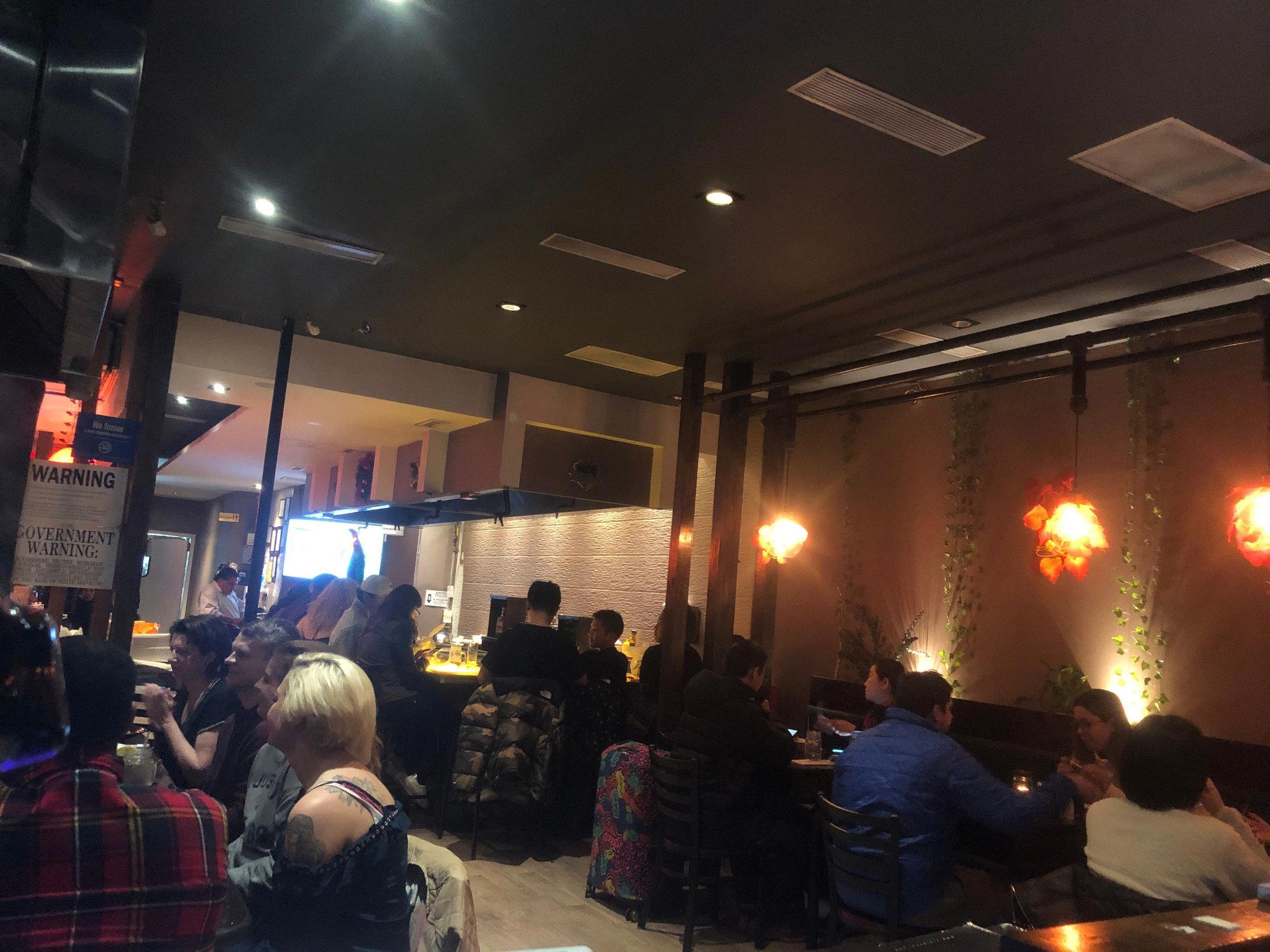
Where the Theater District Meets the Teppanyaki Table
Times Square's dining corridor has long been sorted into two camps: the tourist-facing chains that line the blocks around 42nd Street, and the handful of neighborhood-specific spots that manage to develop a returning clientele despite the transient foot traffic. Fuji Hibachi, at 321 West 42nd Street, occupies an interesting middle position. The hibachi format, with its communal teppanyaki tables and live-fire cooking, is one of the few dining styles that converts first-time visitors into repeat customers on its own terms. The performance element of the meal creates a memory strong enough to bring people back, and that dynamic shapes everything about how this room operates.
Destination counters like Masa and omakase-format rooms position themselves at stronger examples from the Japanese dining bracket, while French-leaning fine dining at venues like Le Bernardin, Per Se, and Eleven Madison Park operates in a completely separate register. Fuji Hibachi is not competing in that tier. Its value proposition is elsewhere: it is a mid-market communal dining experience in a format that rewards groups, families, and anyone who wants a meal that is also a social event.
The Format That Keeps People Returning
Teppanyaki dining, as a category, has a retention dynamic that more conventional restaurant formats envy. The communal table, the theatrical cooking style, and the interactive chef performance create a shared experience that becomes a story rather than just a meal. In a neighborhood where most restaurants are built for one-time visitors moving between shows and hotels, that retention quality is genuinely notable. Regulars at hibachi restaurants across the United States consistently cite the live-fire theater as the reason they return, not because it changes dramatically from visit to visit, but because the experience is inherently social and scales well for groups of different sizes and occasions.
West 42nd Street has seen considerable dining turnover in recent years, with the post-pandemic recovery reshaping which formats survive in high-rent tourist corridors. The hibachi model has proven more durable than many expected, in part because it serves a function that delivery and casual dining cannot replicate: it is a destination format that requires physical presence and benefits from the energy of other diners in the room. That communal dimension is the core of what regulars are actually buying when they return to a hibachi restaurant, and it is worth understanding in that light rather than evaluating the venue purely against the criteria you would apply to a single-chef tasting menu.
What Regulars Actually Prioritize
In the hibachi format broadly, the ordering patterns of returning guests tend to consolidate around a few reliable anchors. Protein-forward combinations, typically steak and seafood pairings, are the standard choice for regulars who know the format well. The fried rice, cooked directly on the teppan, accumulates the cooking residue of earlier courses and is consistently cited as a draw in its own right among habitual hibachi diners. Soup and salad courses that open the meal give the chef time to set the stage, and experienced regulars generally use that window to settle the table and set expectations for guests who are new to the format.
The social choreography of a teppanyaki meal rewards familiarity. First-time visitors are often surprised by the pacing and the proximity of the communal table; regulars have already internalized the rhythm and use it to host others. That hosting function, bringing out-of-town guests or family groups to a format that reliably delivers a memorable evening, is a significant part of why hibachi restaurants in New York maintain a returning base even in neighborhoods that otherwise churn through their dining options rapidly.
The Times Square Context
42nd Street's dining environment is shaped almost entirely by volume. Restaurants in this corridor serve enormous numbers of covers, and the pressure to turn tables quickly is higher than in most other Manhattan neighborhoods. The hibachi format has a built-in tension with that pressure: the meal has a defined theatrical arc that cannot easily be shortened without degrading the experience. For regulars, that arc is precisely the point, and it functions as a natural buffer against the transient energy of the surrounding neighborhood.
New York's broader Japanese dining scene spans a wider range than most cities can match. At the leading end, destination-format venues set the standard nationally; at the accessible mid-market level, formats like hibachi and casual izakaya hold significant volume. The Times Square corridor, despite its tourist-facing reputation, draws enough local and tri-state traffic that the distinction between visitor and regular is less clear-cut than it appears from the outside. A group of New Jersey residents who make a pre-theater dinner a seasonal ritual are, in functional terms, regulars regardless of how they register in neighborhood dining data.
For travelers comparing experiences across American cities, the hibachi format has counterparts in most major markets, but the Times Square location gives Fuji Hibachi a specific draw: it sits within the orbit of Broadway theaters and the broader Midtown entertainment corridor, which makes it a practical pre- or post-event option in a way that more destination-driven venues like Emeril's in New Orleans or The French Laundry in Napa are not designed to be. The format suits that function: a fixed, communal, time-bounded meal that works on a theater-night schedule.
Planning Your Visit
A Minimal comparable set
Comparable venues nearby, for context on price, style, and recognition.
| Venue | Cuisine | Price | Notes |
|---|---|---|---|
| Fuji Hibachi - Times SquareThis venue — the venue you are viewing | Hell's Kitchen, Hibachi Japanese Grill | $$ | Not listed |
| Afuri ramen + dumpling | Not listed | $$ | Williamsburg, Modern Japanese Ramen + Dumplings |
| Ramen DANBO Park Slope | Park Slope, Fukuoka-Style Tonkotsu Ramen | $$ | Not listed |
| Iron Chef House | Brooklyn Heights, Modern Japanese Sushi | $$ | Not listed |
| Uogashi | Not listed | $$ | Hell's Kitchen, Tokyo-style Omakase Sushi |
| PacRim Sushi & Asian Cuisine | Not listed | $$ | East Midtown-Turtle Bay, Japanese Sushi and Asian Fusion |
Continue exploring
More in New York City
Restaurants in New York City
Browse all →
Bars in New York City
Browse all →
Hotels in New York City
Browse all →





At a Glance
- Lively
- Energetic
- Family
- Group Dining
- Celebration
- Open Kitchen
Current opening hours
- Monday
- 11 AM–11:30 PM
- Tuesday
- 11 AM–11:30 PM
- Wednesday
- 11 AM–11:30 PM
- Thursday
- 11 AM–11:30 PM
- Friday
- 11 AM–11:30 PM
- Saturday
- 11 AM–11:30 PM
- Sunday
- 11 AM–11:30 PM
Hours can change for holidays and private events. Last verified .
Soft lighting and elegant décor creating an intimate yet lively atmosphere.