
Ujikin Zushi gives Tome a serious sushi address outside the usual urban circuit, with Tabelog 100 Sushi EAST 2025 recognition placing it in a wider eastern Japan conversation. The appeal is ingredient-led rather than theatrical: fish is the stated priority, shochu has its own emphasis, and the room supports both counter dining and tatami-style meals.
Pearl is the En Primeur Club membership app — saves, bookings, and concierge access live there. Same editors, same standards.
- Address
- 宮城県登米市迫町佐沼字錦27
- Phone
- +81220222230
- Website
- tome-city.com
 Saves & bookings on Pearl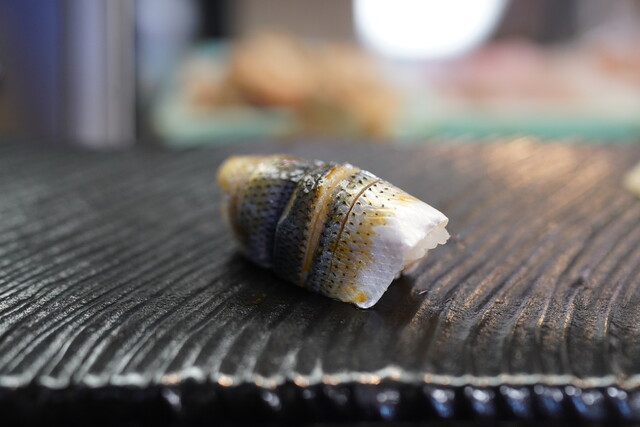
Sanuma is not the stage set many travellers imagine for sushi in Japan. The approach is quieter: a local street address in Tome, counter seating and tatami space, and a dining culture tied less to metropolitan display than to the practical question that has long defined sushi in coastal and river-adjacent Tohoku: what fish is worth serving today, and how plainly can it be handled?
That matters because Miyagi sits in one of Japan’s serious seafood corridors, shaped by Pacific fisheries, inland foodways, and a dining rhythm that needs no Ginza choreography to be credible. Ujikin Zushi belongs to the smaller regional tier of sushi restaurants where sourcing carries the argument. Its public food note is direct, “particular about fish,” usefully pointing to a kitchen built around product selection rather than chef mythology or imported luxury cues.
Regional sushi with fish as the main credential
Japan’s sushi hierarchy is often discussed through Tokyo counters, auction access, and omakase pricing. That frame misses a provincial pattern: restaurants in fishing prefectures can build authority through proximity, regulars, and consistency rather than spectacle. In Tome, the meal sits inside that tradition. The category listing includes sushi alongside katsu-don, signalling a broader Japanese restaurant idiom rather than a severe tasting-menu-only format. For travellers used to capital-city sushi temples, that is not a downgrade; it is a different grammar.
The Tabelog 100 Sushi EAST 2025 selection gives the restaurant a credential beyond local reputation. Tabelog’s Hyakumeiten lists are not Michelin-style stars, but in Japan they carry weight by separating notable genre specialists by category and region. For a sushi address in Tome, appearing in the EAST sushi list places it in a conversation across eastern Japan, not only Miyagi. Its Tabelog score of 3.72 reinforces the point: this is a recognized regional restaurant, not a traveller-facing curiosity.
Pricing shapes expectation. The listed dinner range is JPY 6,000 to JPY 7,999, far below the premium omakase counters dominating international sushi discourse. In the supplied comparison set, Sushi Tetsu Honten occupies a higher dinner band, while Chez Nous sits in a comparable or slightly higher bracket depending on meal period. Ujikin Zushi is therefore neither bargain sushi nor luxury theatre; it is the middle tier where ingredient judgment must do the work because elaborate format cannot carry the bill.
A Tome meal rather than a Tokyo performance
The room format says much about the experience. Counter seating keeps sushi tradition visible, while tatami seating lets the meal behave more like a local gathering than a hushed transaction. Private rooms and private use are available, pushing the restaurant toward social dining as much as individual sushi study. That flexibility suits a city where restaurants often serve repeat local occasions, not only destination diners with reservation spreadsheets.
Shochu has a stated place in the drinks program, another clue that the meal is grounded in Japanese regional habits rather than international wine-pairing language. Sushi can support sake, beer, shochu, tea, or nothing; here Japanese spirits give the table a more local register. It also fits a restaurant not framed as a pure Edomae counter. The broader category range, tatami rooms, and fish-first language point to a dining style loose enough for different occasions.
Smoking is allowed, a detail that will divide readers. In contemporary Japan, especially after the revised Health Promotion Act came into effect in 2020, smoking policies have become a practical traveller filter. Here it is part of the room’s reality, not a footnote. Diners seeking a sealed international fine-dining environment may find that old-school tolerance out of step; diners who read it as local restaurant culture will understand the trade-off.
How to read its place in the trip
Tome is not built around the fly-in dining weekend like Tokyo, Kyoto, or Osaka. That is why a recognized sushi address here is interesting. It gives food-focused travellers a reason to notice Miyagi beyond Sendai, and to read regional sushi through supply, habit, and price rather than ceremony. For a wider city scan, use Our full Tome restaurants guide; for planning around the meal, the adjacent city pages for Our full Tome hotels guide, Our full Tome bars guide, Our full Tome wineries guide, and Our full Tome experiences guide give the broader travel frame.
Approach the restaurant as a specific regional meal, not a trophy booking. Reservations are available, parking is available, and payment is cash only, returning planning to ordinary Japanese travel discipline: confirm the table, carry yen, and do not assume card infrastructure. Public transport access runs through local bus routes, including a stop at Itsukamachi followed by a short walk, so the meal suits travellers already moving through Tome rather than those compressing it into a Tokyo-style restaurant sprint.
For readers mapping Japan through food rather than city fame, the useful comparison is not only sushi. EP Club’s wider Japan file moves from beef in -Grilled beef Sukiyaki- KAMAKURA TANUKIAN 鎌倉 たぬき庵 in Kamakura to casual urban cooking at . 鮪と炭火焼き うお炭 秋葉原店 in Tokyo, coffee culture at .cafe in Osaka, contemporary dining at .know in Kumamoto, Vietnamese cooking at (Shoku) Vietnam in Kawasaki, curry at [Curry Senmon Ten] Maruyama Kyoju. in Sapporo, Kyoto dining at [ki:] in Kyoto, Nara beef culture at #肉といえば松田 奈良本店 in Kashihara, burgers at 1/3 HAMBURGER FACTORY in Kanazawa, Yokohama dining at 1000 in Yokohama, mountain eating at 1000mヒュッテ 1000m Hut in Kutchan, and Japanese food culture abroad through Jōdo Saké Bar in Los Angeles and Onigiri Time in Pasadena. Ujikin Zushi fits that map as a reminder that serious eating in Japan often becomes clearer outside the cities that dominate the itinerary.
How It Stacks Up
Comparable venues by cuisine and price in the same metro.
| Venue | Cuisine | Price | Awards | Notes |
|---|---|---|---|---|
| Ujikin ZushiThis venue — the venue you are viewing | Traditional sushi and katsu-don shop | $$ | , | |
| 工房・レストランMORI | Seasonal Japanese Forest Cuisine | $$ | , | 久美浜町 |
| Nonokura (手打式超多加水麺 ののくら) | Handmade Ultra-High Hydration Ramen | $$ | , | Kameari |
| Rankan | Traditional Japanese Kissaten Coffee House | $$ | , | Dazaifu |
| らぁめん家 69'N' ROLL ONE 赤坂本店 | Chicken Clear Soy Ramen | $$ | , | Akasaka |
| Mentakumi Takamatsu (麺匠 たか松) | Takamatsu Ramen | $$ | , | central Kyoto |
Continue exploring
More in Tome
At a Glance
- Classic
- Cozy
- Hidden Gem
- Family
- Casual Hangout
- Group Dining
- Solo
- Historic Building
- Standalone
- Sake Program
Traditional local sushi-ya atmosphere with a simple, old-school interior that feels cozy and unpretentious, drawing mainly locals for relaxed lunches and dinners.