Twin Isle
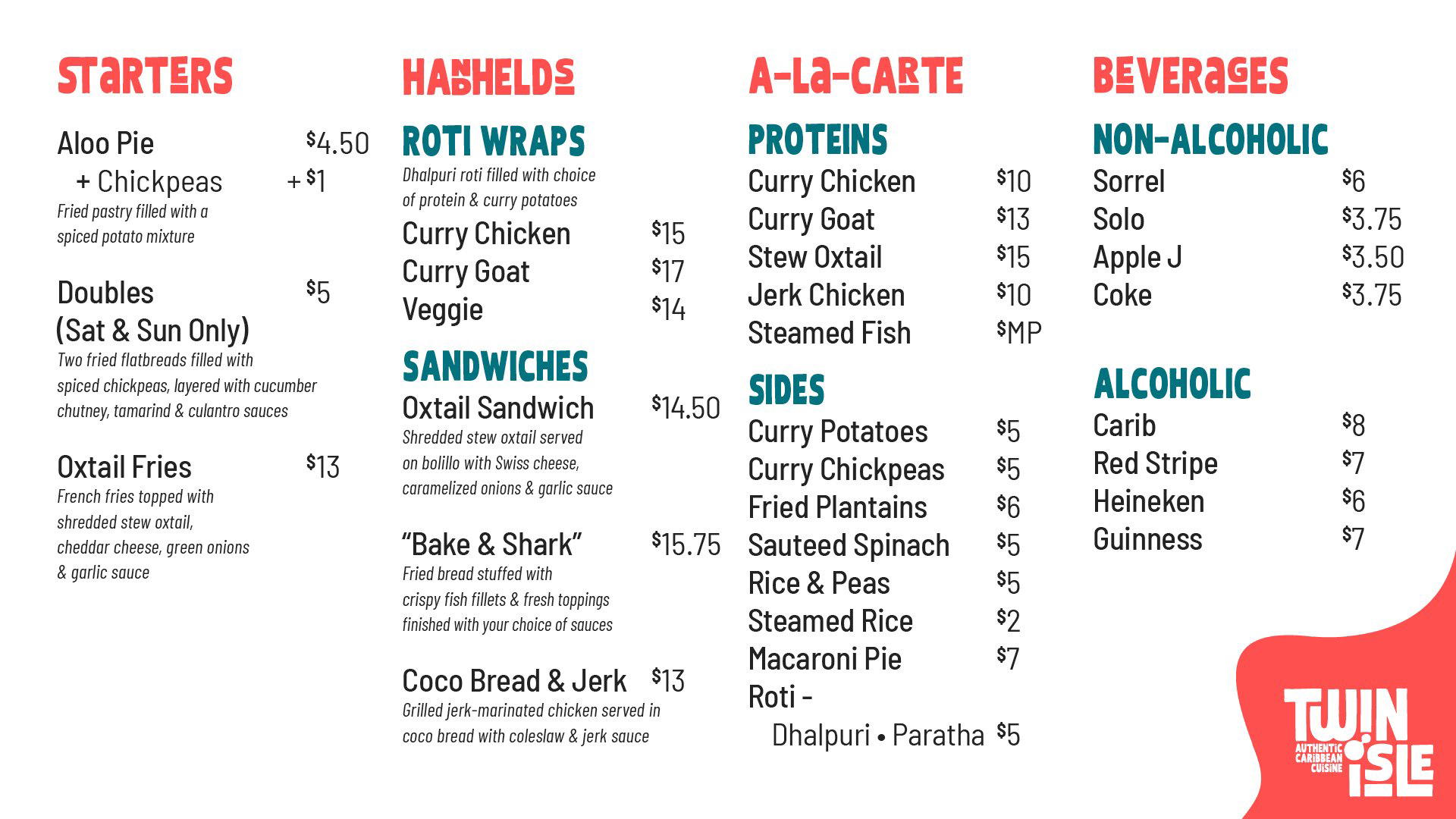
Twin Isle brings the cooking traditions of Trinidad and Tobago to East Austin's Rosewood Avenue, occupying a distinct position in a city whose restaurant scene skews heavily toward barbecue and New American formats. The kitchen draws on a culinary heritage built around layered spicing, stewed proteins, and street-food formats that remain largely underrepresented in Texas dining. For Austin diners tracking the city's expanding range of Caribbean cuisines, this is a meaningful address.
 Discover on Pearl
Pearl is the En Primeur Club membership app — saves, bookings, and concierge access live there. Same editors, same standards.
- Address
- 1401 Rosewood Ave A-1, Austin, TX 78702
- Phone
- (512) 647-0689
- Website
- twinislerestaurant.com
Caribbean Cooking in a City Built on Brisket
Austin's dining identity has long been defined by smoke and fire. The city's most-discussed restaurants tend to cluster around Texas barbecue, live-fire New American formats like Hestia, or the hyper-local sourcing ethos visible at places like Barley Swine. Within that context, a restaurant focused on the cooking of Trinidad and Tobago occupies genuinely different territory. Twin Isle, at 1401 Rosewood Ave A-1 in East Austin, sits in the 78702 corridor, a part of the city that has absorbed more culinary diversity than almost any other over the past decade. That geography matters: the east side is where Austin's more independent, community-rooted food operations tend to land, away from the higher-rent dining districts that push menus toward broader appeal.
The Culinary Architecture of Trinidad and Tobago
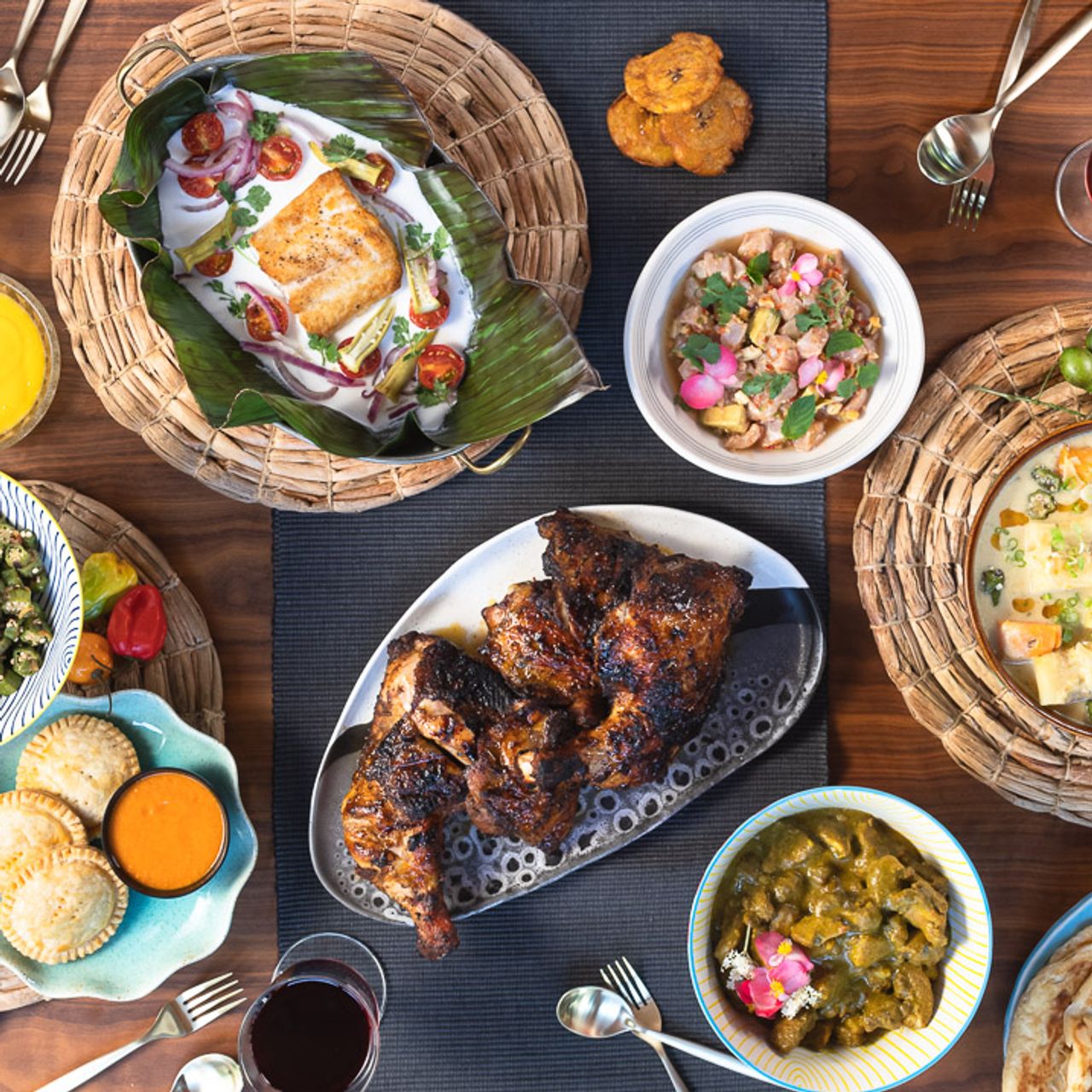
To understand what Twin Isle is doing, it helps to understand what Trinidadian cooking actually is, because the cuisine resists easy categorisation. Trinidad and Tobago sits at the southern end of the Caribbean chain, close enough to Venezuela that its food absorbed South American influences, while its colonial history layered in West African, East Indian, Chinese, and European cooking traditions. The result is a cuisine defined less by any single technique than by accumulation: the roti that wraps curried goat or channa is descended from South Asian flatbread traditions carried by indentured labourers in the nineteenth century; the doubles, a street snack of bara flatbreads with curried chickpeas and chutneys, reflects the same lineage. Stewed oxtail and pelau, a rice-and-pigeon-peas dish, carry West African ancestry. This is a cuisine built on cultural contact and adaptation over two centuries, and it reads on the plate as something genuinely layered.
In the United States, Trinidadian restaurants are concentrated in cities with large Caribbean diaspora populations: New York, Miami, Atlanta. Austin has no such established community, which makes the presence of a restaurant focused on this tradition both more significant and more instructive about how the city's food scene is maturing. For context on how Caribbean-influenced cooking fits into the broader American fine-dining conversation, Le Bernardin in New York City and Emeril's in New Orleans both represent the way diaspora-inflected coastal cuisines eventually enter the American restaurant mainstream, even if the path from community cooking to broader recognition takes decades.
East Austin as a Proving Ground
Rosewood Avenue runs through a neighbourhood that has changed substantially since the early 2010s. The 78702 zip code now holds a cross-section of Austin's independent restaurant culture, from old-school taqueiras to newer wine-focused spots. Twin Isle operates from this base, which gives it a neighbourhood character that contrasts with the more polished dining districts around South Congress or the Domain. East Austin has historically been the part of the city where food with genuine community roots finds space to operate without the pressures of high-volume tourist traffic. That positioning is part of what makes this address coherent for a cuisine like Trinidadian cooking, which is fundamentally a community food tradition rather than a tasting-menu construct.
For reference, the barbecue operations that anchor Austin's food reputation, including la Barbecue and InterStellar BBQ, also operate with the directness and informality that characterises food rooted in tradition rather than theatrical presentation. Twin Isle belongs to the same register, even if the culinary tradition it draws from is entirely different.
Where This Fits in Austin's Broader Dining Range
Austin now supports a wider range of cuisines than its reputation suggests. Alongside the barbecue that defines its national image, the city has Craft Omakase at the precision end of Japanese cuisine, and a growing collection of restaurants operating at price points and in formats that would not have been viable here fifteen years ago. The comparison set for Twin Isle, however, is not those higher-investment operations. Trinidadian cooking is fundamentally a mid-range, high-flavour cuisine, not a tasting-menu tradition. Its peer group in Austin is the set of independent restaurants bringing specific regional cooking traditions to a city that has historically underrepresented the Caribbean entirely.
At the national level, the restaurants drawing the most critical attention for sourcing- and tradition-led cooking include Blue Hill at Stone Barns in Tarrytown, Smyth in Chicago, and Single Thread Farm in Healdsburg, all of which use deep culinary heritage as their primary organisational principle. The methodological parallel to Twin Isle is not the price point or format but the commitment to a specific tradition rather than a generalised idea of Caribbean food. Cuisines like those served at Lazy Bear in San Francisco, Providence in Los Angeles, Addison in San Diego, The Inn at Little Washington, Atomix in New York City, The French Laundry in Napa, and Atelier Moessmer Norbert Niederkofler in Brunico each demonstrate how specific culinary traditions, properly executed, earn sustained critical recognition over time.
Planning Your Visit
Twin Isle is located at 1401 Rosewood Avenue, Suite A-1, in East Austin. The Rosewood corridor is accessible by car, and street parking along Rosewood and adjacent streets is generally available. Current hours are Mon: Closed; Tue through Sun: 11 AM to 8 PM. Twin Isle is walk-in friendly, though arriving early in service is a sensible approach. For a full picture of the Austin restaurant scene across price points and cuisine types, our full Austin restaurants guide covers the range from barbecue institutions to higher-investment tasting formats.
Similar Picks
Comparable venues nearby, for context on price, style, and recognition.
| Venue | Cuisine | Price | Notes |
|---|---|---|---|
| Twin IsleThis venue — the venue you are viewing | Trinidad and Tobago Caribbean | $$ | |
| CUBA512 | Authentic Cuban | $$ | South Austin |
| Murray's Tavern | New York-Style Tavern Fare | $$ | East Cesar Chavez |
| Tapville Social - Austin | American Gastropub with Self-Pour Taps | $$ | University |
| Blue Starlite Mini Urban Drive In | Drive-In Concessions & Themed Dining | $$ | RMMA |
| Pecan Square Café | Contemporary American with Mediterranean influences | $$ | Old West Austin |
Continue exploring
More in Austin
Restaurants in Austin
Browse all →
Bars in Austin
Browse all →
Hotels in Austin
Browse all →

At a Glance
- Lively
- Cozy
- Casual Hangout
- Group Dining
Bright island vibes with vibrant, comforting Caribbean atmosphere.