Tutto Italia
Our verdict
Tutto Italia at Epcot's Italy Pavilion occupies one of the more particular positions in Orlando dining: a sit-down Italian restaurant embedded inside a theme park, drawing on regional Italian traditions within an environment that is itself a curated version of Italy. The question worth asking is how seriously the kitchen takes those traditions relative to the setting.

Pearl is the En Primeur Club membership app — saves, bookings, and concierge access live there. Same editors, same standards.
- Address
- 200 Epcot Center Dr, Lake Buena Vista, FL 32830
- Phone
- (407) 939-5277
- Hours
- Daily 12:30–9 PM
- Website
- tuttoitaliaristorante.com
- Directions
- Get directions
The menu
What to order
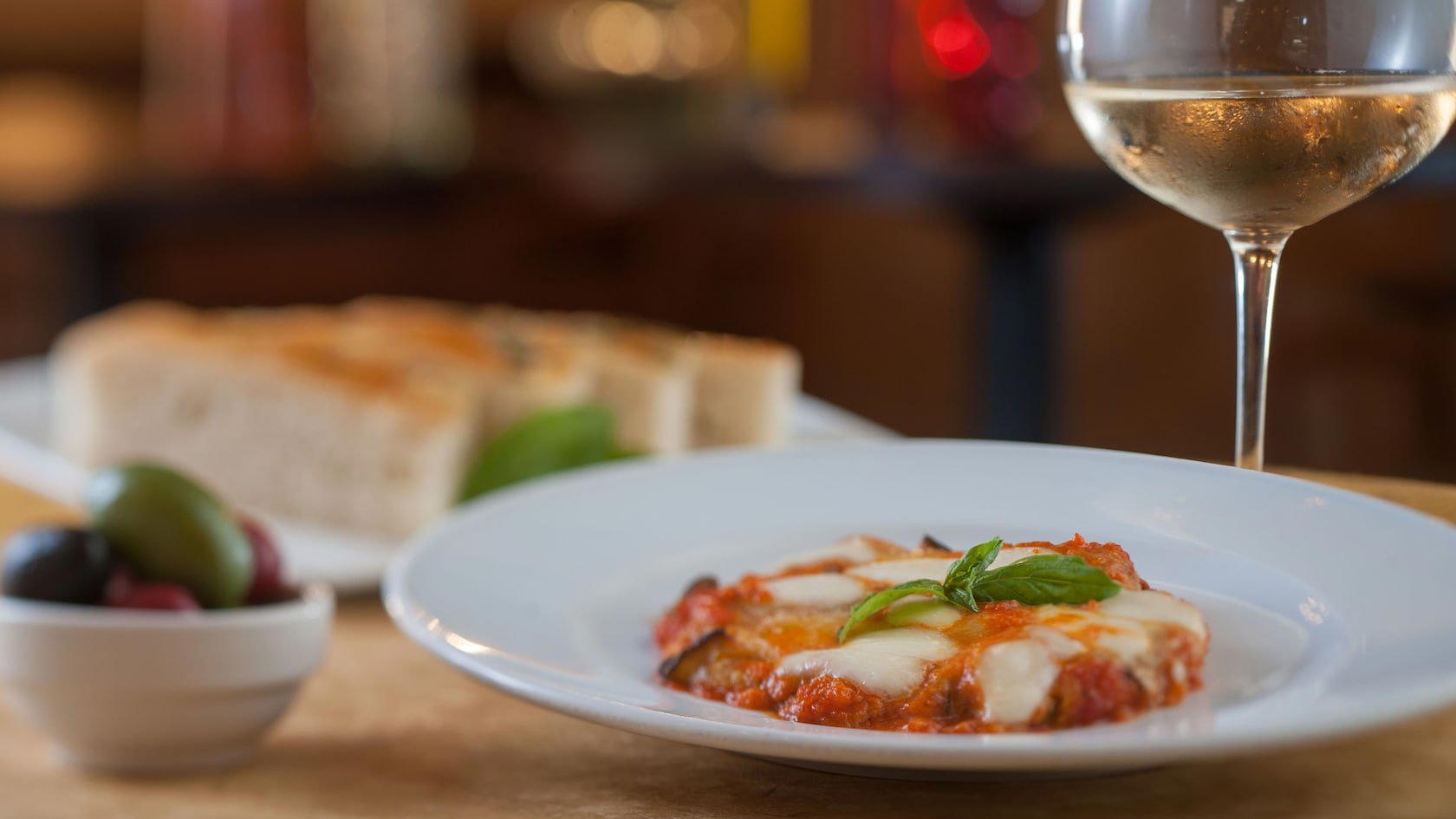
- Lasagna alla Bolognese
- Mare e Monti Ravioli
Italian Dining Inside the Simulation
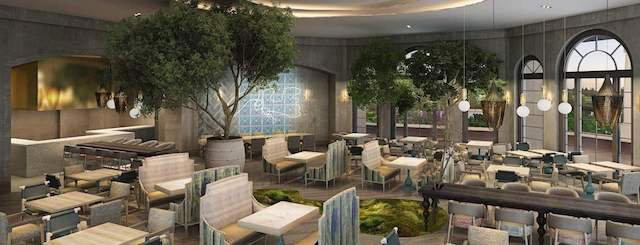
There is a particular logic to dining at Epcot's Italy Pavilion that has nothing to do with escapism and everything to do with commitment. The pavilion itself is a compressed architectural rendering of Venice, Rome, and the Italian countryside, and Tutto Italia sits within that built environment on the World Showcase lagoon, its dining room opening toward a facsimile of St. Mark's Square. The physical context is openly theatrical, which means the kitchen operates under a different set of expectations than a standalone Italian restaurant on a city block. What gets tested here is not whether the setting feels authentic, but whether the food inside it takes regional Italian cooking seriously enough to hold up against the backdrop.
That framing matters because theme park Italian dining in the United States has historically defaulted to a lowest-common-denominator read of the cuisine: red sauce, oversized portions, and a wine list designed for volume rather than region. The Italy Pavilion model, by contrast, asks its restaurants to represent something closer to the real thing, at least in broad strokes. That ambition is either the most interesting thing about Tutto Italia or the most complicated, depending on what you order and what you expect.
What Regional Italian Cooking Actually Looks Like in This Context
Italian cuisine is not a single tradition but a loose confederation of regional ones, each tied to specific geography, climate, and agricultural history. Northern kitchens rely on butter, cream, and rice; central Italy leans into cured pork, legumes, and handmade pasta; the south builds around olive oil, tomato, and preserved fish. A restaurant claiming to represent Italy broadly has to make choices about which of those threads to follow, and those choices are more revealing than any menu description.
Tutto Italia's position inside a Disney property also connects it to a wider pattern in American theme park dining, where the last decade has seen a measurable shift toward full-service restaurants with genuine kitchen investment. That shift mirrors what happened in American airport dining in the 2000s and 2010s, when the captive-audience model gave way to outposts of serious chef-driven concepts. The logic is the same: a guaranteed audience is not an excuse to lower standards, it is an opportunity to convert occasional visitors into repeat guests. Orlando's non-theme-park dining scene has sharpened considerably in that period, with counters like Kadence and Sorekara operating at a level that would register in any major American city, and that broader elevation of the city's dining floor raises the bar even for destination-embedded venues.
Technique, Tradition, and the Import Question
The editorial angle that applies here is one of technique meeting local context. Italian cooking at its foundational level is not about imported ingredients so much as inherited method: the hand-rolled pasta, the slow-braised proteins, the patient reduction of aromatics in fat. When those methods travel, what matters is how faithfully the kitchen preserves process rather than provenance. A ragù made with Florida-raised pork can be as technically sound as one made with Emilian heritage breeds if the cook understands what the technique is asking for. The reverse is also true: the leading imported San Marzano tomatoes cannot save a sauce built without patience.
Tutto Italia sits in a category that American dining criticism tends to undervalue: the mid-format Italian restaurant that is neither a red-sauce neighbourhood joint nor a white-tablecloth tasting-menu operation. That middle tier is actually where most Italians eat most of the time, and it is where technique becomes most visible because there is no ambient luxury or theatrical coursework to compensate for a badly made dish. The competitive reference point for this tier in Orlando includes the upscale steakhouse model at Capa and the Vietnamese fine-dining approach at Camille, both of which operate at the $$$$ price point with deliberate kitchen programs. Nationally, the conversation about what serious Italian cooking looks like in an American context runs from the Mediterranean-sourced precision of Le Bernardin in New York to the hyper-local sourcing at Blue Hill at Stone Barns in Tarrytown, with most working restaurants operating somewhere between those poles.
Internationally, the Italian approach to ingredients-first cooking has found expression far from Italy itself. 8½ Otto e Mezzo Bombana in Hong Kong is the clearest example of Italian technique transplanted wholesale into a non-Italian ingredient market, holding three Michelin stars through disciplined classical execution rather than geographic proximity to source ingredients. That model, where craft travels better than terroir, is the one that benefits any Italian restaurant operating outside Italy's agricultural belt.
Planning a Visit
Tutto Italia is located at 200 Epcot Center Dr, Lake Buena Vista, FL 32830, inside Epcot's World Showcase Italy Pavilion. Because it operates within a Disney property, access requires valid park admission, which functions as the effective entry threshold before any meal consideration. Reservations are bookable through Disney's dining platform and are advisable, particularly during peak seasons: the spring and summer school holiday periods, the Christmas-to-New-Year stretch, and the Epcot International Food and Wine Festival in autumn, which draws significant additional foot traffic to the World Showcase. Walk-in availability exists during off-peak periods but is not dependable enough to plan around. For those comparing options across Orlando's broader dining scene, our full Orlando restaurants guide maps the city's current range from theme park dining to independent fine dining.
Other reference points for ambitious dining within the broader American context, useful for calibrating expectations before a trip that includes serious meals: Alinea in Chicago, The French Laundry in Napa, Providence in Los Angeles, Lazy Bear in San Francisco, Single Thread Farm in Healdsburg, Atomix in New York City, Addison in San Diego, The Inn at Little Washington, and Emeril's in New Orleans. Japanese dining in Orlando specifically is well-represented at Natsu, which rounds out the city's higher-end options alongside the venues already mentioned.
Frequently asked questions
What's the address for Tutto Italia?
Tutto Italia is located at 200 Epcot Center Dr, Lake Buena Vista, FL 32830, Orlando.
Does Tutto Italia accept the Disney Dining Plan, and does that affect the experience?
Tutto Italia at Epcot's World Showcase (200 Epcot Center Dr, Lake Buena Vista, FL 32830) has historically participated in Disney's Dining Plan as a table-service credit redemption, making it one of the more substantial Italian options available under that program. Whether the plan is active during your visit should be confirmed through Disney's official channels, as participation terms change between plan iterations. For guests on the plan, the credit structure can shift the value calculation considerably compared with paying out of pocket.
What's the best thing to order at Tutto Italia?
Because the kitchen operates within Epcot's Italy Pavilion at 200 Epcot Center Dr, the menu draws on regional Italian tradition rather than a single signature dish. Pasta-based courses are consistently the reference point for visitors assessing the kitchen's range. Without a current published menu on file, the safest approach is to ask your server which dishes reflect the day's regional focus.
Can I walk in to Tutto Italia?
Tutto Italia operates as a table-service restaurant inside Epcot, which means walk-in availability depends entirely on the park's daily attendance load. During peak Orlando travel periods — spring break, summer, and major holidays — same-day seating is difficult to secure without a prior reservation. Booking through Disney's dining reservation system ahead of your visit is the practical standard here.
What's the defining dish or idea at Tutto Italia?
The organizing idea at Tutto Italia is regional Italian cooking reframed for a park dining context, which means the menu references Italy's geographic diversity rather than defaulting to a single regional style. That commitment to breadth is what separates it from generic red-sauce trattorias common to theme park settings. The Italy Pavilion address at Epcot's World Showcase provides the architectural and cultural backdrop that reinforces that framing.
How does Tutto Italia handle allergies?
As a Walt Disney World table-service restaurant at 200 Epcot Center Dr, Tutto Italia operates under Disney's documented allergy-accommodation protocols, which cover common allergens including gluten, dairy, tree nuts, and shellfish. Guests are advised to flag dietary needs at the time of reservation and again with the server on arrival. Kitchen staff can typically speak to modifications, though the specifics depend on the current menu.
Is Tutto Italia worth it?
That depends on what you're measuring against. As a table-service Italian restaurant inside a theme park, Tutto Italia competes on a different axis than a standalone trattoria in Orlando proper. For guests already spending a day at Epcot's World Showcase, it offers a sit-down alternative to quick-service options with a wine list and plated courses. If you're making a special trip solely for the food, the standalone Italian dining scene in Orlando offers more targeted options.
Awards and Standing
Comparable venues nearby, for context on price, style, and recognition.
| Venue | Cuisine | Price | Notes |
|---|---|---|---|
| Tutto ItaliaThis venue — the venue you are viewing | Traditional Italian Trattoria | $50–100 | Not listed |
| Vincenzo Cucina Italiana | Authentic Italian Cucina | $50–100 | Convention Center |
| Fiorella's | Tuscan Italian | Not listed | Convention Center |
| Via Napoli | Authentic Neapolitan Pizza | $30–50 | EPCOT Italy Pavilion |
| Bice Ristorante | Northern Italian Trattoria | $50–100 | International Drive |
| Broadway Ristorante & Pizzeria | New York-Style Italian Pizza & Pasta | $20–30 | Woolco Way / Century Plaza |