Natsu

Natsu holds back-to-back Michelin stars (2024 and 2025) and sits at the sharper end of Orlando's Japanese dining scene, operating from a compact North Orange Avenue address. Chef Adrian Torres steers a tasting format that moves through Japanese technique with a precision rarely found outside major coastal cities. At the $$$$ price tier, it competes with the city's most serious tasting-menu rooms.
- Address
- 777 N Orange Ave Suite C, Orlando, FL 32801
- Phone
- +1 407-286-5744
- Website
- natsuomakase.com
- Directions
- Get directions
Where Orlando's Tasting-Menu Scene Gets Serious
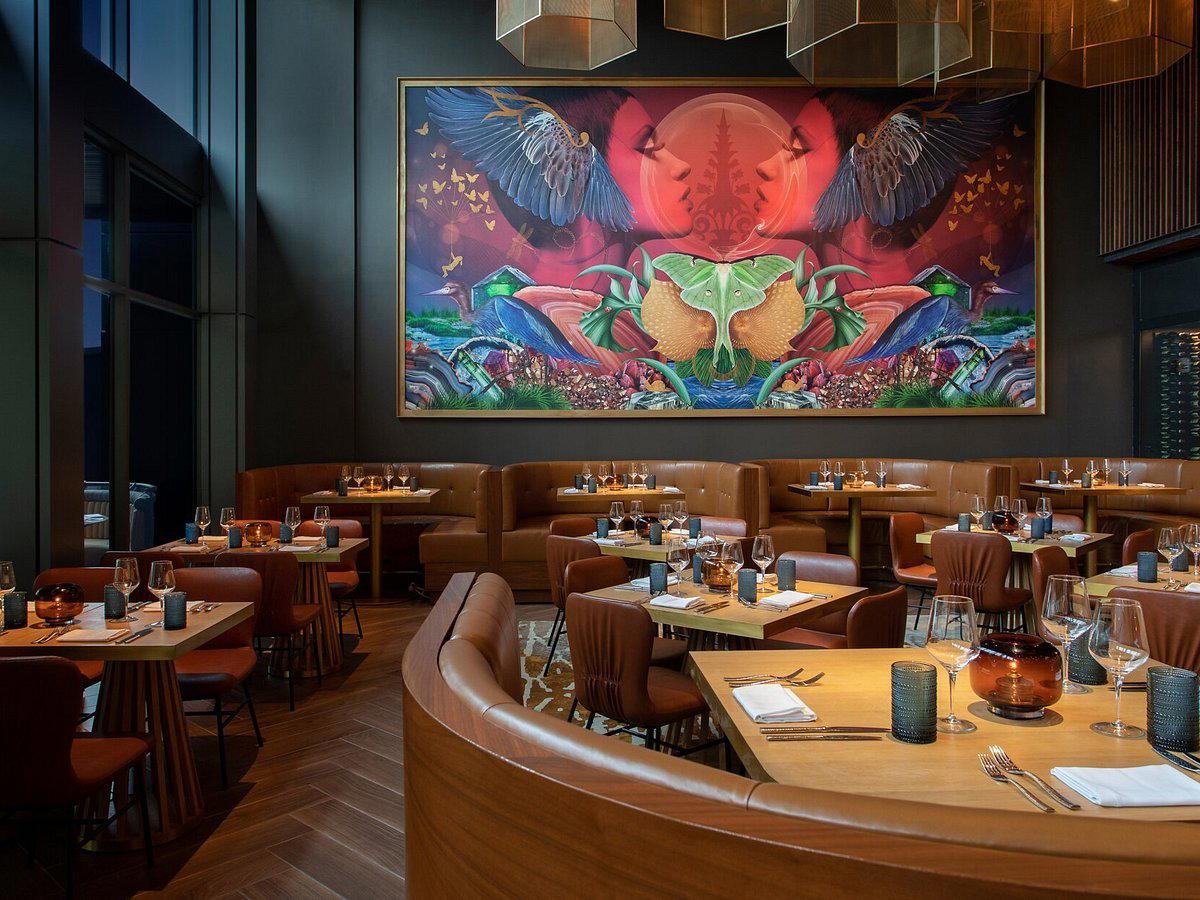
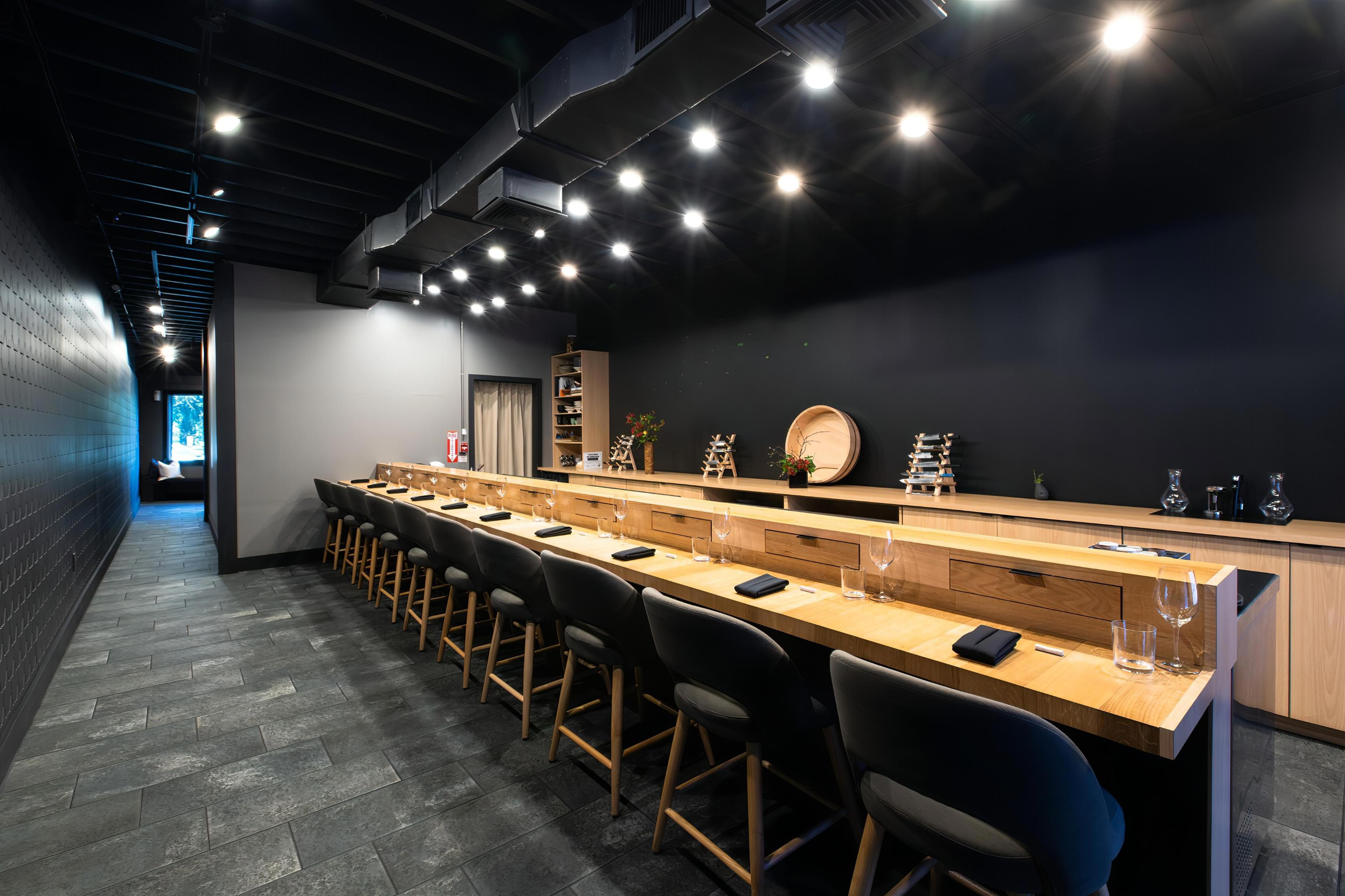
Natsu is a one-Michelin-star restaurant in Orlando serving Traditional Japanese Omakase at about $195 per person. The stretch is low-key by design, and the suite-level entry at 777 N Orange Ave pulls no architectural drama. That understated approach is the first signal: inside Natsu, the physical environment is spare and deliberate, the kind of room where light, surface, and spacing are calibrated to pull attention toward the table rather than the walls. Orlando's fine-dining circuit has historically orbited resort corridors and hotel towers, so a standalone Japanese tasting room earning Michelin recognition in this neighborhood carries specific weight.
The 2024 and 2025 Michelin stars position Natsu inside a short list of Orlando restaurants holding active recognition from the Guide.
The Arc of the Meal
Tasting menus at this price point live or die by sequencing. The format demands an internal logic: early courses that orient the palate, a mid-section that builds intensity, and a close that lands with enough resolution to justify the commitment. Japanese kaiseki tradition provides among the more codified blueprints for exactly this kind of progression, and Natsu operates within that framework, filtered through Chef Adrian Torres's training and the particular conditions of a Florida kitchen.
The early passes in any well-structured Japanese tasting tend toward restraint, smaller bites with high technical precision, where temperature, knife work, and balance do the heavy lifting before richer, more declarative flavours arrive mid-sequence. By the time a meal reaches its main protein courses, the diner's frame of reference has been set. What distinguishes serious omakase-adjacent formats from looser tasting menus is whether that early groundwork is evident in the back half of the meal, whether the progression was actually constructed rather than assembled.
The $$$$ price designation places Natsu alongside the small cohort of Orlando rooms pitching at comparable spend levels. In that company, the Michelin credential becomes the differentiator, a signal about kitchen discipline that a price tag alone cannot provide.
Japanese Fine Dining in an Unlikely City
To understand what Natsu's two consecutive stars represent, it helps to place Orlando in the national picture. Michelin's Guide to Florida is relatively young, and the city does not carry the coastal density of Japanese dining institutions that New York, Los Angeles, or San Francisco have accumulated over decades. The omakase and kaiseki formats that feel quotidian in Manhattan or in the restaurant districts of Tokyo's Minato and Chuo wards are genuinely rare in Central Florida.
Globally, the benchmark counters for Japanese fine dining sit in neighborhoods like Azabu and Ginza, where restaurants such as Myojaku and Azabu Kadowaki set the technical and cultural standard. The American equivalents have mostly concentrated in gateway cities. Natsu's sustained recognition suggests that the format can be executed at a serious level in a market that has not traditionally been associated with it, which is a more consequential statement about the restaurant than any single dish description could provide.
Within the Orlando Japanese scene specifically, Natsu occupies a different register from the broader category. Kadence, Kabooki Sushi, and Gyukatsu Rose each represent distinct points on the city's Japanese dining spectrum, but the tasting-menu format with Michelin validation is Natsu's specific territory.
Chef Adrian Torres and the Question of Authorship
The American tasting-menu tradition has increasingly borrowed from Japanese technique without always understanding its internal grammar. The risk in fusion-adjacent formats is a meal that reads as a greatest-hits compilation rather than a coherent argument. What Michelin's inspectors evaluate, across two separate visits in two consecutive years, is consistency and point of view, the sense that a kitchen knows what it is trying to say and says it reliably.
Chef Adrian Torres functions here as the author of that argument, not as the story itself. The relevant editorial fact is that Natsu has passed that inspection standard twice, which in the context of Florida's relatively compact Michelin landscape places it in a category of tasting-menu dining where authorship is the entire premise. The comparison to Le Bernardin in New York City or The French Laundry in Napa is one of format discipline rather than cuisine, the same class of commitment to the tasting-menu contract. Counterparts like Single Thread Farm in Healdsburg show how Japanese-influenced precision can thrive outside traditional culinary capitals, a trajectory Natsu mirrors in Florida's context.
Planning a Visit
Natsu operates from Suite C at 777 N Orange Ave in downtown Orlando, within reach of the city's central accommodation corridor. For where to stay before or after a dinner here, Tasting menus at the $$$$ level in a Michelin-starred room should be booked well ahead; reservation-only service means tables are limited. The compact suite setting suggests this is not a high-volume room, which adds to both the intimacy and the scarcity of tables.
City Peers
Comparable venues nearby, for context on price, style, and recognition.
| Venue | Cuisine | Price | Notes |
|---|---|---|---|
| NatsuThis venue — the venue you are viewing | Traditional Japanese Omakase | $$$$ | Not listed |
| Capa | Spanish-Influenced Steakhouse | $$$$ | Golden Oak |
| Kaya | Modern Filipino | $$$ | Mills50 |
| Kadence | Modern Japanese Omakase | $$$$ | Audubon Park Garden District |
| The Ravenous Pig | Modern American Gastropub | $$$ | Winter Park |
| Gyukatsu Rose | Japanese Gyukatsu | $$ | Audubon Park Garden District |
Recognition history
Dated appearances from independent guides and award organizations, with the underlying list record or original source where available.
Michelin 1 Star
Michelin
Michelin 1 Star
Michelin







At a Glance
- Intimate
- Elegant
- Modern
- Sophisticated
- Date Night
- Special Occasion
- Business Dinner
- Chefs Counter
- Open Kitchen
- Sake Program
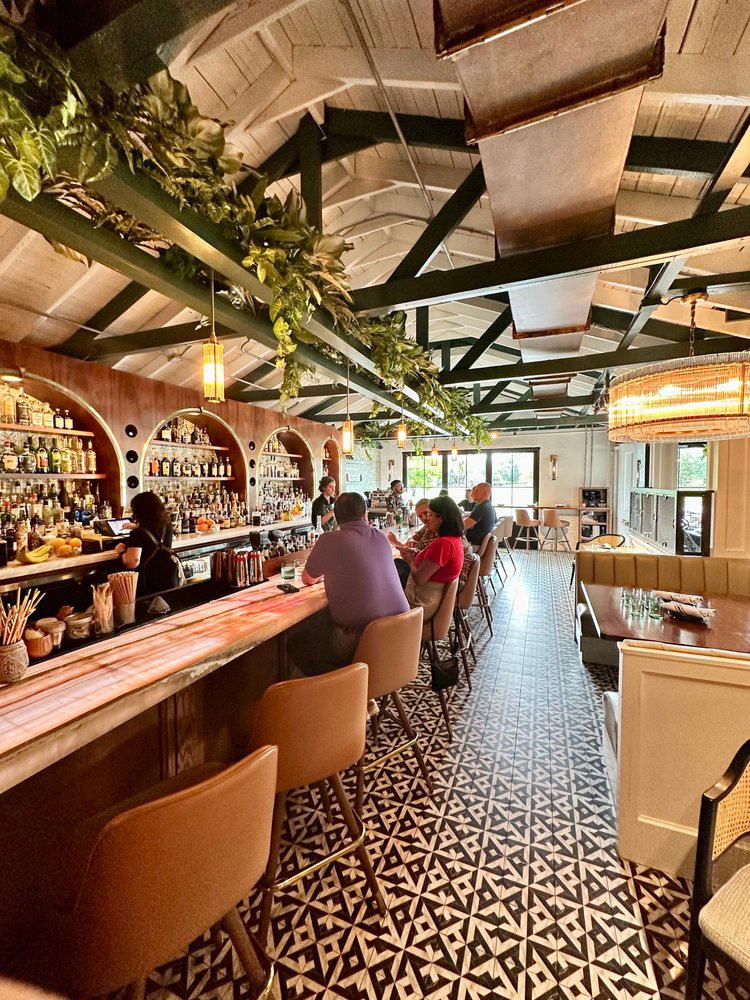
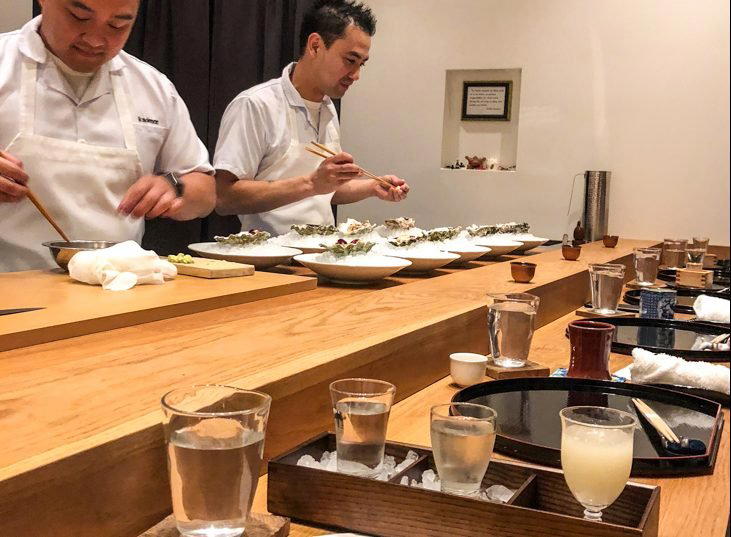
Spartan-styled intimate room dominated by a counter with handsome blond wood surfaces, terrazzo countertops, and stone paneling creating a serene, luxurious atmosphere.