Kadence

Kadence holds two consecutive Michelin stars (2024, 2025) and represents a different tier of ambition within Orlando's Japanese dining scene. Under chef Haley Duren, the Winter Park Road counter operates at a price point comparable to starred Japanese restaurants in major coastal cities, but with a fraction of their booking friction. For a $$$$ spend, the credentials are unusually strong by any regional standard.
Pearl is the En Primeur Club membership app — saves, bookings, and concierge access live there. Same editors, same standards.
- Address
- 1809 Winter Park Rd, Orlando, FL 32803
- Website
- kadenceorlando.com
- Directions
- Get directions
 Saves & bookings on Pearl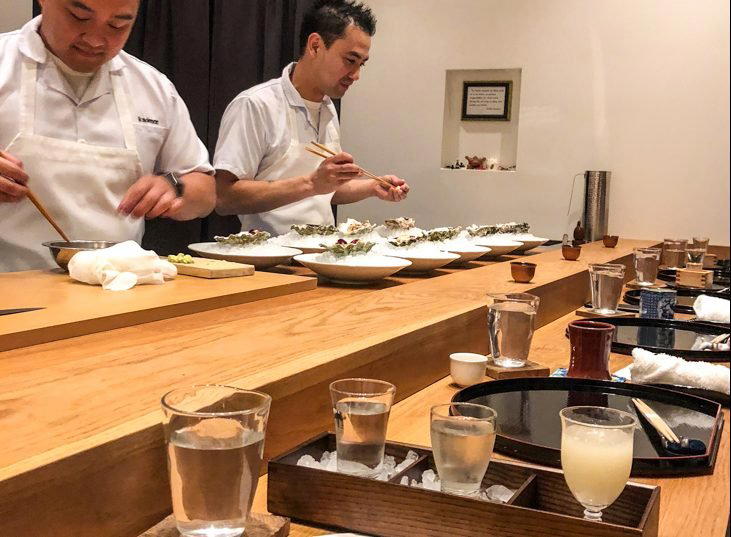
What Orlando's Michelin Map Reveals About Kadence
When the Michelin Guide awarded its first Florida stars, the move validated something Orlando's serious dining community already knew: the city's restaurant scene had outgrown its theme-park reputation. Among the restaurants that earned recognition, Kadence arrived as one of the more instructive data points. A Japanese counter on Winter Park Rd, holding one Michelin star in 2024 and 2025, operating at $$$$ pricing, in a city where that credential had previously been the near-exclusive territory of hotel dining rooms and celebrity chef imports. The fact that it holds its own in that company tells you something useful about where Orlando's independent dining has arrived.
For context, the broader Florida Michelin cohort leans heavily on contemporary American and European formats. Starred Japanese counters in the Southeast remain genuinely rare outside Miami, which makes Kadence's position on Winter Park Rd more legible as a regional anomaly than as a local inevitability. It belongs to a small national tier of Japanese restaurants earning Michelin recognition outside the traditional coastal clusters of New York, Los Angeles, and Chicago.
The Counter Format and What It Costs You
Omakase and counter-format Japanese dining at the Michelin level price similarly whether you're in Manhattan or central Florida. The $$$$ tier at a starred venue in Orlando maps to a spend comparable to many recognized counters in larger markets, which raises a direct question about value: what do you receive for that outlay, and how does it compare to alternatives?
The short answer is that Kadence delivers credentials that would justify the price in any market. One Michelin star signals consistency, not a one-cycle anomaly.. For a dining room in a mid-sized Sun Belt city, that combination of institutional recognition and sustained guest endorsement is relatively uncommon. Compare that to dining at a $$$$ steakhouse or contemporary American room with no starred recognition, and the case for Kadence becomes more concrete. You're paying for a similar check average, but against a verifiable performance record rather than local reputation alone.
For planning purposes, Kadence is located at 1809 Winter Park Rd, Orlando, FL 32803. Counter-format Japanese restaurants at this tier typically require advance booking; given the starred status and limited counter format, reservations well ahead of your intended visit are advisable. Specific hours and booking methods are best confirmed directly with the venue.
Kadence Within Orlando's Japanese Dining Tier
Orlando's Japanese dining options have expanded in depth and range over the past decade. At the summit of that range, a small cluster of $$$$ venues now competes for the same guest who might previously have traveled to Tampa or Miami for comparable quality. Sorekara holds two Michelin stars and operates at the same price tier, making it the clearest direct peer in the city's Japanese segment. Natsu and Kabooki Sushi serve different points on the Japanese format spectrum, while Gyukatsu Rose covers the more specialized katsu format. Juju brings a different editorial angle to Japanese-influenced dining in the city.
Within this comparable set, Kadence sits at the starred Japanese counter tier alongside Sorekara, and together they constitute a pairing that would not be out of place in a much larger market. That two independently starred Japanese venues operate within the same city at the same price bracket is a marker of genuine dining density, not coincidence.
On a national scale, the comparison set for a venue holding back-to-back Michelin stars in the Japanese category includes counters operating in cities with far deeper restaurant infrastructure. Venues like Myojaku in Tokyo and Azabu Kadowaki in Tokyo represent what the Michelin standard looks like at its most established. In the American context, the credential places Kadence in a bracket with recognized names far better known to international travel audiences. Fine dining operations like Le Bernardin in New York City, Alinea in Chicago, Lazy Bear in San Francisco, Single Thread Farm in Healdsburg, and The French Laundry in Napa all operate under Michelin recognition. The difference is that those venues carry decades of press and carry the booking friction to match. Kadence, at this stage of its trajectory, represents a window where a Michelin-starred Japanese counter is still accessible without the six-month waitlist that typically follows sustained star retention at high-profile urban addresses.
Chef Haley Duren and the Credentialing Signal
In omakase and counter-format Japanese dining, the chef's background functions as one of the primary trust signals available before you commit to a booking. The Michelin star is an institutional verdict; the chef's training and lineage provide the interpretive frame for understanding what kind of Japanese cooking is being practiced. Haley Duren leads the kitchen at Kadence. Beyond the name and the starred record, any further claims about training or influence would move into unverified territory. What the double star does confirm is that the inspectors found the cooking worthy of recognition across two consecutive annual cycles, which is the metric that carries greater weight in assessing a kitchen's direction and consistency.
In the broader American fine dining context, starred Japanese counters run by chefs outside particularly visible coastal cities tend to attract less national press attention than their credentials warrant. The result, from a visitor's perspective, is that Kadence occupies the kind of position where the quality signal is high and the external hype is lower than the record would produce if the same kitchen were located in a more media-saturated dining market. That gap between credential and profile is where value typically lives in fine dining.
The Value Argument, Stated Plainly
Fine dining value is not about finding something cheap. At $$$$ pricing, Kadence is not an inexpensive evening. The value argument is about the relationship between what you spend and what you receive in return: credential density, kitchen consistency, and access. On all three counts, the case is clear. Two Michelin stars represent institutional verification that the experience meets a global standard. A 4.7 average across hundreds of reviews reflects consistency that holds beyond the initial critical moment.
For guests traveling specifically for food, it belongs in the same planning conversation as recognized restaurants in cities with much longer culinary reputations. The Emeril's in New Orleans model of a single-city anchor driving serious dining travel applies here at a smaller scale: Orlando now has Japanese counters with the credentials to anchor a dining itinerary, not merely fill one.
Planning Your Visit to Orlando
Kadence is one point on a broader Orlando dining map that has become substantially more interesting since Michelin entered the market.
What Should I Eat at Kadence?
Kadence operates as a Japanese counter with Michelin recognition, which means the kitchen drives the menu direction rather than a guest selection from a printed list. At counter-format Japanese restaurants in this tier, the omakase structure, where the chef sequences courses according to seasonal availability and kitchen judgment, is standard. The specific dishes served on any given evening vary by the omakase format and the kitchen's direction that evening. The practical guidance is to arrive with no fixed expectations about individual courses and to let the counter format operate as intended. Chef Haley Duren holds the starred record that anchors any reasonable decision to book.
Just the Basics
Comparable venues nearby, for context on price, style, and recognition.
| Venue | Cuisine | Price | Notes |
|---|---|---|---|
| KadenceThis venue — the venue you are viewing | Japanese | $$$$ | Not listed |
| Camille | Not listed | $$$$ | Baldwin Park, Modern French-Vietnamese Fine Dining |
| Domu | East End Market, Modern Japanese Ramen | $$ | Not listed |
| Natsu | Not listed | $$$$ | North Quarter, Traditional Japanese Omakase |
| Kaya | Not listed | $$$ | Mills50, Modern Filipino |
| Nami | Lake Nona, Contemporary Japanese Fusion | $$$$ | Not listed |
Recognition history
Dated appearances from independent guides and award organizations, with the underlying list record or original source where available.
Michelin 1 Star
Michelin
Michelin 1 Star
Michelin
Michelin 1 Star
Michelin
At a Glance
- Intimate
- Minimalist
- Elegant
- Modern
- Date Night
- Special Occasion
- Chefs Counter
- Open Kitchen
- Sake Program
Current opening hours
- Monday
- 4–8 PM
- Tuesday
- 4–8 PM
- Wednesday
- 4–8 PM
- Thursday
- Closed
- Friday
- 4–8 PM
- Saturday
- 4–8 PM
- Sunday
- 9 AM–12 PM
Hours can change for holidays and private events. Last verified .
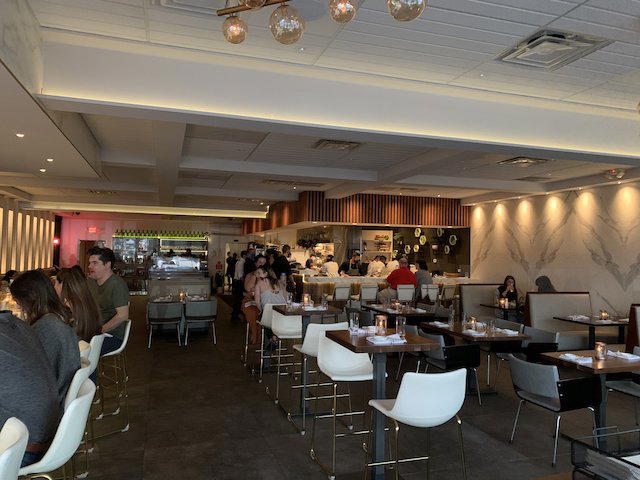
Minimalist interior with clean lines, natural wood, soft warm lighting over the sleek wooden counter, creating understated elegance focused on the sushi craft.