Capa



Capa occupies the 17th floor of Four Seasons Resort Orlando at Walt Disney World Resort, combining Basque-inflected tapas and wood-fired prime steaks with a wine list of 350 selections. Consecutive Michelin stars in 2024 and 2025 confirm its place at the summit of the Orlando steakhouse tier. The Spanish-accented format, communal pacing, and sommelier-led cellar make it a distinct proposition in a city better known for theme-park dining.
Pearl is the En Primeur Club membership app — saves, bookings, and concierge access live there. Same editors, same standards.
- Address
- 10100 Dream Tree Blvd, Lake Buena Vista, FL 32836
- Phone
- (407) 313-7777
- Website
- fourseasons.com
- Directions
- Get directions
 Saves & bookings on Pearl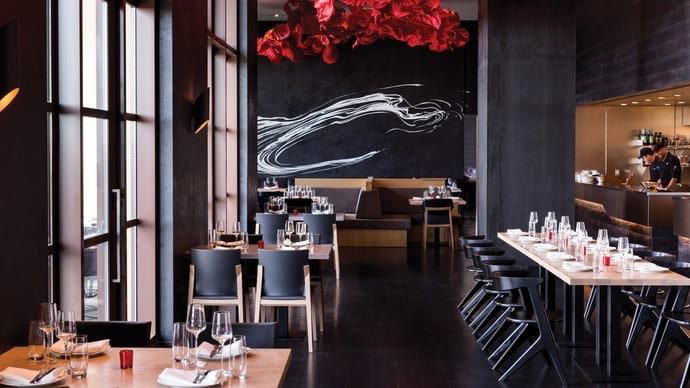
Seventeen Floors Above the Theme Parks, a Different Kind of Ambition
Orlando's dining scene has spent decades balancing resort buffets and character dinners. The city's serious restaurant tier has been building quietly but with increasing credibility: Knife & Spoon holds its own as a refined steakhouse alternative, while Japanese-influenced rooms like Sorekara and Kadence have introduced a different register of precision cooking to the market. Capa sits on the 17th floor of Four Seasons Resort Orlando and stakes out a distinct position in the city's steakhouse category.
The elevator opens onto pitch-black walls, and the first thing that registers is overhead: a ceiling-spanning installation in deep crimson by Dutch artist Peter Genetenaar, shaped to evoke the sweep of a matador's cape. It is not incidental decoration. The room is built around that gesture, and the contrast between the dark walls and the red mass above feels contemporary rather than themed. The patio, which faces the Walt Disney World Resort nightly fireworks displays, pulls guests outside at intervals during the meal, folding spectacle into the rhythm of the evening in a way that feels less gimmicky than it sounds.
Basque Logic in a Steakhouse Format
The steakhouse category in American fine dining has become crowded enough that differentiation requires a genuine structural argument. The hybrid format pairs a prime cut program with a distinct culinary tradition, allowing the kitchen to build a coherent menu on both sides of the main. Capa's argument is Basque and broader Spanish cuisine grafted onto a wood-fired beef program, and it holds together better than most.
The meal is designed to move. Early rounds come from the Para Picar and Raciones sections: small plates of prawns, octopus, cured meats, Spanish regional cheeses, and pan con tomate, a bruschetta-style preparation on fresh bread that earns consistent mention as the table's anchor. Guests are encouraged to choose several shared plates before transitioning to the steaks. The pacing ebbs rather than drives, which places it in the tradition of Basque txoko dining rather than the American steakhouse rhythm of salad-then-slab.
Steaks themselves are prime cuts, wood-fired over oak, and finished with olive oil, salt, and pepper. Dry-aged between 30 and 40 days, they are served without elaborate saucing, a format that reflects a confidence in sourcing and technique. That approach is consistent with how higher-end steakhouses have moved in recent years: less compound butter, more exposure to the actual cut. For comparison, A Cut in Taipei and Born and Bred in Busan both operate in this same territory of using regional cooking identity to reframe what a steakhouse evening means, rather than defaulting to the classic American steakhouse vocabulary.
Dessert follows the Spanish logic through to the end. The churros with chocolate, crema Catalan with blood orange and saffron, and the guindilla with spicy chocolate ice cream and Reus hazelnuts represent a specific regional identity rather than a generic patisserie close.
The Wine Program: Spain, California, and a Cellar Built for Prime Beef
The editorial angle that makes Capa worth extended attention is the wine program, and specifically the role that sommelier Thomas Rotherham plays in threading the Spanish framework of the food through a cellar structured for steakhouse drinking. The list carries around 350 selections with an inventory of approximately 1,375 bottles. Wine pricing is in the higher bracket, reflecting a meaningful number of bottles above the $100 threshold, with corkage available at $50 for guests who bring their own.
Spain accounts for more than 50 dedicated selections on its own, a commitment that matches the culinary framing and gives Rotherham the tools to build a coherent pairing narrative from first tapas to the wood-fired mains. Spanish reds, particularly from Rioja and Ribera del Duero, sit naturally against oak-fired beef: the tannin structure and red fruit profile of Tempranillo-based wines from these appellations interact with the char and fat of a 35-day dry-aged steak in a way that California Cabernet, for all its merit, approaches differently. A sommelier operating in a Spanish-themed steakhouse with this kind of inventory depth has the opportunity to make genuinely interesting regional pairings that most American steakhouses, working from Napa-heavy lists, cannot replicate.
The California presence on the list ensures that guests arriving with conventional steakhouse expectations find familiar ground. France and Italy round out the cellar. The structure serves a range of wine sophistication levels without sacrificing the Spanish identity that gives Capa its point of difference.
The cocktail program runs 12 signature drinks, two of which (Agua de Valencia and Robujito) are served in porrones, communal glass vessels with a long spout historically used in Catalan and Basque drinking culture. The format is functional as a hospitality gesture: it extends the communal, sharing-led logic of the food menu into the bar program.
Michelin Recognition and Competitive Position
Capa holds one Michelin star, awarded in 2024 and 2025. Consecutive awards matter more than a single year: they signal consistency in execution rather than a one-off performance, and the Guide's inspectors return to starred restaurants specifically to confirm that standard is maintained. In the context of Orlando's dining tier, the recognition places Capa in a competitive set that extends beyond the city. For reference, Le Bernardin in New York, Alinea in Chicago, and The French Laundry in Napa all carry Michelin recognition, and the Guide's Florida coverage has expanded in recent years to provide more granular assessment of the state's serious restaurant tier.
Within Orlando specifically, the $$$$ price tier includes Knife & Spoon, Sear + Sea, Sorekara, and Camille, all of which operate at comparable price points and with comparable ambitions. Capa's Michelin star places it at the summit of that tier, but the format also differentiates it: the Basque-steakhouse hybrid with a deep Spanish cellar and a theatrical room occupies a position that the other $$$$ venues don't replicate.
Chef Fabrizio Schenardi leads the kitchen, with Christopher Wong as general manager. The property is owned and operated by Four Seasons, which matters in the context of consistency: the infrastructure, staffing depth, and operational standards of a Four Seasons property underwrite the experience in ways that independent restaurants must manage differently.
Planning a Visit
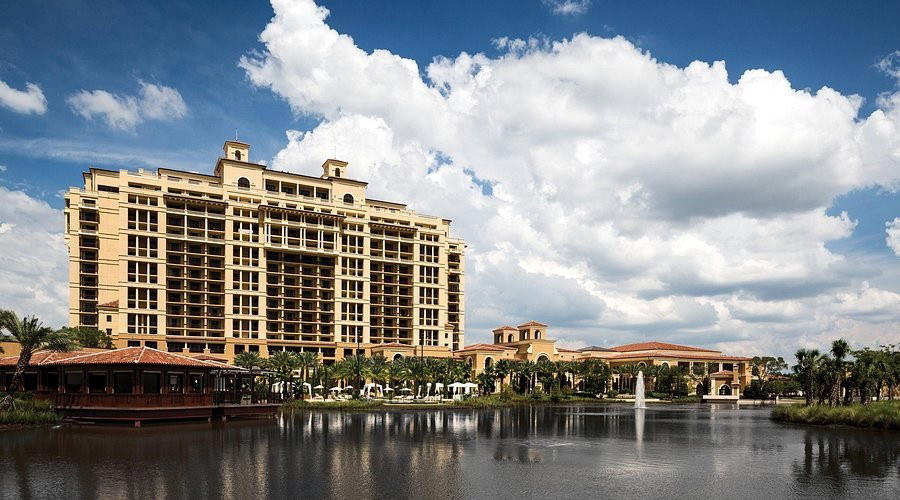
Capa operates as a dinner-only restaurant, served nightly. The dress code is resort casual: collared shirts and slacks for men, cocktail dresses for women, with jackets and ties not required. The restaurant sits on the 17th floor of Four Seasons Resort Orlando at Walt Disney World Resort, at 10100 Dream Tree Blvd, Lake Buena Vista, FL 32836.6 across 1,076 ratings. Cuisine pricing falls in the $$$ band (two-course meals above $65, not including beverages). The wine list carries a separate $$$ pricing designation based on its range of $100-plus bottles. For diners exploring the broader American fine dining circuit, properties like Lazy Bear in San Francisco, Emeril's in New Orleans, and Single Thread Farm in Healdsburg offer instructive comparisons in how regional identity and culinary ambition intersect at the summit of the market.
Peers You’d Cross-Shop
Comparable venues nearby, for context on price, style, and recognition.
| Venue | Cuisine | Price | Notes |
|---|---|---|---|
| CapaThis venue — the venue you are viewing | Spanish-Influenced Steakhouse | $$$$ | Not listed |
| Camille | Modern French-Vietnamese Fine Dining | $$$$ | Baldwin Park |
| Natsu | Traditional Japanese Omakase | $$$$ | North Quarter |
| Knife & Spoon | New American Steakhouse & Seafood | $$$$ | Sky Lake South |
| Kadence | Modern Japanese Omakase | $$$$ | Audubon Park Garden District |
| Kaya | Modern Filipino | $$$ | Mills50 |
Recognition history
Dated appearances from independent guides and award organizations, with the underlying list record or original source where available.
Michelin Plate
Michelin
Wine Spectator Best of Award of Excellence
Wine Spectator
Forbes Recommended
Forbes
Michelin 1 Star
Michelin
Wine Spectator Best of Award of Excellence
Wine Spectator
Michelin 1 Star
Michelin
At a Glance
- Romantic
- Elegant
- Sophisticated
- Lively
- Date Night
- Special Occasion
- Celebration
- Rooftop
- Open Kitchen
- Hotel Restaurant
- Private Dining
- Extensive Wine List
- Craft Cocktails
- Local Sourcing
- Skyline
- Waterfront
Current opening hours
- Monday
- 5–10 PM
- Tuesday
- 5–10 PM
- Wednesday
- 5–10 PM
- Thursday
- 5–10 PM
- Friday
- 5–10 PM
- Saturday
- 5–10 PM
- Sunday
- 5–10 PM
Hours can change for holidays and private events. Last verified .
Romantic and dramatic rooftop setting with open kitchen views, wood grill aromas, and outdoor terrace overlooking fireworks and lakeside scenery.