
Tabelog 100 #61
Our verdict
A large-format Ebisu Chinese dining room with Tabelog 100 Chinese TOKYO recognition in 2026, Tsukushi Rou Ebisu ten belongs to a Tokyo category that values private rooms, wine service, and group-friendly precision over counter intimacy. The draw is less about chef theatre than about planning: reservations are available, the room has 146 seats, and the format suits meals where logistics matter as much as the cooking.

Pearl is the En Primeur Club membership app, where members save venues, book tables and use the concierge.
The menu
What to order
- Braised whole shark fin (fukahire no sugatani)
- Shark fin sashimi
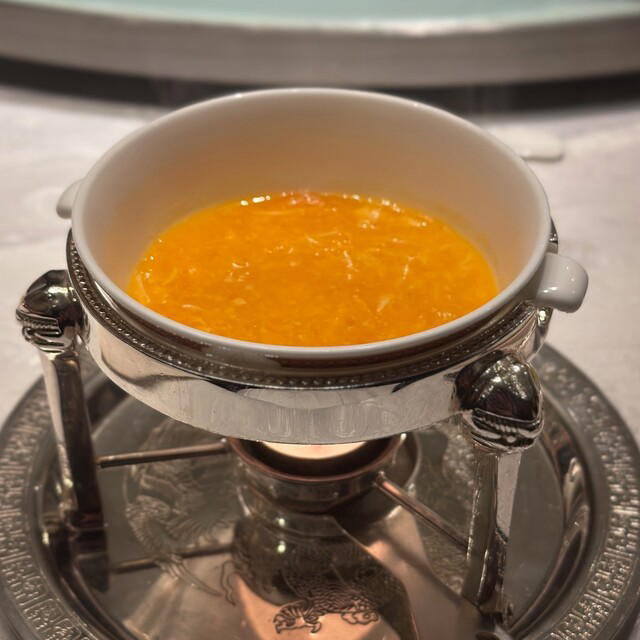
- Shark fin and crab-roe stewed soup
- Peking duck
- Char siu
Approaching Tsukushi Rou Ebisu ten in Tokyo resets expectations before the first order. This is not necessarily a reservation to read through the lens of one narrow Tokyo dining format. The clearer signal is its place as a Chinese restaurant with public recognition, a defined budget range, and enough planning relevance to matter before a traveler starts comparing options.
That matters because serious Chinese dining in Tokyo often splits into different lanes: compact special-occasion rooms, broader restaurants for longer meals, and places where the budget can change sharply between lunch and dinner. Tsukushi Rou Ebisu ten sits clearly in the Chinese-dining conversation, with Tabelog Hyakumeiten recognition in 2026 giving it a public marker in a category visitors can find hard to read.
Tokyo Chinese dining built for planning, not counter theatre
Tokyo is useful for polished meals without reducing every reservation to counter theatre. Across the city are after-work drinking, date-night restaurants, polished yakiniku, and destination dining in many formats. In that mix, Chinese restaurants can do what more rigid formats often cannot: give travelers another way to think about appetite, budget, and occasion.
The restaurant’s positioning is the point. Rather than being framed only as a tiny specialist counter, it reads as a place for a fuller Chinese meal in Tokyo: a booking tied to purpose, whether that means hosting colleagues, gathering friends, or setting aside time for a meal that carries more intent than a casual stop.
That does not make it casual in price. Dinner sits in the JPY 20,000 to JPY 29,999 band, while lunch sits at JPY 3,000 to JPY 3,999. The gap is useful intelligence: lunch is a lower-commitment route into the restaurant, while dinner competes with serious Tokyo Chinese rooms rather than everyday neighborhood dining. The Tabelog score of 3.70 and 2026 Hyakumeiten recognition support that reading: this is a recognized address within its category, not a generic large restaurant trading only on convenience.
For readers mapping Tokyo by format, compare it with other lanes. Pizza Marumo points toward a different kind of meal; Shamo Maru, Ushigoro Kan Ebisu honten, Yakiniku Dori gg, and バンデルオーラ each answer different cravings. Tsukushi Rou Ebisu ten is chosen for Chinese cooking in a room and price band that signal a more deliberate plan.
What the recognition says about the cooking category
Tabelog’s Hyakumeiten recognition is useful because Tokyo Chinese dining has no single dominant image. The category can include many styles, service formats, and levels of formality, making outside comparison difficult for travelers who are not already following the local scene closely. A 2026 recognized Chinese restaurant in Tokyo belongs to that broader landscape rather than to a single imported stereotype.
The price signals matter. At dinner, the listed budget places Tsukushi Rou Ebisu ten above casual everyday use and into a range where diners should expect planning, time, and attention to the table. At lunch, the lower budget gives travelers a more approachable way to understand the address before committing to the fuller evening spend.
The useful editorial facts are straightforward. Tokyo’s international dining coverage often overvalues biography and narrative because they package easily. Here, the relevant planning facts are operational: a Tokyo Chinese restaurant with a 2026 Tabelog Hyakumeiten marker, a 3.70 score, and a listed dinner band that places it firmly in the city’s serious-dining conversation.
Within a Tokyo itinerary, the comparison set is instructive. Pizza Marumo, Shamo Maru, Ushigoro Kan Ebisu honten, Yakiniku Dori gg, and バンデルオーラ serve different purposes, and unnamed Tokyo dining rooms can be slotted around them by mood, budget, and format. The decision is not simply “best restaurant nearby”; it is whether the occasion calls for a higher-commitment Chinese meal.
How to use it in a Tokyo itinerary
The smart use case is not a rushed stop treated as interchangeable with any other booking. It is a planned meal where the table wants Chinese cooking and the confidence of a restaurant with 2026 Tabelog Hyakumeiten recognition. The listed score and budget make it a place to schedule deliberately, especially for dinner.
Lunch is strategic for travelers who want to understand the address without committing to dinner spend. Dinner better fits hosted meals, celebratory tables, and groups that value a more deliberate restaurant choice. Because the location should be treated simply as Tokyo for planning purposes, build the surrounding evening around your broader city route rather than relying on a hyper-specific landmark cue.
Practical details should be confirmed directly before visiting, especially for reservations, payment, access, and any seating preferences. The stable facts for planning are the category, the price bands, the Tabelog score, and the 2026 recognition. Those are enough to separate it from casual Chinese dining while avoiding assumptions about services that may change.
For a broader Tokyo dining plan, place this alongside other Tokyo dining rooms rather than treating all reservations as interchangeable. Travelers building a full city itinerary can also use broader Tokyo hotels, bars, wineries, and experiences coverage to sort the trip by area, budget, and format.
Outside this single reservation, the same logic applies across Japan and beyond: match the meal to the role it needs to play, not only the cuisine label. Some venues solve quick comfort, others solve celebratory pacing, and others are built around drinking or a narrow specialty. In Tokyo, the question is simpler: when a Chinese meal needs recognition, budget clarity, and planning flexibility, Tsukushi Rou Ebisu ten has a clear role.
Credentials Lens
Comparable venues at the same tier for side-by-side context.
| Venue | Cuisine | Price | Awards | Notes |
|---|---|---|---|---|
| Tsukushi Rou Ebisu tenThis venue (the venue you are viewing) | Luxury shark fin–focused Chinese (Ebisu flagship) | $100–150 | Tabelog 100 #61 | Not listed |
| 赤坂 桃の木 | Modern Cantonese Chinese | $150–200 | Tabelog 100 #95 | Chiyoda |
| 飘香 广尾店 | Traditional Sichuan Omakase | $200–300 | Tabelog 100 #74 · Black Pearl 1 Diamond | Hiroo |
| Tsugumi | Modern Chinese Tasting Menu | $150–200 | Tabelog 100 #3 | Minato |
| Toh-Ka-Lin | Authentic Cantonese Fine Dining | $100–150 | Tabelog 100 #32 | Minato |
| Fureika (中国飯店 富麗華) | Shanghai-Cantonese Chinese Fine Dining | $100–150 | Michelin Plate · Black Pearl 2 Diamond | Higashiazabu |
Recognition history
Dated appearances from independent guides and award organizations, with the underlying list record or original source where available.
Tabelog 100 #61 · No. 61
Tabelog · Tabelog 100 - Chinese cuisine - TOKYO - 2026
Continue exploring
More in Tokyo
Restaurants in Tokyo
All restaurants in Tokyo →



Bars in Tokyo
All bars in Tokyo →








Tsukushi Rou Ebisu ten
The wine
- Wine program
- Deep wine list
- Extensive wine list
Details
- Elegant
- Lively
- Sophisticated
- Romantic
- Well Known
- Business Dinner
- Group Dining
- Date Night
- Family
- Special Occasion
- After Work
- Open Kitchen
- Private Dining
- Terrace
- Standalone
- Extensive Wine List
- Sustainable Seafood
- Street Scene
- A La Carte
- Set Menu
- Wine
- Shaoxing Jiu
- Cocktails
- Pescatarian Friendly
Bright, open main dining room with a lively open kitchen, moodier terrace seating at night, and calm private rooms; overall an upscale yet approachable atmosphere suited to special occasions and business meals.