Traube

Michelin Plate
Our verdict
The kitchen works within the framework of regional cuisine at a €€€€ price point, signalling a commitment to considered cooking rather than casual comfort food. Located in the Kirchheim district at Rathausstraße 75, it represents a quieter alternative to the city's tourist-facing restaurant scene.
- Address
- Rathausstraße 75, 69126 Heidelberg, Germany
- Phone
- +49 6221 6737222
- Website
- traube-heidelberg.de
- Directions
- Get directions
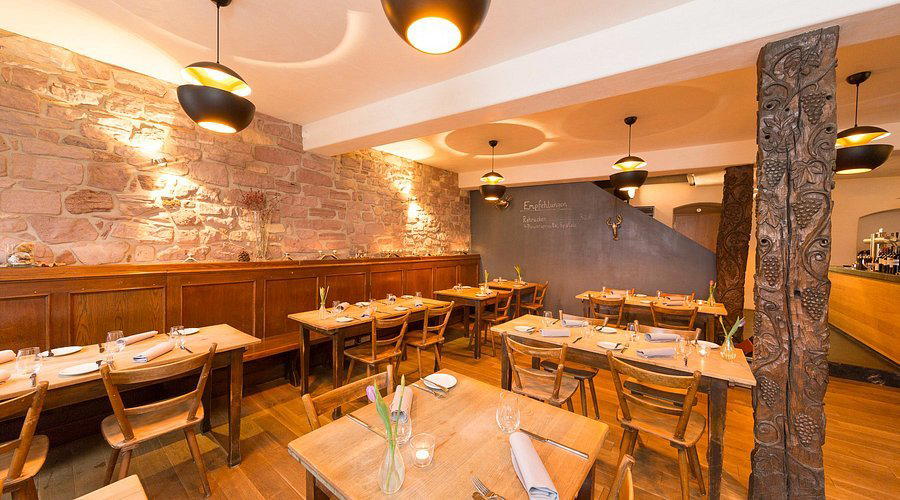
Dining at the Edge of Heidelberg's Culinary Conversation
Approach Rathausstraße 75 in Heidelberg's Kirchheim district and you are already outside the gravitational pull of the Altstadt's tourist corridors. This part of the city does not trade on castle views or bridge photographs. What it offers instead is the kind of neighbourhood quiet that allows a restaurant to develop its own tempo, its own regulars, its own reasons for existing.
What Regional Cuisine Means at This Price Point
The phrase "regional cuisine" carries very different weight depending on the price bracket it occupies. At the lower end, it tends to mean Schnitzel and seasonal soup. At €€€€, it signals something closer to the approach practised at places like Grenzhof in Heidelberg or, further afield, Fahr in Künten-Sulz and Gannerhof in Innervillgraten: producers named, seasons observed, techniques applied with enough precision that the sourcing choices become legible on the plate. Traube operates in that upper register of regional cooking, where the kitchen's relationship with local supply chains is part of the editorial logic of the meal, not a marketing footnote.
Germany's fine-dining scene has increasingly organised itself around this tension between classical European ambition and regional specificity. Institutions like Schwarzwaldstube in Baiersbronn and Vendôme in Bergisch Gladbach anchor one end of that spectrum with starred credentials and international frame of reference. The Michelin Plate, which Traube holds for 2025, sits in a different tier: it denotes good cooking, confirmed by Michelin inspectors, without the additional weight of star recognition. That is neither a diminishment nor a consolation prize. It is a useful signal that the kitchen is cooking at a level above its surroundings without the booking pressure and price escalation that star status tends to produce.
How the Menu Architecture Reveals the Kitchen's Priorities
Regional menus at this price point typically reveal their character through structure as much as through individual dishes. The question is whether the kitchen organises its menu around the logic of the season, around a particular geography, or around a chef's personal technique vocabulary. At €€€€, a tasting format is the more common vehicle for that kind of argument, allowing the kitchen to build a sequence that demonstrates range and discipline simultaneously. The degree to which Traube commits to that format, or instead offers a shorter à la carte with enough depth to make the same point, shapes what kind of evening the diner is signing up for.
Within Heidelberg's dining field, that structural choice matters. Oben operates at the same price tier with a Modern European and creative approach, which tends to place greater weight on technique and presentation as primary signals. Die Kurfürstenstube argues a Classic French position at €€€, offering a different kind of menu logic entirely: one built on tradition and continuity rather than seasonal adjustment. Traube's regional framework is distinct from both. It asks the diner to read the menu as a document about place and season rather than as a showcase of culinary lineage or technical invention. That is a quieter argument to make, and it requires the sourcing to be genuinely compelling for it to land.
Elsewhere in Germany, kitchens making similar arguments with high confidence include ES:SENZ in Grassau and JAN in Munich, both of which use regional anchoring as an organising principle without retreating from ambition. Aqua in Wolfsburg and CODA Dessert Dining in Berlin occupy a different register entirely, where the menu structure itself is the conceptual statement. Traube's Plate recognition places it below those starred tiers but within a credible conversation about considered German cooking.
The Kirchheim Context and What It Changes
Heidelberg's dining scene is physically split between the tourist-facing Altstadt concentration and a more dispersed set of serious restaurants operating in residential and outer-district addresses. The Kirchheim district, where Traube is located, belongs to the latter category. That geography has practical consequences for the kind of restaurant that can sustain itself there. Without tourist walk-in traffic, a kitchen in Kirchheim earns its covers from repeat local diners and from the more deliberate visitor willing to take a tram or taxi beyond the obvious.
For diners building an evening in Heidelberg, the location question is real but manageable. The Kirchheim district is accessible by public transport from the Altstadt, and the absence of the old city's ambient noise and restaurant density can feel like a relief after a day of sightseeing. Those looking to stay close to the centre and sample a range of price points have options at 959 and Chambao, but neither occupies the same culinary register as Traube. For accommodation planning, our full Heidelberg hotels guide covers the city's range; for a broader view of the dining field, our full Heidelberg restaurants guide maps the competitive set in full.
Planning Your Visit
Traube sits at Rathausstraße 75, 69126 Heidelberg. The €€€€ price point positions it among the city's more considered dining expenditures, and at a Michelin Plate level the expectation is a meal that justifies that spend through ingredient quality and kitchen discipline rather than spectacle or setting.
For those building a fuller Heidelberg itinerary, the city's bar and wine scene offer good supporting context. Our full Heidelberg bars guide and our full Heidelberg wineries guide cover both. For experiences beyond the table, our full Heidelberg experiences guide maps the broader cultural offer.
Frequently asked questions
What distinctions does Traube have?
Traube has received recognition including: Michelin Plate (2025).
What's the best thing to order at Traube?
Traube operates within a regional cuisine framework at the €€€€ price point, which means the menu's most instructive choices are those that make the strongest provenance argument. At this bracket and with Michelin Plate recognition in 2025, the kitchen is expected to handle regionally anchored ingredients with a level of technique that justifies the spend. Dishes that foreground Baden-Württemberg's agricultural identity tend to be where menus at this price point concentrate their effort.
What's the price range at Traube?
Pricing at Traube is listed as €€€€.
How do I find Traube?
Traube is located at Rathausstraße 75, 69126 Heidelberg, Germany, Heidelberg.
How hard is it to get a table at Traube?
Michelin Plate recognition in a mid-size city like Heidelberg generates meaningful but manageable booking pressure. Unlike a starred counter in a major capital, Traube at Rathausstraße 75 is unlikely to require months of advance planning, though weekends will fill faster following the 2025 Michelin listing. Booking a week or two ahead is a reasonable baseline for dinner; closer to the date works better at lunch.
Comparable Venues
Comparable venues nearby, for context on price, style, and recognition.
| Venue | Cuisine | Price | Awards | Notes |
|---|---|---|---|---|
| TraubeThis venue — the venue you are viewing | Modern Regional German Fine Dining | Not listed | Michelin Plate | Not listed |
| Scharffs Schlossweinstube | Classic German Fine Dining | $100–150 | Not listed | Heidelberger Altstadt |
| Gasthaus "Zum Roten Ochsen" | Traditional German Hausmannskost | $20–30 | Not listed | Altstadt |
| Chambao | Creative Mediterranean Tapas | $50–100 | Michelin Plate | Altstadt |
| Darwisch | Traditional Persian | $30–50 | Not listed | Weststadt |
| Restaurant zur Herrenmühle | Modern French Crossover Gourmet | Not listed | Not listed | Altstadt |
Recognition history
Dated appearances from independent guides and award organizations, with the underlying list record or original source where available.
Michelin Plate
Michelin
Continue exploring
More in Heidelberg
Restaurants in Heidelberg
Browse all →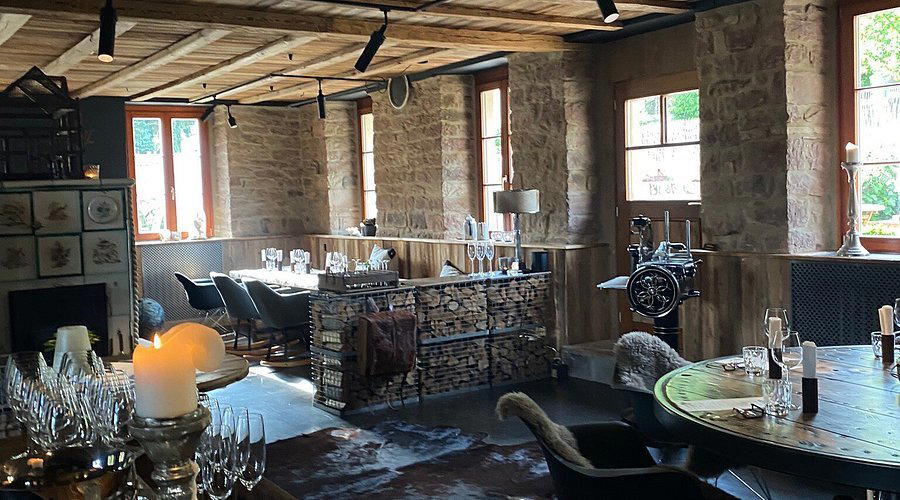
Bars in Heidelberg
Browse all →
Hotels in Heidelberg
Browse all →
Details
- Cozy
- Elegant
- Classic
- Intimate
- Date Night
- Special Occasion
- Historic Building
- Extensive Wine List
- Local Sourcing
- Sustainable Seafood
- Set Menu
- Vegetarian Friendly
- Vegan Options
Current opening hours
- Monday
- 6–11 PM
- Tuesday
- Closed
- Wednesday
- Closed
- Thursday
- 6–10 PM
- Friday
- 6–11 PM
- Saturday
- 6–11 PM
- Sunday
- 12–2 PM, 6–11 PM
Hours can change for holidays and private events. Last verified .
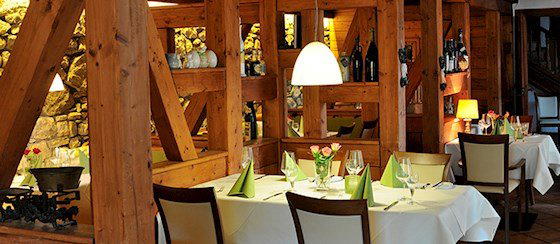
Cosy interior blending traditional and modern elements with warm hospitality and a relaxed atmosphere.