Traif
Traif has occupied a corner of South Williamsburg since the early 2010s, bringing a deliberately irreverent approach to non-kosher cooking in a neighbourhood with deep Orthodox roots. The kitchen draws on global technique applied to local and seasonal ingredients, producing a menu that sits outside New York's conventional fine-dining tier without abandoning its ambitions. For Brooklyn diners looking beyond the borough's standard small-plates circuit, it remains a considered option.
Pearl is the En Primeur Club membership app — saves, bookings, and concierge access live there. Same editors, same standards.
- Address
- 229 S 4th St, Brooklyn, NY 11211
- Phone
- +1 347 844 9578
- Website
- traifny.com
- Directions
- Get directions
 Saves & bookings on Pearl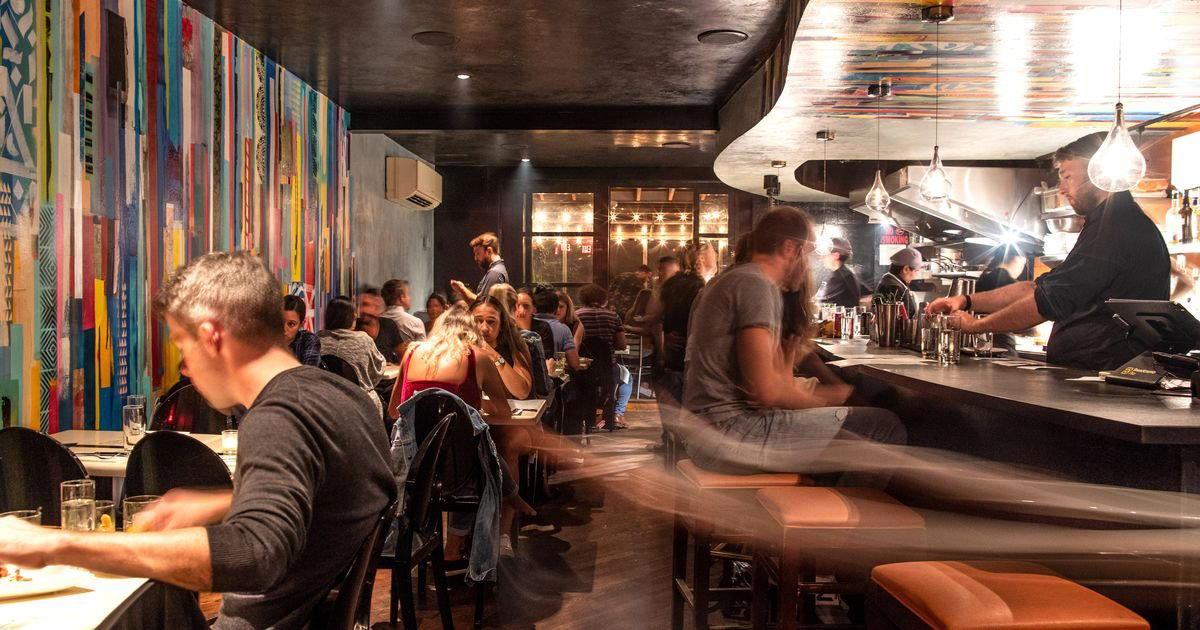
South Williamsburg and the Anti-Kosher Tradition
Traif is a restaurant in Brooklyn, New York City, serving Modern Unkosher Fusion at about $75 per person. When Traif opened on South 4th Street in Williamsburg, the address carried a specific weight. The neighbourhood sits at the edge of one of North America's most concentrated Orthodox Jewish communities, where kashrut, the dietary laws governing what is and isn't permissible, shapes the local food economy in visible ways. Opening a non-kosher restaurant here, and naming it after the Yiddish word for food that violates those laws, was less a provocation than a clear declaration of intent: this kitchen would operate by entirely different rules.
That founding position matters because it explains the menu's logic. In a dining culture where Brooklyn restaurants often define themselves by what they import, whether that means Japanese techniques, Scandinavian preservation methods, or West African spice frameworks, Traif's identity was built around what it deliberately refused to exclude. Pork and shellfish, two of particularly prominent categories under kashrut restriction, became central rather than incidental. The result is a kitchen that treats those ingredients as a compositional starting point rather than a novelty.
Global Technique, Local Materials
The more durable editorial thread at Traif isn't the name or the geographic irony, it's the kitchen's approach to technique. Brooklyn's dining scene in the early part of this decade was absorbing influences from across the professional cooking world, as chefs trained in French classical kitchens, Japanese izakayas, and Southeast Asian street-food traditions began settling in neighbourhoods that could support small, low-overhead restaurants. Traif was part of that wave.
The menu has historically operated in a small-plates format, which allows the kitchen to function across multiple culinary registers simultaneously. A single evening's menu might move between cured preparations, high-heat wok cooking, and cold raw dishes without the structural awkwardness that a conventional three-course format would impose. This is a format that rewards curiosity more than it rewards diners with fixed expectations about how a meal should move.
Traif occupies a distinct position relative to the city's formal dining tier. Properties like Le Bernardin, Eleven Madison Park, Per Se, Masa, and Atomix operate in the highest award and price bracket the city offers. Traif sits in a different register entirely: more casual in format, more accessible in price point, and more rooted in neighbourhood identity than in the global fine-dining circuit. That's not a limitation, it's a different competitive set.
Across the United States, a cluster of restaurants has pursued similar territory: places where ingredient sourcing and technique are taken seriously without the ceremony or price architecture of formal tasting menus. Lazy Bear in San Francisco, Smyth in Chicago, and Providence in Los Angeles each operate in their own way as evidence that serious cooking doesn't require a white-tablecloth container. The farm-to-table model, most formally expressed at places like Blue Hill at Stone Barns in Tarrytown and Single Thread Farm in Healdsburg, has a Brooklyn-inflected counterpart in the way kitchens like Traif's engage with seasonal local supply chains at a smaller scale.
Internationally, the intersection of local ingredients and imported technique that defines Traif's approach has parallels in Europe. Atelier Moessmer Norbert Niederkofler in Brunico applies rigorous Alpine-product sourcing through a refined modern European framework. Dal Pescatore in Runate draws on the agricultural output of the Po Valley through classical Italian structure. The editorial logic is the same even where the execution differs: technique serves the ingredient rather than overwriting it.
Williamsburg's Dining Context
South Williamsburg in the early 2010s was a neighbourhood in transition, and the dining environment it produced was shaped by that tension. The L train corridor was already establishing itself as a serious dining destination, with a mix of low-key neighbourhood restaurants and more technically ambitious kitchens operating side by side. The area offered lower rents than Manhattan, which allowed chefs to experiment with formats that wouldn't have been economically viable on the other side of the bridge.
In the Brooklyn context specifically, a restaurant on South 4th Street is positioned within walking distance of the Williamsburg Bridge, giving it relatively easy access from lower Manhattan, which matters for a restaurant whose appeal extends beyond the immediate neighbourhood.
Comparison points in other American cities include Emeril's in New Orleans, which similarly represents a chef-driven neighbourhood anchor that operates at a different altitude than the city's formal dining tier, and Frasca Food and Wine in Boulder, which imports Italian regional framework into an American context. Addison in San Diego and The Inn at Little Washington each represent American fine dining at a more formal tier. The French Laundry in Napa remains the canonical benchmark for American tasting-menu dining. Traif operates well outside all of those formal frameworks, which is precisely the point.
Know Before You Go
Address: 229 S 4th St, Brooklyn, NY 11211
Neighbourhood: South Williamsburg, Brooklyn
Format: Small plates, casual dining
Phone: Check current booking channels directly
Reservations: Recommended
Getting There: J/M/Z trains stop at Marcy Avenue, a short walk from the address
Peers You’d Cross-Shop
Comparable venues nearby, for context on price, style, and recognition.
| Venue | Cuisine | Price | Notes |
|---|---|---|---|
| TraifThis venue — the venue you are viewing | Modern Unkosher Fusion | $$$ | Not listed |
| Natsumi Tapas | Japanese-Italian Fusion Tapas | $$$ | Gramercy |
| Franchia | Pan-Asian Vegan Fusion | $$$ | Midtown-Times Square |
| The Newsroom | Caribbean-Latin-Asian Fusion | $$$ | Long Island City-Hunters Point |
| Dekalb Market Hall | Eclectic Global Food Hall | $$ | Downtown Brooklyn-DUMBO-Boerum Hill |
| SEA | Modern Southeast Asian Fusion | $$$$ | Midtown South-Flatiron-Union Square |
Continue exploring
More in New York City
Restaurants in New York City
Browse all →
Bars in New York City
Browse all →
Hotels in New York City
Browse all →







At a Glance
- Trendy
- Intimate
- Modern
- Date Night
- Special Occasion
- Open Kitchen
- Extensive Wine List
Current opening hours
- Monday
- 5–10 PM
- Tuesday
- 5–10 PM
- Wednesday
- 5–10 PM
- Thursday
- 5–10 PM
- Friday
- 5–10 PM
- Saturday
- 5–10 PM
- Sunday
- 5–10 PM
Hours can change for holidays and private events. Last verified .
Cozy and hip Williamsburg spot with a backyard patio, featuring an eclectic and playful atmosphere centered on rich, forbidden foods.