Dekalb Market Hall
Dekalb Market Hall at 445 Albee Square West anchors Downtown Brooklyn's food hall scene, drawing a loyal local crowd across dozens of vendor stalls. Where Manhattan's formal dining rooms, from the tasting menus of Le Bernardin to the kaiseki precision of Atomix, demand reservation strategy and dress codes, Dekalb operates on drop-in logic, multiple visits per week, and a rotating cast of independent operators.
Pearl is the En Primeur Club membership app — saves, bookings, and concierge access live there. Same editors, same standards.
- Address
- 445 Albee Square W, Brooklyn, NY 11201
- Phone
- +19293596555
- Website
- dekalbmarkethall.com
- Directions
- Get directions
 Saves & bookings on Pearl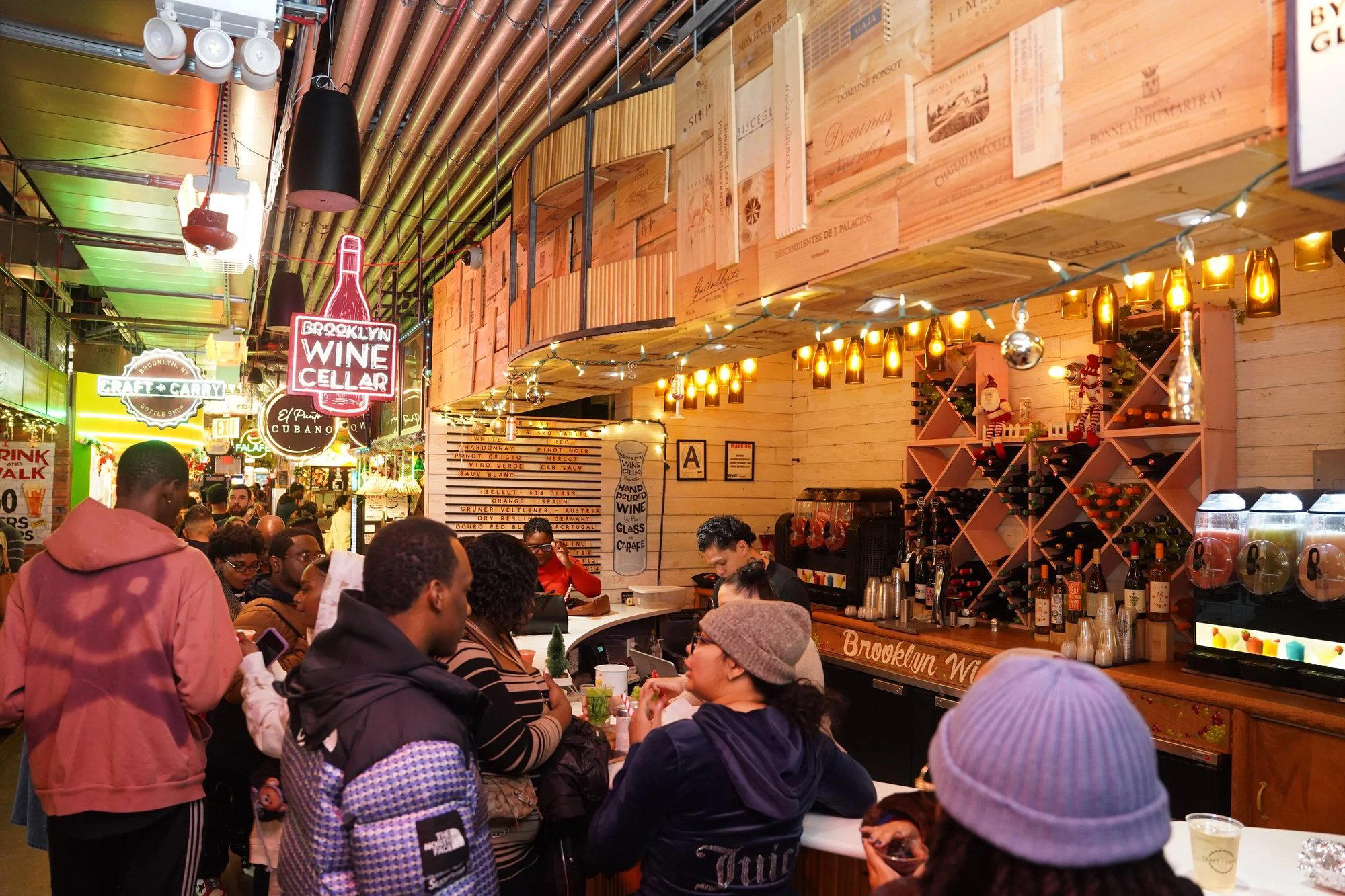
The Food Hall as Neighborhood Infrastructure
Downtown Brooklyn has never fully committed to a single dining identity. It sits between the brownstone restaurant culture of Cobble Hill and the destination-dining ambitions of Manhattan, close enough to both that it developed its own logic: high foot traffic, eclectic demand, and a transient population of office workers, students, and longtime residents who need somewhere reliable at 1pm on a Tuesday. The food hall format, at its leading, answers all of those pressures at once. Dekalb Market Hall at 445 Albee Square West is a casual Eclectic Global Food Hall in Brooklyn.
Food halls in American cities have split into two distinct tiers over the past decade. The first is the real estate play: a developer-anchored anchor tenant with rotating pop-ups, Instagram lighting, and lease terms that churn vendors annually. The second is the neighborhood infrastructure model, where regulars develop vendor-specific loyalty, return cadence is weekly rather than occasional, and the hall functions more like a covered market than a dining event. Dekalb operates in that second category. Its longevity in a borough that has seen significant retail disruption is evidence enough of that status.
What the Regulars Know
The defining characteristic of any food hall worth repeat visits is vendor depth: not the number of stalls, but whether individual operators have developed a following independent of the hall's ambient foot traffic. At Dekalb, the regulars have sorted themselves by vendor rather than by occasion. The crowd at lunch on a weekday moves with the purposeful speed of people who already know where they're going. That behavioral pattern, the person who doesn't look at the directory board, who orders without scanning the menu, is one reliable indicator that a food hall has crossed from novelty into routine.
This matters because the alternative model, the food hall as tourism node, produces a different kind of visitor and a different economics. Compare Dekalb's neighborhood anchor role to the Manhattan food hall format, where proximity to hotel corridors and corporate offices drives a one-time visit pattern. Brooklyn's version has enough residential density nearby, and enough transit connectivity through the Fulton Street and DeKalb Avenue subway stations, to sustain genuine repeat business from a non-tourist base. Dekalb offers a walk-in-friendly setting, a casual dress code, and multiple cuisines in a single visit.
Format Discipline and the Multi-Vendor Logic
The food hall format rewards a specific kind of eating habit: the person who wants one thing from one vendor and something entirely different from another, eaten in the same sitting or on consecutive days. This is structurally different from fixed-price dining. Per Se locks a diner into a single vision for an entire evening. Dekalb's format is configurable by the visitor, which is precisely why its regulars return at a frequency that tasting-menu restaurants cannot replicate by design.
The food hall model has proven durable across American cities when it avoids the temptation to over-curate toward a single demographic. For reference, consider how destination-driven food experiences in other cities, Lazy Bear in San Francisco, with its communal-table prix-fixe structure, or Smyth in Chicago, with its seasonal tasting format, occupy a completely different tier of intent and price. Those formats attract a diner who has planned the visit weeks in advance. Dekalb attracts the person who has twenty-five minutes between meetings and a specific craving.
Brooklyn's Position in New York's Broader Dining Map
New York's dining geography has consolidated around a handful of narrative poles. Manhattan holds the majority of the city's formal recognition: the Michelin-starred rooms, the James Beard-nominated chefs, the tasting menus that require months of advance planning. Brooklyn operates as a counter-pressure: higher vendor density in the casual and mid-range tiers, a stronger independent operator culture, and neighborhoods where the dining scene reflects resident demographics rather than tourist demand.
Dekalb sits within that Brooklyn context and benefits from it. Its address in the Albee Square area places it adjacent to the MetroTech corridor and within walking distance of the Brooklyn Academy of Music, producing a mixed-use foot traffic pattern that sustains vendor volume across lunch and early evening.
For comparison, consider how the food hall model translates in other American cities. Emeril's in New Orleans anchors a different kind of neighborhood institution logic, built around a named chef and a fixed format. Providence in Los Angeles operates in the fine-dining tier with a seafood focus that requires reservation discipline. Addison in San Diego and The Inn at Little Washington represent destination formats built around single culinary visions. Dekalb's model is structurally unlike any of them, which is the point: the food hall serves a gap in the market that white-tablecloth rooms cannot, and vice versa.
Other reference points across the country that operate in similarly distinct formats include Blue Hill at Stone Barns in Tarrytown, Single Thread Farm in Healdsburg, Frasca Food and Wine in Boulder, and internationally, Atelier Moessmer Norbert Niederkofler in Brunico and Dal Pescatore in Runate, all of which share the destination-visit logic that Dekalb deliberately does not require.
Planning a Visit
| Factor | Dekalb Market Hall | Le Bernardin | Atomix |
|---|
Cuisine and Credentials
Comparable venues nearby, for context on price, style, and recognition.
| Venue | Cuisine | Price | Notes |
|---|---|---|---|
| Dekalb Market HallThis venue — the venue you are viewing | Eclectic Global Food Hall | $$ | Not listed |
| Casa Colven | Colombian-Venezuelan Fusion | $$ | Lower East Side |
| M. Wells | Quebecois Steakhouse | $$$ | Long Island City-Hunters Point |
| wagamama, murray hill, new york | Modern Asian Fusion with Japanese Ramen & Noodles | $$ | Murray Hill-Kips Bay |
| Carla | Modern Mexican-Asian Fusion | $$ | Queensbridge-Ravenswood-Dutch Kills |
| ASSET | Asian-inspired New American | $$$ | Upper West Side (Central) |
Continue exploring
More in New York City
Restaurants in New York City
Browse all →
Bars in New York City
Browse all →
Hotels in New York City
Browse all →






At a Glance
- Lively
- Trendy
- Energetic
- Industrial
- Casual Hangout
- Group Dining
- Brunch
- Late Night
- Live Music
- Open Kitchen
- Craft Cocktails
- Organic
Current opening hours
- Monday
- 11 AM–10 PM
- Tuesday
- 11 AM–10 PM
- Wednesday
- 11 AM–10 PM
- Thursday
- 11 AM–10 PM
- Friday
- 11 AM–10 PM
- Saturday
- 11 AM–10 PM
- Sunday
- 11 AM–10 PM
Hours can change for holidays and private events. Last verified .