
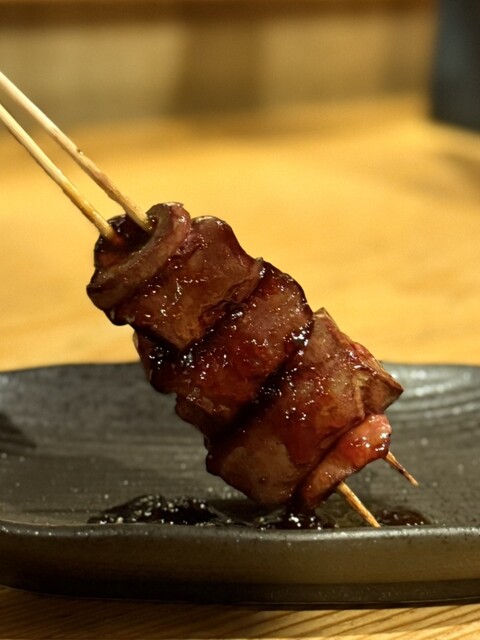
Toriya Yamaguchi belongs to Kagoshima’s serious chicken-cuisine tier: small-format, charcoal-led, and priced for diners who want poultry treated as the main event rather than a casual skewer stop. Its 2025 Tabelog 100 selection for chicken cuisine gives it a clear quality signal in a city better known to many visitors for pork, shochu, and market seafood.
Pearl is the En Primeur Club membership app — saves, bookings, and concierge access live there. Same editors, same standards.
- Address
- 鹿児島県鹿児島市西田2-22-1 堅山ビル 1F
- Phone
- +81992995828
- Website
- tabelog.com
 Saves & bookings on Pearl
The room is small enough for the grill to set the rhythm. In Kagoshima, where dinner often defaults to kurobuta pork, shochu, and fish from nearby waters, a focused chicken-cuisine counter changes the conversation: the meal becomes about sourcing, heat control, and the discipline of using poultry as a full dinner format rather than a prelude to drinks.
That distinction matters because Kagoshima’s food identity is unusually ingredient-led. The prefecture has a strong agricultural base, volcanic soil, access to coastal fish, and a drinking culture built around sweet-potato shochu. Chicken sits inside that wider pantry, but in a smaller specialist category. Toriya Yamaguchi is useful for travellers who want to understand the city beyond the obvious pork-and-seafood circuit, especially because it was selected for Tabelog 100 Chicken Cuisine in 2025.
Chicken as the main argument in a pork-heavy city
Yakitori can be casual, technical, or celebratory depending on how the restaurant frames the bird. Kagoshima’s lower-priced local meals are easy to find, from tonkatsu lunches to cafeteria-style set meals, but a chicken-focused dinner in this tier asks a different question: how much range can one ingredient family carry over the course of an evening?
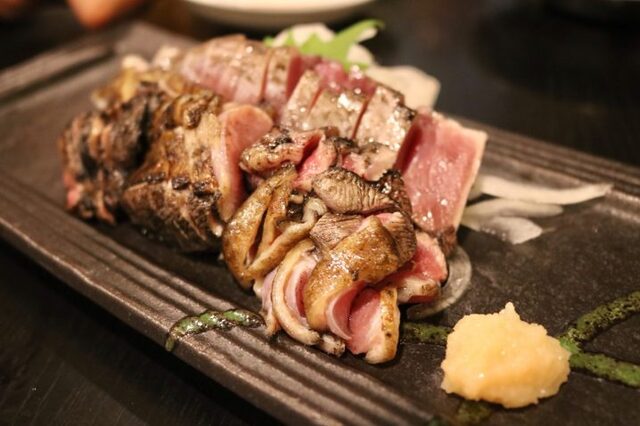
The answer depends less on luxury signals than on cuts, doneness, seasoning, and pacing. Serious chicken cuisine in Japan is built on small decisions: when to salt, when to sauce, when to let fat drip directly over charcoal, and when to hold back. The 2025 Tabelog 100 chicken-cuisine selection places Toriya Yamaguchi in a national category rather than a purely local one, which is the relevant context. This is not simply a Kagoshima neighbourhood skewer shop; it is part of a Japanese genre where the grill is a technical instrument.
For visitors comparing dinner options, the contrast is sharp. Aji no Tonkatsu Maruichi speaks to Kagoshima’s pork culture at a far more casual tariff, while Akadori Sumiyaki Daiyasu sits closer to the charcoal-chicken lane but in a different everyday price band. Toriya Yamaguchi occupies the narrower dinner category where poultry becomes the whole thesis, not a snack ordered alongside beer.
Why sourcing carries the meal
Ingredient sourcing is the real test for this style of cooking. Chicken cuisine has nowhere to hide: lean meat dries out, skin turns flabby without correct heat, and offal becomes unforgiving if handled without precision. A chef can season aggressively, but the better version of the form depends on clean poultry, correct butchery, and a grill sequence that respects texture differences across the bird.
Kagoshima gives that approach a strong regional frame. The prefecture’s dining culture rewards provenance, especially in meat and shochu, and diners are used to restaurants making specific choices around local products. Even without turning the meal into a lecture, a chicken-focused counter in this city is read through that lens: the bird is not generic protein, it is the reason to sit down.
That is also why the format suits diners who prefer concentration over variety. A broader night in Kagoshima might start with market fish at Ichiba Shokudo Jounan ten, move through charcoal fish and rice at Charcoal-grilled Fish & Clay Pot-cooked Rice Ochawan, Japanese Set Meal Diner, then finish with a serious drink at BAR STINGER. Choosing Toriya Yamaguchi instead compresses that itinerary into one ingredient-led dinner, with the grill carrying the structure.
Who should choose the small-format counter
This is a better fit for diners who like narrow focus, quiet attention, and the cumulative logic of a course-style meal. The room’s 11-seat scale and lack of private rooms point to a compact setting rather than a group-friendly dining room. Children are accommodated only if they can eat the course meal, which tells experienced travellers plenty about the expected pace.
Payment and access are practical rather than decorative details here: cards are accepted, PayPay is accepted, electronic money is not, and parking is unavailable. The restaurant is close to Kagoshima Chuo Station, so it works well for a first or last night in the city when the schedule is built around rail movement rather than taxis across town.
The broader Kagoshima dining map helps set expectations. Travellers chasing low-cost local staples should keep a separate list; this is not competing with casual shirokuma sweets at Tenmonkan Mujaki Amyu puraza ten or set-meal pricing at Washoku Tei. It sits closer to the city’s occasion-dinner lane, beside names such as Karen Kagoshima ten in price positioning, though with a much narrower ingredient brief.
Use it when the point of the evening is precision rather than breadth. Kagoshima has enough range for several kinds of appetite, and this address covers the specialist poultry end of that spectrum. For wider planning, see Our full Kagoshima restaurants guide, Our full Kagoshima hotels guide, Our full Kagoshima bars guide, Our full Kagoshima wineries guide, and Our full Kagoshima experiences guide.
Readers building Japan-wide food itineraries can also compare category focus across cities: -Grilled beef Sukiyaki- KAMAKURA TANUKIAN 鎌倉 たぬき庵 in Kamakura for beef-centered dining,. 鮪と炭火焼き うお炭 秋葉原店 in Tokyo for tuna and charcoal cooking,.cafe in Osaka for a different casual register,.know in Kumamoto, (Shoku) Vietnam in Kawasaki, [Curry Senmon Ten] Maruyama Kyoju. in Sapporo, Jōdo Saké Bar in Los Angeles, and Onigiri Time in Pasadena.
Comparable Spots, Quickly
Comparable venues by cuisine and price in the same metro.
| Venue | Cuisine | Price | Awards | Notes |
|---|---|---|---|---|
| Toriya YamaguchiThis venue — the venue you are viewing | Japanese Yakitori & Chicken Cuisine | $$$ | , | |
| Tenjin Boumarushin | Traditional handmade soba | $$ | , | Tenmonkan / Tenmonkandori |
| Tonkatsu Kawakyu | Kagoshima Black Pork Tonkatsu | $$ | , | Chuocho |
| Karen Kagoshima ten | Kagoshima wagyu & Kurobuta shabu-shabu and sukiyaki | $$$ | , | Tenmonkan |
| Torisen Ippo | Traditional Yakitori & Chicken Izakaya | $$ | , | Tenmonkan |
| Tonkatsu to, Shabushabu. Kurobuta Fukuya | Kagoshima Kurobuta Tonkatsu & Shabu-shabu | $$$ | , | Tenmonkan |
Continue exploring
More in Kagoshima
Restaurants in Kagoshima
Browse all →

Hotels in Kagoshima
Browse all →
Wineries in Kagoshima
Browse all →
At a Glance
- Hidden Gem
- Intimate
- Cozy
- Date Night
- Special Occasion
- Business Dinner
- Solo
- Celebration
- Chefs Counter
- Standalone
Small and intimate counter-style space with a cozy, low-key atmosphere typical of a hidden local specialist restaurant; non-smoking and designed for a focused, course-style dining experience.