
A Tenmonkan chicken specialist with Tabelog 100 Chicken Cuisine 2025 recognition, Maruman Ganso Yakitori sits in Kagoshima’s izakaya tradition rather than the polished tasting-menu lane. The appeal is narrow and local: Satsuma chicken, shochu, counter-and-tatami informality, and a price tier that keeps it closer to a repeatable night out than a destination splurge.
Pearl is the En Primeur Club membership app — saves, bookings, and concierge access live there. Same editors, same standards.
- Address
- 12-31 Yamanokuchicho, Kagoshima, 892-0844, Japan
- Phone
- +81 99-224-6808
- Website
- tabelog.com
 Saves & bookings on Pearl
Tenmonkan is Kagoshima’s evening engine: signs stacked above narrow streets, drinkers moving between counters, and the city’s shochu culture doing as much work as the food. In that setting, chicken is not a generic izakaya fallback. Kagoshima has its own claim through Satsuma chicken, one of Japan’s established native breeds, and the local table often treats smoke, fat, ponzu, and distilled sweet-potato spirit as a complete grammar rather than a supporting act.
Maruman Ganso Yakitori belongs to that grammar. Its recognition in Tabelog’s 2025 Chicken Cuisine 100 places it inside a national conversation about tori-ryori, but the format reads closer to old urban Kagoshima than to the chef-counter escalation seen in larger Japanese cities. The point is not breadth. The point is discipline: a chicken-focused room in the city’s night district, built around a short food register, local drinking habits, and the kind of casual seriousness that can be hard to parse from outside Japan.
Satsuma chicken, shochu, and the Kagoshima night table
Japan’s yakitori vocabulary changes sharply by region. Tokyo often turns the genre into a sequence of cuts, skewers, tare management, and wine-pairing ambition. Kyushu leans more openly into smoke, salt, ponzu acidity, and shochu. Kagoshima sharpens that further because sweet-potato shochu is not a novelty here; it is the default cultural pairing, as familiar to the meal as beer is to a pub table.
The listed drinks point directly to that local alignment: sake and shochu, with Satsuma Fuji named among the shochu options. That matters because the food is not priced or framed as a luxury counter performance. It sits in the JPY 3,000 to JPY 3,999 dinner band, the same broad bracket as Akadori Sumiyaki Daiyasu, and above the everyday lunch-and-dinner economy represented by Aji no Tonkatsu Maruichi. Against Charcoal-grilled Fish & Clay Pot-cooked Rice Ochawan, Japanese Set Meal Diner, which works in the set-meal register, Maruman Ganso Yakitori is more clearly a night-drinking address: narrower, smokier, and tied to the rhythm of the district.
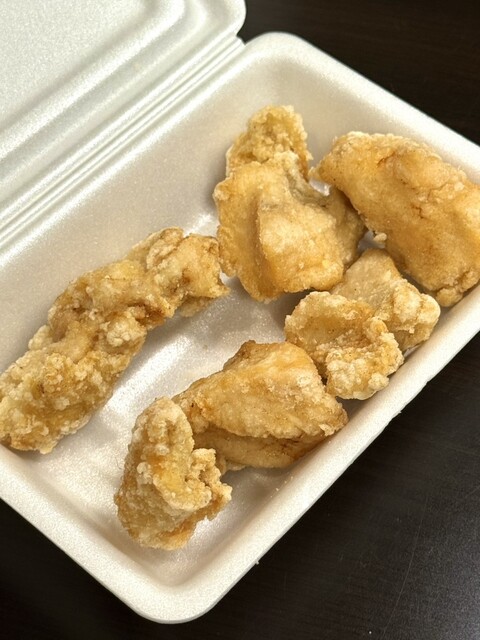
The menu identity is unusually compact. Public listings describe two core dishes: chicken skin with ponzu and grilled chicken thigh, both using Satsuma chicken. That kind of compression can be a warning sign in a weaker restaurant; here, it is also the reason the place belongs in the tori-ryori conversation. A two-dish structure removes the safety net of variety. It asks the breed, the grill, and the drink pairing to carry the evening.
A small-room format rather than a trophy-counter performance
Room format helps explain the appeal. Counter seating and tatami seating put it in the social, unfussy lane of Kagoshima dining rather than the hushed omakase lane. The recommended occasion skews toward friends, which fits the city better than a formal date-night reading. Tenmonkan rewards places that can hold conversation, smoke, and drink orders without turning the meal into theatre.
That distinction is useful for travellers building a Kagoshima food itinerary. A polished regional dinner at the higher end of the city’s pricing sits in a different category from a chicken-and-shochu night. Karen Kagoshima ten, for example, occupies a far higher dinner bracket, while Maruman Ganso Yakitori remains in the middle of the city’s casual evening economy. The more relevant comparison is not luxury versus budget; it is breadth versus concentration. Some Kagoshima meals introduce the prefecture through many local products. This one narrows the lens to chicken and shochu, then trusts the repetition.
There is also a piece of local cultural memory attached to the address. Public restaurant materials connect the place to manga artist Fujio Akatsuka, including a logo attributed to his relationship with the owner and a signed illustration displayed inside. That anecdote should not overwhelm the food, but it does place the room in a recognisable Japanese category: the neighbourhood restaurant whose reputation travels through regulars, artists, and repeat drinkers before it travels through glossy dining media.
For a broader Kagoshima run, this is the kind of stop that works after seafood, tonkatsu, or a set-meal lunch rather than in competition with them. Ichiba Shokudo Jounan ten pulls the day toward market cooking, while BAR STINGER extends the evening into cocktails; see BAR STINGER for that side of the city. Travellers mapping the wider city can use Our full Kagoshima restaurants guide, then pair dinner planning with Our full Kagoshima hotels guide, Our full Kagoshima bars guide, Our full Kagoshima wineries guide, and Our full Kagoshima experiences guide.
How to read it in a wider Japan itinerary
Maruman Ganso Yakitori is not trying to solve the same problem as a multi-course capital-city restaurant. It is more useful as a regional marker: evidence of how local breeds, local alcohol, and an entertainment district can create a compact dining form. For visitors crossing Japan, that makes it more instructive than another broad izakaya menu. The lesson is Kagoshima-specific, not just chicken-specific.
That is why the address sits well beside other tightly defined Japanese food stops rather than against them. A sukiyaki specialist such as -Grilled beef Sukiyaki- KAMAKURA TANUKIAN 鎌倉 たぬき庵 in Kamakura explains beef through one format;. 鮪と炭火焼き うお炭 秋葉原店 in Tokyo frames tuna and charcoal in a metropolitan register;.cafe in Osaka,.know in Kumamoto, (Shoku) Vietnam in Kawasaki, and [Curry Senmon Ten] Maruyama Kyoju. in Sapporo show how narrow concepts can carry a city’s appetite more clearly than sprawling menus. Even outside Japan, the same logic appears at Jōdo Saké Bar in Los Angeles and Onigiri Time in Pasadena, where a focused category becomes the organising principle rather than a limitation.
The editorial case is simple: choose it when the night calls for Kagoshima in close-up. The Tabelog 100 Chicken Cuisine 2025 selection supplies the external signal, but the stronger argument is cultural fit. Tenmonkan, Satsuma chicken, shochu, counter seating, and tatami seating form a coherent local scene. In a city where regional identity can easily be reduced to a checklist, this is the tighter read.
Budget Reality Check
Comparable venues by cuisine and price in the same metro.
| Venue | Cuisine | Price | Awards | Notes |
|---|---|---|---|---|
| Maruman Ganso YakitoriThis venue — the venue you are viewing | $$ | , | ||
| Kumasotei | $$ | , | Higashi Sengoku-cho, Traditional Satsuma Cuisine | |
| 菜々かまど | 天文館, Japanese Seafood Izakaya | $$ | , | |
| shirokuma cafe | $ | , | Tenmonkan, Traditional Kagoshima shaved ice & dessert cafe | |
| Karen Kagoshima ten | $$$ | , | Tenmonkan, Kagoshima wagyu & Kurobuta shabu-shabu and sukiyaki | |
| Yakitori Senmyou | $$$ | , | Tenmonkan / Koto Chugakko Mae area, Traditional Yakitori |
Continue exploring
More in Kagoshima
Restaurants in Kagoshima
Browse all →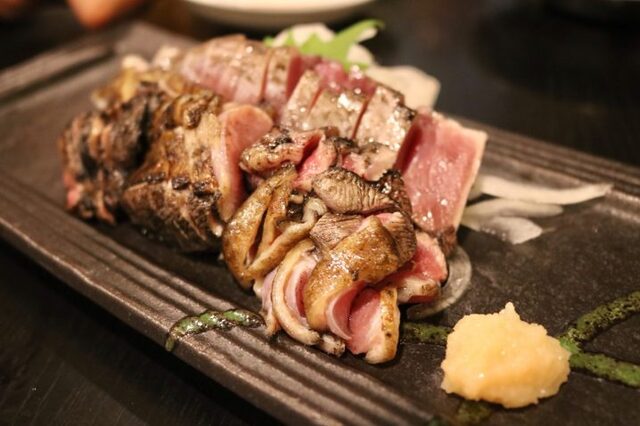
Hotels in Kagoshima
Browse all →
Wineries in Kagoshima
Browse all →
At a Glance
- Iconic
- Lively
- Classic
- Cozy
- After Work
- Casual Hangout
- Group Dining
- Solo
- Standalone
- Sake Program
- Local Sourcing
A classic, smoky yakitori spot in Tenmonkan with counter and tatami seating, simple decor featuring Fujio Akatsuka’s logo and signed illustration, a lively crowd of friends and regulars, and the feel of a cozy local institution rather than a polished modern restaurant.