
Yakitori Senmyou places Kagoshima’s charcoal-grill culture in a tighter, more specialist register than the city’s casual izakaya circuit. Its Tabelog 100 Yakitori WEST selections in 2023 and 2025 put it among the region’s recognized yakitori addresses, with a dinner budget that aligns it with Kagoshima’s serious skewer counters rather than quick-drink stops.
Pearl is the En Primeur Club membership app — saves, bookings, and concierge access live there. Same editors, same standards.
- Address
- 鹿児島県鹿児島市樋之口町8-6 和興ビル 1F
- Phone
- +81992260760
- Website
- tabelog.com
 Saves & bookings on Pearl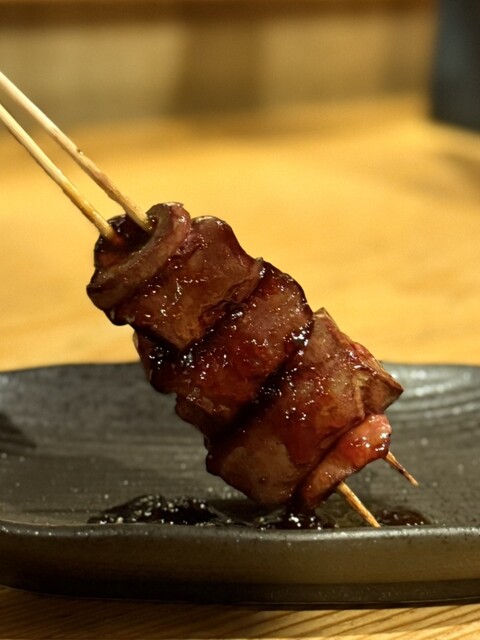
Approaching Kagoshima’s Tenmonkan-side dining streets, the city changes register after dark: shochu bars, small counters, late trains, and restaurants that treat charcoal as a working tool rather than theatre. Yakitori sits naturally in that rhythm. It is not formal kaiseki, and it is not a snack between drinks when handled seriously. The format depends on sequencing, heat control, salt, tare, and the quiet discipline of serving chicken in parts rather than as a single idea.
Yakitori Senmyou belongs to that specialist side of Kagoshima dining. The useful context is not only that it serves grilled chicken skewers, but that it has been selected for Tabelog 100 Yakitori WEST in both 2023 and 2025, placing it inside a regional conversation that extends beyond local regulars. In a city better known to many visitors for kurobuta pork, Satsuma-age, and shochu, that recognition matters: it signals a counter where yakitori is treated as the evening’s main event, not as background to drinking.
Where Kagoshima's skewer culture gets more exacting
Kagoshima’s dining identity is often read through abundance: pork cutlets, market fish, clay-pot rice, and shochu poured with local confidence. That makes a focused yakitori counter feel sharper. The appeal is compression. A meal can move through different cuts, grill timings, and seasoning decisions without the ceremony or cost escalation associated with higher-form Japanese dining. The result is a format that rewards attention but does not require reverence.
Within Kagoshima, Yakitori Senmyou prices into the same dinner band as Yakitori Kouun, while Torisen Ippo sits in a lower bracket. That spread says something about the local category: serious yakitori here does not have to imitate Tokyo’s high-priced omakase counters, but it does separate itself from casual skewer-and-beer rooms. For travelers comparing categories, the budget sits above quick ramen and many bar snacks, below grand tasting-menu territory, and in the zone where grill skill must carry the bill.
The neighborhood reinforces the point. This is central Kagoshima rather than resort Japan, so the evening has a practical urban cadence: trains, narrow streets, office workers, and diners moving between restaurants and bars. A night can start with yakitori and continue with cocktails at BAR STINGER, or lean more local with black pork at Aji no Tonkatsu Maruichi on another evening. The city’s strength is that these choices feel close in spirit even when the cooking styles differ: direct, ingredient-led, and relatively unfussy.
A charcoal counter in a city better known for pork and shochu
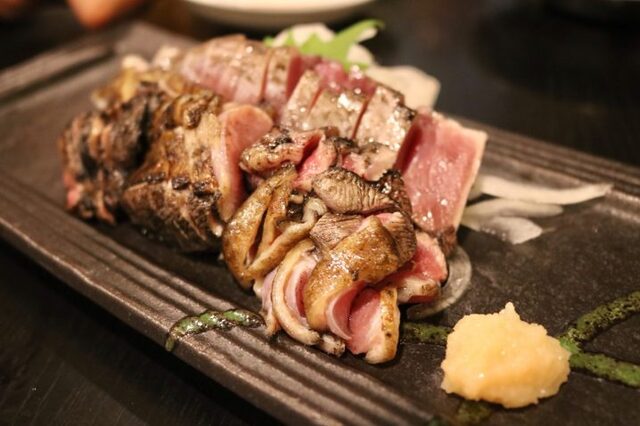
Yakitori’s seriousness is easy to underestimate because the format looks simple. Chicken on skewers, charcoal, salt or sauce: the vocabulary is short. The difference comes through repetition and control. Grill work has to manage skin, fat, lean meat, and offal without turning the meal into monotony. In western Japan, where regional lists often group cities across broad territories, a Kagoshima selection carries extra weight because it asks a local address to compete in a field dominated by larger dining markets.
The 2025 Tabelog 100 Yakitori WEST selection gives Yakitori Senmyou a clear credential. It is not a Michelin-style star system, but for Japanese diners Tabelog’s Hyakumeiten lists function as a category-specific signal: a way to identify restaurants that have earned attention within a cuisine rather than across a generic luxury scale. The earlier 2023 selection also suggests continuity, not a single-season spike.
That context helps explain how to use the restaurant. Visitors chasing Kagoshima’s breadth should not treat yakitori as a substitute for the city’s other signatures. It works better as one focused evening among several. Build another meal around market seafood at Ichiba Shokudo Jounan ten, compare grilled formats at Akadori Sumiyaki Daiyasu, or go gentler with set-meal structure at Charcoal-grilled Fish & Clay Pot-cooked Rice Ochawan, Japanese Set Meal Diner. Read together, those meals sketch Kagoshima more accurately than a single trophy booking.
How to place it in a Kagoshima itinerary
The smarter plan is to keep Yakitori Senmyou for a dinner when the point is precision rather than variety. It suits travelers who already understand that yakitori is a craft of small differences: heat, pacing, smoke, seasoning, and the order in which richer and leaner cuts arrive. Diners looking for a broad Japanese menu will get a narrower experience; diners who like specialist formats will understand the appeal quickly.
For a wider Kagoshima shortlist, start with Our full Kagoshima restaurants guide, then separate food-led nights from drinking-led ones through Our full Kagoshima bars guide. Travelers building a longer stay can pair that with Our full Kagoshima hotels guide, while broader regional planning sits in Our full Kagoshima experiences guide and Our full Kagoshima wineries guide.
Outside Kagoshima, the comparison becomes useful for calibration rather than direct substitution. A skewer-focused dinner here occupies a different lane from -Grilled beef Sukiyaki- KAMAKURA TANUKIAN 鎌倉 たぬき庵 in Kamakura, seafood-and-charcoal rooms such as. 鮪と炭火焼き うお炭 秋葉原店 in Tokyo, or casual urban addresses like.cafe in Osaka. Travelers mapping Japanese dining by format rather than city can also compare it against.know in Kumamoto, (Shoku) Vietnam in Kawasaki, [Curry Senmon Ten] Maruyama Kyoju. in Sapporo, or Japan-inflected California counters such as Jōdo Saké Bar in Los Angeles and Onigiri Time in Pasadena. The through-line is specialization: small menus, clear formats, and a reason to choose one craft over general comfort.
Compact Comparison
Side-by-side context: comparable cuisine and price.
| Venue | Cuisine | Price | Notes |
|---|---|---|---|
| Yakitori SenmyouThis venue — the venue you are viewing | $$$ | ||
| Tonkatsu to, Shabushabu. Kurobuta Fukuya | $$$ | Tenmonkan, Kagoshima Kurobuta Tonkatsu & Shabu-shabu | |
| Yakitori Kouun | Hinohiguchi-cho, Yakitori | $$ | |
| Yushoku Tonsai Ichiniisan Kagoshima honten | $$ | Shimoarata, Kagoshima black pork shabu-shabu & regional Japanese | |
| Sushi Dokoro Kimiya | $$$ | : Not found in provided sources, Edomae Sushi Omakase Counter | |
| Sushisho Nomura | $$$$ | Matsubaracho, Kagoshima-Style Omakase Sushi |
Continue exploring
More in Kagoshima
Restaurants in Kagoshima
Browse all →

Hotels in Kagoshima
Browse all →
Wineries in Kagoshima
Browse all →
At a Glance
- Cozy
- Lively
- Hidden Gem
- Intimate
- Date Night
- Casual Hangout
- After Work
- Group Dining
- Solo
- Special Occasion
- Chefs Counter
- Standalone
- Private Dining
- Beer Program
- Sake Program
A compact, reservation-only yakitori shop with counter-focused seating, non-smoking and likely bustling in the evenings, offering a warm, intimate atmosphere centered on the grill rather than décor.