
Tori Yoshi places Kobe’s chicken-cuisine tradition in a compact Higashinada setting, with yakitori, chicken dishes and izakaya drinking culture treated as a focused evening ritual rather than a broad casual spread. Its selection for Tabelog 100 Chicken Cuisine 2025 gives it a clear critical marker, while the small-room format keeps the meal closer to a neighbourhood counter than a destination tasting room.
Pearl is the En Primeur Club membership app — saves, bookings, and concierge access live there. Same editors, same standards.
- Address
- 1 Chome-7-20 Moriminamimachi, Higashinada Ward, Kobe, Hyogo 658-0011, Japan
- Phone
- +81 78-411-3292
- Website
- tabelog.com
 Saves & bookings on Pearl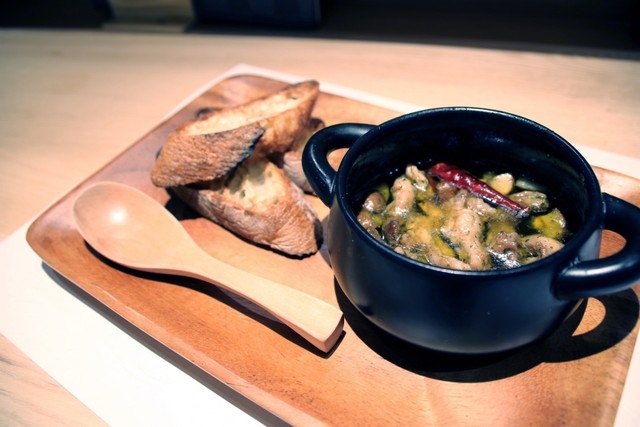
Approaching a serious yakitori room in Kobe is not about spectacle. The ritual begins with compression: a small doorway, a counter close enough to read the grill’s pacing, and tables that keep the room social rather than formal. Tori Yoshi belongs to an older Japanese category where chicken cookery, drinking snacks and izakaya rhythm overlap; the point is not a long menu staged as theatre, but small decisions around heat, timing and appetite.
Kobe dining is often reduced to beef, yet the city’s evening culture is broader than steakhouse ceremony. In the residential east, away from the densest tourist corridors, chicken restaurants carry a different local confidence. The format rewards repeat diners: skewers ordered in waves, sake or shochu beside the grill, and a meal shaped by pace rather than fixed-course choreography. That frames Tori Yoshi, selected for Tabelog 100 Chicken Cuisine 2025, placing it inside Japan’s closely watched chicken-cuisine conversation, not merely Kobe’s neighbourhood izakaya circuit.
Chicken cookery as a paced Kobe evening, not a tasting-menu performance
Yakitori’s discipline is easy to underestimate because its grammar looks simple: chicken, charcoal, salt or tare, drink, repeat. Better rooms are judged by control, not ornament. Heat management, portion size and spacing between rounds matter as much as variety. A counter seat makes the grill’s cadence visible; a table shifts the meal toward conversation and shared plates. Tori Yoshi’s format, combining chicken dishes, grilled skewers and izakaya structure, sits in that practical middle ground.
The price tier reinforces this. It is neither luxury omakase nor a low-commitment, volume-driven drinking stop. Against nearby comparison venues, its positioning is precise: Baan thai ASHIYA occupies a similar dinner spend in another cuisine lane, Do Sanjin Ashiya ten sits lower, and Ristorante Bellini moves higher. In that company, the restaurant reads as a focused specialist rather than a general-purpose night out. Its Tabelog score of 3.63 adds another signal: not a mass-market popularity marker, but enough critical density to matter in Japan’s restaurant-ranking culture.
The drinking side matters too. Sake, shochu and wine are part of the format, with particular emphasis on sake. That range is typical of contemporary chicken counters that no longer treat yakitori as beer-only food. The ritual stays casual, but the drinks alter the register: sake sharpens the savoury rhythm, shochu keeps the evening leaner, and wine places the grill within a broader modern izakaya vocabulary.
A small-room format that rewards attention to etiquette
Scale is part of the case. With 15 seats split between counter and tables, the restaurant sits at the low-capacity end of Kobe’s casual dining spectrum. That changes the meal. Ordering too broadly at the start can flatten it; yakitori works better when rounds arrive with space between them. The two-hour seating limit is long enough for a full meal, but discourages the slow drift of looser izakaya drinking.
Etiquette here is less formal rulebook than tempo reading. Counter dining rewards decisive ordering, moderate volume and attention to the grill’s sequence. Table dining is more forgiving, especially for families and friends, but the same logic holds: let the meal build in smaller rounds rather than treating the menu as a checklist. Children are welcome, private rooms are absent, so the atmosphere remains shared. The non-smoking policy gives the room a cleaner contemporary baseline than older izakaya models.
The 1996 opening date adds credibility. Kobe has changed sharply since then, especially around station-adjacent dining and how visitors discover casual specialists, yet long-running neighbourhood restaurants survive on repetition. In chicken cuisine, longevity matters because technique is measured nightly, not annually. The 2025 award recognition is therefore less interesting as a badge than as confirmation that a small local format can register nationally without becoming grand.
How to place it within a wider Kobe itinerary
For visitors building a Kobe food map, the restaurant belongs with focused specialists rather than the city’s obvious beef addresses. Travellers comparing formats can look at Aburi Niku Kobo Wakkoku Shinkobe ten or Aburi Niku Kobo Wakkoqu Kitano Sakamoto Ten for Kobe beef’s formal lane, then use a chicken counter to understand local dinner culture without ceremony. Coffee rooms such as Akaneya Coffee Ten, casual addresses such as Akari, and community-specific kitchens such as Ali's Halal Kitchen show a city eating across many registers.
The wider planning frame matters because Kobe is often folded into a Kansai itinerary rather than treated as a full dining city. Use Our full Kobe restaurants guide for sequencing, then match the evening with Our full Kobe hotels guide, Our full Kobe bars guide, Our full Kobe wineries guide and Our full Kobe experiences guide. The useful strategy is contrast: grill-focused chicken one night, beef another, and a lighter coffee or bar-led stop around the edges.
For readers comparing Japanese casual formats across cities, the question is the same: is the venue built around a single craft, or broad convenience? -Grilled beef Sukiyaki- KAMAKURA TANUKIAN 鎌倉 たぬき庵 in Kamakura. 鮪と炭火焼き うお炭 秋葉原店 in Tokyo.cafe in Osaka.know in Kumamoto, (Shoku) Vietnam in Kawasaki and [Curry Senmon Ten] Maruyama Kyoju. in Sapporo all answer differently. Outside Japan, the comparison shifts to how Japanese drinking and snack formats travel, as at Jōdo Saké Bar in Los Angeles and Onigiri Time in Pasadena.
The verdict is restrained but clear: a small Kobe chicken specialist with enough recognition to justify planning around it, especially for diners who understand yakitori as rhythm rather than variety. Its appeal lies in format discipline: limited seats, counter energy, chicken-led ordering and a drinking program that supports the grill without making the room formal.
What It’s Closest To
Comparable venues to anchor price and recognition.
| Venue | Cuisine | Price | Notes |
|---|---|---|---|
| Tori YoshiThis venue — the venue you are viewing | Traditional Yakitori / Chicken Dishes | $$ | Not listed |
| Banshu Jizake Hino | Japanese Izakaya | $$ | Chūō |
| 老虎菜 本店 | japanese | Not listed | Higashinada |
| Koube Kitano Asahi Yaseinikuten | Kobe beef diner & butcher eat-in | $$ | Chūō |
| Sanuki Menbo Suzume | Traditional Sanuki Udon & Tempura | $ | Chūō |
| Grill Suematsu | Classic Yoshoku (Japanese‑style Western) Grill | $$ | Chūō |
Recognition history
Dated appearances from independent guides and award organizations, with the underlying list record or original source where available.
Tabelog 100 #65 · No. 65
Tabelog · Tabelog 100 - Chicken cuisine - 2025
Continue exploring
More in Kobe
Restaurants in Kobe
Browse all →



Bars in Kobe
Browse all →



Hotels in Kobe
Browse all →



At a Glance
- Cozy
- Classic
- Intimate
- Family
- Date Night
- Casual Hangout
- Standalone
- Sake Program
- Beer Program
Current opening hours
- Monday
- 5–10 PM
- Tuesday
- Closed
- Wednesday
- 5–10 PM
- Thursday
- 5–10 PM
- Friday
- 5–10 PM
- Saturday
- 5–10 PM
- Sunday
- 5–10 PM
Hours can change for holidays and private events. Last verified .
A small, stylish, relaxed hideout with counter seating and a non-smoking, intimate atmosphere that suits a quiet chicken-focused dinner.