Tori Shin

Our verdict
One of New York's most consistent yakitori destinations, Tori Shin on West 53rd Street has held a place on Opinionated About Dining's North America list every year from 2023 through 2025. The format is traditional, skewered chicken cooked over binchōtan charcoal, with a beverage programme anchored in sake and shochu that treats drinks as part of the meal rather than an afterthought.

Pearl is the En Primeur Club membership app, where members save venues, book tables and use the concierge.
The menu
What to order
- Chicken skewers
- Wagyu
- King crab
Where Yakitori Took Root in New York
Yakitori arrived in New York before most diners knew what binchōtan was. The discipline has Japanese roots going back centuries: whole birds butchered down to their constituent parts, each cut skewered separately and cooked over white charcoal at a temperature that takes years to calibrate. What the city eventually learned, largely through a handful of Hell's Kitchen and Midtown addresses, is that this is a precision format, not a casual one. The margin between a properly rendered yakitori, skin crisped and juiced inward, fat rendered but not expelled, and an overcooked stick of chicken is a matter of seconds and attention.
Tori Shin, at 362 West 53rd Street, has been part of that education. It sits in a Midtown block that lacks the neighbourhood character of, say, the East Village, but the address matters less here than in other formats. Yakitori counters draw diners to the craft, not the postcode. The more relevant comparison set is the small cluster of serious yakitori rooms operating in New York, including Kono, which operates at an omakase counter level, and Yakitori Totto, which takes a higher-volume approach nearby. Tori Shin occupies the middle tier of this set: serious enough to earn recurring critical recognition, accessible enough that the format does not require the planning of an omakase appointment.
The Beverage Programme as a Structural Element
The editorial angle on Tori Shin starts with drinks, not food, because at yakitori counters the beverage programme is structural, not decorative. In Japan, the izakaya tradition and its yakitori sub-category were built around the idea that beer, sake, or shochu should pace the meal, arriving with early skewers, shifting in character as cuts progress from milder breast meat to richer offal and skin. The food and drink are designed to move together.
At serious yakitori rooms operating outside Japan, replicating that logic requires a genuine sake and shochu list rather than a wine-forward programme retrofitted onto a Japanese format. The two drink categories behave differently across the progression of a yakitori meal. Sake, particularly junmai or junmai ginjo styles, which avoid added distilled alcohol, carries umami alignment with the amino acids in grilled chicken in a way that still wine does not. Shochu, distilled rather than brewed, cuts through fat on heavier cuts: skin, cartilage, the richer pieces that come later in a proper progression. A programme that understands this sequencing turns beverage pairings into something closer to course design.
Tori Shin's repeated presence on Opinionated About Dining's North America list, ranked 135th in 2023, 143rd in 2024, and climbing back to 116th in 2025, suggests the kitchen and the overall experience hold up under sustained critical scrutiny. OAD's methodology draws on the votes of experienced diners and industry professionals, which means sustained placement reflects peer recognition rather than a single year of good press. That three-year track record places Tori Shin in a different conversation from the dozens of Japanese-inflected restaurants that cycle in and out of New York media attention.
The Format and What It Demands
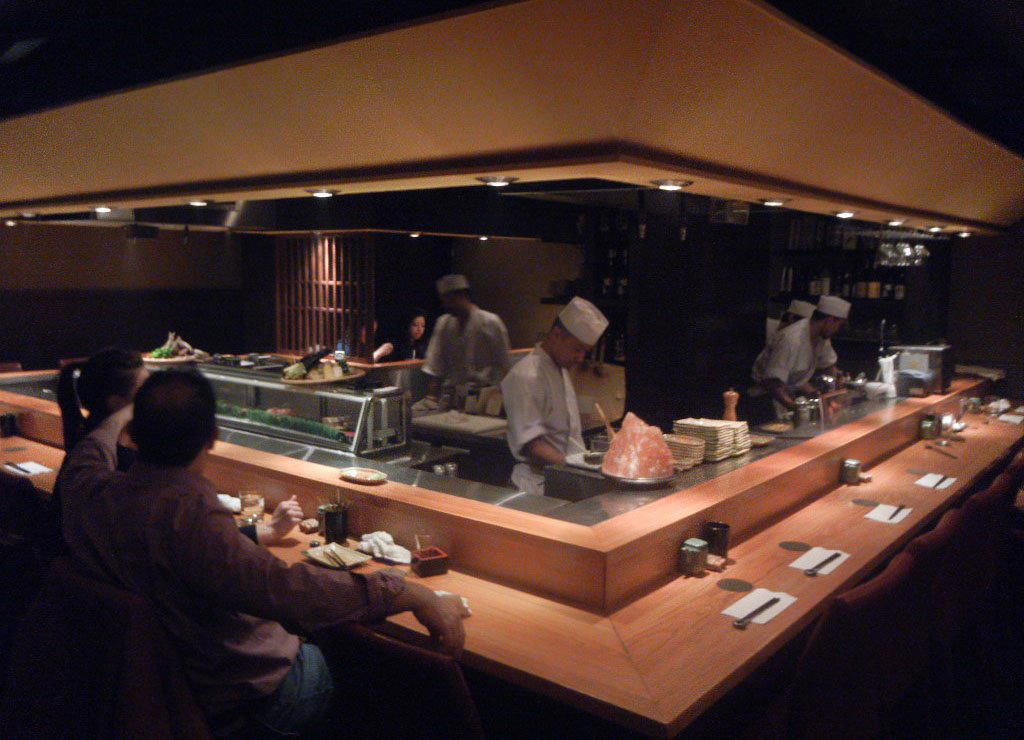
Yakitori as a format makes specific demands on the diner. The meal moves at the kitchen's pace, not the table's. Skewers arrive two or three at a time across a long sequence, and the logic of that sequence, which cuts appear when, which sauces (tare versus salt) are applied to what, reflects a philosophy embedded in the kitchen rather than something a server can easily narrate in a single visit. This is why the bar seating, where available, tends to reward attentive diners more than table seating: the proximity to the grill makes the sequencing legible in a way that distant tables cannot replicate.
The comparison to omakase sushi is instructive here. Both formats share the same underlying logic: the chef controls the progression, the diner surrenders the menu, and the skill lives in the sequencing as much as in any individual piece. At New York's highest-stakes sushi rooms, that logic commands prices that put individual meals in the range of other city-wide splurges like Le Bernardin, Atomix, or Eleven Madison Park. Serious yakitori occupies a lower price register while applying comparable discipline to sourcing and technique, a value proposition that OAD's sustained ranking implicitly acknowledges.
Internationally, the reference points are the Osaka and Kyoto specialists who have been refining this format for decades. Ichimatsu in Osaka and Torisaki in Kyoto represent the tradition at source, the counters against which serious New York yakitori rooms are quietly measured. The gap has narrowed over the past decade as sourcing networks for quality Japanese birds and binchōtan charcoal have improved for U.S. operators.
Atmosphere and What to Expect
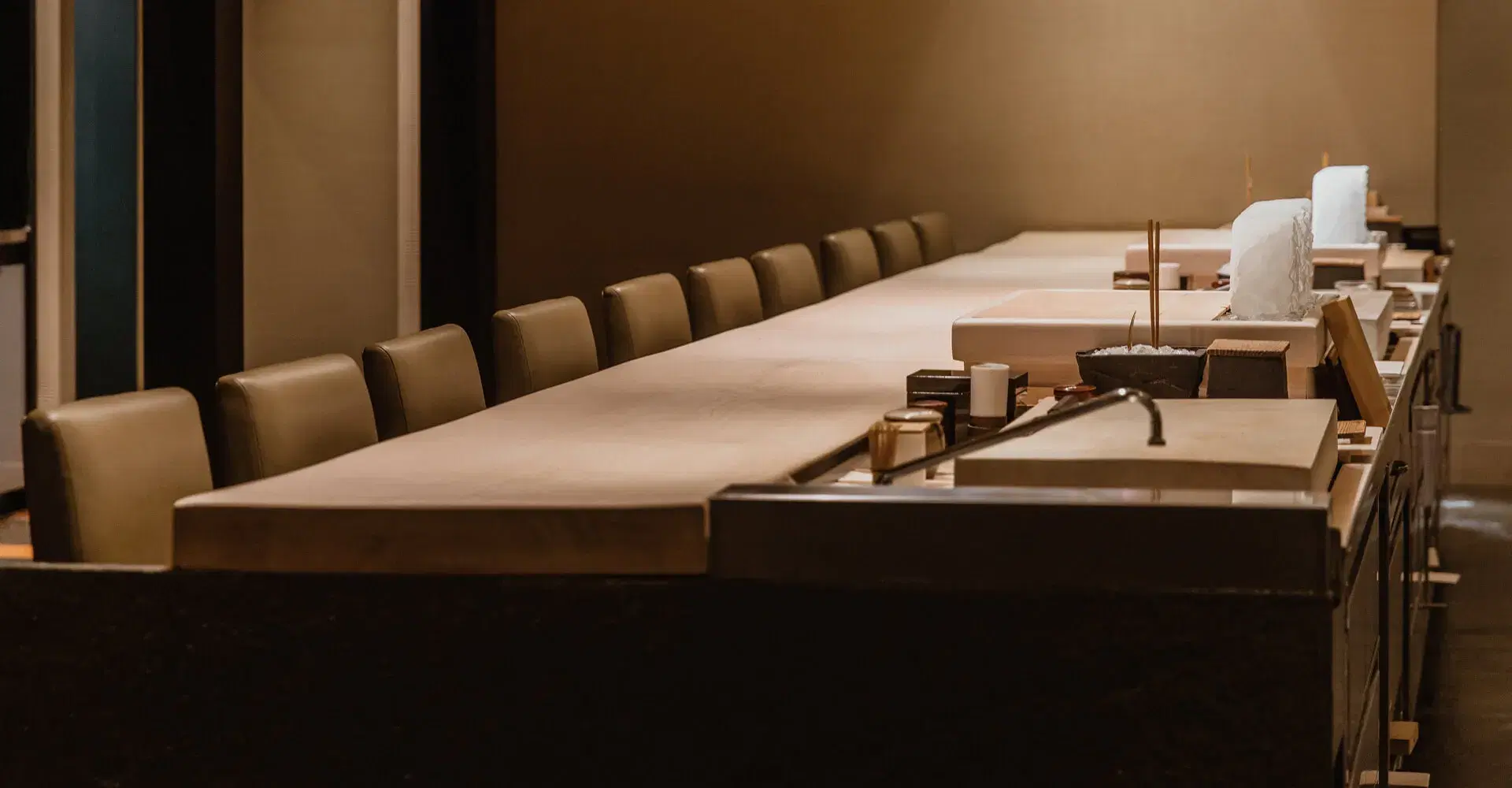
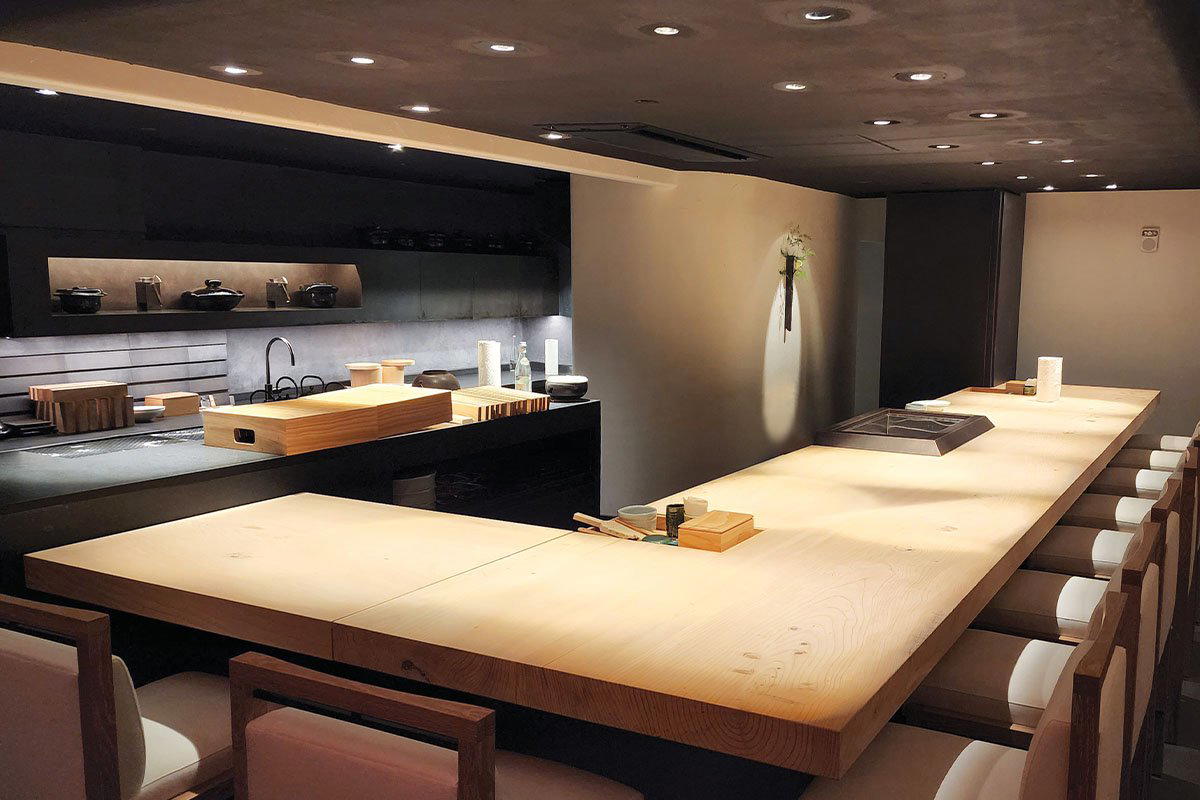
The room at Tori Shin is compact, as the format requires. Yakitori counters succeed at human scale: too large and the kitchen loses control of timing, too noisy and the quiet rhythm of the meal gets disrupted. The crowd skews toward diners who know the format and return rather than first-timers checking off a list, which shapes the room's register.
Service hours run Tuesday through Saturday, 5pm to 10pm, and Sunday, 5pm to 10pm, with Monday closed, the standard closure pattern for kitchens that keep tight crews. The evening-only schedule is common across serious yakitori rooms globally, since lunch service disrupts the mise en place rhythm that charcoal-based cooking requires.
Planning Your Visit
Tori Shin fits the itinerary of a Midtown evening, before or after Lincoln Center, or as a standalone counter dinner that runs at its own pace. The format does not suit those who need to catch a curtain on a tight schedule; yakitori meals at serious counters expand comfortably past two hours when drinks are part of the evening.
For a broader map of where Tori Shin sits within New York's dining options, our full city guides cover the range: our full New York City restaurants guide, our full New York City hotels guide, our full New York City bars guide, our full New York City wineries guide, and our full New York City experiences guide.
Elsewhere in the U.S. the counter-format dining tradition takes different shapes: Lazy Bear in San Francisco and Alinea in Chicago both operate within the premise that a fixed progression, paced by the kitchen, produces a more coherent meal than a carte. The French Laundry in Napa, Single Thread Farm in Healdsburg, and Providence in Los Angeles operate in different registers, but the underlying argument for surrendering menu control to a skilled kitchen runs across all of them. Emeril's in New Orleans represents a different lineage, but belongs to the same American fine-dining generation that the yakitori counter quietly challenges on value terms.
Quick reference: 362 W 53rd St, New York. Tuesday through Sunday, 5–10 pm. Monday closed. OAD North America Leading Restaurants: #116 (2025), #143 (2024), #135 (2023).
Frequently asked questions
What is the atmosphere like at Tori Shin?
The room is compact by design, yakitori counters operate at human scale, where the kitchen can maintain timing across every skewer. Expect a focused, unhurried pace closer to a Japanese omakase counter than a neighbourhood izakaya. Tori Shin has held a consistent place in Opinionated About Dining's North America rankings from 2023 through 2025, which signals a room that draws serious diners rather than casual walk-ins.
Where exactly is Tori Shin?
Tori Shin is located at 362 W 53rd St, New York, New York, United States, New York City.
Has Tori Shin won any awards?
Tori Shin has received recognition including: Opinionated About Dining Top Restaurants in North America Ranked #116 (2025); Opinionated About Dining Top Restaurants in North America Ranked #143 (2024); Opinionated About Dining Top Restaurants in North America Ranked #135 (2023).
What should I order at Tori Shin?
At a yakitori counter, the format itself is the instruction: the kitchen sets the sequence, and skewers arrive two or three at a time at the kitchen's pace, not the table's. Whole birds are broken down into distinct cuts, so the range runs from familiar thigh and breast to the more specific liver, heart, and cartilage preparations that define serious yakitori. The beverage programme at counters like this is built around the food's register, so factor drinks into the experience from the start.
Is Tori Shin focused on a specific cuisine style?
Is Tori Shin open every day?
Hours at Tori Shin: Hours: Monday Closed Tuesday 5–10 pm Wednesday 5–10 pm Thursday 5–10 pm Friday 5–10 pm Saturday 5–10 pm Sunday 5–10 pm.
Category Peers
| Venue | Cuisine | Price | Awards | Notes |
|---|---|---|---|---|
| Tori ShinThis venue (the venue you are viewing) | Authentic Yakitori | $100–150 | Not listed | Not listed |
| Le Bernardin | French Seafood Fine Dining | $300–500 | 3 Michelin Stars · World's 50 Best #13 | French, Seafood |
| Atomix | Modern Korean Tasting Menu | $300–500 | 2 Michelin Stars · World's 50 Best #7 | Modern Korean, Korean |
| Masa | Seasonal Hokkaido Tempura Omakase | $150–200 | Tabelog 100 #34 | Sushi, Japanese |
| Per Se | French Fine Dining Tasting Menu | $300–500 | 3 Michelin Stars · World's 50 Best #40 | French, Contemporary |
| Eleven Madison Park | Contemporary Plant-Based Fine Dining | $300–500 | 3 Michelin Stars · World's 50 Best #4 | French, Vegan |
Recognition history
Dated appearances from independent guides and award organizations, with the underlying list record or original source where available.
Opinionated About Dining Top Restaurants in North America Ranked #122
Opinionated About Dining
Full recognition history (5 entries)
Opinionated About Dining Casual in Japan Ranked #29
Opinionated About Dining
Opinionated About Dining Top Restaurants in North America Ranked #116
Opinionated About Dining
Opinionated About Dining Top Restaurants in North America Ranked #143
Opinionated About Dining
Opinionated About Dining Top Restaurants in North America Ranked #135
Opinionated About Dining