Our verdict
TONO by Akira Back occupies a prominent address on Bloor Street East, where the Yorkville adjacency and the Akira Back brand's international reach converge in Toronto's upper dining tier. The concept draws from the chef's Korean-Japanese culinary framework, placing it in a category alongside the city's most ambitious Asian-inflected tasting menus. For Toronto diners tracking the serious end of the market, it merits attention alongside peers at the $$$$ price point.

Pearl is the En Primeur Club membership app, where members save venues, book tables and use the concierge.

The menu
What to order
- Tajima Wagyu short ribs
- Chilean sea bass
- Ceviche
Bloor Street and the Address That Does Work
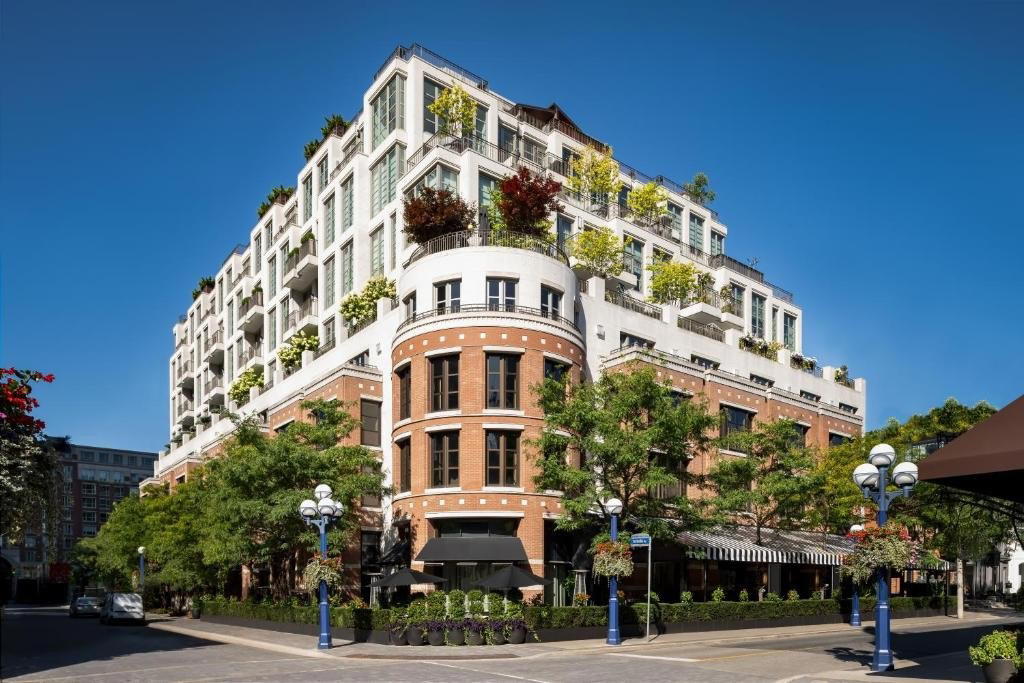
Ninety Bloor Street East is not a subtle location. The address sits at the eastern edge of Yorkville, Toronto's most commercially assertive luxury corridor, where the density of high-end retail, hotel lobbies, and restaurant dining rooms is higher per block than almost anywhere else in the city. When a restaurant occupies this kind of real estate, the location itself becomes part of the proposition: the clientele, the occasion type, and the price tolerance of the neighbourhood all shape what a dining room can credibly attempt. TONO by Akira Back arrives at that address carrying a specific kind of capital, the Akira Back name, which has expanded across properties in Seoul, Dubai, Bangkok, and beyond, and which Toronto diners with international travel habits may already recognise from those markets.
The Yorkville-adjacent positioning matters for another reason. Toronto's premium dining scene has historically clustered in a few corridors, King West, Ossington, the Financial District fringes, while Bloor and Yorkville have remained stronger ground for hotel restaurants and occasion-dining rooms that lean on address prestige as much as culinary ambition. TONO enters that micro-market at a moment when the city's broader fine-dining conversation is increasingly led by venues like Alo and Aburi Hana, both of which have demonstrated that Toronto diners will pay serious prices for serious cooking. The question TONO answers is whether the Akira Back format, Korean-Japanese inflected, internationally distributed, brand-aware, can hold its own in that conversation.
The Akira Back Framework and Where Toronto Sits Within It
The Akira Back brand operates a recognisable culinary logic: Korean heritage filtered through Japanese technique, with a visual presentation sensibility that reads well in hotel-adjacent dining rooms across Asia and the Middle East. That framework has earned the name recognition it carries. In the context of Toronto's Japanese-inflected fine dining, TONO enters a market that already has serious benchmarks. Sushi Masaki Saito operates at the most rarified end of the city's sushi counter tier, while Aburi Hana holds kaiseki credentials that position it among the most technically demanding Japanese formats available in Canada. TONO does not compete directly with either, its Korean-Japanese fusion orientation occupies a distinct register, but those peers set the frame of reference Toronto diners bring when they book a $$$$ Japanese-inflected table.
Internationally, the Akira Back brand shares a competitive tier with restaurant groups that have built credential-heavy multi-city footprints. The comparison to Atomix in New York is instructive: Korean-rooted fine dining at the highest price point, in a city with high dining literacy, requires a level of specificity and depth that the brand's global distribution alone cannot supply. Toronto's dining public, increasingly literate about what serious Asian fine dining looks like, will apply similar scrutiny.
The Canadian Fine Dining Context
Toronto's position within Canadian fine dining is worth framing briefly. The city's restaurant scene operates at a different scale from the tasting-menu intensity of Tanière³ in Quebec City or the locally-rooted ambition of AnnaLena in Vancouver, but it is emphatically not a secondary market. The concentration of international travel, a large Korean and Japanese diaspora population with high culinary expectations, and a financial services economy that sustains premium occasion dining all make Toronto a credible test for a brand of TONO's profile. That diaspora dimension is particularly relevant: the Korean-Canadian community in Toronto is among the largest in North America, and diners from that community bring comparative knowledge that extends well beyond what most Western fine-dining audiences apply.
Beyond Toronto, the Ontario dining scene includes serious cooking at a range of scales and formats, from Restaurant Pearl Morissette in Lincoln and Eigensinn Farm in Singhampton to The Pine in Creemore, contexts that reward understanding what Toronto's urban premium tier is doing differently. TONO's Bloor Street address places it firmly in the urban occasion-dining category, oriented toward the hotel-adjacent, expense-account-compatible register rather than the destination-journey model those out-of-city addresses represent.
Occasion Type and Who Books Here
The Bloor Street address and the Akira Back brand both signal a specific occasion type: international business entertaining, anniversary and celebration dinners, and tourism from visitors who already know the brand from other cities. That clientele profile is distinct from the culinary-pilgrim audience that books DaNico or Don Alfonso 1890 on the strength of culinary credentials alone. It is a different value exchange: familiarity and address prestige carry weight alongside the cooking itself.
For international visitors to Toronto who have encountered Akira Back restaurants in Seoul or Bangkok, TONO offers continuity. For local diners seeking the city's most demanding technical cooking, the peer comparison to Alo or the kaiseki rigour of Aburi Hana will apply. Both audiences are valid; they simply arrive with different expectations, and the room's performance will read differently against each frame.
For a broader map of where TONO sits within Toronto's full dining spectrum, the EP Club Toronto restaurants guide covers the $$$$ tier in detail, with comparative context across cuisine types and occasion categories. International reference points from the Korean fine-dining world include Atomix in New York and, for broader fine-dining benchmarking, Le Bernardin, which demonstrates what sustained multi-decade excellence at the upper price tier requires.
Planning Your Visit
Address: 90 Bloor St E, Toronto, ON M4W 1A7. Reservations: Booking details are best confirmed directly with the venue; for a restaurant at this address and price tier, advance planning of at least two to three weeks is advisable for weekend sittings. Budget: Positioned at the $$$$ tier, consistent with Toronto's top-end dining rooms. Occasion fit: Business entertaining, celebration dinners, and visits from internationally mobile diners familiar with the Akira Back brand elsewhere.
Frequently asked questions
What should I order at TONO by Akira Back?
The Akira Back format across its international locations has been built around Korean-Japanese fusion dishes, typically organised around sharing plates and tasting-style progressions. Given that framework and the $$$$ price positioning, the menu at TONO is likely structured to highlight signature preparations from that culinary tradition. For specific current dishes, the venue's own channels are the reliable source, menus at this tier change seasonally, and specific dish information is leading verified at the point of booking.
How far ahead should I plan for TONO by Akira Back?
At the $$$$ price tier on a high-traffic Bloor Street address, demand for weekend tables at restaurants with international brand recognition tends to compress quickly. Two to three weeks advance notice is a reasonable minimum for weeknights; weekend and holiday sittings benefit from booking further out. If the venue has launched recently, early demand may be higher than the settled long-term pattern, booking promptly after you confirm the date is the practical approach.
What is TONO by Akira Back leading at?
The Akira Back brand's consistent strength across its international locations has been the Korean-Japanese fusion format: technically considered presentations, visual coherence across the menu, and a dining room sensibility that suits occasion dining and business entertaining. In Toronto's context, that places TONO in a distinct lane from the kaiseki-depth of Aburi Hana or the Canadian-contemporary tasting menu of Alo, different in orientation rather than lesser.
Can TONO by Akira Back adjust for dietary needs?
Restaurants at the $$$$ tier in Toronto's fine dining market routinely accommodate dietary requirements when notified in advance. Given the Korean-Japanese menu framework, the kitchen will likely have experience managing common restrictions. The most reliable approach is to communicate requirements at the time of reservation, either through the booking platform or directly with the restaurant, rather than on arrival.
Does TONO by Akira Back justify its prices?
The $$$$ price point at 90 Bloor Street East is consistent with what the Yorkville-adjacent address and an internationally recognised brand command in Toronto's current market. Whether that represents value depends on what the diner is comparing: against the technical depth of Sushi Masaki Saito or the precision of Aburi Hana, the calculus is about culinary specificity; against the broader occasion-dining market, address and brand recognition carry their own weight in the equation.
Is TONO by Akira Back part of a hotel, and does that affect the dining experience?
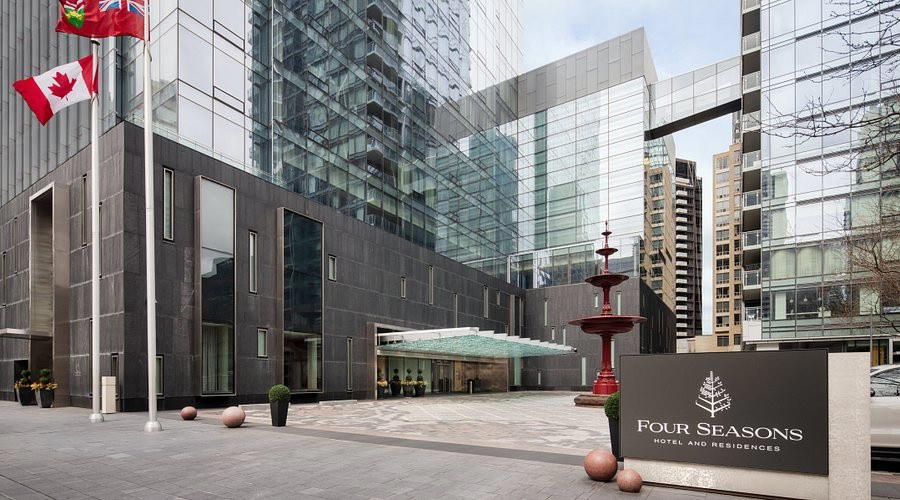
The 90 Bloor Street East address has hotel associations consistent with the Yorkville corridor, and the Akira Back brand has a well-documented history of operating within premium hotel and mixed-use developments globally, venues in Seoul, Bangkok, and Dubai have all followed that model. In those contexts, the dining room typically maintains a distinct identity from the broader hotel operation, though the clientele skews toward hotel guests and business travellers alongside local diners. Whether TONO in Toronto follows the same structure is best confirmed with the venue directly, but the brand pattern is a reasonable reference point for setting expectations about atmosphere and occasion type.
Standing Among Peers
Comparable venues nearby, for context on price, style, and recognition.
| Venue | Cuisine | Price | Awards | Notes |
|---|---|---|---|---|
| TONO by Akira BackThis venue (the venue you are viewing) | Modern Nikkei (Japanese-Peruvian Fusion) | $100–150 | Not listed | Not listed |
| Jade Yorkville | French-Asian Fusion | $100–150 | Not listed | Annex |
| Blue Bovine Steak + Sushi House | Steak & Sushi House | $50–100 | Wine Spectator Best of Award of Excellence | Financial District |
| Radici Project | Contemporary Italian-Japanese Fusion | $150–200 | Not listed | Palmerston-Little Italy |
| Sash | Modern Fusion Fine Dining | $100–150 | Not listed | Summerhill |
| LSL | French-Japanese Fine Dining | $500+ | Canada's 100 Best Restaurants #51 | Bedford Park-Nortown |
Continue exploring
More in Toronto
Restaurants in Toronto
All restaurants in Toronto →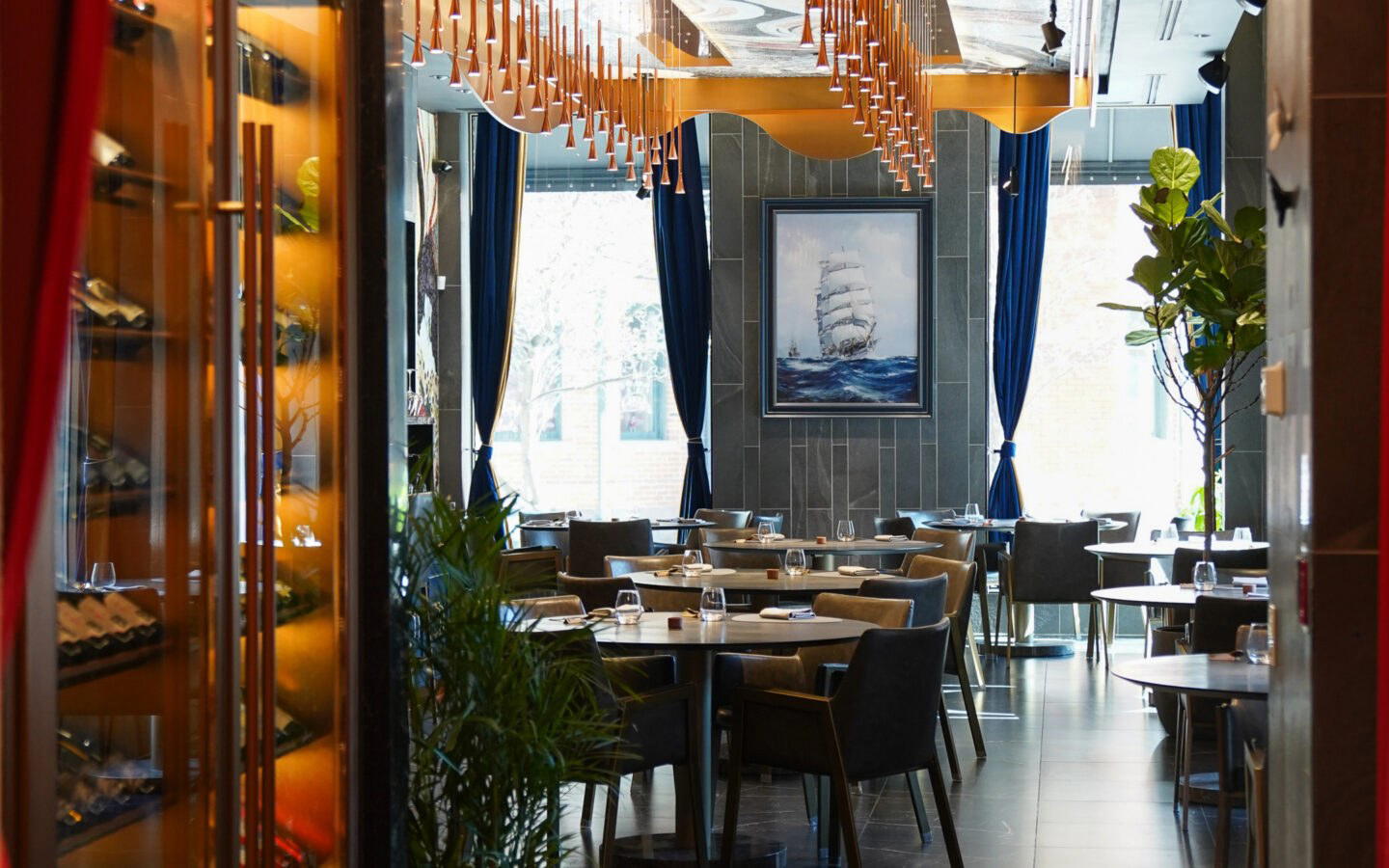
Bars in Toronto
All bars in Toronto →

Details
- Modern
- Trendy
- Sophisticated
- Elegant
- Date Night
- Special Occasion
- Business Dinner
- Rooftop
- Hotel Restaurant
- Open Kitchen
- Craft Cocktails
- Sake Program
- Skyline
- A La Carte
- Small Plates
- Craft Cocktails
- Vegetarian Friendly
Current opening hours
- Monday
- 5–11 PM
- Tuesday
- 5–11 PM
- Wednesday
- 5–11 PM
- Thursday
- 5–11 PM
- Friday
- 5 PM–12 AM
- Saturday
- 5 PM–12 AM
- Sunday
- 5–11 PM
Hours can change for holidays and private events. Hours as of .
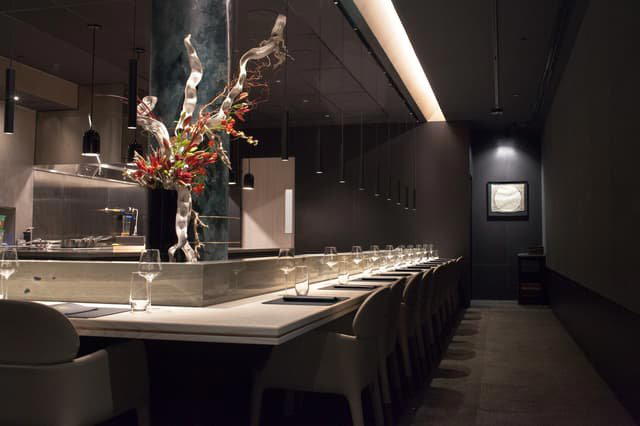
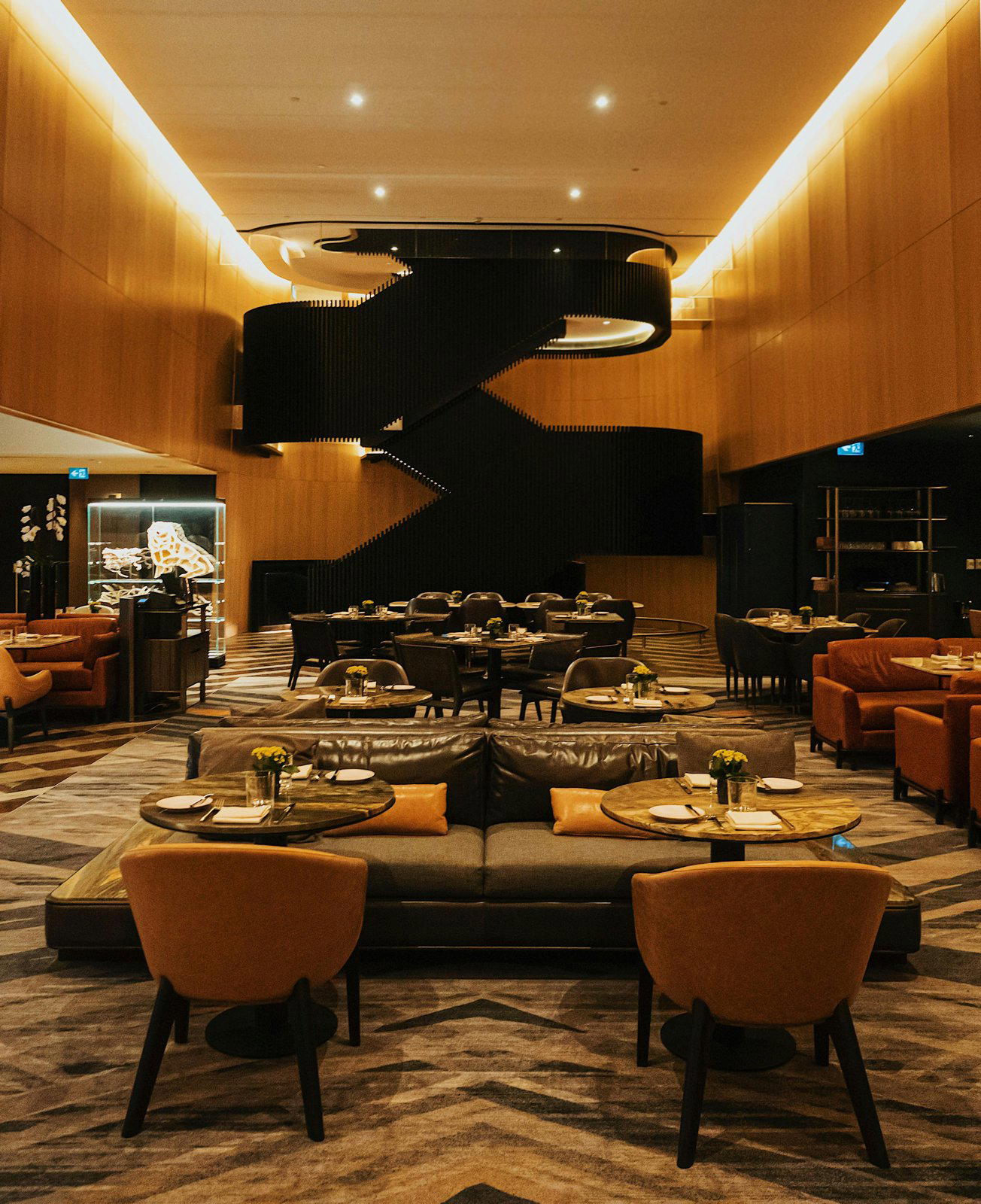
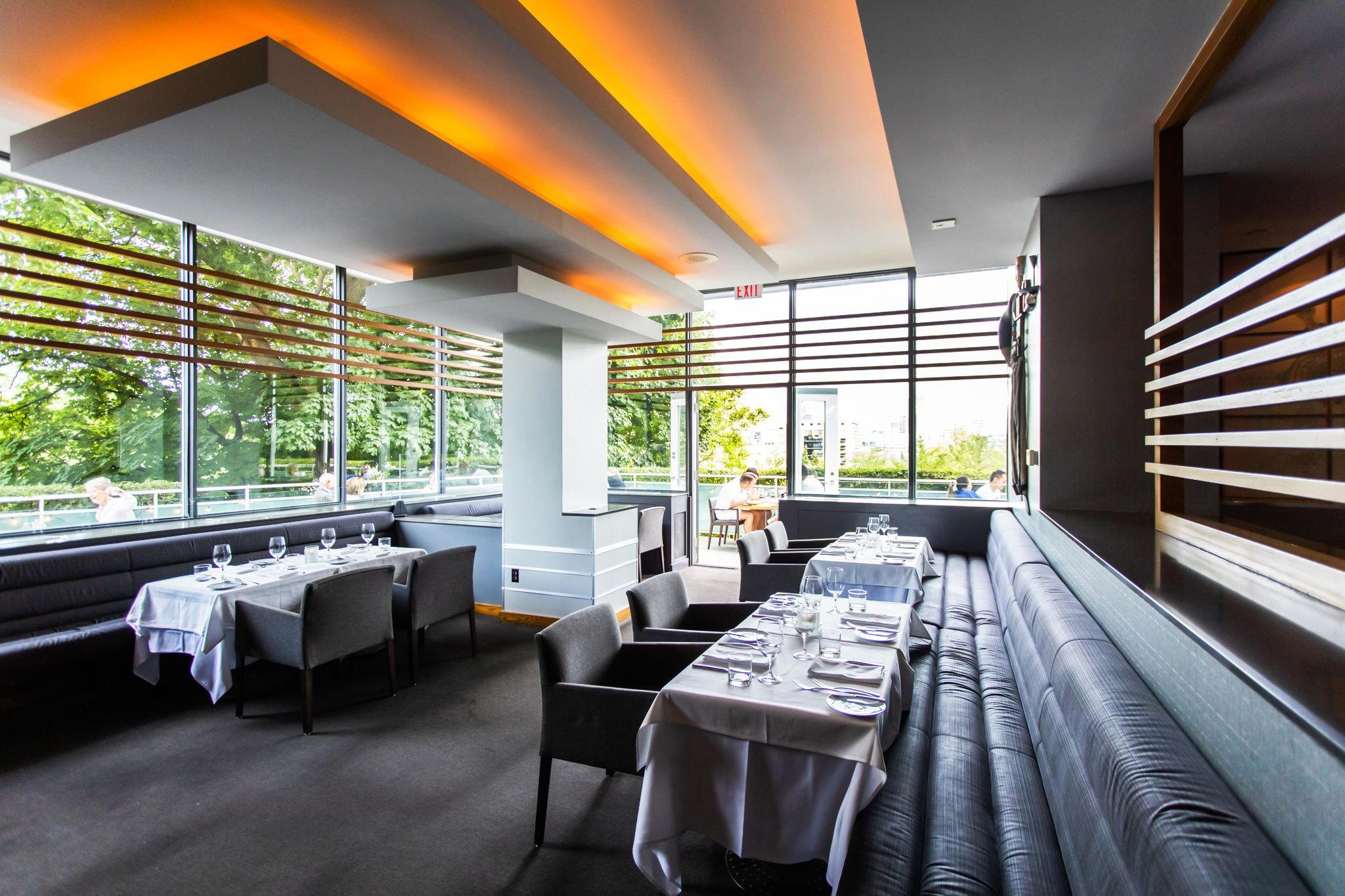
Warm modern design with floor-to-ceiling windows offering skyline views, sculptural sushi bar, and floating floral installation under an industrial ceiling.