On College Street in Toronto's Little Italy, Radici Project engages with the intersection of Italian culinary heritage and Canadian ingredients in a way that feels deliberate rather than decorative. The kitchen applies classical European technique to local sourcing, positioning the restaurant within a broader Canadian dining shift away from imported identity and toward grounded regional expression.
Pearl is the En Primeur Club membership app — saves, bookings, and concierge access live there. Same editors, same standards.
- Address
- 588 College St, Toronto, ON M6G 1B3, Canada
- Phone
- +14167921550
- Website
- radiciproject.ca
- Directions
- Get directions
 Saves & bookings on Pearl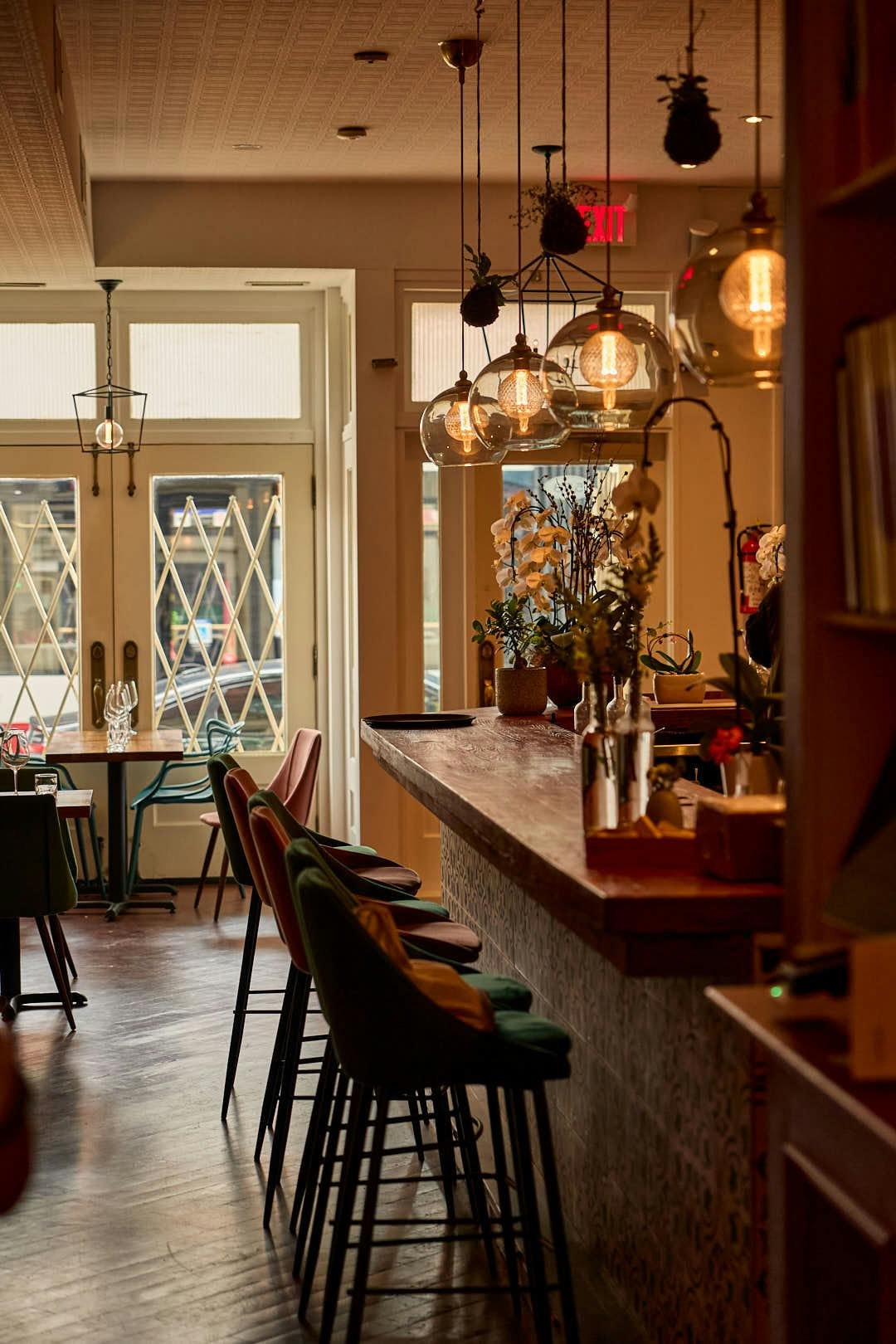
College Street and the Italian-Canadian Table
College Street west of Bathurst carries one of Toronto's more legible culinary identities: Italian-Canadian, layered and sometimes contested, stretching from mid-century red sauce institutions toward more contemporary interpretations. Radici Project, at 588 College St, enters that conversation from the contemporary end. The address alone situates it inside one of the city's oldest immigrant food corridors, a street where the question of what Italian cooking means in Canada has been asked, answered, and revised across decades.
That question has sharpened recently. Across Canadian cities, a growing set of kitchens has stopped treating European technique and North American product as separate concerns. The approach at properties like AnnaLena in Vancouver and Tanière³ in Quebec City treats classical method as a tool applied to ingredients that are specifically, unapologetically Canadian. Radici Project works within that same current, drawing on Italian roots while building its menu around what Ontario produces rather than what a transatlantic pantry imports.
Technique Imported, Ingredients Local
The editorial angle that defines Radici Project is one that Canadian dining has been working out slowly: what happens when European culinary grammar meets a genuinely regional pantry? Italian cooking, with its structural clarity around pasta, preserved vegetables, cured proteins, and acid-forward saucing, provides a useful technical scaffolding. Ontario's agricultural calendar, which runs from early ramp season through summer brassicas and into autumn squash and root vegetables, provides the vocabulary that fills it.
This is not a recent invention. The tension between imported tradition and local product has defined Canadian restaurant culture for at least two decades, producing distinct regional outcomes. In Ontario's rural belt, places like Eigensinn Farm in Singhampton and The Pine in Creemore resolved that tension by going almost entirely hyperlocal, sometimes at the cost of accessibility. Urban Italian-influenced kitchens face a different pressure: how to maintain culinary coherence while sourcing seasonal and regional. The restaurant sits on the urban side of that equation, at a College Street address that is close enough to the city's wholesale food district and farmers' market network to make seasonal sourcing practical rather than aspirational.
Where It Sits in Toronto's Italian Dining Field
Toronto's Italian restaurant field has separated into at least three distinct tiers. The first is the long-standing neighbourhood trattoria, often family-run, where the loyalty is geographic and generational. The second is the high-end contemporary Italian room, represented by venues like Don Alfonso 1890 and DaNico, both operating at the $$$$ price tier with full tasting or prix-fixe formats and polished service programs. The third tier, smaller and less defined, is occupied by kitchens that use Italian form as a frame rather than a destination, where the cooking is as interested in Canadian product as it is in Italian precedent.
The restaurant reads as an entry in that third category. It does not compete directly with the white-tablecloth Italian rooms downtown, nor does it position as a neighbourhood pasta institution. Its College Street location, the name's reference to roots, and its evident interest in local sourcing place it closer to the mid-tier independent that has built a following among the city's food-aware dining public without requiring the formal occasion framing of a $$$$ destination.
For comparison, the broader Toronto fine dining conversation is anchored by venues like Alo, which operates at the summit of the contemporary tasting menu format, and Japanese-trained counters including Sushi Masaki Saito and Aburi Hana, each at the $$$$ tier. The restaurant's apparent positioning is deliberately less formal, which in 2024-era Toronto is a considered choice: the city's most energetic dining movement is not at the apex of price and format but in the range immediately below it, where technique and sourcing matter but the experience architecture is more relaxed.
The Canadian Ingredient-Meets-European-Method Pattern
Internationally, the template for this kind of cooking is well-established. Le Bernardin in New York City demonstrated decades ago that classical French technique applied to the leading available North Atlantic seafood produces something greater than either component alone. Atomix in New York City applies Korean culinary logic to a mixture of Korean and American product with similarly rigorous results. The question the restaurant implicitly poses is whether Italian technique applied to Ontario product can achieve comparable coherence.
Across Canada, that question is being answered in different registers. Jérôme Ferrer - Europea in Montreal applies European classical training to Quebec product with decades of continuity. Restaurant Pearl Morissette in Lincoln, Ontario, resolves the imported-technique/local-product question through its wine program as much as its kitchen. Narval in Rimouski works with Gulf of St. Lawrence product through a broadly European lens. Each represents a different answer to the same structural problem. The restaurant's version, Italian in grammar and Ontarian in vocabulary, is one of the more direct formulations of it.
Planning a Visit
The restaurant is located at 588 College St in Toronto's Little Italy, accessible via the College streetcar and within the walkable stretch between Bathurst and Ossington. The neighbourhood is most active from early evening onward, and College Street dining tends to peak on weekend nights, which typically means earlier reservations or weeknight visits are easier to secure at shorter notice.
Venue Comparison at a Glance
| Venue | Cuisine | Price Tier | Format |
|---|---|---|---|
| The restaurant | Contemporary Italian-Japanese Fusion | $$$ | Independent neighbourhood |
| DaNico | Italian | $$$$ | Contemporary Italian |
| Don Alfonso 1890 | Contemporary Italian | $$$$ | Formal Italian room |
| Alo | Contemporary | $$$$ | Tasting menu |
| Barra Fion (Burlington) | European-influenced Canadian | Not published | Independent |
For a full map of Toronto dining across price tiers and cuisines, see our full Toronto restaurants guide.
Peers in This Market
Comparable venues nearby, for context on price, style, and recognition.
| Venue | Cuisine | Price | Notes |
|---|---|---|---|
| Radici ProjectThis venue — the venue you are viewing | Contemporary Italian-Japanese Fusion | $$$ | Not listed |
| Eloise | Modern Global Fusion | $$$ | Saint Lawrence |
| 887 Dundas St W | Asian Fusion Brunch | $$ | Trinity Bellwoods |
| Jade Yorkville | French-Asian Fusion | $$$$ | Annex |
| Florette | Funky Modern Canadian with Seasonal Sharing Plates | $$ | Little Portugal |
| Lake Inez | Modern Asian Fusion | $$ | Little India |
Continue exploring
More in Toronto
Restaurants in Toronto
Browse all →
Bars in Toronto
Browse all →
Hotels in Toronto
Browse all →
Wineries in Toronto
Browse all →
At a Glance
- Intimate
- Modern
- Sophisticated
- Cozy
- Date Night
- Special Occasion
- Celebration
- Open Kitchen
- Chefs Counter
- Natural Wine
- Sake Program
- Sommelier Led
- Farm To Table
- Local Sourcing
Current opening hours
- Monday
- Closed
- Tuesday
- Closed
- Wednesday
- 5–10 PM
- Thursday
- 5–10 PM
- Friday
- 5–11 PM
- Saturday
- 5–11 PM
- Sunday
- 5–10 PM
Hours can change for holidays and private events. Last verified .
Intimate space with natural wine bar up front and tables facing open kitchen in back, moderate noise, relaxing and pleasant service.