Tomo Ya

Tomo Ya brings precise sushi technique to Luxembourg's Neudorf-Weimershof quarter, earning a Michelin Plate in 2024 under chef Mathieu Desmarest. Priced in the mid-range tier (€€), it sits apart from the city's dominant French fine-dining circuit and draws consistent approval from. For serious sushi in a city where the format is rare, this is the address to know.
Pearl is the En Primeur Club membership app — saves, bookings, and concierge access live there. Same editors, same standards.
- Address
- 675 Rue de Neudorf, 2220 Neudorf-Weimershof Luxembourg
- Phone
- +352 26 44 15 31
- Website
- gastronomie.lu
- Directions
- Get directions
 Saves & bookings on Pearl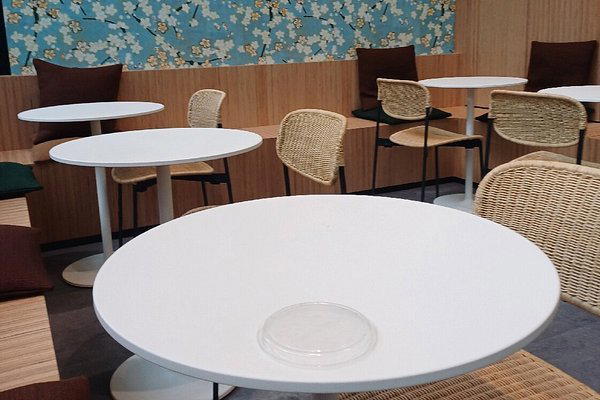
Sushi in a French-Dominant City
Luxembourg's restaurant scene is, by reputation and by critical record, a French-leaning one. The city's Michelin-recognised addresses cluster around classic and contemporary French formats: Léa Linster and Ma Langue Sourit operate at the higher end of that tradition, while creative European formats like Apdikt and produce-led concepts like Archibald de Prince represent the newer wave. Against this backdrop, a Michelin Plate-recognized sushi counter operating in the €€ tier is a notable exception. Japanese cuisine in European capitals tends to bifurcate sharply: either informal conveyor-belt operations or high-spend omakase counters positioned against the city's broader fine-dining comparable set.
The Neighbourhood and the Address
Rue de Neudorf runs through Neudorf-Weimershof, a residential district on the eastern edge of Luxembourg City. The area sits outside the more intensively touristic Grund and Kirchberg zones, and that geography is relevant: this is not a restaurant built for business-lunch expense accounts or conference-hotel overflow. The clientele drawn to a sushi address at this location is likely local and repeat, which, when combined with the volume of reviews, suggests a community that has adopted the restaurant rather than simply visited it once. Tomo Ya operates in an entirely different context, not as a competitor to those counters, but as a proof point that the discipline and vocabulary of Japanese sushi technique can be transplanted and practised seriously at a mid-range price in a European city with no deep sushi tradition of its own.
Imported Method, Local Context
The broader story of serious sushi outside Japan is one of technique migration. The traditions codified at counters like Sushi Kanesaka in Tokyo's Ginza, precise rice temperature, controlled vinegar ratios, the discipline of cutting and aging fish, have gradually moved into global capitals as Japanese-trained chefs or seriously self-taught practitioners have established footholds. In cities with large Japanese populations, this happened decades ago. In smaller European capitals like Luxembourg, it has taken longer, and the bar for what constitutes credible execution is set by the absence of competition rather than by it. When a city has one serious sushi address, each service carries more weight. Chef Mathieu Desmarest operates in this context: a French name behind Japanese technique, which in itself reflects how the craft has travelled. The intersection of European sourcing networks, Luxembourg sits at a distribution crossroads between French, Belgian, and German suppliers, and Japanese preparation philosophy is precisely where a restaurant like this finds its identity. The product coming in may not be sourced daily from Toyosu, but the method applied to it can still carry integrity. That combination, where globally-derived technique meets whatever the local and regional supply chain offers, is now how serious Japanese restaurants outside Japan are judged. See how this plays out at comparable transplant operations like Shoukouwa in Singapore or Sushi Sho in New York, both of which demonstrate that geographical distance from Japan is not, on its own, a disqualification from serious practice.
What the Michelin Plate Signals
A Michelin Plate identifies restaurants the inspectors consider to offer good cooking without yet meeting the criteria for a star. In the context of Luxembourg's guide, where the starred tier includes addresses at significantly higher price points, a Plate at the €€ level is a meaningful signal. It places Tomo Ya on the same quality-recognition map as the city's more prominent fine-dining addresses, while operating at a fraction of the spend. For comparison, a meal at Ma Langue Sourit sits at €€€€; the gap between that and €€ in Luxembourg terms represents a substantial difference in positioning, not just price. That Tomo Ya holds Michelin recognition at the mid-range tier also implies something about value relative to the city's overall dining economy. Luxembourg is an expensive city by European standards, and mid-range here is not the same as mid-range in, say, Lisbon. For visitors or residents already factoring in the city's general cost level, Tomo Ya's price tier represents a considered, accessible entry into Michelin-tracked quality. Other sushi practitioners operating at the serious end of the craft outside Japan, Sushi Harasho in Osaka or Edomae Sushi Hanabusa in Tokyo, provide a reference for the techniques and standards the Michelin inspectors are calibrating against when they assess a sushi restaurant anywhere in the world.
Where Tomo Ya Sits in the Luxembourg Picture
For a complete read of Luxembourg's dining scene, Japanese cuisine of this standard sits as a quiet outlier in a city whose critical conversation is still primarily conducted in French. The Italian address Fani and the creative European formats represent one axis of diversification; the restaurant represents another, pulling in an entirely different culinary tradition. That plurality is what makes a food city interesting over time, and Luxembourg, despite its small population, has enough international density, European institutions, financial-sector expats, multilingual residents, to sustain it. If you are building a broader itinerary around dining, drinking, and staying in the city, the full Luxembourg restaurants guide maps the scene in detail. The Luxembourg hotels guide, bars guide, wineries guide, and experiences guide cover the rest of the city's relevant infrastructure.
Planning a Visit
The restaurant is located at 675 Rue de Neudorf in the Neudorf-Weimershof district. The €€ pricing makes it accessible relative to Luxembourg's higher-end dinner circuit, and given the Michelin Plate recognition and the volume of positive reviews, booking ahead is advisable rather than optional, a restaurant with this level of public recognition and presumably limited seating fills faster than its price point might suggest. Hours are Mon: 7–10 PM; Tue to Sat: 12–2 PM and 7–10 PM; Sun: closed. Reservations are recommended.
What People Recommend at Tomo Ya
What do people recommend at Tomo Ya?
Without access to a confirmed current menu, specific dish recommendations should be treated with caution. What the record does confirm: the restaurant holds a 2024 Michelin Plate, placing it in the inspectors' tracked tier for good cooking in Luxembourg. Chef Mathieu Desmarest leads the kitchen, and the restaurant's core identity is sushi, a format that, at this standard, typically centres on nigiri technique, rice quality, and the handling of fish. For context on what serious sushi practice looks like at the craft's higher registers, the work at counters like Harutaka or Sushi Kanesaka provides a reference frame. At the restaurant's price tier, the practical recommendation is to order broadly and trust the chef's format rather than treating the menu as a selection exercise.
Comparable Spots, Quickly
Comparable venues nearby, for context on price, style, and recognition.
| Venue | Cuisine | Price | Awards | Notes |
|---|---|---|---|---|
| Tomo YaThis venue — the venue you are viewing | Traditional Japanese Sushi & Omakase | $$ | Michelin Plate | Not listed |
| Hakii | Fusion Japanese Sushi | $$ | Not listed | Hollerich |
| Bick Stuff | Classical French Bistro | $$ | Michelin Plate | Clausen |
| Villa Pétrusse | Dining | Not listed | Not listed | Ville Haute |
| Mesa Verde | Organic Vegetarian with Asian Influences | $$ | Not listed | Ville Haute |
| Amore | Fresh Italian Pasta & Natural Wine Bar | $$ | Not listed | Ville Haute |
Recognition history
Dated appearances from independent guides and award organizations, with the underlying list record or original source where available.
Michelin Plate
Michelin
Continue exploring
More in Luxembourg
Restaurants in Luxembourg
Browse all →
Bars in Luxembourg
Browse all →
Hotels in Luxembourg
Browse all →


At a Glance
- Cozy
- Minimalist
- Intimate
- Date Night
- Casual Hangout
- Special Occasion
- Chefs Counter
- Standalone
- Sustainable Seafood
Current opening hours
- Monday
- 7–10 PM
- Tuesday
- 12–2 PM, 7–10 PM
- Wednesday
- 12–2 PM, 7–10 PM
- Thursday
- 12–2 PM, 7–10 PM
- Friday
- 12–2 PM, 7–10 PM
- Saturday
- 12–2 PM, 7–10 PM
- Sunday
- Closed
Hours can change for holidays and private events. Last verified .
Minimalist decor with traditional Japanese aesthetic; cozy and intimate setting that emphasizes the artistry of the dishes rather than elaborate surroundings.