Tokyo Diner
Tokyo Diner has occupied its Newport Place address in the heart of London's Chinatown since 1992, serving direct Japanese canteen food at prices that have remained conspicuously low for central London. The no-tipping policy and cafeteria-style format have made it a reference point for accessible Japanese dining in a neighbourhood otherwise dominated by Chinese restaurants.
Pearl is the En Primeur Club membership app — saves, bookings, and concierge access live there. Same editors, same standards.
- Address
- 2 Newport Pl, London WC2H 7JP, United Kingdom
- Phone
- +442072878777
- Website
- tokyodiner.com
- Directions
- Get directions
 Saves & bookings on Pearl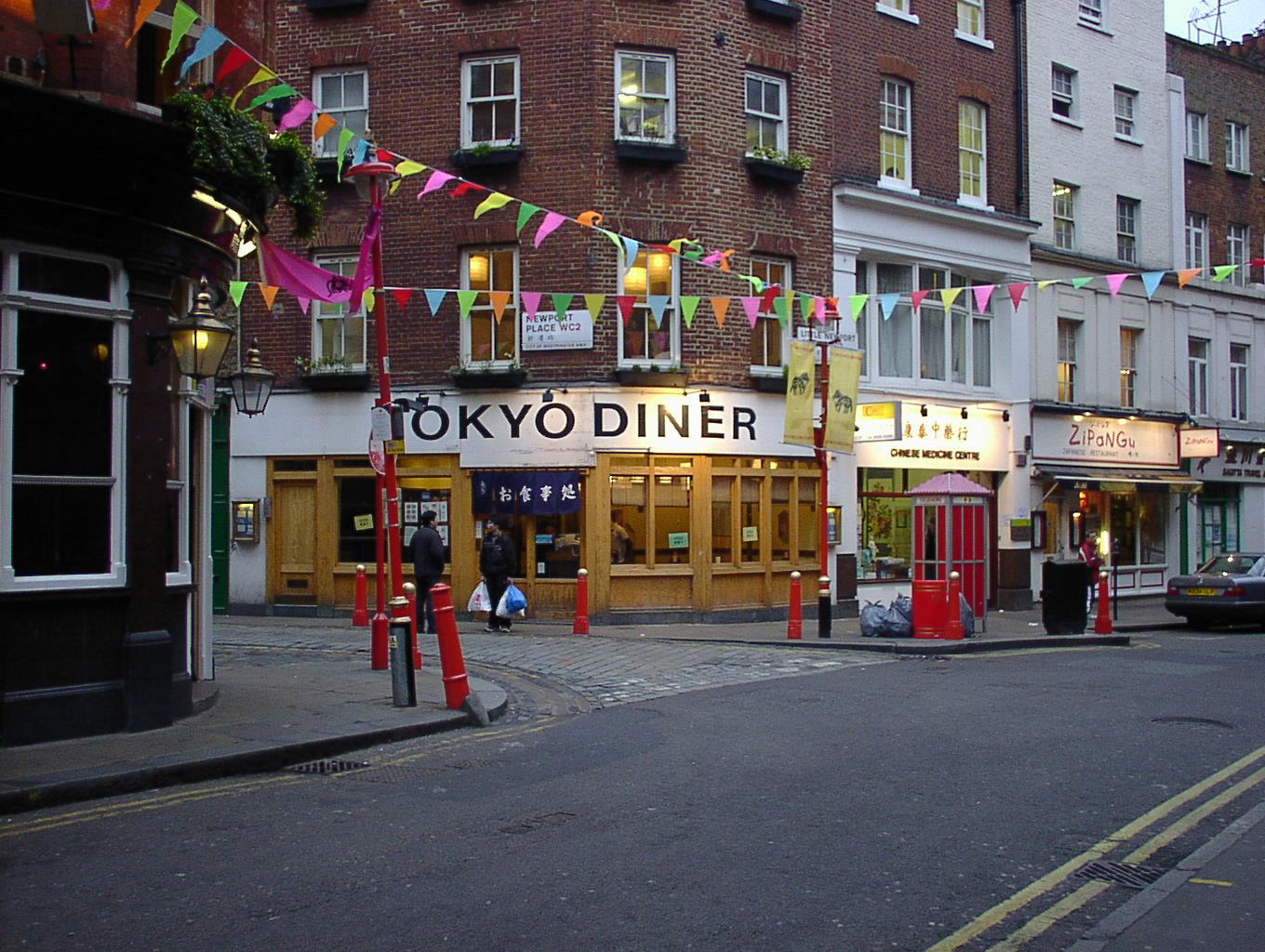
Chinatown's Japanese Outlier
London's Chinatown is among the more geographically concentrated restaurant districts in Europe, with Newport Place and Gerrard Street functioning as a dense corridor of Cantonese, Szechuan, and pan-Chinese cooking. Against that backdrop, Tokyo Diner, open on Newport Place since 1992, represents an anomaly: a Japanese canteen that has persisted for more than three decades in a neighbourhood where the competitive pressure runs almost entirely in one direction. Its longevity is itself a data point worth reading. In a district where turnover is high and margins are thin, a Japanese operation surviving on canteen economics for over thirty years signals something about the regularity of its custom and the clarity of its offer.
The broader context matters here. Japanese food in London has split into two largely separate tiers over the past decade. At one end sit the high-spend omakase and kaiseki formats, counters charging £150 to £300 per head, sometimes with allocation-style booking systems that resemble fine wine rather than restaurant reservations. At the other end, a smaller cohort of canteen and set-menu operations has held ground by offering recognisable Japanese staples at accessible prices in central locations. Tokyo Diner belongs firmly to the second category, and has done so since before the premium tier existed in London in its current form. In that sense, it predates the bifurcation it now sits beneath.
The Canteen Format and What It Signals
The canteen model, fixed or short menus, fast table turns, affordable covers, has a specific logic in Japanese food culture. The teishoku tradition (a set meal with rice, miso, and a main component) is the direct antecedent of what casual Japanese restaurants in London serve as their core offer. Tokyo Diner draws on that tradition rather than the more theatrical formats that have attracted critical attention in recent years. There are no tasting menus, no elaborate beverage pairings, and no extended front-of-house ritual. The format is closer to the neighbourhood shokudo of Japanese cities than to the Mayfair omakase counter.
No-tipping policy is one of the venue's most documented characteristics and worth understanding in context. Japan has no tipping culture, and a number of Japanese-run or Japanese-inspired restaurants in London and New York have adopted the same convention as a statement of alignment with that hospitality philosophy. At the restaurant, it has been in place since opening, which places it among the earlier adopters of the practice in the UK. The policy does two things simultaneously: it clarifies the transaction for the customer and it positions the restaurant's pricing as genuinely all-in, rather than requiring the customer to mentally add 12.5 per cent to the bill.
Service and Collaboration Inside the Format
Editorial angle of team dynamic is particularly readable at a venue where front-of-house carries more weight than the kitchen's individual authorship. In high-concept restaurants, the CORE by Clare Smyth tier, or operations like The Ledbury, the chef is the clear protagonist and the service team exists to execute a singular culinary vision. At a canteen like Tokyo Diner, the dynamic is different: the food is largely standardised, the menu is not changing seasonally in ways that require staff to narrate it, and the relationship between the team and the guest is more functional. Speed, accuracy, and consistency are the service metrics that matter. That shift in priority is not a diminishment, it is a different model of hospitality, one where the front-of-house team's competence is measured against different criteria than at Sketch or Restaurant Gordon Ramsay.
Distinction is worth making because it clarifies how to read the experience. Guests arriving with expectations shaped by London's premium Japanese tier, or even by more mid-market operations, will find a pared-back interaction. That is intentional. The canteen format does not attempt to replicate the hospitality intensity of a full-service restaurant. It offers a different thing: reliable, unpretentious delivery of a familiar repertoire at a price that reflects the format rather than the postcode.
Newport Place in the Wider London Context
Newport Place sits at the northern edge of Chinatown proper, connecting Shaftesbury Avenue to Gerrard Street. It is walking distance from Leicester Square station, which makes it accessible from a wide catchment but also places it in one of London's highest-footfall tourist corridors. That location creates a particular type of restaurant clientele: a mix of regulars who know the venue well enough to bypass the surrounding noise and first-time visitors drawn in by proximity and price. Few restaurant addresses in London operate under quite the same dual pressure: serve the neighbourhood regular and the passing visitor simultaneously, at margins that leave no room for error.
London's premium dining tier has expanded considerably since the early 1990s, with Dinner by Heston Blumenthal and the broader growth of high-spend restaurant culture reshaping expectations at the summit of the market. The UK's starred dining scene extends well beyond the capital, Waterside Inn in Bray, Le Manoir aux Quat'Saisons in Oxford, L'Enclume in Cartmel, Moor Hall in Aughton, Gidleigh Park in Chagford, Hand and Flowers in Marlow, hide and fox in Saltwood, Midsummer House in Cambridge, Opheem in Birmingham, and Restaurant Andrew Fairlie in Auchterarder all represent different expressions of high-investment British dining. None of that applies to the restaurant. It occupies the opposite end of the investment and aspiration spectrum, which is precisely the point. Its peer comparison is not with starred London restaurants but with the accessible Japanese canteen format found in cities like New York, where operations like Atomix and Le Bernardin represent the premium end of an equally bifurcated market.
For a fuller picture of London's dining options across price tiers, see our full London restaurants guide.
Know Before You Go
- Address: 2 Newport Place, London WC2H 7JP
- Nearest station: Leicester Square (Northern and Piccadilly lines), approximately 3 minutes on foot
- Tipping policy: No tips accepted, pricing is all-in
- Format: Canteen-style Japanese; set meals and à la carte staples
- Booking: Walk-ins accommodated; no complex reservation system reported
- Price tier: Accessible; among the lower-priced central London Japanese options
Fast Comparison
Comparable venues nearby, for context on price, style, and recognition.
| Venue | Cuisine | Price | Notes |
|---|---|---|---|
| Tokyo DinerThis venue — the venue you are viewing | Authentic Japanese Home-Style | $$ | Not listed |
| wagamama covent garden | Japanese-inspired Asian Fusion | $$ | Covent Garden |
| Sushi Bar Makoto | Fresh Sushi Bar | $$ | Chiswick |
| wagamama great marlborough street | Japanese Ramen Noodle Bar | $$ | Soho |
| Cafe Japan | Authentic Japanese Sushi | $$ | Golders Green |
| Sushi Masa Belsize Park | Japanese Omakase Sushi | $$$ | Belsize Park |
Continue exploring
More in London
Restaurants in London
Browse all →
Bars in London
Browse all →
Hotels in London
Browse all →



At a Glance
- Minimalist
- Well Known
- Cozy
- Casual Hangout
- Late Night
- Standalone
- Sake Program
Current opening hours
- Monday
- Closed
- Tuesday
- 12–11 PM
- Wednesday
- 12–11 PM
- Thursday
- 12–11 PM
- Friday
- 12–11:30 PM
- Saturday
- 12–11:30 PM
- Sunday
- 12–11 PM
Hours can change for holidays and private events. Last verified .
Blonde minimalism with warm wood tables, chairs, cute trinkets on shelves, and golden glow from paper and wood lampshades creating a calm atmosphere.