Sushi Masa Belsize Park
Sushi Masa on Haverstock Hill occupies a quietly established position in north London's dining scene, drawing a loyal neighbourhood following that returns for precisely the kind of focused Japanese cooking that rarely surfaces this far from the West End. The address at Belsize Park places it outside the central London omakase circuit, making it one of the more considered alternatives for residents who prefer proximity over prestige-postcode theatrics.
Pearl is the En Primeur Club membership app — saves, bookings, and concierge access live there. Same editors, same standards.
- Address
- 91 Haverstock Hill, London NW3 4RL, United Kingdom
- Phone
- +442077228999
- Website
- opentable.com
- Directions
- Get directions
 Saves & bookings on Pearl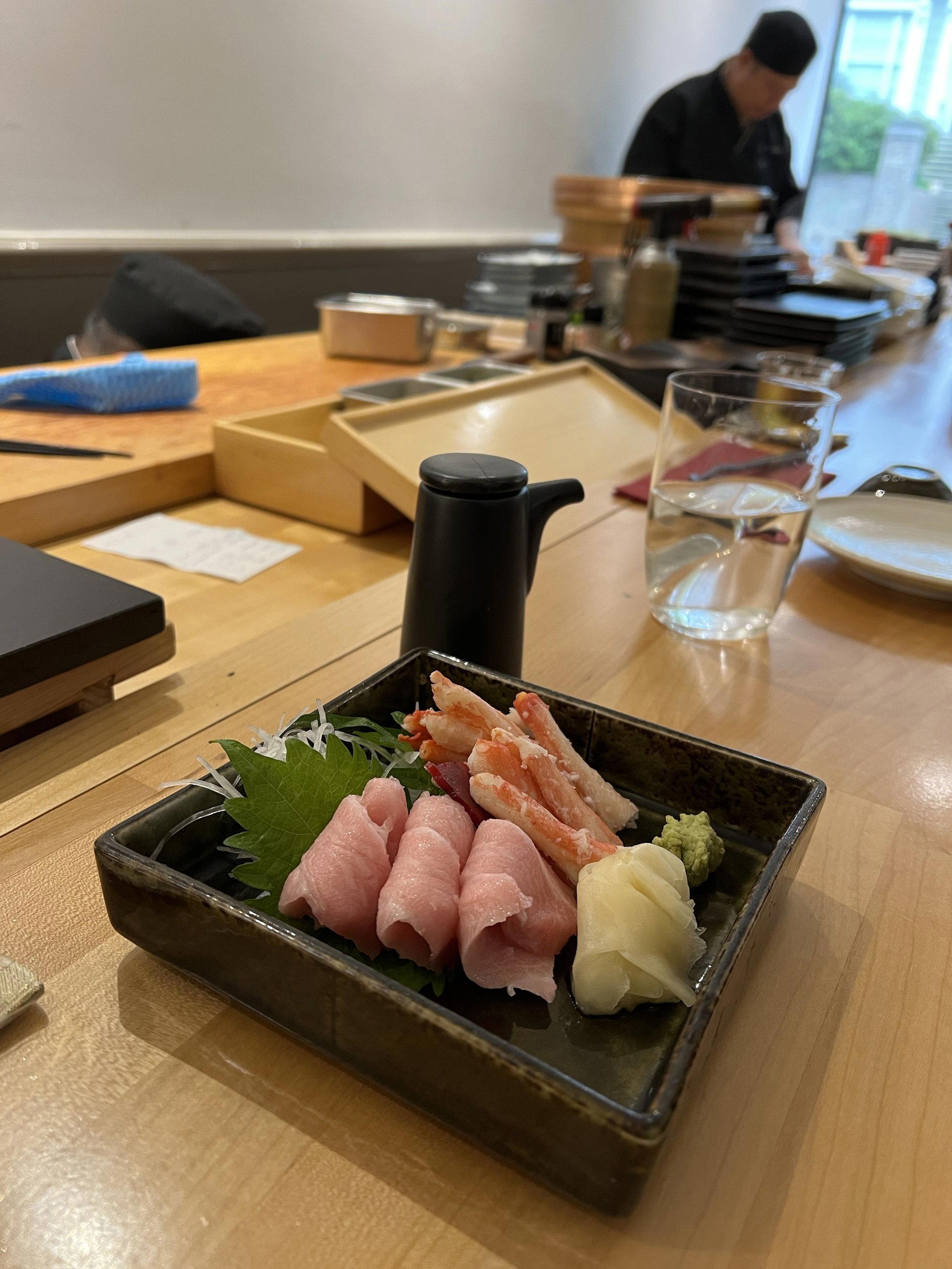
North London and the Case for Japanese Cooking Away from the Centre
London's premium Japanese dining has long clustered in Mayfair, Knightsbridge, and the City, where the economics of high-turnover lunch trade and corporate expense accounts sustain the cost of imported fish and specialist preparation. The further you travel from those postcodes, the thinner the serious Japanese offer tends to become. Belsize Park sits in that gap: a prosperous, well-travelled neighbourhood with the appetite for precise cooking but historically underserved by the kind of focused sushi operation it warrants. Sushi Masa, at 91 Haverstock Hill, has filled that gap long enough to accumulate the thing that no marketing spend can manufacture, a returning clientele who have made it part of their domestic rhythm.
That regulars' economy matters more in neighbourhood Japanese restaurants than in almost any other format. Omakase-style cooking, or even simpler counter sushi, depends on a cook-to-diner relationship that develops over visits. The customer who arrives every few weeks, who has preferences known without asking, who accepts the chef's judgement on which fish is running well this week, that diner gets a materially different experience from the first-timer. It is a dynamic that London's central Japanese counters aspire to but rarely achieve at scale. Away from the theatre district, it becomes more possible.
The Neighbourhood's Dining Character
Belsize Park and the Haverstock Hill corridor have a dining character shaped by their resident profile: long-term north Londoners, international families, professionals who entertain at home as readily as in restaurants. The strip supports independent operators more reliably than parts of the city where landlord economics favour chains. That independence matters for a Japanese kitchen, where the sourcing relationships and daily purchasing decisions that determine quality cannot be delegated to a central procurement team. Restaurants in this part of NW3 tend to earn loyalty through consistency over years rather than through opening-week press attention, which is a harder and more durable way to build a reputation.
For context on what London's highest-tier restaurant scene looks like, the West End and Chelsea address the comparison set: CORE by Clare Smyth, Restaurant Gordon Ramsay, Sketch, The Lecture Room and Library, The Ledbury, and Dinner by Heston Blumenthal all operate at the formal, destination-dining end of the spectrum. Sushi Masa occupies a different register entirely: neighbourhood scale, without the ceremony or pricing architecture of that tier, serving a local population that has made a deliberate choice to eat well close to home.
What Regulars Return For
The regulars' perspective on a Japanese restaurant tends to orbit a few consistent anchors. Fish quality is the first: serious returning diners know what properly conditioned tuna should feel like against the palate, and they will notice within a bite whether standards have shifted. The second anchor is rice, which is where many London sushi operations, including some expensive ones, lose the argument. Sushi rice at the right temperature, seasoned with appropriate precision, is a technical discipline that rewards repetition and penalises inattention. A regular knows, over visits, whether the kitchen holds that standard.
The third anchor, in any neighbourhood Japanese restaurant that has earned loyalty, is the unwritten menu: the preparation that does not appear on the printed list but materialises for a familiar face who asks, or who simply allows the cook to decide. This is the dimension of Japanese counter dining that most casual visitors never access, and it is the primary reason the format rewards return visits over one-off bookings. For residents within walking distance of Haverstock Hill, Sushi Masa's position makes that accumulated familiarity practically achievable in a way that a Mayfair counter simply is not.
Placing Sushi Masa in the Broader Japanese Dining Picture
British fine dining at its most formal plays out across the country in settings as varied as Waterside Inn in Bray, Le Manoir aux Quat'Saisons in Oxford, L'Enclume in Cartmel, Moor Hall in Aughton, Gidleigh Park in Chagford, Hand and Flowers in Marlow, hide and fox in Saltwood, Midsummer House in Cambridge, Opheem in Birmingham, and Restaurant Andrew Fairlie in Auchterarder. None of those operate in the Japanese tradition, and the comparison is geographic rather than culinary. The point is simply that serious cooking distributed outside central London or outside capital cities does find its audience, and often builds a more durable one than the press-cycle-dependent openings that dominate restaurant coverage.
For the international reference point, serious omakase and Korean tasting counter operations in New York, such as Le Bernardin and Atomix, demonstrate how far counter-format Japanese and Asian cooking can extend when applied with rigour. London's equivalent tier is smaller, more Mayfair-concentrated, and more expensive relative to quality than New York's mid-tier. That compression at the leading makes neighbourhood operators like Sushi Masa more valuable to their local area than the headline count of the London restaurant scene might suggest.
Planning a Visit
Sushi Masa is at 91 Haverstock Hill, NW3 4RL, which places it on the main thoroughfare between Belsize Park and Chalk Farm, both served by the Northern Line. For visitors travelling specifically for the restaurant rather than for neighbourhood reasons, Belsize Park station is a short walk south. Haverstock Hill is a mixed residential and commercial strip where parking is constrained on weekday evenings; public transport is the practical choice.
Nearby-ish Comparables
Comparable venues nearby, for context on price, style, and recognition.
| Venue | Cuisine | Price | Notes |
|---|---|---|---|
| Sushi Masa Belsize ParkThis venue — the venue you are viewing | Japanese Omakase Sushi | $$$ | Not listed |
| Donabe | Modern Japanese Donabe | $$$ | South Bank |
| Titu | Modern Pan-Asian Gyoza Specialist | $$$ | Mayfair |
| Sticks'n'Sushi Greenwich | Japanese-Danish Fusion Sushi & Yakitori | $$$ | Greenwich |
| Shiro Sushi | Contemporary Japanese Sushi | $$$ | Broadgate |
| Jugemu | Authentic Japanese Izakaya & Sushi | $$$ | Soho |
Continue exploring
More in London
Restaurants in London
Browse all →
Bars in London
Browse all →
Hotels in London
Browse all →


At a Glance
- Elegant
- Sophisticated
- Intimate
- Date Night
- Special Occasion
- Sake Program
Current opening hours
- Monday
- Closed
- Tuesday
- 12–2:30 PM, 6–10 PM
- Wednesday
- 12–2:30 PM, 6–10 PM
- Thursday
- 12–2:30 PM, 6–10 PM
- Friday
- 12–2:30 PM, 6–10 PM
- Saturday
- 12–2:30 PM, 6–10 PM
- Sunday
- Closed
Hours can change for holidays and private events. Last verified .
Moderate noise level with welcoming atmosphere focused on fine sushi dining.