wagamama great marlborough street
Wagamama on Great Marlborough Street sits at the Carnaby end of Soho, where London's mid-century Japanese-inspired noodle format has become a neighbourhood staple. The chain pioneered the long communal bench and open kitchen in British casual dining, and this location remains one of its higher-traffic central London sites, serving ramen, donburi, and gyoza to a mixed crowd of shoppers, office workers, and tourists.
Pearl is the En Primeur Club membership app — saves, bookings, and concierge access live there. Same editors, same standards.
- Address
- 42 Great Marlborough St, Carnaby, London W1F 7JL, United Kingdom
- Phone
- +442031175555
- Website
- wagamama.com
- Directions
- Get directions
 Saves & bookings on Pearl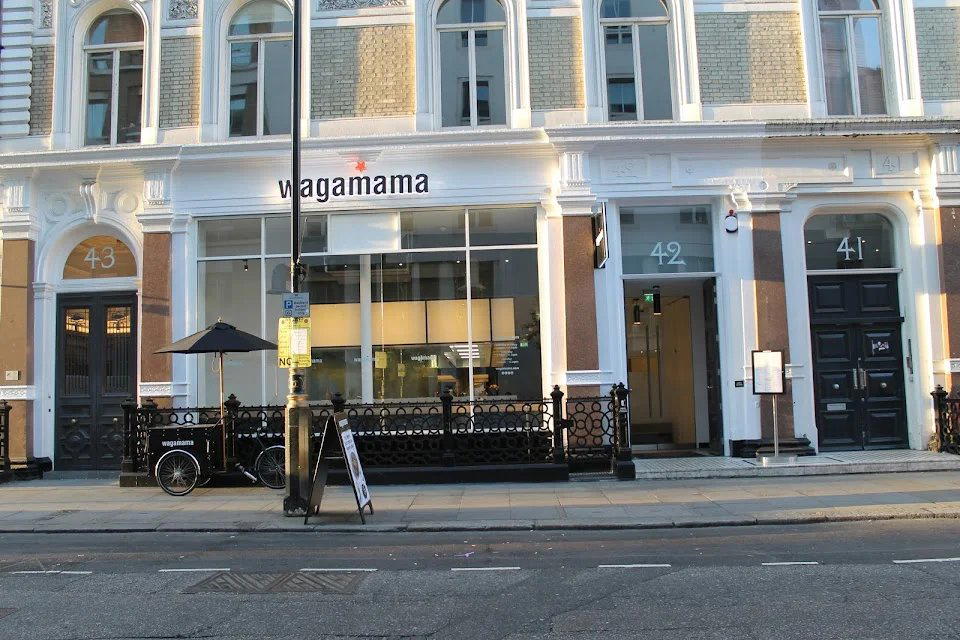
Carnaby's Noodle Bench: Wagamama in Context
Great Marlborough Street sits one block north of Carnaby Street, in a stretch of central London where retail density is high and the dining offer ranges from fast-casual to polished neighbourhood bistro. Wagamama's presence here is consistent with the chain's broader London footprint: high-footfall zones where the communal bench format and quick turnaround suit the rhythm of the street. Casual Japanese ramen noodle bar with, it fits the pace of Carnaby and the West End. The Soho and Carnaby area in particular has long attracted chains that can hold their own against the neighbourhood's more independent competition, and wagamama, launched in 1992 near the British Museum, is one of the few mid-price formats that has maintained relevance across three decades of London dining shifts.
The Format and What It Represents
Wagamama's founding premise was always about importing a particular reading of Japanese fast-dining culture, specifically the ramen-shop model, with its long wooden counters, communal seating, and canteen-style efficiency, and adapting it for a British audience that, in the early 1990s, had little familiarity with the format. That translation is now so embedded in British casual dining that it's easy to forget how novel it was at launch. The long bench, the open kitchen, the numbered dishes arriving as they're ready rather than together: these were all departures from the British restaurant norm at the time.
Across London's dining spectrum, wagamama occupies a distinct mid-tier position. At the upper end of the city's restaurant offer, venues like CORE by Clare Smyth, Restaurant Gordon Ramsay, Sketch, The Lecture Room and Library, The Ledbury, and Dinner by Heston Blumenthal operate with prix-fixe menus, tasting formats, and price points that place them in an entirely different competitive set. Wagamama competes in the accessible casual tier, where speed, consistency, and price accessibility are the primary metrics rather than culinary innovation or sourcing provenance.
Local Ingredients, Global Technique: Where Wagamama Fits the Frame
Imported method meeting local product is a useful lens through which to read wagamama's evolution. The original menu drew from Japanese ramen and gyoza conventions but was never a strict facsimile: the broth bases, the toppings, and over time the broader menu, have incorporated Western and South Asian influences in ways that reflect British multicultural eating habits rather than any single Asian tradition. Dishes across the menu draw on Korean, Chinese, Japanese, and Southeast Asian references, filtered through a kitchen model designed for high throughput and consistent replication across dozens of sites.
That hybrid approach is part of why wagamama became a format rather than just a restaurant. It's a comparable trajectory, at a different price point and ambition level, to what chefs like those behind Opheem in Birmingham or Atomix in New York City do with Korean and South Asian technique at the fine-dining tier: taking a culinary tradition that is not British or American by origin and building a coherent, accessible restaurant identity around it. The mechanism is different, but the underlying cultural logic, that diners want food rooted in non-Western technique, made accessible without being diluted, runs through casual and fine dining alike.
Internationally, a parallel model operates at the fine-dining end of the seafood and technique spectrum: Le Bernardin in New York City demonstrates how French classical technique applied to a specific product category can sustain a restaurant identity for decades. Wagamama's longevity in the British market reflects a similar discipline at a different price register: a clear product identity, executed consistently, that doesn't chase trends.
The Great Marlborough Street Location
This branch sits at 42 Great Marlborough Street, in the W1F postcode that covers the Carnaby district. The surrounding area draws a high volume of foot traffic from the Carnaby shopping zone to the south and the Oxford Street retail corridor to the north, which means this location sees a broad demographic: younger shoppers, international tourists navigating the West End, and office workers from the media and creative businesses concentrated around Soho. The immediate streetscape is commercial rather than residential, which shapes the tempo of the dining room: turnover is a priority, and the format is designed to deliver on that.
For visitors using this location as a base, the broader West End offers dining options across a wide range of tiers. Within the UK, comparable destinations for fine dining are worth noting for context: Waterside Inn in Bray, Le Manoir aux Quat'Saisons in Oxford, L'Enclume in Cartmel, Moor Hall in Aughton, Gidleigh Park in Chagford, Hand and Flowers in Marlow, hide and fox in Saltwood, Midsummer House in Cambridge, and Restaurant Andrew Fairlie in Auchterarder all represent the upper tier of British restaurant dining, at a significant remove in format and price from the Carnaby wagamama but relevant for trip planning across a longer UK stay.
Planning Your Visit
Wagamama operates as a walk-in-friendly format across its UK estate. Central London locations, particularly those in high-traffic zones like Carnaby, tend to see longer waits at peak times, and weekend lunches and post-work early evenings between 6pm and 8pm are typically the busiest windows. The communal bench format means solo diners and pairs are seated faster than larger groups. The menu spans ramen, donburi rice bowls, gyoza, and smaller plates, with options clearly flagged for plant-based diners, a category wagamama has expanded significantly over recent years in response to shifting demand across the mid-market casual dining sector.
Peers in This Market
Comparable venues nearby, for context on price, style, and recognition.
| Venue | Cuisine | Price | Notes |
|---|---|---|---|
| wagamama great marlborough streetThis venue — the venue you are viewing | Japanese Ramen Noodle Bar | $$ | Not listed |
| Sushi Bar Makoto | Fresh Sushi Bar | $$ | Chiswick |
| Kiki Restaurant | Authentic Japanese | $$ | Kentish Town |
| Suzu | Japanese Sushi | $$ | Brook Green |
| wagamama ealing | Japanese-inspired Pan-Asian Ramen and Noodles | $$ | Ealing Broadway |
| TEMAKI | Modern Japanese Handroll Bar | $$ | Brixton |
Continue exploring
More in London
Restaurants in London
Browse all →
Bars in London
Browse all →
Hotels in London
Browse all →



At a Glance
- Lively
- Modern
- Trendy
- Energetic
- Group Dining
- Casual Hangout
- Open Kitchen
- Sake Program
Current opening hours
- Monday
- 10 AM–10 PM
- Tuesday
- 10 AM–10 PM
- Wednesday
- 10 AM–10 PM
- Thursday
- 10 AM–11 PM
- Friday
- 10 AM–11:30 PM
- Saturday
- 10 AM–11:30 PM
- Sunday
- 10 AM–10 PM
Hours can change for holidays and private events. Last verified .
Modern and relaxed atmosphere with communal tables fostering a lively, energetic vibe.