Cafe Japan

Cafe Japan sits on Finchley Road in Golders Green, a North London neighbourhood with one of the city's most established Japanese communities outside the West End. The address alone signals something: this is Japanese food eaten by people for whom it is habitual rather than occasional. It occupies a different tier and register from the high-spend omakase rooms of Mayfair and the City.
Pearl is the En Primeur Club membership app — saves, bookings, and concierge access live there. Same editors, same standards.
- Address
- 626 Finchley Rd, London NW11 7RR, United Kingdom
- Phone
- +44 20 4529 4202
- Website
- atariya.co.uk
- Directions
- Get directions
 Saves & bookings on Pearl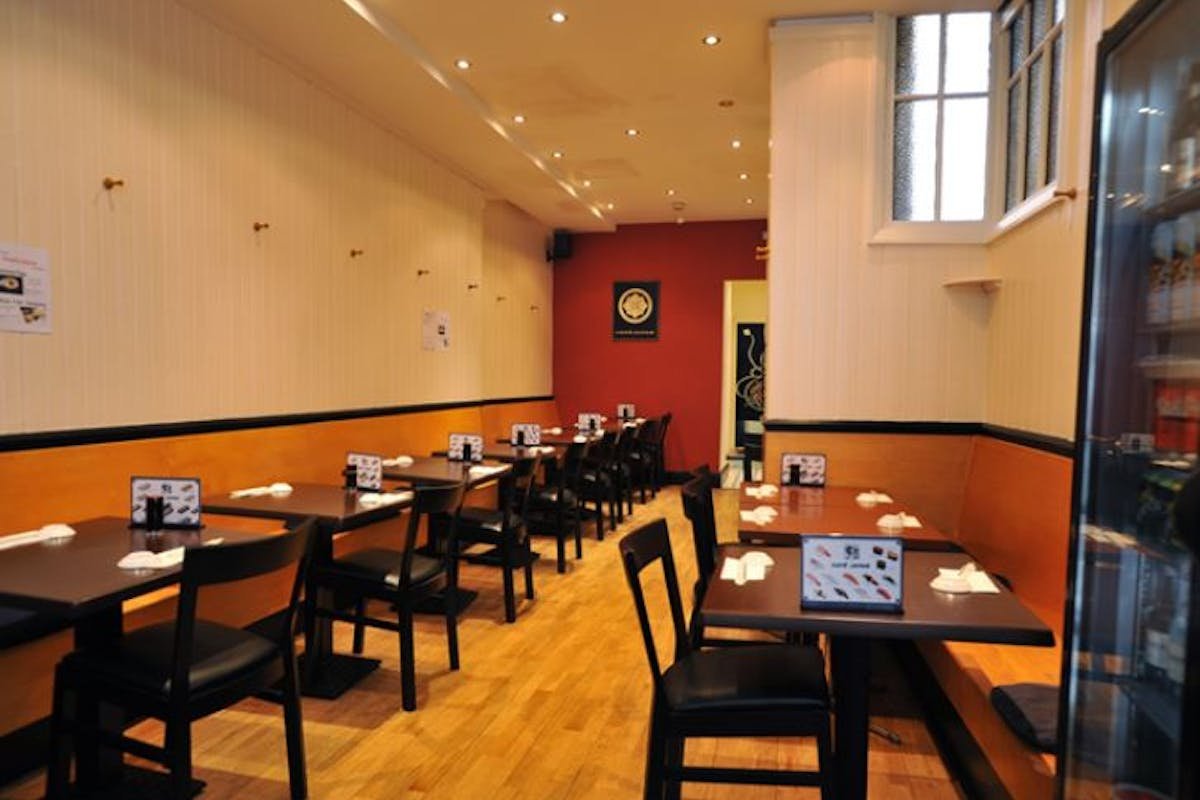
Finchley Road and the Geography of Everyday Japanese London
Cafe Japan is a Japanese restaurant in London, serving Authentic Japanese Sushi, with. There is a particular kind of credibility that attaches to restaurants in residential neighbourhoods rather than tourist corridors. Golders Green and the stretch of Finchley Road around NW11 have carried a significant Japanese population since the 1980s, when corporate relocations brought a wave of Japanese families to North London's leafier postcodes. The supermarkets, bakeries, and restaurants that grew up around them were not built for curious visitors; they were built for people who needed to eat well in a familiar register, regularly, without spending a fortune. Cafe Japan at 626 Finchley Road sits in that tradition.
The contrast with London's more publicised Japanese dining is sharp. The Michelin-starred omakase counters of the West End, and the kaiseki-influenced tasting menus that now occupy a similar price tier to CORE by Clare Smyth or Restaurant Gordon Ramsay, serve a different purpose entirely. Those rooms sell occasion dining, occasion pricing, and a degree of theatre calibrated to a certain type of evening. What Golders Green offers is the other end of the spectrum: Japanese food as a daily practice rather than a destination event.
That distinction matters when you are deciding where to eat. London's serious Japanese food does not all sit in W1 or EC2. Some of it sits on the Northern line.
The Neighbourhood as Context
The concentration of Japanese-owned and Japanese-operated businesses along this stretch of Finchley Road is meaningful in ways that restaurant reviews often understate. When a cuisine has a deep residential community behind it, the supply chain looks different. Japanese grocery stores in Golders Green stock ingredients that do not pass through the premium import chains that supply central London restaurants; the standard of everyday fish and produce available in the area is shaped by demand from people who know what it should look like. Restaurants operating in that environment are accountable to a different audience than a Soho newcomer pitching to the weekend brunch crowd.
This is a pattern visible in other cities. The ramen and soba houses of Düsseldorf's Immermannstrasse, the Japanese grocery ecosystem of the San Francisco Bay Area's East Bay, and the long-standing Japanese restaurant clusters of Paris's 1st and 9th arrondissements all share a similar logic: proximity to a residential Japanese community tends to lift the baseline, even at the casual end of the market. Golders Green's version of that pattern is modest in scale compared to those examples, but the principle holds.
Where Cafe Japan Sits in London's Japanese Dining Spectrum
London's Japanese dining now spans a range that would have been unrecognisable two decades ago. At the leading, omakase counters and kaiseki-influenced tasting menus compete on similar terms to the city's leading Modern European rooms, with price points and booking windows to match. At the other end, the supermarket sushi chains and high-street conveyor-belt operations have expanded considerably. The interesting middle ground is occupied by neighbourhood restaurants serving orthodox Japanese cooking, competently executed, at prices that allow regular return visits.
The restaurant occupies territory in that middle register, in a postcode where the customer base has opinions and reference points. That is not a small thing. Restaurants serving informed, repeat customers in a cuisine's own community tend to hold technical standards that are harder to maintain in purely tourist-facing locations. It is worth comparing this to how Korean food in New Malden, or Vietnamese food in Hackney's Kingsland Road cluster, operates at a different register than the same cuisines served in more central, more tourist-accessible addresses.
For context on the high end of London's Japanese dining, the market now also includes serious Korean-inflected tasting room formats: Atomix in New York City represents the global comparable set for that style, while in London, the comparable ambition sits in a handful of multi-course rooms in Mayfair and the City. The restaurant is not in that conversation, nor does it need to be.
London's Wider Dining Frame
For travellers building a London food itinerary, the city's geography rewards deliberate choices about which tier to visit and when. The Michelin-dense west and central London rooms, from The Ledbury in Notting Hill to Sketch, The Lecture Room and Library in Mayfair, serve one function. Dinner by Heston Blumenthal in Knightsbridge serves another. The neighbourhood restaurants of North London, including the Japanese-operated addresses of Golders Green, serve a third. Understanding the distinction prevents the common visitor error of treating price and occasion as the only reliable proxies for quality.
Beyond London, the UK's most acclaimed destination restaurants, including The Fat Duck in Bray, L'Enclume in Cartmel, Moor Hall in Aughton, Gidleigh Park in Chagford, Hand and Flowers in Marlow, and hide and fox in Saltwood, represent a different day-trip or weekend calculus. And on the global stage, rooms like Le Bernardin in New York City set the international reference point for serious fish cookery against which London's Japanese restaurants are sometimes, if loosely, measured.
For a broader survey of what the capital offers across categories, see our full London restaurants guide, our full London hotels guide, our full London bars guide, our full London wineries guide, and our full London experiences guide.
Planning Your Visit
Golders Green is served directly by the Northern line (Golders Green station), making the journey from central London direct: roughly 20 minutes from King's Cross or Euston. The neighbourhood is leading visited during the week or at quieter weekend times if you want to explore the surrounding Japanese grocery and bakery cluster alongside the restaurant.
City Peers
Comparable venues nearby, for context on price, style, and recognition.
| Venue | Cuisine | Price | Notes |
|---|---|---|---|
| Cafe JapanThis venue — the venue you are viewing | Authentic Japanese Sushi | $$ | Not listed |
| Sanjugo Shoreditch | Japanese Izakaya | $$ | Shoreditch |
| Konnichiwa Japanese Cuisine | Authentic Japanese Sushi | $$ | Hornsey |
| Kiku | Authentic Japanese Sushi & Kaiseki | $$ | Mayfair |
| Kuyamoto | Casual Japanese Sushi | $$ | Acton Green |
| Sushi Say | Traditional Japanese Sushi | $$$ | Willesden Green |
Recognition history
Dated appearances from independent guides and award organizations, with the underlying list record or original source where available.
Opinionated About Dining Top Restaurants in Europe Recommended
Opinionated About Dining
Continue exploring
More in London
Restaurants in London
Browse all →
Bars in London
Browse all →
Hotels in London
Browse all →



At a Glance
- Cozy
- Modern
- Casual Hangout
- Family
- Open Kitchen
- Sake Program
Current opening hours
- Monday
- Closed
- Tuesday
- Closed
- Wednesday
- 6–10 PM
- Thursday
- 6–10 PM
- Friday
- 12–2 PM, 6–10 PM
- Saturday
- 12–2 PM, 6–10 PM
- Sunday
- 12–2 PM, 6–10 PM
Hours can change for holidays and private events. Last verified .
Functional and simple interior with a no-frills cafe atmosphere, featuring an open sushi preparation area.