
Black Pearl 1 Diamond
Our verdict
虎峰 sits in Tokyo’s high-scrutiny dining culture with a Black Pearl Restaurant Guide 2026 one-diamond citation, a useful signal in a city where recognition often separates serious counters from ordinary destination dining. With public detail kept spare, the smarter read is contextual: judge it as part of Tokyo’s precision-led restaurant scene, where pacing, room discipline, and team coordination matter as much as the plate.

Pearl is the En Primeur Club membership app, where members save venues, book tables and use the concierge.
The menu
What to order
- Abalone and shark fin dishes
- Crispy chicken
- Shaoxing wine–marinated crab
- Bang bang chicken noodle
- Vertical stripe shrimp with Chinese rice wine
Tokyo dining often announces itself quietly: a narrow frontage, a controlled room, a service rhythm that asks guests to pay attention before anything is explained. 虎峰 belongs to that register. The public-facing details are lean, but its Black Pearl 2026 one-diamond recognition places it inside a serious tier of restaurants where the room, kitchen, and front-of-house have to work as one system rather than as separate departments.
That matters in Tokyo more than almost anywhere. The city rewards precision, but not only in cooking. The handoff from kitchen to dining room, the timing between courses, the way staff manage silence, explanation, and pace: these are not decorative parts of the meal. They are the meal’s structure. In a dining culture crowded with specialist counters, compact rooms, and tasting-led formats, a restaurant needs coherence before personality. Recognition from Black Pearl suggests 虎峰 has cleared that first and more difficult test.
Tokyo precision depends on the whole room, not only the kitchen
The strongest Tokyo restaurants tend to feel less like showcases than controlled ensembles. A kitchen may define the culinary direction, but the experience rises or falls on the supporting cast: the person reading the table, the staff member placing the next course at the right moment, the beverage lead adjusting tempo without interrupting it. That team dynamic is often what separates an ambitious dinner from a polished one.
For readers used to larger dining rooms in other global restaurant cities, Tokyo can feel compressed. Fewer visible moving parts do not mean less complexity. Smaller rooms put pressure on every gesture. A late plate, an overlong explanation, or a mistimed pour lands harder when the guest can see the full operating rhythm. The one-diamond citation is therefore useful not as decoration, but as evidence that 虎峰 is being assessed among restaurants where consistency and coordination carry real weight.
This is not a page where the meal can be reduced to a founder’s narrative or a single personality. The more relevant question is how the team presents the experience in the room. Tokyo’s serious dining culture has long valued craft over performance, and the better meals tend to make labour visible only through ease: dishes arrive with no rush, explanations stay concise, and the room never feels unmanaged.
Recognition in Tokyo means little without restraint
Awards in Tokyo operate in a crowded field. The city has an unusually deep restaurant culture, and recognition has to be interpreted against that density. A Black Pearl one-diamond listing does not tell the whole story, but it does narrow the field. It indicates that the restaurant has been placed above the level of casual recommendation and into a more selective editorial category, the kind of signal that matters for travellers deciding where to spend a limited number of dinners.
That is especially useful when cuisine labels, pricing, and format are not part of the public brief. Rather than forcing the restaurant into a neat category, the better approach is to read the available signal alongside Tokyo’s broader dining habits. The city values seasonality, product discipline, compact service formats, and technical repetition. It also punishes excess. Restaurants that over-explain themselves often age badly here; rooms that understand restraint tend to travel better across language and culture.
For planning a Tokyo food itinerary, 虎峰 sits in the serious-dinner column rather than the casual grazing column. Build the day accordingly: lighter lunch, fewer pre-dinner stops, and enough time to arrive composed. Tokyo rewards guests who treat meals as scheduled appointments rather than flexible suggestions. For a wider spread of options, our full Tokyo restaurants guide gives the broader city context, while our full Tokyo bars guide is the cleaner place to plan a drink before or after dinner.
How to place it inside a wider Tokyo trip
The sharper Tokyo itinerary balances formal dining with less formal eating, because the city’s range is part of the point. A dinner at 虎峰 makes more sense when set against everyday specialists and category-specific rooms rather than stacked beside another high-pressure meal. Around the city, other dining rooms and casual specialists show how specific Tokyo can become even at different levels of formality, from compact counters to focused formats built around a single point of craft.
The same logic applies beyond restaurants. Tokyo works better when dining is planned with sleep, transport, and evening pacing in mind. The city’s hotel choices help anchor the broader trip decision, while experience planning is useful for building a day that does not exhaust the palate before dinner. Beverage planning can sit beside the restaurant schedule when travellers want the evening to feel deliberate rather than improvised.
For readers extending the trip through Japan, the useful comparison is not between named peers in the same category, but between how different cities express specialisation. Other dining rooms across the country point to a national dining culture built from narrow, exact categories, with restaurants often defined by focus rather than scale. Even beyond Japan, Japanese-influenced formats can travel, adapt, and become easier to read after time spent in Tokyo.
The editorial case for 虎峰 is therefore not built on spectacle. It rests on a simpler proposition: in Tokyo, a recognised restaurant with spare public messaging should be judged by discipline, not noise. The Black Pearl one-diamond citation gives the trust signal; the city supplies the pressure test. For travellers choosing carefully, that combination is enough to make it a serious candidate for a focused Tokyo dining night.
How It Compares
Comparable venues nearby, for context on price, style, and recognition.
| Venue | Cuisine | Price | Awards | Notes |
|---|---|---|---|---|
| 虎峰This venue (the venue you are viewing) | Modern Cantonese chef’s counter | $200–300 | Black Pearl 1 Diamond | Not listed |
| の弥七 | Chinese-Japanese Fusion Omakase | $200–300 | Michelin Plate · Tabelog 100 #13 | Shinjuku |
| 旬華なか村 | Modern Cantonese Kappo | $100–150 | Tabelog 100 #50 | Chūō |
| Ino Cantonese Nihonbashi Takase | Innovative Cantonese with Japanese ingredients | $100–150 | Michelin Plate · Tabelog 100 #20 | Chūō |
| Xao Xiong Fan Dian | Refined Old Sichuan Cuisine | $200–300 | 1 Michelin Star | Minato |
| Maison de Yuron | Nouvelle Chinoise | $100–150 | Tabelog 100 #2 | Minato |
Recognition history
Dated appearances from independent guides and award organizations, with the underlying list record or original source where available.
Black Pearl 1 Diamond
Black Pearl
Continue exploring
More in Tokyo
Restaurants in Tokyo
All restaurants in Tokyo →


Bars in Tokyo
All bars in Tokyo →





Details
- Elegant
- Modern
- Trendy
- Intimate
- Sophisticated
- Date Night
- Business Dinner
- Special Occasion
- Celebration
- Solo
- After Work
- Chefs Counter
- Open Kitchen
- Standalone
- Design Destination
- Extensive Wine List
- Sommelier Led
- Craft Cocktails
- Local Sourcing
- Sustainable Seafood
- Tasting Menu
- Omakase
- Counter Dining
- Small Plates
- Wine
- Chinese Rice Wine And Shaoxing Wine
- Cocktails
- Tea Pairings
- Allergy Accommodating
- Pescatarian Friendly
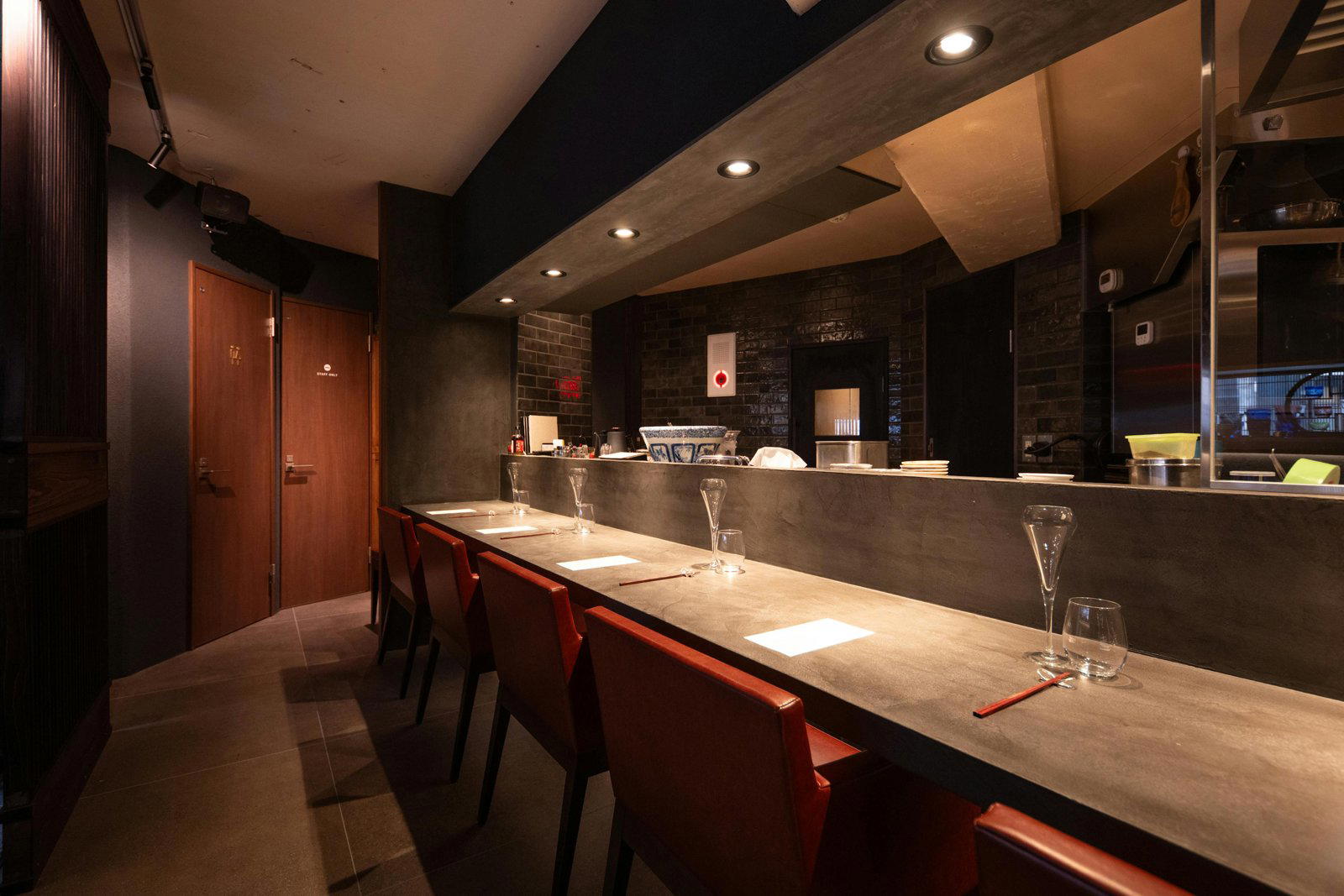
A hidden, counter-only space in a Roppongi back street with a stylish, calm atmosphere; guests sit around a U-shaped counter facing a theatrical open kitchen where flames and wok sounds provide energy while service remains polished and intimate.