Theary Cambodian Foods
Our verdict
Theary Cambodian Foods brings the flavors of Khmer cooking to Federal Way's South King County dining corridor at 2012 S 320th St. In a region where Southeast Asian restaurants skew heavily toward Vietnamese and Thai, this spot occupies a distinct niche, serving the braised, fermented, and herb-driven dishes that define Cambodia's culinary identity. It is a reliable address for the community and an accessible entry point for first-timers.

Pearl is the En Primeur Club membership app — saves, bookings, and concierge access live there. Same editors, same standards.
- Address
- 2012 S 320th St Suite C, Federal Way, WA 98003
- Phone
- (206) 201-9995
- Hours
- Mon ClosedTue–Fri 11 AM–7 PMSat 11 AM–8 PMSun 11 AM–6 PM
- Website
- thearytestsite.square.site
- Directions
- Get directions
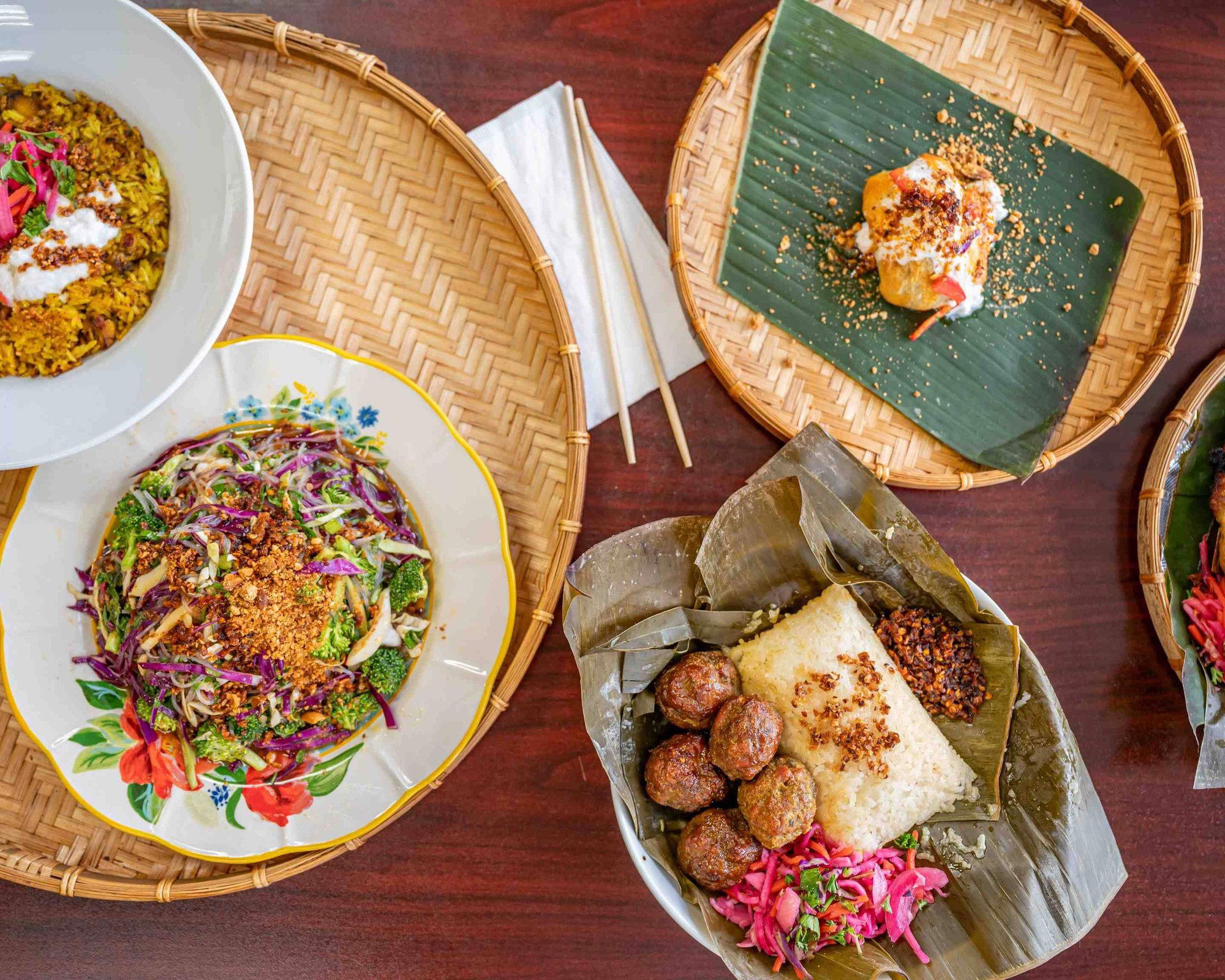
The menu
What to order
- Stuffed chicken wings
- Beef with prahok
- Coconut chicken
- Combo plate
Khmer Cooking in the Pacific Northwest
Southeast Asian restaurants in the greater Seattle corridor follow a familiar pattern: Vietnamese pho shops and Thai curry houses dominate, with Filipino and Lao kitchens filling the gaps in between. Cambodian cooking, by contrast, remains underrepresented across Washington State, which makes Federal Way's concentration of Khmer-owned restaurants a minor phenomenon worth paying attention to. The city's South King County location, historically a resettlement destination for Southeast Asian refugees after the 1970s, created the demographic conditions for an authentic Cambodian food culture to take root, and that foundation is still visible today.
Theary Cambodian Foods, located at 2012 S 320th St Suite C in Federal Way, sits squarely within that tradition. The address is a strip-mall suite, the kind of low-overhead, high-output format that defines how diaspora cooking most reliably reaches a neighborhood. There is no valet, no designed-in theatrics. What the format signals is a kitchen-forward operation where the cooking itself is the point — consistent with how Cambodian family restaurants have operated in American cities since the 1980s.
What Makes Cambodian Cuisine Distinct
Understanding what Cambodian cooking actually is helps place a restaurant like Theary in context, particularly for diners who approach Southeast Asian food through the more familiar grids of Thai or Vietnamese cuisine. Khmer cooking shares ingredients — lemongrass, galangal, kaffir lime, fish sauce, but assembles them differently. Where Thai food often pushes toward heat and brightness, and Vietnamese toward lightness and acidity, Cambodian cuisine tends toward deeper, more fermented base flavors. Prahok, the fermented fish paste that functions as a culinary backbone across the country, gives many dishes an earthiness with no direct equivalent in neighboring food traditions.
Samlor, the family of Cambodian soups and stews, reflects this tendency toward complexity built through slow cooking and layered aromatics rather than quick-balance techniques. Amok, the steamed coconut-and-turmeric fish preparation traditionally cooked in banana leaf, is among the dishes that have attracted outside culinary attention as Khmer food has gained more international visibility, including coverage in major food publications and growing representation on U.S. coasts in the years following the 2010s. Federal Way's Cambodian restaurants predate that wave of interest by decades, having served the local community long before Khmer food became a subject of food-media curiosity.
Federal Way's Place in This Story
Federal Way is not a dining destination in the way that Capitol Hill or Ballard are for Seattle visitors. It functions differently: as a working-city food corridor where community restaurants serve residents rather than trend-chasers. That positioning is precisely what makes its Southeast Asian dining scene legible on its own terms. The restaurants here are not performing authenticity for an outside audience; they are producing food for people who grew up eating it. That distinction matters when assessing what you are likely to find at a place like Theary Cambodian Foods.
For diners making the trip from Seattle proper, or connecting through Federal Way while traveling the I-5 corridor, the neighborhood sits roughly 25 miles south of downtown Seattle. The surrounding stretch of S 320th St includes other independent dining options, including Mama Stortini's for Italian-American and Tokyo Japanese Steak House for teppanyaki-format Japanese, but Theary occupies a category with no direct local competitor in the immediate vicinity. Our full Federal Way restaurants guide maps the broader dining picture across the city's main corridors.
The Format and Who It Suits
Strip-mall Cambodian restaurants in the U.S. typically run on a short-menu, high-turnover model that keeps prices accessible and portions generous. This is categorically different from the tasting-menu format you find at places like Le Bernardin in New York or Alinea in Chicago, or the produce-sourcing-led narratives of Single Thread Farm in Healdsburg or Blue Hill at Stone Barns in Tarrytown. Those restaurants exist at the opposite end of the hospitality spectrum, where the dining room itself is part of an extended composition. Theary operates in a tradition where the value proposition is direct: a specific cuisine, cooked for a community, served without ceremony.
That model works well for family meals. Groups can typically order across multiple dishes, which is how Cambodian food is meant to be eaten, shared plates arriving with rice, each dish contributing a different flavor register to the table. The format accommodates varied appetites and does not require a fixed tasting sequence, making it more flexible than the prix-fixe structures at restaurants like Lazy Bear in San Francisco or The French Laundry in Napa. For diners with children or mixed food preferences in the group, a shared-plate Cambodian spread tends to be more accommodating than either format.
In the current U.S. dining environment, where Korean tasting menus at places like Atomix and chef-driven Peruvian at spots like Causa in Washington D.C. have raised visibility for previously underrepresented cuisines, Cambodian food occupies an interesting position: it has the culinary depth to support that kind of attention, but most of its American presence remains in community-format restaurants rather than fine-dining iterations.
Planning Your Visit
Theary Cambodian Foods is located at 2012 S 320th St Suite C, Federal Way, WA 98003. The strip-mall setting means street parking is generally available directly in front of the suite, with no validation or fee structures to account for. No booking information, hours, or phone contact is confirmed in available data, so visiting during standard lunch and dinner windows or checking current listings before traveling is advisable. Dress code is informal; the format does not require or suggest otherwise.
Frequently asked questions
Does Theary Cambodian Foods work for a family meal?
Strip-mall Cambodian restaurants in Federal Way's South King County corridor are built around communal, family-style eating — shared plates, accessible price points, and generous portions are the standard format. Theary sits at 2012 S 320th St Suite C, a location typical of the working-city dining strip where local families form the core customer base. The setting is practical rather than formal, which suits multi-generational groups and children without the constraints of a reservation-driven dining room.
What is the atmosphere like at Theary Cambodian Foods?
The restaurant occupies a suite within a strip-mall on S 320th St in Federal Way — the dominant format for community-anchored Southeast Asian dining in South King County. Expect a no-frills interior where the focus is on the food rather than the decor, consistent with the Cambodian and Khmer immigrant restaurant tradition in the U.S. Pacific Northwest. It functions as a neighbourhood spot for the Federal Way community rather than a destination dining room.
Is Theary Cambodian Foods one of the few places in Washington State serving authentic Khmer cuisine?
Cambodian restaurants are significantly underrepresented across Washington State compared to Vietnamese and Thai options, making Federal Way's cluster of Khmer establishments — including Theary at 2012 S 320th St — part of a rare concentration in the Pacific Northwest. Federal Way has one of the larger Cambodian-American communities in the state, which sustains the kind of cooking aimed at Khmer diners rather than adapted for a broader audience. That community orientation is a meaningful distinction from generalist Southeast Asian menus elsewhere in the Seattle corridor.
What do people recommend at Theary Cambodian Foods?
Cambodian restaurant menus in the U.S. typically feature amok (coconut curry steamed in banana leaf), lok lak (stir-fried beef with lime dipping sauce), and rice-based plates built around prahok fermented fish paste — dishes absent from the more familiar Thai and Vietnamese menus that dominate Federal Way's dining strip. Visiting and asking staff directly about current preparations is the most reliable approach.
Budget Reality Check
Comparable venues nearby, for context on price, style, and recognition.
| Venue | Cuisine | Price | Notes |
|---|---|---|---|
| Theary Cambodian FoodsThis venue — the venue you are viewing | Authentic Cambodian Khmer | $20–30 | Not listed |
| Tokyo Japanese Steak House | Teppanyaki Japanese Steakhouse | $30–50 | Not listed |
| Mama Stortini's - Federal Way | Pacific Northwest Italian | $20–30 | The Commons at Federal Way, Pacific Northwest Italian |
Continue exploring
More in Federal Way
Restaurants in Federal Way
Browse all →
Bars in Federal Way
Browse all →
Hotels in Federal Way
Browse all →


Details
- Cozy
- Family
- Casual Hangout
- Group Dining
- A La Carte
Current opening hours
- Monday
- Closed
- Tuesday
- 11 AM–7 PM
- Wednesday
- 11 AM–7 PM
- Thursday
- 11 AM–7 PM
- Friday
- 11 AM–7 PM
- Saturday
- 11 AM–8 PM
- Sunday
- 11 AM–6 PM
Hours can change for holidays and private events. Last verified .
Bright, airy open layout with traditional Cambodian decor including statues, creating a welcoming homey atmosphere.