The Q
The Q occupies a prominent address on Washington Street in Boston's Theatre District, placing it within a corridor of the city's more ambitious dining.
Pearl is the En Primeur Club membership app — saves, bookings, and concierge access live there. Same editors, same standards.
- Address
- 660 Washington St, Boston, MA 02111
- Phone
- +18573503968
- Website
- thequsa.com
- Directions
- Get directions
 Saves & bookings on Pearl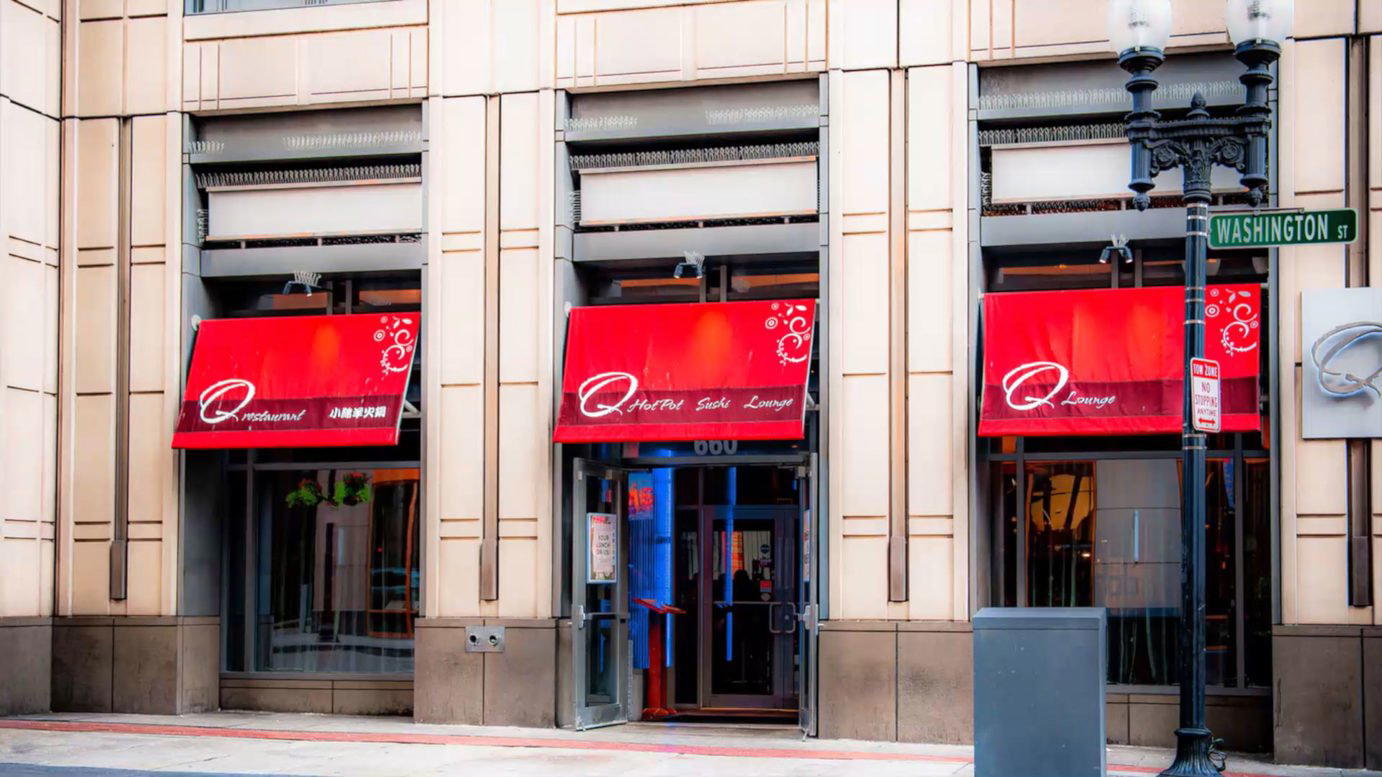
Washington Street and the Dining Corridor It Anchors
Boston's Theatre District has spent the better part of a decade resolving an identity problem common to entertainment-adjacent neighbourhoods: whether to serve the pre-show crowd or build a dining destination in its own right. The stretch of Washington Street running south from Downtown Crossing toward the South End now contains enough serious cooking to suggest the latter is winning. The Q, at 660 Washington St, sits within this corridor, in a part of the city where the competition includes operators with clear sourcing commitments and defined culinary points of view.
Understanding what distinguishes a restaurant in this zip code requires understanding the broader sourcing conversation happening across Boston's dining scene. New England's agricultural and maritime supply chain is among the more coherent regional food systems in the United States: dayboat fisheries out of Gloucester, Chatham, and New Bedford; farm networks concentrated in the Connecticut River Valley and coastal Massachusetts; dairy and charcuterie producers in Vermont and Maine who have built direct relationships with city kitchens over the last two decades. Any restaurant operating at meaningful ambition in this part of Boston is, by proximity and expectation, implicated in that conversation.
The Sourcing Framework That Defines Boston's Serious Kitchens
The ingredient-sourcing angle is not a trend in Boston so much as a structural feature of the market. Kitchens that have achieved sustained recognition in this city, including those on the waterfront and in the South End, have done so partly by making supply chain legibility a design principle rather than a marketing footnote. At Agosto, Portuguese-inspired sourcing informs a tasting-menu format where the provenance of ingredients shapes the sequence. At 1928 Rowes Wharf, the waterfront position reinforces a direct relationship with regional seafood suppliers. These are not incidental details; they are the editorial argument the restaurant makes about itself.
Across the United States, the farms-and-fisheries model has reached a level of sophistication where the sourcing claim alone is no longer sufficient differentiation. What separates a kitchen that genuinely builds around ingredient provenance from one that uses it as a surface credential is the degree to which sourcing decisions constrain the menu rather than decorate it. At Blue Hill at Stone Barns in Tarrytown, the farm is the kitchen's primary constraint and primary identity. At Single Thread Farm in Healdsburg, a farm-to-table framework is executed at a level that has attracted sustained critical recognition. These are reference points for what deep sourcing integration looks like when it reaches the upper tier of American dining.
Boston's Mid-Corridor Position in the National Scene
Boston does not operate at the same altitude as the restaurants that have most thoroughly defined American fine dining over the past decade. Kitchens like Alinea in Chicago, The French Laundry in Napa, and Le Bernardin in New York City have defined categories, accumulated sustained multi-year recognition, and set benchmarks against which every serious American kitchen is implicitly measured. Boston's most ambitious operators compete in a tier below that, alongside destinations like Providence in Los Angeles and Addison in San Diego: skilled, regionally important, occasionally achieving national visibility.
Within Boston itself, the competitive set for any serious Washington Street address includes a range of format types. 311 Omakase operates in the high-constraint, chef-controlled format that has become the primary vehicle for premium Japanese dining in American cities. Abe and Louie's holds a long-established position in the steakhouse tier that depends on consistency over novelty. 75 on Liberty Wharf anchors itself in waterfront seafood. Each of these represents a clear editorial position. Particularly durable restaurants in this city tend to be the ones where that position is legible within the first exchange with the room.
Seasonal Timing and the New England Calendar
The seasonal argument for visiting any serious Boston restaurant is strongest in two windows: late spring through early summer, when the regional supply chain transitions from root vegetables and preserved goods to soft-shell crab, spring peas, ramps, and the first local strawberries; and autumn, when the fisheries, farm harvests, and cooling temperatures converge into what is, by most accounts, one coherent season for New England cooking. Restaurants that source seriously shift their menus in ways that are not always telegraphed publicly, and the difference between a visit in February and one in October can be significant in any kitchen that is genuinely tied to regional supply.
For visitors planning around the Theatre District specifically, weekday evenings before performances provide a different dining dynamic than weekend service. Pre-theatre timing creates natural constraints on pacing, and restaurants in this corridor have generally calibrated their service to accommodate that rhythm. Booking ahead by at least a week for weekend tables is standard practice across this part of Washington Street.
How The Q Sits Within This Context
The Q is a restaurant at 660 Washington St, Boston, serving Pan-Asian with Mongolian Hot Pot. What that address implies is a placement within one of Boston's more active dining corridors, in a city with a strong regional sourcing infrastructure and a dining public that has grown accustomed to ingredient-led cooking.
For broader context on what Boston's dining scene currently offers at various tiers, Reference points from further afield, including Atomix in New York and Lazy Bear in San Francisco, illustrate the formats and sourcing philosophies that have defined the upper tier of American dining over the current decade, and against which any serious regional kitchen is now being read.
Comparable Options
Comparable venues nearby, for context on price, style, and recognition.
| Venue | Cuisine | Price | Notes |
|---|---|---|---|
| The QThis venue — the venue you are viewing | Pan-Asian with Mongolian Hot Pot | $$ | Not listed |
| Dumpling Palace | Authentic Chinese Dumplings | $$ | Symphony |
| Myers+Chang | Pan-Asian (Chinese, Taiwanese, Thai, Vietnamese) | $$ | South End |
| China Pearl | Authentic Cantonese Dim Sum & Banquet | $$ | Chinatown |
| Legal Crossing | Classic New England Seafood | $$ | Downtown Crossing |
| Tiki Rock | Polynesian-Asian Fusion Gastropub | $$ | Downtown |
Continue exploring
More in Boston
Restaurants in Boston
Browse all →
Bars in Boston
Browse all →
Hotels in Boston
Browse all →
Wineries in Boston
Browse all →
At a Glance
- Modern
- Trendy
- Cozy
- Group Dining
- Casual Hangout
- Open Kitchen
- Craft Cocktails
Current opening hours
- Monday
- 11:30 AM–10 PM
- Tuesday
- 11:30 AM–10 PM
- Wednesday
- 11:30 AM–10 PM
- Thursday
- 11:30 AM–11 PM
- Friday
- 11:30 AM–12 AM
- Saturday
- 11:30 AM–12 AM
- Sunday
- 11:30 AM–11 PM
Hours can change for holidays and private events. Last verified .
Upscale hip surrounds with a cozy lounge and spacious contemporary interior suitable for groups.