The Mughal's Indian Restaurant
Located on London Street in Tyburnia, The Mughal's Indian Restaurant sits within a neighbourhood that carries genuine historical weight for South Asian dining in the capital. The restaurant draws on the culinary traditions of the Mughal courts, a lineage that shaped modern North Indian cooking across centuries. Visitors looking for a fixed point in London's Indian dining scene will find it here.
Pearl is the En Primeur Club membership app — saves, bookings, and concierge access live there. Same editors, same standards.
- Address
- 11 London St, Tyburnia, London W2 1HL, United Kingdom
- Phone
- +442072623030
- Website
- mughalsrestaurant.uk
- Directions
- Get directions
 Saves & bookings on Pearl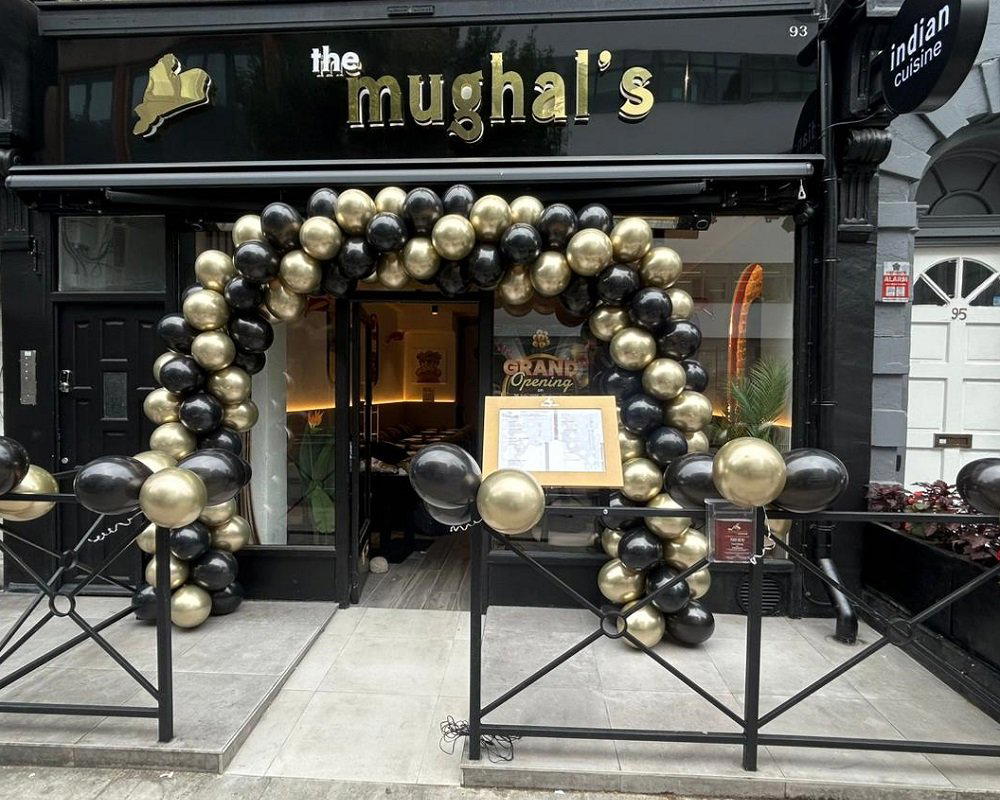
The Mughal Court and Its Culinary Legacy
The name says something specific. Mughal cuisine is not a regional style in the way that Chettinad or Malabar cooking is regional, it is a court tradition, one that developed across the sixteenth to eighteenth centuries as the Mughal emperors drew Persian, Central Asian, and North Indian culinary practice into a single, elaborate synthesis. Slow-cooked meats, aromatic spice blends, and techniques like dum cooking (sealing a vessel with dough and cooking over low heat) all carry Mughal fingerprints. When a London restaurant anchors its identity to this tradition, it is making a specific claim about culinary depth and historical seriousness, not simply offering a category of food.
London has carried South Asian cuisine longer than most European capitals. The first Indian restaurants appeared in the city in the late nineteenth century, and by the mid-twentieth century the trade had established itself in districts across the East End, Southall, and eventually throughout the West. Tyburnia, the neighbourhood around W2 where The Mughal's Indian Restaurant sits on London Street, occupies a different quadrant of that story, closer to Paddington and the transient, cosmopolitan energy of a district shaped by arrivals and departures. That geography matters: it has historically given restaurants in this pocket access to a clientele more varied than a purely local trade, and it has demanded a certain consistency that tourist-adjacent neighbourhoods always test.
Where This Sits in London's Indian Dining Map
London's Indian restaurant scene has stratified considerably over the past two decades. At one end, a small number of venues have pursued formal recognition and tasting-menu formats, Opheem in Birmingham being one example of how South Asian fine dining has reached Michelin level in a UK context, operating in a comparable set alongside addresses like CORE by Clare Smyth and Restaurant Gordon Ramsay in terms of ambition, if not cuisine type. At the other end, high-volume curry houses continue to serve a function that is as social as it is culinary. Between those poles sits a middle tier of restaurants that draw on specific regional or historical traditions and hold a loyal, repeat-visitor trade.
The Mughal's Indian Restaurant positions itself within that tradition-anchored middle tier. Mughal-lineage cooking in London tends to operate with a repertoire built around northern Indian classics: slow-cooked lamb preparations, tandoor-roasted proteins, layered rice dishes, and cream- or nut-based sauces that reflect Persian influence filtered through centuries of subcontinental kitchen practice. Venues that do this well are not chasing the same recognition markers as, say, Sketch, The Lecture Room and Library or The Ledbury. They are instead accountable to a different standard: fidelity to a cooking tradition that has its own internal logic and its own community of informed eaters.
The Tradition Behind the Menu
Understanding Mughal cooking requires stepping back from the modern Indian restaurant menu as a genre. The court kitchens of Akbar, Jahangir, and Shah Jahan were not producing what most British diners think of as Indian food. They were producing a cuisine shaped by Persian poetry and aesthetics, by the spice trade routes that ran through Samarkand and Kabul, and by the Hindu and Jain culinary traditions of the Indian subcontinent. The result was a cooking style that privileged complexity achieved through patience rather than through heat or volume of spicing.
Dum biryani is one of the clearest survivors of that tradition: rice and meat layered in a sealed vessel, cooked by trapped steam over time, with the goal being a unified aromatic result rather than a spiced rice dish as an afterthought. Korma, as understood in its original context, referred to a braising technique rather than the mild, cream-heavy sauce it has become in British adaptations. Nihari, a slow-cooked bone-marrow stew historically eaten as a breakfast dish by Mughal labourers after overnight cooking, has migrated into the evening repertoire of diaspora restaurants and remains one of the more demanding dishes to execute properly. These are the reference points that a restaurant invoking the Mughal name is working against.
The W2 Context
Tyburnia sits between Paddington Station and Hyde Park, a pocket of London that has long functioned as a transit point for international visitors arriving by rail or moving between the city and Heathrow. The restaurant density around London Street reflects that transient footfall, but the Indian restaurants in this corridor have also served the established South Asian communities of West London for decades. That dual audience, passing visitors and regular community trade, creates a different dynamic than a restaurant serving primarily a destination-dining clientele, as venues like Dinner by Heston Blumenthal do at the Hyde Park end of the same postcode district.
For a visitor approaching London's restaurant map from the perspective of a broader UK dining trip, it is worth noting that the capital's South Asian offering is substantially wider than its Michelin-starred tier suggests. The starred addresses, and the broader range of acclaimed UK restaurants from Waterside Inn in Bray to L'Enclume in Cartmel, from Moor Hall in Aughton to Midsummer House in Cambridge, occupy a recognisable formal tier. Traditional Indian restaurants operate on a different axis entirely, where the currency is depth of tradition, consistency, and cultural familiarity rather than tasting-menu innovation. Both have a place in a serious London itinerary, and they answer different questions. Addresses like Le Manoir aux Quat'Saisons in Oxford, Gidleigh Park in Chagford, Hand and Flowers in Marlow, hide and fox in Saltwood, and Restaurant Andrew Fairlie in Auchterarder all represent the formal fine-dining end of the UK's varied restaurant culture. The tradition-anchored Indian restaurant represents something equally specific on the other side of that divide. Further afield, comparable questions of cultural depth versus formal recognition play out at venues like Le Bernardin in New York City and Atomix in New York City, where the premium and the traditional often occupy entirely separate tiers of a city's dining conversation.
Know Before You Go
- Address: 11 London St, Tyburnia, London W2 1HL
- Neighbourhood: Tyburnia, between Paddington Station and Hyde Park
- Nearest transport: Paddington Station (Elizabeth, Circle, District, Bakerloo, and National Rail lines)
- Reservations: Recommended
- Awards: none currently listed
- Price range: About $25 per person
Price and Positioning
Comparable venues nearby, for context on price, style, and recognition.
| Venue | Cuisine | Price |
|---|---|---|
| The Mughal's Indian RestaurantThis venue — the venue you are viewing | Not listed | $$ |
| Dishoom Carnaby | Soho, Bombay Comfort Food | $$ |
| Poppadom Indian Kitchen | Bloomsbury, Indian Fusion Kitchen | $$ |
| Pure Indian Cooking | Hurlingham, Modern Indian | $$ |
| Dishoom Shoreditch | Shoreditch, Bombay Comfort Food | $$ |
| Salaam Namaste | St Pancras, Modern Indian & Pakistani | $$ |
Continue exploring
More in London
Restaurants in London
Browse all →
Bars in London
Browse all →
Hotels in London
Browse all →


At a Glance
- Cozy
- Classic
- Group Dining
- Family
- Casual Hangout
- Historic Building
Current opening hours
- Monday
- 12–11 PM
- Tuesday
- 12–11 PM
- Wednesday
- 12–11 PM
- Thursday
- 12–11 PM
- Friday
- 4–11 PM
- Saturday
- 12–10:30 PM
- Sunday
- 12–11 PM
Hours can change for holidays and private events. Last verified .
Cosy and traditional with even table spacing for private conversations and a down-to-earth vibe.